50 Things To Never Buy

50 Things You Never Have to Buy

A few months ago, I posted 10 items we no longer buy and have had a resounding response. Well, they were actually 20 items, since the original list of 10 came from Suburban Pioneers. I’ve decided to up the ante and compile a list of 50 items you could cross off your shopping list. I’ll start at 50 and work my way down to the first 10 listed by Suburban Pioneers.

Here goes:

50) Bottled Water: Let’s just not ever buy bottled water unless we absolutely have to. Ok? With a little forethought, there’s no need to buy water packaged in plastic.

Bottled Water for Sale

49) Air:  Who buys air? Apparently the air is so bad in Beijing, the Chinese do.

48) Note paper: Notes can be written down on any scrap paper. We write notes on the backside of letters with only one side printed, that come in the mail: envelopes, anything with room for a few paragraphs, a list, or some doodles.

47) Wrapping Paper: There are so many wonderful alternatives to wrapping paper, including cloth, paper bags, your children’s artwork, and chip bags. We have a stash of reusable cloth bags that I make each year to use as gift bags. We save wrapping paper, too, and reuse it and reuse it and…
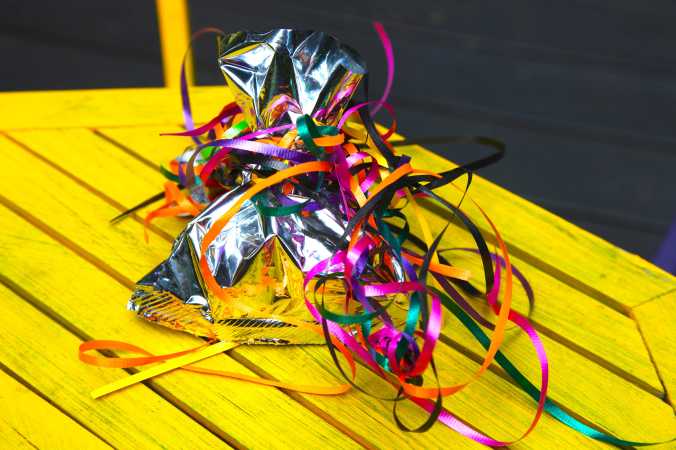
Chip Bag Gift Bag

Chip bag turned gift bag.

46) Fly Paper: We’ve started making our own sweet fly paper and it works most of the time..

Hanging out to dry. Photo © Liesl Clark

45) Pot Scrubbers: Crumpled up aluminum foil works. Really. Don’t laugh. It totally works.

44) Planters: Almost anything can be converted into a planter — you just have to use your imagination. If it can hold anything, it can be a planter. I’ve seen bras and toilets as planters, bike helmets, and baby shoes. Here are 5 planters that I photographed while in Nepal.

43) Trellises: As above, trellises are a garden feature that can include whimsical reuse. Here are 25 beautiful trellises you can make from your trash.

42) Chicken Bedding: We use cut grass, dried leaves, roadside grass and — our favorite — shredded paper.

Shredded Paper Bedding Photo © Liesl Clark

41) Yogurt Maker: Skip the yogurt maker and make your own in glass jars. It’s easy.
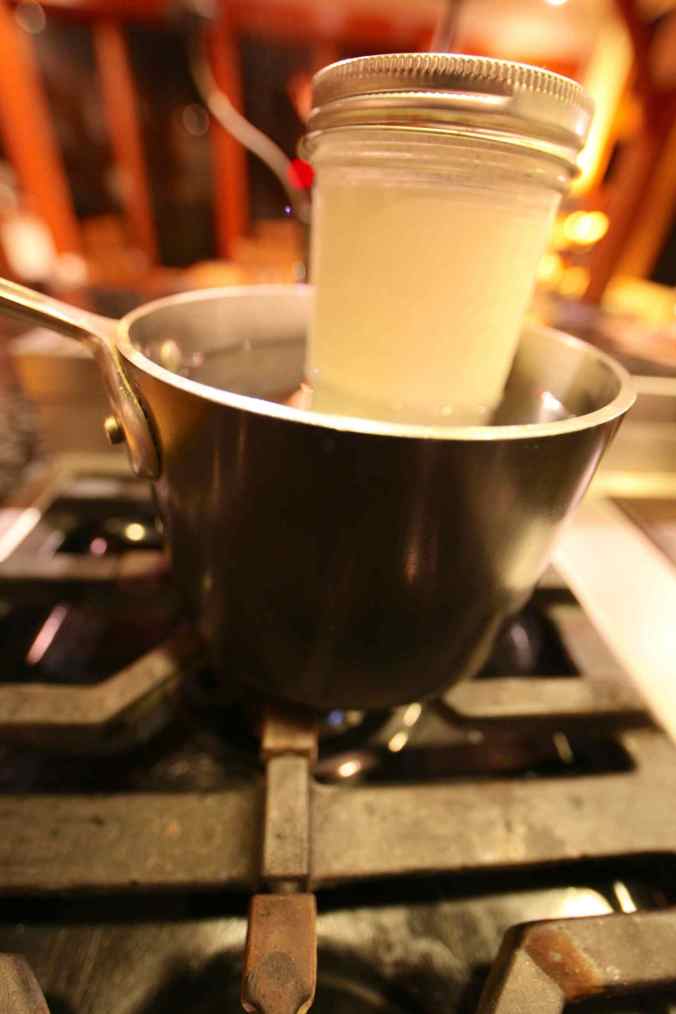
img_1601-photo-c2a9-liesl-clark

Off-The-Grid Yogurt Over The Pilot Light ©Liesl Clark

40) Window Washing Liquid: Vinegar and water works perfectly, along with newspaper instead of microfiber rags or paper towels.

No-Smudge Newspaper Method. Photo © Liesl Clark

39) Laundry Detergent: Try this DIY recipe and save some money.

38) Dish soap: Here’s a DIY Dish Soap recipe that’ll surprise you.

37) Salad Dressings: Remember simple balsamic and olive oil dressings? Just make your own delicious dressings in a jar. They get better with age and will give you no excuse for not eating your greens. Try our favorite recipe and you won’t be disappointed.

Adding Vinegar to Taste is Best. Photo © Liesl Clark

36) Fire Starters: These are so easy to make and they make excellent gifts.

35) Balloons: If you visit Balloons Blow on the Web, you’ll understand why you never want to buy them again. And as an alternative, try a pretty no-sew bunting.

34) Saran Wrap: We never use plastic food wrap any more, now that there’s the ultimate reusable alternative.

33) Gift Tags: We’ve been known, come Christmas, to repurpose last year’s cards as gift tags. You can do the same with all the pretty cards you receive throughout the year — turn them into tags to add to your gifts.

32) Padded Envelopes: We receive so many of these throughout the year, and reuse them of course, that we even give away in our local Buy Nothing group a box or 2 to other local businesses that can reuse them.
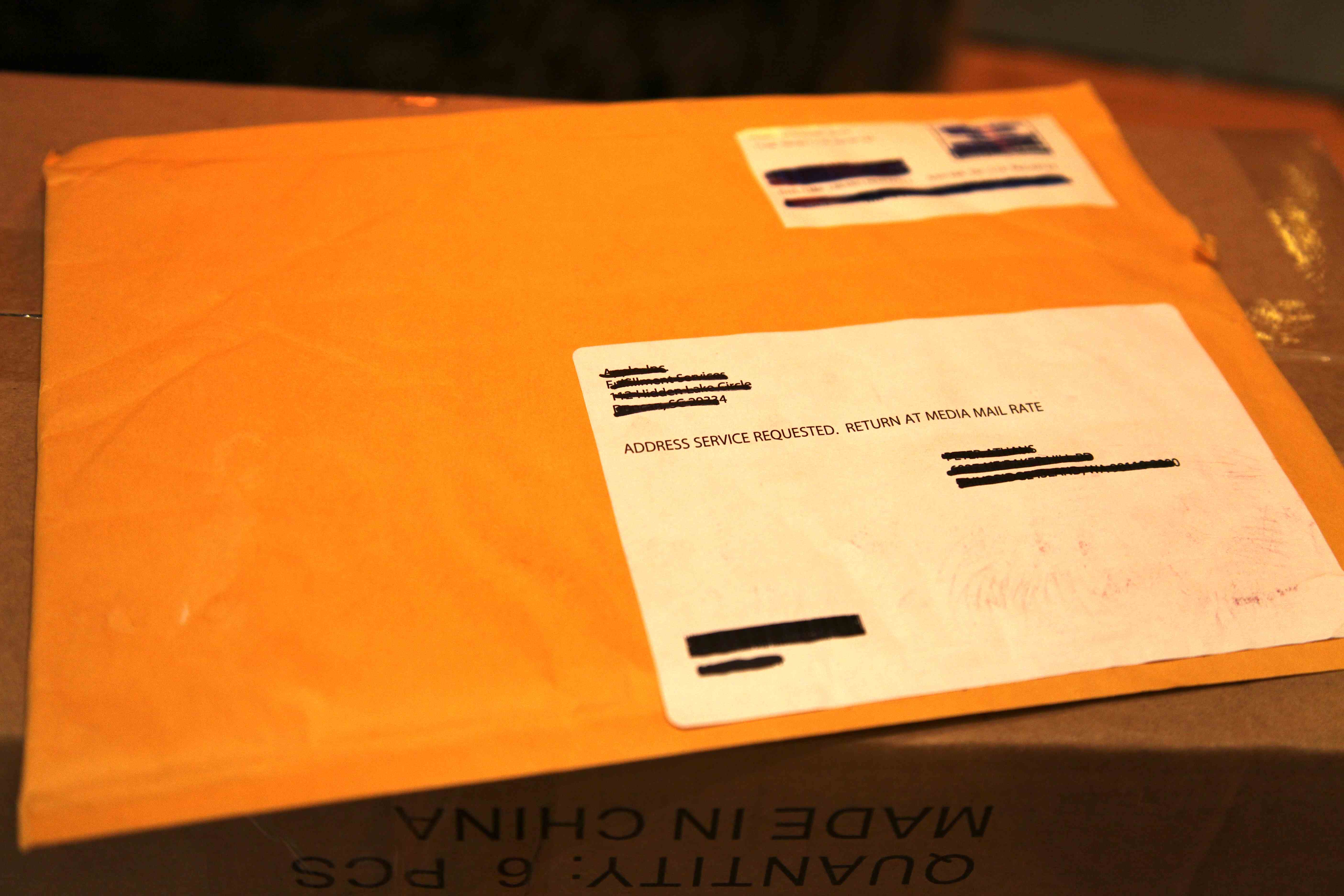
Don't Buy New! Reuse Your Padded Envelopes.

31) Christmas Ornaments: Ornaments are one of the sweetest items to make, as they’re treasured year after year. It’s a family tradition.

Click Through For Trash Backwards Trash to Treasure Ornament Roundup in our app!

30) All-Purpose Cleaner: Orange peels and vinegar will style you with an all-purpose cleaner you’ll love.

DIY All-Purpose Household Cleaner

29) Fruit Vinegar: Fruit scrap vinegar is one of the DIY recipes that’s really changed my buying habits. I make a better apple cider vinegar, red wine vinegar, and blackberry vinegar than I can buy in the store.

Vinegars Photo © Liesl Clark

28) Potatoes, Arugula: If you’re a gardener, you’ll understand this. When you inadvertently leave a potato or two in your garden, you end up with more next year. Same goes for arugula which always goes to seed in our garden. We never have to replant it. So we simply don’t buy it.

27) Garlic Crusher: In a pinch, use a wide knife to whack at your garlic cloves. Or, go caveman-style as I do and find a great stone for crushing.

Garlic Crushing Pestle.jpg Photo © Liesl Clark

26) Furniture/Floor protectors: So many items can be used to protect your floors from the scratching legs of your furniture. Flip flops are one among many.

25) Silica Gel: We get a lot of silica gel through products that are sent to my husband for his work and then give it away. Silica gel has so many uses! If you need it, just ask on your Buy Nothing group and you’ll likely find plenty.

Silica Gel, Photo by Liesl Clark

24) Beach Toys: So many beach toys are washed up on our beaches, obviously left behind by others, I’d love to see people simply stop buying them. There are great alternatives to buying these redundant plastic items.

Metal beach toys from the thrift shop, photo by Rebecca Rockefeller

23) String: We rarely buy string anymore, because we aren’t ashamed to say we salvage it from all sorts of items, like our chicken feed sacks.

22) Doorstops: Get creative with your doorstops and you’ll find joy in refraining to buy one.

Boot Doorstop © Rebecca Rockefeller

21) Easter Egg Dye: We discovered a great reuse for an Easter egg dye that we’ll definitely use again — magic markers! Whether they’re used up or not, soaking them in water for a while doesn’t hurt them one bit.

Use your dried up Non-Toxic Markers for Easter Egg Dye

20) Paper towels: Um, use cloth ones.

A few good rags in a basket = alternative to paper towels. Photo © Liesl Clark

19) Hair ties: Look in every parking lot and on any sidewalk and you’re bound to find a hair tie or 2. I mean it, they’re everywhere. I find them on trails in the woods, too.

Hair Ties and Hair Clips Recovered From the Parking Lots and Sidewalks of the World. Just wash them. Photo © LIesl Clark

18) Pens: As above, look in every parking lot and on the side walks. Pens are everywhere.

Pens Recovered on Puget Sound Beaches

17) Ribbons: Simply look on every shoreline and ribbon can be found there.

Ribbon Found on Our Beaches (including the spool), Photo © Liesl Clark

Ribbon Found on Our Beaches (including the spool), Photo © Liesl Clark

16) Styrofoam Packing Peanuts or bubble wrap:  (Just ask for it on your Buy Nothing group.)

15) Ziploc bags: Wash them.

Gaiam Bag Dryer, Photo © Liesl Clark

Gaiam Bag Dryer, Photo © Liesl Clark

14) Plastic children’s toys: Just ask any parent for them, they’ll gladly give you a box or 3.

13) Books: Of course, I do support buying books from your favorite author, but for many of the books you’ll need throughout the year, use your library!

12) Plastic straws: Plastic straws are a scourge upon the land and water. Use your lips, or find a glass, bamboo, or metal alternative.

plastic straws recovered from Point No Point and Schel-Chelb Estuary, WA, photo by Liesl Clark

11) Cigarette Lighters: Plastic cigarette lighters replace matches way too often. We still collect cool looking matchbooks from bars and restaurants.

Lighters Recovered from Puget Sound Beaches

Lighters Recovered from Puget Sound Beaches

(For these last 10, be sure to visit Suburban Pioneers for their full post)

10) Post-Its

9) Plastic Funnels

8) Microwavable Neck Pillow

7) Pet Fur Remover (Brush or Stone)

6) Travel Toiletry Containers

5) Rubber Bands

4) Reusable Grocery Bags

3) Pet Poo Bags

2) Cleaning Rags

1) Plastic Leftovers Containers

What can you add to our list?  Enjoy your frugal living!

In Praise of Dried Grass

Sometimes a thing you need is hiding right there in plain sight. For 8 years we’ve had chickens, 14 girls a-layin’ in a coop my resourceful husband, Pete, made of salvaged materials. For bedding, on the floor of the coop to absorb their droppings, we’ve used pine chips, sold in bales wrapped in plastic. It’s clean and dry and when the bedding becomes soiled with excessive chicken droppings, we shovel it out of the coop, into the compost pile and lay down new chips …  Until we discovered the shredded paper method.

Through our local Buy Nothing group, I now procure shredded paper for use as chicken bedding and it works beautifully in both the coop and the compost, breaking down even faster than the pine chips in the heat of the composter. It’s free, and we make sure we only get shredded paper. No plastic bits please.

The nest boxes require straw for soft egg-laying. Again, for years we’ve used straw sweepings we get for a few dollars at our local feed store. And then I saw what looked like straw laying on the side of our road. Two or 3 times a summer, our island road maintenance crew cuts the tall grass on the roadsides, leaving the “hay” to dry in the sun. It remains there until the next batch of grass is cut and laid on top of it. Last week, we took a basket down the road and filled it with the beautifully dried hay and brought it home for the chickens. Our guinea pig loves the hay, too!  Nothing better than freshly cut and dried nest box material right at the end of the driveway.

My dear friend, Yangin Sherpa, is my inspiration. She spends long summer days in her region of Nepal, Solu Khumbu, hiking up mountainsides in the jungle, searching for tall grasses to cut and then take home to dry in the sun. She later sells the grass to yak and dzopkyo owners for winter feed. She sells 40 kilos of hay (carried on her back) for about $60. Not a bad price for rural Nepal.

For Yangin, seeing the free cut dried grass here by the road, no one collecting it for their animals, is a waste of a great resource. It’s just a few hundred yards off our property, so we’ve collected 2 loads of hay for the coop that should last us through the winter.

We lay it out on our lawn to dry further in the sun and when it’s dry, Yangin separates the hay and knots it into easy-to-grab bundles. We hang it up in our carport in an old hammock (destined for the landfill because it had a hole in it) for easy retrieval.

Yangin knots them into easily transportable bundles. Once again, an age-old technique that has served cultures well for thousands of years, so simple and practical, brings us closer to the rhythms of the natural world around us. Yet we’ve somehow lost this connection and knowledge over the years, no longer utilizing the resources hiding in plain sight.

Eat Your Brassicas, Flowers And All

Kale florets are sweeter than broccoli raab. Photo © Liesl Clark

If you’re a gardener, you’ll know what I’m talking about. Can you eat the flower heads of your brassicas (broccoli, cabbage, kale, collards, arugula, mustard)? Yes! As my friend Rebecca says, “We just call it “raab.”” It’s like broccoli raab but much sweeter in the case of kale and collards which we’ve been enjoying for the past few weeks. And if you don’t believe me, visit the Mixed Greens Blog where you’ll learn more about the wonders of the brassica family.

Kale flowers pinched off to make the plant produce more! Photo © Liesl Clark

Brassica florets, leaves, stems are all good for you. Even the yellow flowers themselves can be added to salads for color. These versatile veggies house nutrients that help protect you against prostrate, bladder, colon, pancreatic and breast cancers. We simply consider them among our “deep greens” family, easy to grow in most climates and hence worth finding great recipes for.

Saute brassica florets and leaves in garlic and olive oil. Photo © Liesl Clark

I pinch off the flower heads before they actually flower and they’re just like broccoli flowerets which can go in salads, omelets, macaroni and cheese, quiches, you name it! Pinch right down to the leaves and new florets will resprout. As long as you don’t let your plant flower completely the florets don’t get too bitter.

Once your brassicas flower the leaves become more bitter. But the honey bees love the flowers and the flowers work nicely in a salad. Prolong the life of your brassicas! Photo © Liesl Clark

I guess it’s a sign of not being able to let go, but these brassica flower heads are too delicious not to harvest and they extend our food crops sometimes indefinitely. We do let a few plants flower just to keep the honey bees happy. One winter, I fed my family off of 4 brassicas the entire winter: the leaves, the stems, the florets, and then the flowers in salads. Seeds, too, are edible. We simply let the bees do their collecting of pollen and watch the flowers turn to seeds which drop to the ground and I never plant brassicas again. They resprout all over the garden. A perennial self-sustaining food forest that could feed many families for years to come.

Home made macaroni and cheese with sauteed kale florets. Photo © Liesl Clark

Enjoy your brassica florets and do share your favorite recipes with us so we can extend our brassica bravado into new culinary adventures.

IMG_4541 Photo © Liesl Clark

#WhyWomenDontReport

Because I was 15, spending a summer abroad to learn French, and I didn’t know who to talk to when you’d come to my bedside and grope me in the night. #WhyWomenDontReport

Like so many women, I don’t have adequate words to share in the spaces between these highlighted occurrences. They’re just a few among others buried in my subconscious, ingrained in the tactile memory of my cells every time someone touches me, even in moments of tenderness.

Because I was one of your guests, and I thought we were all enjoying a night swim in the Mediterranean. Yet the darkness hid your assault in broad moonlight. #WhyWomenDontReport

I’d posit that women are robbed of their own pleasure, for years, when their bodies become the unwitting object of another’s unwanted, yet continued, advances.

Because my  job was to film you, but you’d kiss me on the mouth every morning and “slept” for hours in the car with your head in my “lap” while my boss looked on and smiled. #WhyWomenDontReport

When sexual predators are in positions of power, there’s a feeling of communal embarrassment that goes along with the knowledge that everyone saw what they did. Why report, if all are in the know anyhow and were unwilling to help stop the impropriety?

Because I never saw your stranger’s face hidden in your jacket as you jerked off while I sat by the river, writing in my journal. I ran home terrified you were following me. #WhyWomenDontReport

Every woman knows the terror of sensing they’re being followed by a stranger. And when it is someone who half-hides half-naked, it’s even more frightening since boundaries have lost all meaning.

Because I was your girlfriend and there was no safe space between virgin and whore in your mind. #WhyWomenDontReport

I hope, for my daughter and son, that they’ll both find representations of strong smart funny and admirable women front-and-center in their books, magazines, ipads, and laptops. I had no female role models in literature or on TV and neither did the boys and men I grew up with.

Because I was traveling alone, and didn’t speak the language there. #WhyWomenDontReport

A culture that prides itself on complimenting women is one thing, but grabbing onto our bodies to bring us in close and cop a kiss or a feel, without knowing us, is another. When it happens in public for all to see and validate, a woman feels humiliated and powerless.

Because after you yelled lewd comments out your truck window for all to hear as I was jogging, you crashed into the parked car ahead of you and I still felt shame. #WhyWomenDontReport

Maybe karma has a way of working things out in small but poetic ways.

bt0c0553_dl


Doll House Haunted House

It was a dark and stormy night…(yes, we get plenty of these in the Pacific Northwest) and a couple of innovative kids created a mini haunted house from items they found in boxes and toy collections. They wanted to create something to play with but also to put on display outside the front door, without purchasing anything new. This haunted doll house is now a treasure, simply because they transformed a few everyday items and found some seasonal ones to add to the ambiance. The key is: Buy nothing and craft a cool Halloween decoration.

Here’s how this easy rainy-day project can quickly come to fruition for you, too:

1) A dollhouse will need to be your centerpiece.

2) Then, a glow-stick-style flashlight that glows a flourescent green will need to be procured from a closet. Or, use a regular flashlight and use some green plastic sheeting as a gel for your light.

3) Tiny plastic bugs must be curated out of your vast collection of creepy crawlies.

4) Next comes a search for white yarn scraps you might have thrown in the waste basket but thought better of. These will serve as cob webbing.

5) And finally, any tiny otherwise useless Halloween bits and bobs you’ve accumulated from previous years will make your mini haunted house’s yard art especially intimidating. If you don’t have anything, just ask for them on your local Buy Nothing group.

6) Put on some scary mood music (Pandora can be great for that), and let the mini doll-style Halloween fun begin.

What no-buy, no-waste Halloween ideas have you crafted up?

Tree Stump Planters

Tree Stump Planters are Natural and Easy. Photo © Liesl Clark

It’s been raining so much here, I started looking through some sunny photos and came across these. We have some enormous tree stumps on our property, old growth douglas fir stumps measuring 6-8 feet in diameter, left behind by the logging that took place when the San Francisco fire took its toll on our island’s trees. Our oldest and tallest helped rebuild that city, hundreds of miles to our south. One stump is so large we built a playhouse for our children off the edge of it, the perfect platform plus huckleberry garden for a pallet playhouse for little tree climbers.

Turn your trash backwards: Used wooden pallets are perfect for treehouses

But the mid-sized stumps on our cleared land just sat there for years, slowly rotting out, a small mass of wood and rocks that would take a bull dozer to remove. I decided to turn one, in the middle of a yard, into a planter. Since the stump’s interior was soft, I removed what woody material I could and then put potting soil and compost in its place. My planter was ready for an indigenous perennial.

I turned an unwanted tree stump into a favorite feature of the property. Photo © Liesl Clark

I chose crocosmia because they’re hardy, come from a bulb and need to be contained. Their reedy thin sword-like leaves spreading forth from the round and flat stump offer a pretty look. And the flashy red flowers are especially stunning in the late summer.

Tree Stump Turned Crocosmia Planter. Photo © Liesl Clark

Stump planters are a natural way to take advantage of the remains of an old tree. Here’s one made from a palm tree stump that my mother-in-law used to plant cacti.

Trunk Planter For Beach Cacti. Photo © Liesl Clark

You don’t have to wait for your trees to become stumps to make planters. These geraniums add color to a twisted trunk with a hole large enough to hold a geranium plant or two.

A hole in a trunk makes room for pretty geraniums. Photo © Liesl Clark

Do you have a stump or natural planter you’ve created for your blossoms? Please share.  Planters can be made from nearly everything.

10 DIY Fire Pits

The allure of the fire pit. Photo © Liesl Clark

The allure of the fire pit. Photo © Liesl Clark

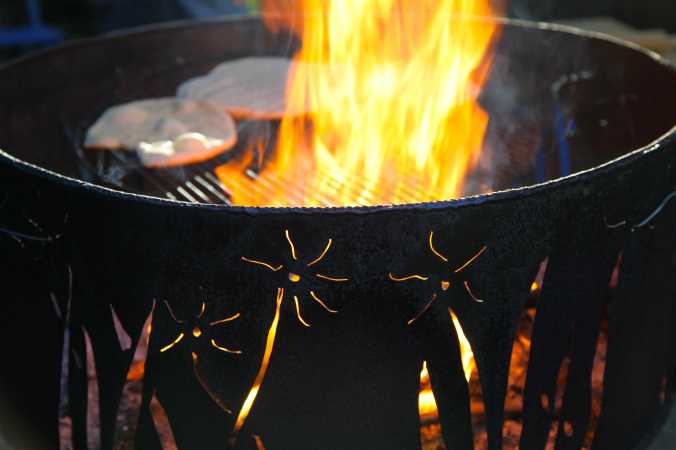
We love outdoor “rooms” with fire pits. They extend your outdoor time by weeks. Seems the latest craze is repurposing metal things into fire pits. Here’s a list of some of the most innovative ones we could find:

1) Metal Wheelbarrow Fire Pit: If you’ve got a metal one that’s broken down, try to turn it into a fire pit. It’ll look cool in your back yard.

2) Washing Machine Drum Fire Pit: Our app users love this. Next time someone you know is getting rid of their washing machine, ask for the drum inside. They make beautiful fire pits.

3) Paver Brick Fire Pit: Brick and concrete pavers make easy fire pit insulation material. There are many tutorials to find on the web for these homemade fire rings.

4) Wash Pail Fire Pit: A metal wash pail can work as a fire pit. Just be sure that if it’s galvanized you give plenty of time for the chemicals on the metal to burn off.

5) In-Ground Fire Pit: This is a classic and easy fire pit to make at home.

6) Old Grill Fire Pit. Wait for an old grill to come up on your Buy Nothing group for this fire pit option.

7) Shopping Cart Fire Pit: My favorite, with built-in log storage rack.

8) Industrial Wire Waste Fire Bowls: You can always try your hand a making fire bowls like these.

9) Tractor Rim Fire Ring: If you have access to a tractor rim, it makes a great fire ring.

10) Castiron Bathtub Fire Pit: Maybe you have an old tub hanging about?

Low Impact Trekking

By Mr. Everest

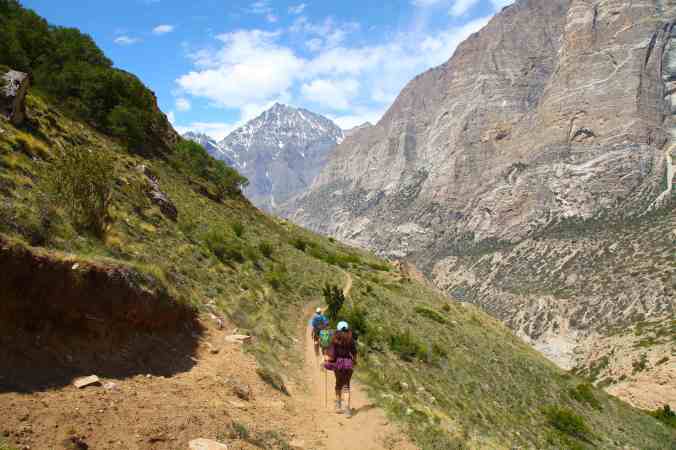
A Journey Beneath Dhaulagiri. Photo © Liesl Clark

A Journey Beneath Dhaulagiri. Photo © Liesl Clark

In most parts of the world, the higher we journey, the more rarified the air and pristine the environment. But in Nepal, that truth is changing. Twenty thousand visitors per year travel to the Mount Everest region, and thousands climb the 20,000 foot trekking peaks to catch glimpses of the world’s highest mountains. It’s imperative that we strive to leave as little impact as possible, and take steps to reverse some of the impacts left behind by others.

IMG_3030

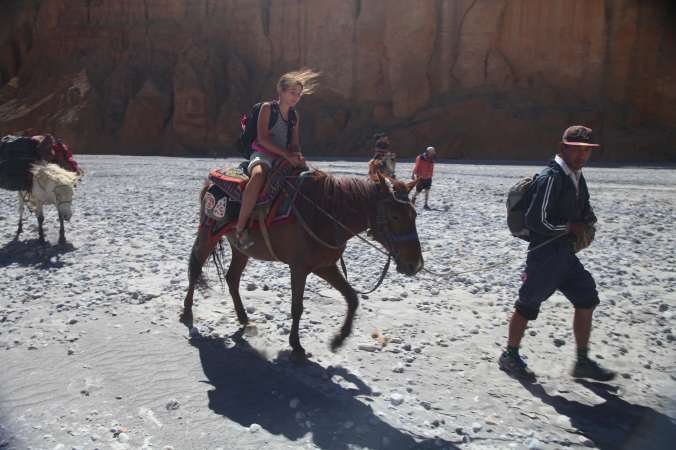
This summer, we’ll be on our 13th journey through Nepal with our children, and feel fortunate to be able to share our work in the Himalayas with them, continuing the friendships they’ve established after 12 consecutive years of coming to this rugged country every spring or summer.  Exploring the outdoors brings joy to my 10 and 13 year old daughter and son and is integral to who they are.

Our children go on expeditions with us in Nepal.

Our children go on expeditions with us in Nepal. © Liesl Clark

My wife, Liesl, and I strive to pass on to them the 7 principles of leave no trace, established by the Center for Outdoor Ethics. I’ve added my personal insights and recommendations to the basic principles that you might find useful in planning for your next trip into the wilderness, whether alone or with your family and friends. The less impact we have on the environment, indeed even in our own backyards, the more readily our unique ecosystems and all the flora and fauna therein can thrive.

1) Planning your trip ahead of time and preparing is the first step. Take extra care to gain cultural knowledge of the behavior and the accepted norms of the country you’re travelling in. Learn about the environment you’re going into, whether it’s a pristine alpine wilderness or a heavily used high desert. Memorize which habitats are the most at risk and stay clear of them. Knowing this can make a difference in the choices you make for camping and recreating. Establish contingencies and have a plan in place for all contingencies.

Spinning prayer wheels in Kagbeni. © Liesl Clark

Spinning prayer wheels in Kagbeni. © Liesl Clark

Here are a few steps you’ll need to take in the planning phase that will greatly reduce your impact:

a) Get rid of all excessive packing of items you’re bringing with you. Remove the packaging from batteries, for example so you don’t bring that unnecessary paper and plastic (called blister packs that are not recyclable) with you.

b) Procure the right medicines and medical supplies for your trip. Remove the unnecessary packaging.

c) Bring maps and navigation materials like a compass or GPS.

IMG_4248

d) Set up the necessary insurance you’ll need in the event of a medical evacuation or helicopter rescue.

e) Where will your water sources come from? Please avoid plastic bottled water and plan to bring your own reusable water bottle to be refilled. Bring a Steripen for ultraviolet water purification, a water filter, or iodine tablets to treat your water.

2) Travel and camp on durable surfaces. For most trekking, you don’t need big heavy boots. You can travel in lighter trail shoes which don’t impact the terrain as much, causing erosion. Avoid going over people’s stone walls or walking through gardens. If you open gates, close them behind you. The point here is that you’re leaving no trace that you passed by. This is one instance where you don’t want to leave a big impression behind.

Sometimes travelling by foot is more reliable than by jeep. This jeep lost its fuel tank en route up the Kali Gandaki River. © Liesl Clark

Sometimes travelling by foot is more reliable than by jeep. This jeep lost its fuel tank en route up the Kali Gandaki River. © Liesl Clark

3) Have a plan for dealing with your waste:

a) If you’re in a National Park, use blue bags or something similar to pack out your own human waste. If you’re trekking, use outhouses. Otherwise, carry a small trowel or shovel and dig catholes. Carry your own toilet paper and burn it.

b) Carry out all plastics from your bars and all packaging from your food. A compression sack can do the trick to keep the waste in one place in your pack and consolidated.

c) Carry out the batteries from cameras and other equipment. These should be disposed of responsibly. Either take them home with you if you’re travelling in a country that doesn’t recycle them, or research where your nearest recycling facility is at the end of your trip. We stockpile all our batteries on our expeditions and bring them home.

d) Water: This might be the single most important step you take. Bringing your own reusable bottle saves the environment from hundreds of plastic bottles potentially littering the landscape. If others see you using a Steripen, a filter, or water tablets, they’ll see how easy an option it is. You can always ask for boiled water, but this water requires fuel to boil contaminants. A Steripen or hand-filter will mean you can get water wherever you want and it’ll be cold. It will also be free! I use a Steripen that has a solar charger attached to it so I’m not reliant on power or batteries to use it. Learn where the potable water stations are so you can support these efforts to stop people from buying bottled water.

Using a Steripen means we can have fresh cold water anywhere. © Liesl Clark

Using a Steripen means we can have fresh cold water anywhere. © Liesl Clark

e) When you’re on your way out, pay it forward by removing any waste you see in the environment. Especially if you come across potentially toxic waste like batteries or CFL light bulbs. These shouldn’t be anywhere outside, helping to remove these things and disposing of them safely, helps zero-offset your impact.

Removing a battery from a village water source. © Liesl Clark

Removing a battery from a village water source. © Liesl Clark

4) If you’re cooking on your own, be sure that you know where you should and shouldn’t have fires. Use local fuel that you can find easily and use those in substitution of wood fires.

IMG_1708

a) If you’re trekking where there are villages nearby, eating locally is a great way to reduce waste. The more local produce and indigenous food products you can eat from nearby fields and kitchens the less imported foods are needed to support your journey. We eat in homes and tea shops wherever we can in Nepal, where you’ll always find dhal bhat a Nepali dish of rice and lentils along with side dishes of locally grown vegetables.

Local Fresh Goatsmilk Yogurt in Kolapani. © Liesl Clark

Local Fresh Goatsmilk Yogurt in Kolapani. © Liesl Clark

b) Save your organic waste rather than throwing it outdoors to decompose. In some environments like the desert, even eggshells take an inordinate amount of time to break down. If you’re passing through villages, local farmers will be happy to take your stockpiled organics to feed to their stock animals (chickens, cows, yaks) or put in their compost piles.

5) Leave the natural environment as it is. Refrain from picking flowers or taking mementos from the natural world. Take only photos, leave only footprints.

IMG_3324

6) Be respectful of wildlife and don’t disturb any birdlife, mammals or any animals you come across.

7) Be respectful of other travellers using the same environment. The same goes for locals. Try to learn some of their language so you can greet them and ask a question. For starters, learning how to say hello, goodbye (often the same word), thank you, good morning, and counting to three will get you far. And, as in step #1, be aware of cultural norms.

9-hour day in jeep will put any 7-year-old to sleep. © Liesl Clark

9-hour day in jeep will put any 7-year-old to sleep. © Liesl Clark

Most of all, be in the moment and enjoy the journey, and where it takes your mind and heart.

BT0C5138

How to Fix a Cracked Wheelbarrow

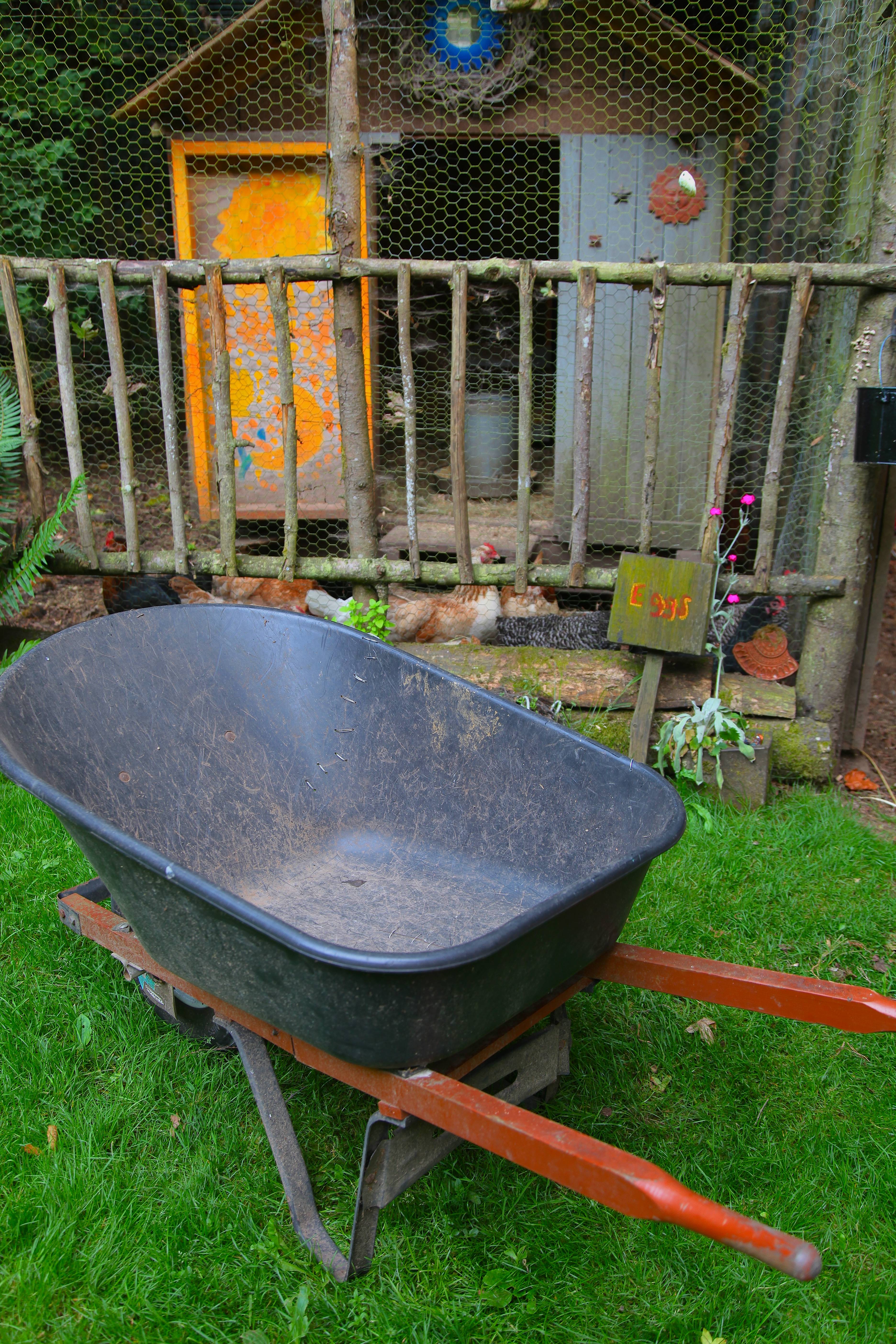
I bought a plastic wheelbarrow and regretted it 4 years later. So much for the “plastic lasts forever” theory. Yes, it lasts forever, but it cracks in the interim, into smaller and smaller pieces. That was the fate of our deep Ace Hardware wheelbarrow that was this homestead’s workhorse for some 4 years.

We’ve had to replace the wheel once already. You can do that at Ace, amazingly, as they have parts ready to purchase for their wheelbarrows, but I doubt they’d have a new tub for us to replace. I thought we’d have to trash the whole molded black plastic thing, and then our friend, Ang Temba Sherpa from Nepal came to the rescue. He stitched it!

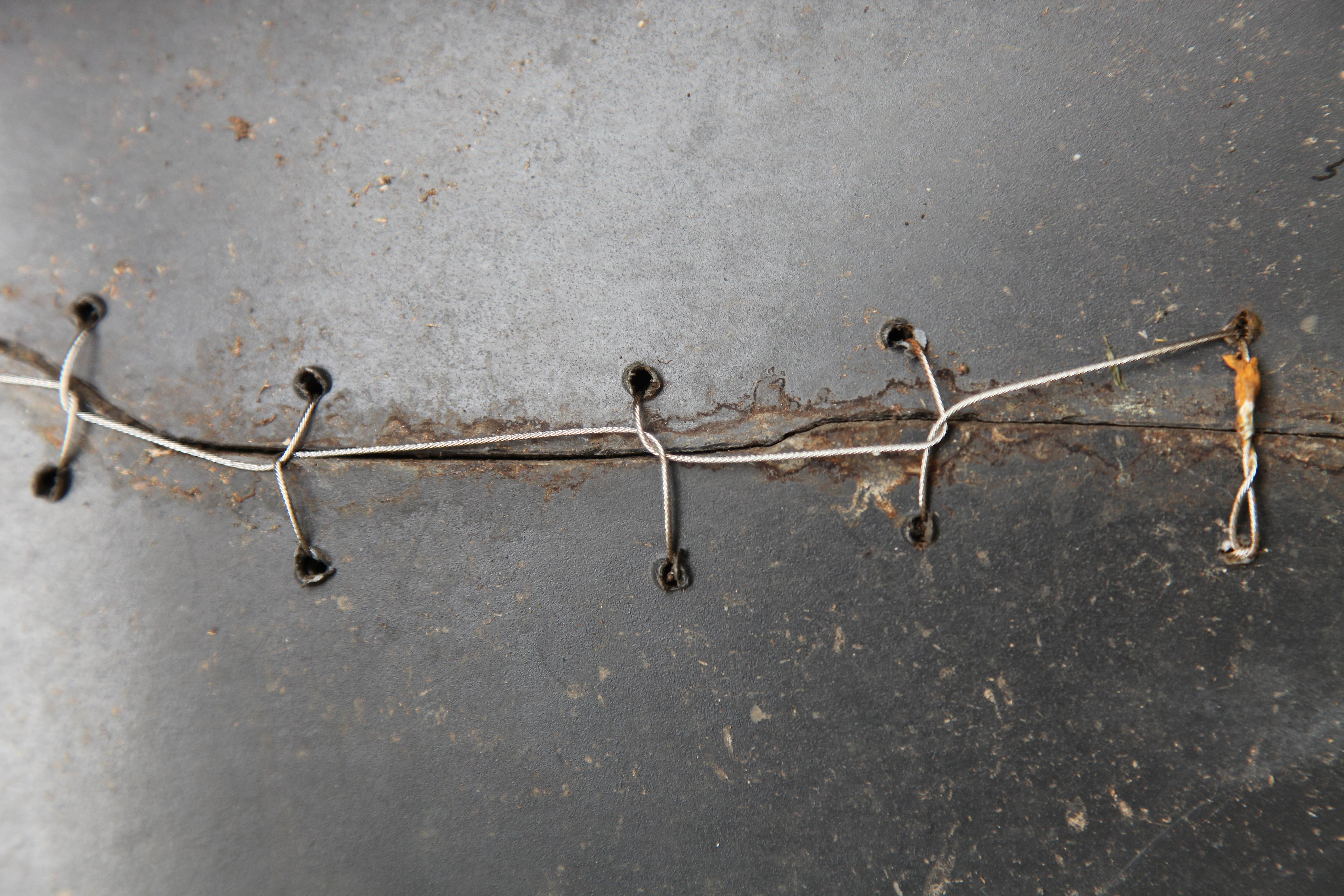
Yep, the fix was a mend via wire stitching, using a thin drill bit to make small holes for threading the wire along the crack. It’s a beautiful work of art to behold, somewhat like the stitch-up of the plastic plant pot I spotted in Tsarang, Upper Mustang, Nepal on our last trip there.

repair plastic pot

Why don’t we mend our plastics in this country like the people of Nepal do?

It’s now been another 4 years since Ang Temba repaired our wheelbarrow, and I’m proud to tell you that we’re still using it! The long cracks in the base are actually quite welcome, as they let rainwater drip out. We have an improved wheelbarrow as a result of this everlasting hand stitchery.

Thanks, Temba!

IMG_3154

It’s still in action!

10 Things You Never Need to Buy

We got our inspiration for this post by reading Suburban Pioneers’ list of 10 common products you never need to buy, so we thought we’d spread the wealth and add to their list. So, this is really about 20 things you never have to buy. Do read their list first.

If we all compiled lists of 10 “Never Buy” items complete with explanation, we’d live in a utopian circular economy, my dream economy.  After reading our list, then compile your own and send it along in the comments below. I actually already have a list of 100 items, but I’m going to work up to it, so I don’t overwhelm you.

So, here goes: 10 common items you should never have to buy —

1) Paper towels (Um, use cloth ones.)

2) Hair ties (look in every parking lot and side walk. I’m serious.)

Hair Ties and Hair Clips Recovered From the Parking Lots and Sidewalks of the World. Just wash them. Photo © LIesl Clark

3) Pens (Look in every parking lot and side walk. I can’t tell you how many hundreds of pens I’ve found in public places.)

Pens Recovered on Puget Sound Beaches

4) Ribbons (Look on every shoreline.)

Ribbon Found on Our Beaches (including the spool), Photo © Liesl Clark

5) Styrofoam Packing Peanuts or bubble wrap (just ask on your local Buy Nothing group.)

6) Ziploc bags (wash them.)

Gaiam Bag Dryer, Photo © Liesl Clark

7) Plastic children’s toys (just ask any parent for them, they’ll gladly give you a box or 3.)

These Plastic Toys Were Being Thrown Away. Photo © Rebecca Rockefeller

Oh, and if the parents in your neighborhood want to hang on to all that plastic, just make your own toys. Here are a few (hundred) ideas for toys you can make from stuff in your home to get you started:

Click through for innovative ideas for making your own toys or reusing them at Trash Backwards

8) Books (use your library!)

9) Plastic straws (use your lips.)

plastic straws recovered from Point No Point and Schel-Chelb Estuary, WA, photo by Liesl Clark

10) Plastic cigarette lighters (use matches, especially from matchbooks you collect from bars and restaurants.)

Lighters Recovered from Puget Sound Beaches

OK, so now it’s your turn. What’s on your list?