A Wood-Foraging Workout

IMG_1402

© Liesl Clark

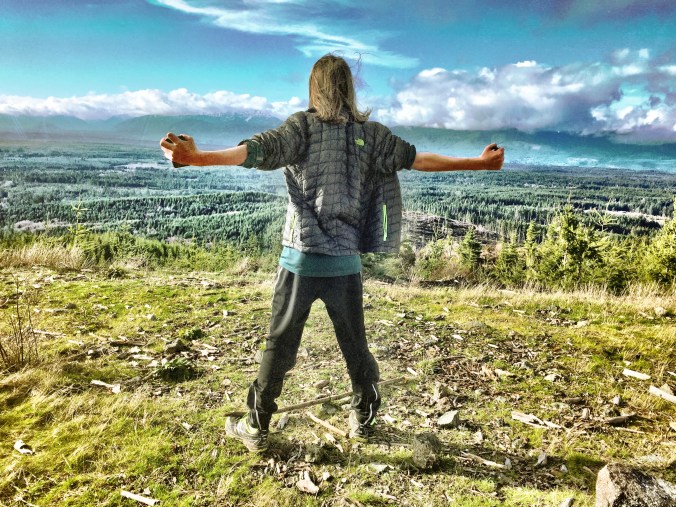
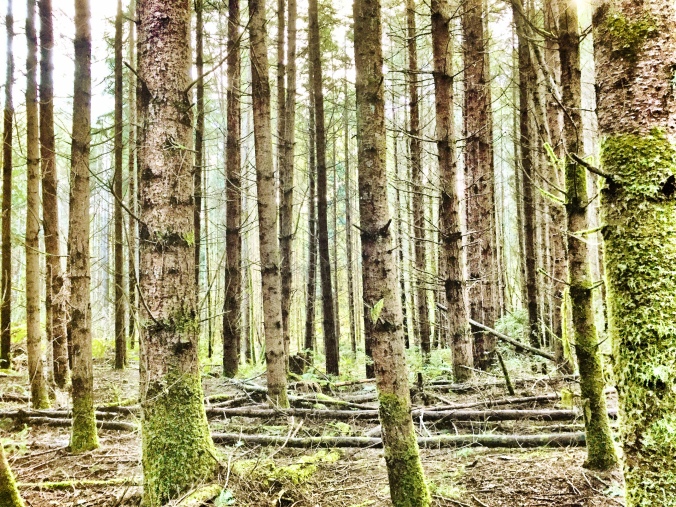
It occurred to me, last winter, when high winds blew down so many trees, that I could help clear the trails, rather than just hike them. The added benefit was wood.

IMG_1470

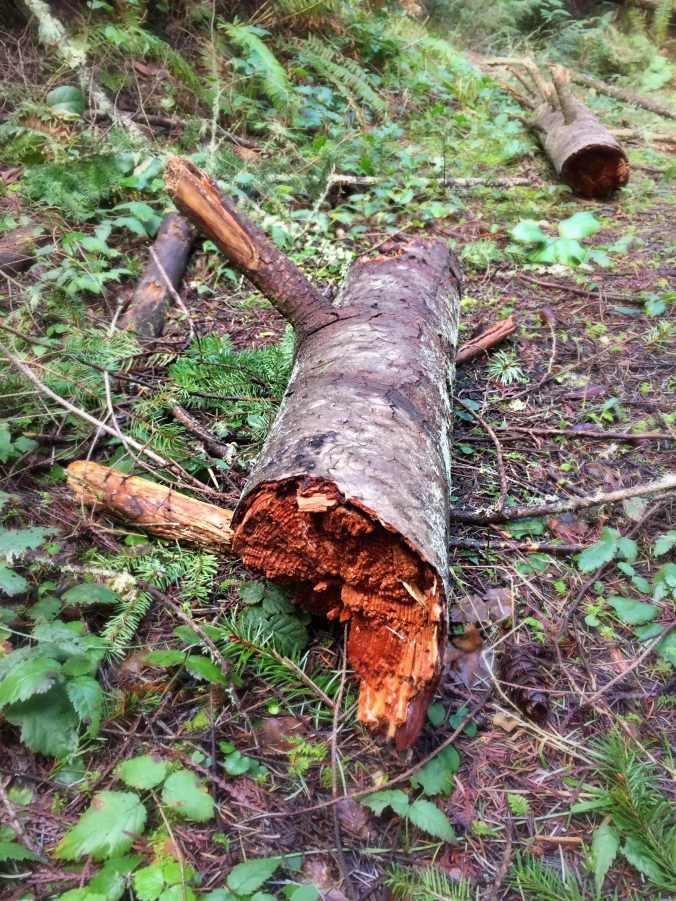
Blown-down wood on a Pacific Northwest Trail © Liesl Clark

Rather than carrying a backpack filled with random items to give me added weight for a pre-expedition workout, I realized the resource I could gather on my hikes was right at my feet. My friend, Yangin Sherpa, walks 5 miles a day to collect wood where she lives. Why couldn’t I?

Trail

We heat our home with wood and our property provides most of what we need. But I realized that every day, during the storm season, I was picking up and throwing aside big chunks of wood that had come down the day before onto the trails we hike on our hill.

IMG_1467

Huge Trees Come Down, Blocking Our Trails, All Winter Long © Liesl Clark

I bring an empty pack after a windstorm and load it with large chunks blocking the trail that I would otherwise throw aside. There’s so much wood out there, areas where blow-downs outnumber the trees standing. I figure a small payment for my clearing of the trails are the few pieces I can gather to add weight to my gait, to give greater resistance to my uphill climb so I can prepare for the high passes and cliffside traverses we do each summer in the Himalaya.

IMG_1469

Payment for My Pains © Liesl Clark

I find joy in knowing what it feels like to walk 5 miles for a bundle of wood that will keep my family warm for one more day.

IMG_0578

What are your simple pleasures?

IMG_1453


DIY Bamboo or Stick Fence

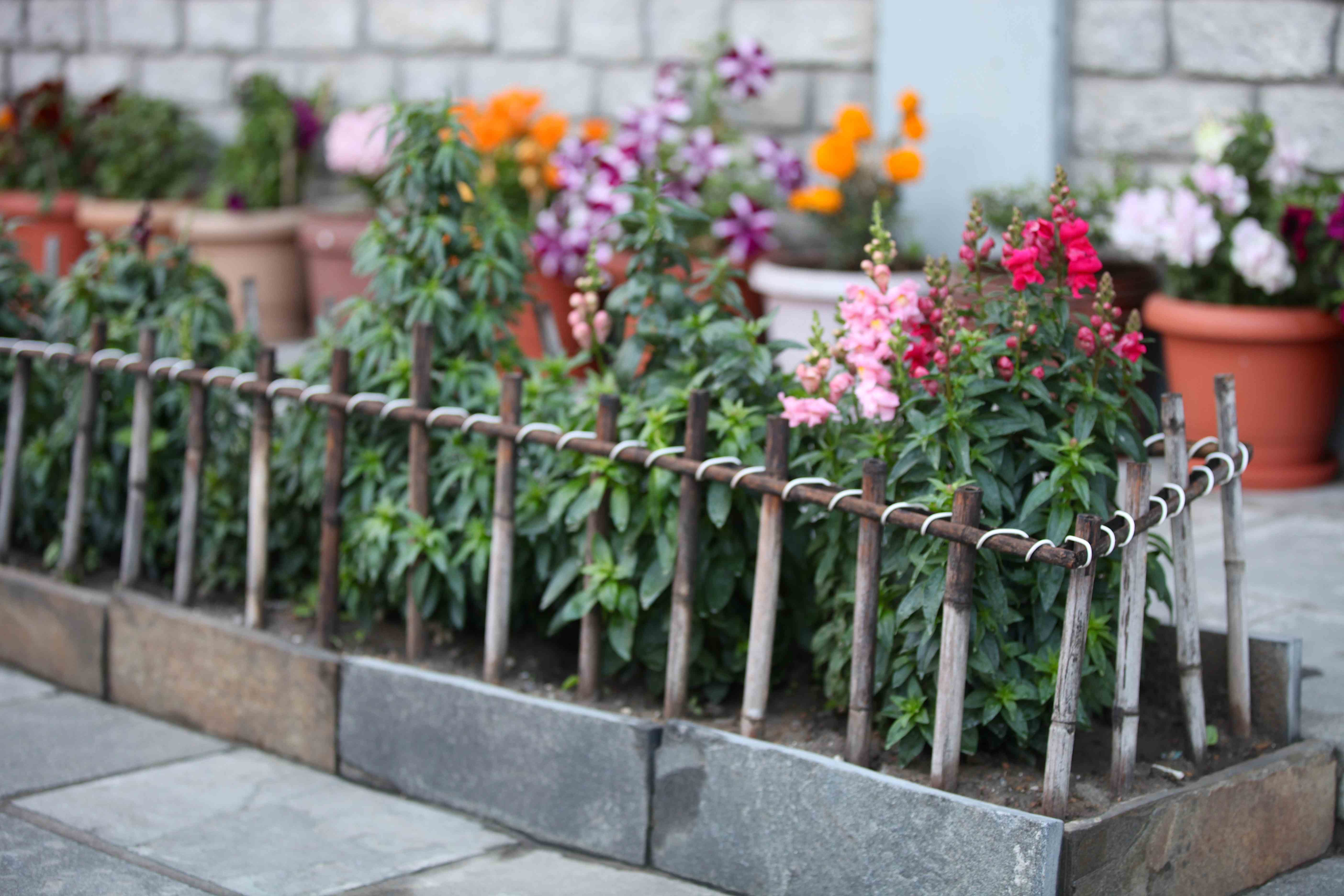
Bamboo + Electrical Wire = Pretty Garden Fence.

This bamboo fence, in Kalopani, Nepal, is one of my favorite garden fences I’ve come across while traveling. It’s a simple construction of bamboo sticks and woven electrical cord to hold the whole structure together. Here, people use what they have at hand to create beauty in an unforgiving alpine environment at 7,500 feet.

The electrical wire serves to hold the fence together.

Several 1-foot-high sticks are placed vertically in the ground about 5 inches apart and a long bamboo stick is split down the middle and placed horizontally across the vertical sticks, all woven together by an old electrical cord tied and knotted at the corner of the fence.

The horizontal piece is split in half.

It’s a simple construction and quite attractive for a high altitude flower garden at the base of Dhaulagiri, the world’s 7th highest mountain.

IMG_6524 © Liesl Clark

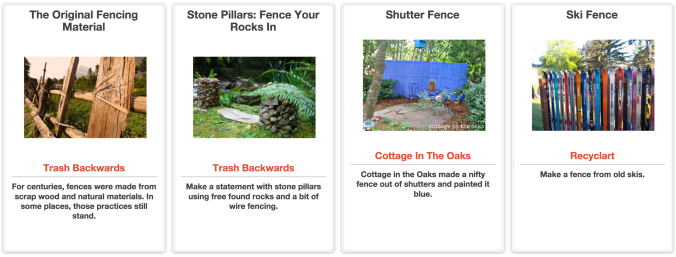
If you’re looking for some more interesting ideas for fencing materials, we might have what you’re looking for in our Trash Backwards app.

What have you used for fencing?

Wine Cork Pot Lid Grips

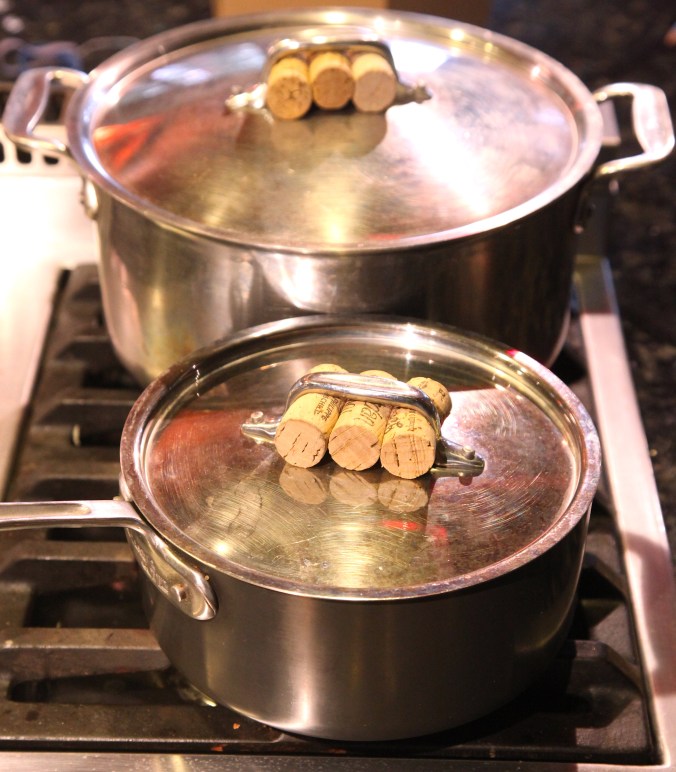
cork potgrippers

No Need for Potholders © Liesl Clark

Wine Cork Pot Lid Grips: Lift off hot pot lids with your fingers! Simple wine cork-stuffed handles mean no need for pot holders around the stove. Cram the corks tightly into the handle of your pot lid and you’ll never need to remove them again.

IMG_1383

Those are my 10-year-old’s fingers, lifting a hot pot. © Liesl Clark

They’re dishwasher and sink-washing safe, too! Smart. Easy.

IMG_1391


Backyard 7 Summits Project: Kitsap County’s Highest Peak

By Cleo Clark-Athans, Grade 4

IMG_475892539-11

Climbing Gold Mountain © Liesl Clark

We did it!

We reached the highest point in our county today. It’s called Gold Mountain and is only 1,687 feet high. It took about an hour and 10 minutes to get to the top. Two miles to the summit, but it was straight up through a thick forest, until we hit a logging road with extraordinary views.

IMG_1327

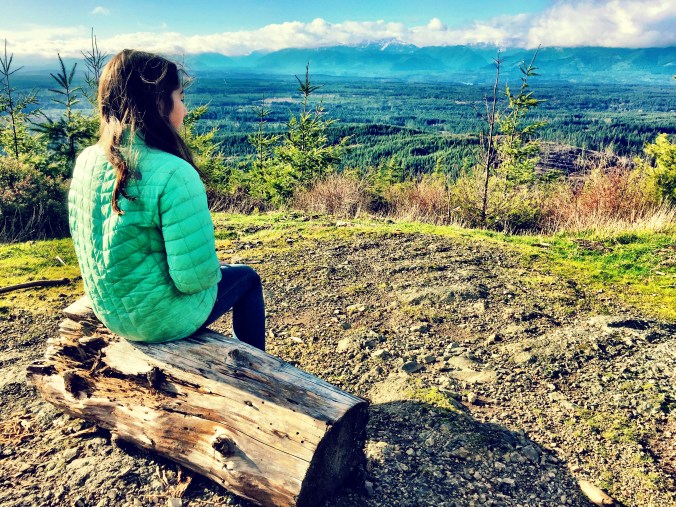
We could see across many lakes and Hood Canal to the Olympic Mountains out on the Peninsula. My brother was happy to get to the top, with sweeping views and high winds.

IMG_1328

Million Dollar View, 50 Miles Wide © Liesl Clark

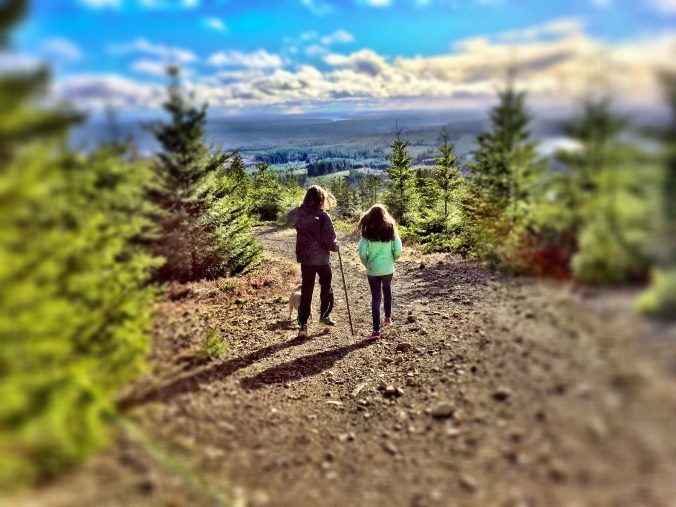
Although our county doesn’t have extremely high peaks, I’m planning to climb all 7 of the highest mountains as part of my Backyard Seven Summits Project, an attempt to get kids outdoors to explore the high points in their own counties.

IMG_1329

Gold Mountain Lets You See From Sea to Summit © Liesl Clark

We’ve done 2 out of 7 summits and they’re all beautiful hikes, in the Blue Hills of Kitsap County. Most people don’t even know about these peaks. They’re hilltops for all of us to get on top of for great expansive views of a luscious green landscape from the sea to the glaciers on the highest points of the Olympic Peninsula.

IMG_1331

Sibling Time Together © Liesl Clark

The journey down is like a dream, easy, and it goes by fast, with so much to see on the horizon miles and miles away. But if you watch your feet there are semi-precious stones to be found on these trails, like agates. We learned this from a man we met on the trail. He also said he saw fresh puma tracks. Hiking gets people outside but it also gets people to talk to each other.

IMG_1325

PNW Whimsey © Liesl Clark

There’s plenty to marvel at when you just get outside. Our dog, Sailor, knows this.

Have you climbed your own seven summits in your neighborhood? If so, please write in the comments below so we can hear about your adventures.

IMG_1324

The Backyard Seven Summits Project © Liesl Clark

Garden Glove Love


Roadside Garden Glove. Photo © Finn Clark

It all started on a bike ride. We kept seeing garden gloves along the side of the road. In fact, we had seen the gloves lying there for weeks and finally decided to pick them up. One by one, over the course of about 2 weeks, we had managed to collect 20 pairs!

I Have Good Garden Glove Karma. Photo © Liesl Clark

We’re an island of avid gardeners, farmers, and a world-famous garden tour called “Bainbridge in Bloom.” Twelve months of gardening weather here on Puget Sound has afforded us 4 seasons of dirt digging. The problem is that the gardeners’ (or perhaps it’s the hired landscapers’) gloves too often end up along the sides of the roads, having fallen from the backs of landscaper’s trucks, farmers’ tractors, or islander’s cars. Being a food-grower myself, I couldn’t just let those gloves rot in the ditches.

Garden Gloves Rain or Shine. Photo © Finn Clark

My children and I have been collecting them: pulling to the side of the road, jumping out of the car, jumping back in, celebrating, for a year now and have 45 pairs plus about 50 singles ready for a mate. Do you have a single garden or work glove awaiting a partner? Don’t throw it out! Send it to us so we can marry it to one we have here because their next life is going to be GOOD.

We have gloves in every color. Photo © Liesl Clark

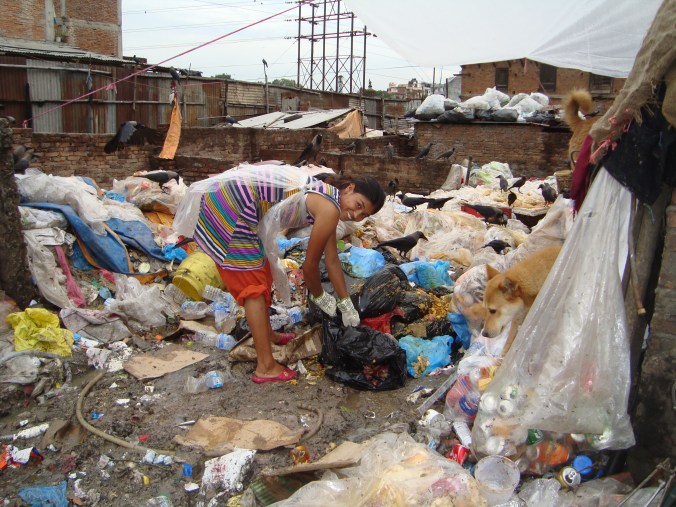
All pairs of gloves we reunite will go to Kathmandu to protect the hands of the rag pickers there. Life as a rag picker is tough, really tough, and many are children in their pre-teens. These kids, and plenty of adults, make a living picking through other people’s trash to compile enough polyethylene plastic or PET plastic bottles to send to India for recycling. It’s a decent living, but the conditions are among the worst on the planet.  We want to help by giving them the garden gloves we’ve found on our streets and in your garden sheds.

Give Garden Gloves or Help in Other Ways to Improve Conditions for the Rag Pickers of Kathmandu. Photo © Liesl Clark

My children and I made a movie about the rag pickers in Kathmandu. If you have a few minutes, this film short will give you a brief look into the work they do:

Most rag pickers have no gloves at all. They pick bare-handed through broken glass and human excrement to find their quarry, and the best protection they can have, in my humble estimation, is for their hands (of course it doesn’t hurt to have a face mask, too.) We’ve seen some rag pickers with just one glove, as that’s all they have.

Packed to the Gills, Ready for Zero Waste Travel

In August, we’ll be headed to Nepal again, to give gloves to Kathmandu’s rag pickers to aid in protecting them from the unsanitary conditions in which they work daily. Over two hundred rag pickers work at the city’s dump some 50 miles from Kathmandu. But countless children pick plastics from the Bagmati River as well as the streets of Kathmandu, and having a glove or two could save a child from infection, disease, and dysentery which comes with the territory.

Trash Day Curbside Pile in Kathmandu, Flattened by Rush-Hour Traffic

Want to help us protect the rag pickers, those moving Kathmandu’s trash backwards into new goods, to help reduce the mountains of garbage in the foothills of the Himalaya? There are 3 things you can do to help:

1) Use our Trash Backwards app and indicate when you’ve done something good. By clicking the “I Did It” button on any individual solution, you show us that you’ve changed your behavior to help reduce waste. These simple clicks that show what you’ve done to reduce, reuse, and recycle provide us with data to indicate whether a social movement like ours that educates through social media can make a difference. Every “I Did It” click means we can do some good, too. It’s a one-for-one correlation between your action at home/in the office and our action worldwide. For every “I Did It” click in our app, we’ll do our own good: We’ll hand out a pair of gloves to a rag picker, we’ll remove batteries from a water source in a village, we’ll collect plastics from rivers and shorelines, we’ll conduct a village waste audit. Every action you do enables us to do our greater good and ultimately find the support to do even more! So, please visit us at TrashBackwards.com and find some solutions to our global waste that you can undo in your own small scale, then hit the “I Did It” button and we’ll do the same. The more you do, the more we’ll do in return.

2) Send us your odd (or pairs of) garden gloves. We’ll likely have a match and can then get them into the hands of someone in need. Please know that the conditions are deplorable for a rag picker. Gloves could save someone from infection and truly make a difference. Does one glove have a hole in the thumb but the other is fine? Send us the good one!

Garden Glove Love

6027 NE Baker Hill Road

Bainbridge Island, WA 98110

3) Simply help fund our efforts to improve the lives of Kathmandu’s rag pickers and kids in higher villages. You can do so by donating much needed funds to the Alex Lowe Charitable Foundation so we can get our duffel bags of gloves (we donate shoes and books too) over to Nepal and remove toxic waste from the highest watersheds in the world while also helping to increase literacy in local villages. As little as $20 can go such a long way in Nepal. We’ve been bringing children’s books by porter, yak, horse, and donkey up to the highest villages in the Himalaya for 7 years now, and have opened 7 children’s libraries called The Magic Yeti Libraries. We bring books up and toxics down. Our target this summer is to remove batteries, CFL light bulbs, and plastics from the rivers, streams, irrigation ditches and water supply of villages between 9,000 and 14,000 feet. We’ll get these toxic materials out of the pristine waters and bring them down to a municipal organization that can dispose of them responsibly. We all live downstream of these waters, but for those who live in the villages nearby, the battery and plastics-laden streams need to be cleaned up as soon as possible.

Garden Glove Love was inspired by England’s Glove Love campaign, a nationwide movement to rescue single gloves and give them a new life on the hands of eager people wanting to help reduce our overall impact on the environment.

Start today with your efforts to reduce your own impact on our planet by doing some good with the stuff you already have in your life. Reduce, reuse, re-gift, repair, and rethink your material assets as you use our Trash Backwards web app and you’ll inevitably help others and our planet, too.

Water Cress Pesto

Feeding my family by way of mid-winter foraging always feels like a triumph. Although there’s little in the garden these days, when we go on hikes on our hill, we find water cress in the places where the springs are running freely. The winter rains have been incessant, so this year the cress is abundant.

IMG_1187

We collect handfuls of it each week and turn it into a spicy pesto the kids love on pasta. It’s a quick dinner for a busy mama to make.

IMG_1124 copy


Water Cress Pesto (a.k.a. Water Cresto)

4 Cloves Garlic

1/2 Cup Walnuts or Pine Nuts

(put the garlic and nuts in your food process or and run it until they’re completely turned into small bits) Add:

1 1/2 – 2 Cups Water Cress, washed

1/4 Cup Olive Oil

1/4-1/2 Cup Parmesan Cheese (in small chunks)

Process the rest of the ingredients together until you have nice green paste. Toss it with your favorite pasta.

IMG_1126 copy

Enjoy!

Zero Waste Shipping: Padded Envelopes & Mailers

Refuse & Reduce: We never buy anything for shipping, like envelopes, bubble-pack mailers, Tyvek pouches, padded envelopes and boxes because we receive so many of them. As a small production company, why buy new ones when plenty come in the door?

“Because they’ll look used and that won’t be professional if you reuse them,” you might say.

Since we’re all about reuse, there’s no problem gussying up a used envelope to resend to a client or partner, especially if we bring attention to the fact that we’ve given it a second life and ask them to reuse it, too. We have no problem reusing boxes for shipping, why not reuse padded envelopes? When I see a corporation reuse an envelope, I try to let them know how cool I think that is. A few weeks ago I received some of my hard drives back from WGBH/NOVA and it came in a box that was reused. It was probably the box I sent it in.

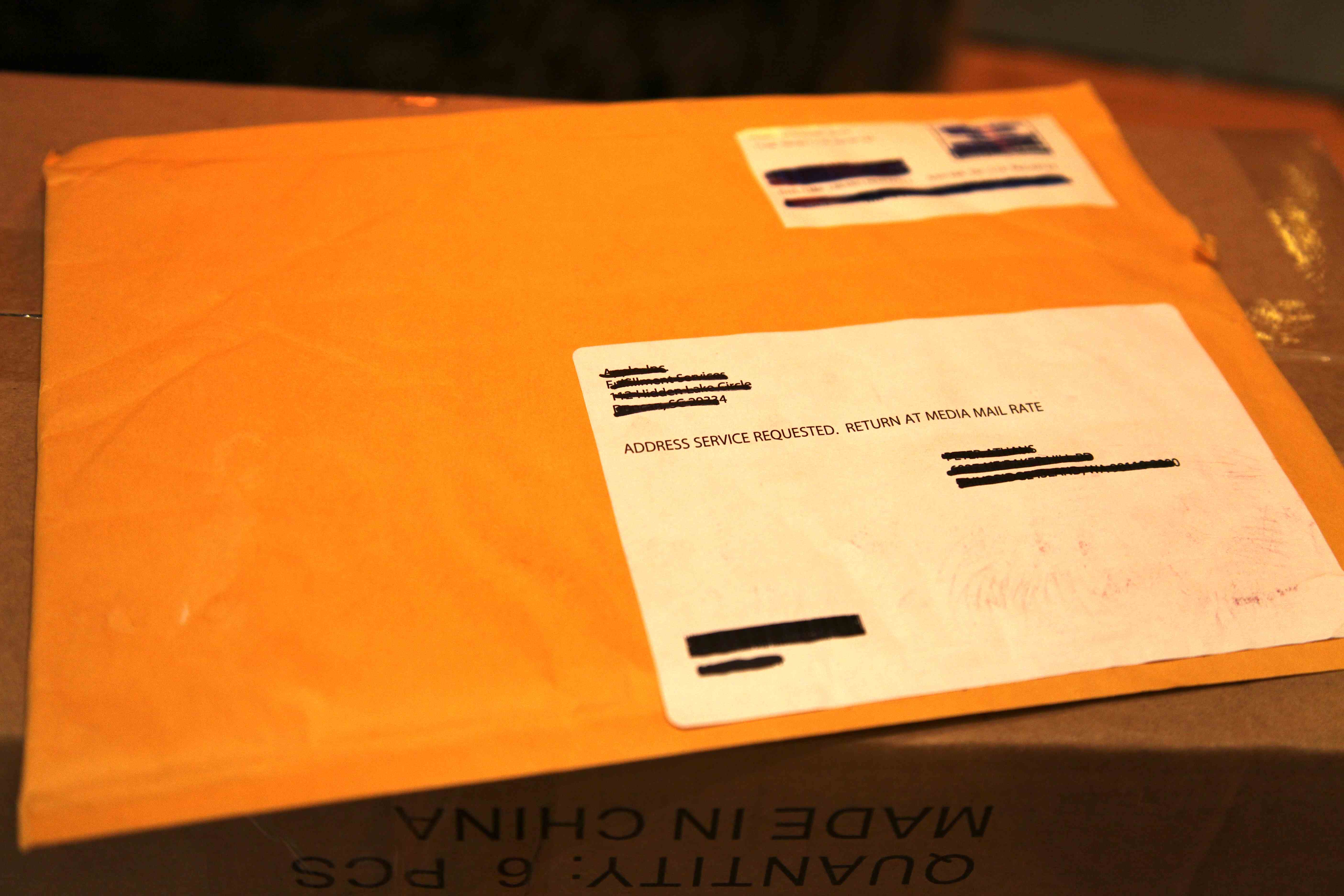
Simply sticking a new address label over the old one doesn’t take much thought. We often use a little piece of scrap paper and some glue or tape to cover over the old address and make a new label. Staples or tape can be used to reseal the mailer.

Share Your Excess Mailers: I save up my mailers so I can share them on my local Buy Nothing group. Neighbors are happy to come and get them, for reuse. Just before Christmas, I was able to offload a pile of padded envelopes to a neighbor who needed them for a company mailing. Using my old mailers definitely saved him some money. I included some blank mailing labels so he could cover up my address, but I often use a Sharpie to black-out the addresses and bar codes on previous mailers.

Don't Buy New! Reuse Your Padded Envelopes.

You can add a small heart to the envelope with the words “Reuse Me” in it to encourage the recipient of your envelope to reuse it, too.

Have Fun and Encourage Others to Reuse

If you are a company that regularly uses padded envelopes for shipping, ask for them in your Buy Nothing group and get the good word out to others that stockpiling them, for sharing, is a good idea, rather then throwing them away.

What about Tyvek plastic envelopes that have logos on them or come from FedEx, yet you want to use the USPS instead? I simply turn them inside out!

A plastic padded envelope can be used both inside and out.

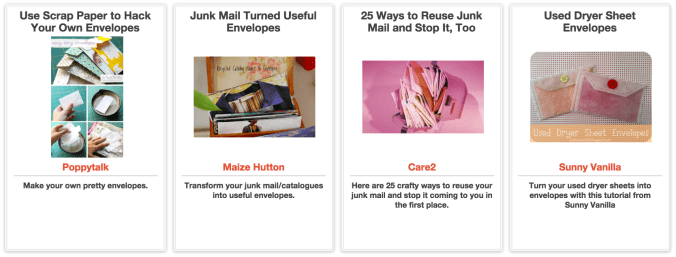
Turn Your Padded Envelope Into Something Cool! Creme de la Craft has a great tutorial for transforming your padded envelope into an ipad case. Simple. Smart.

Recycle Tyvek Plastic Envelopes & Mailers: If you ever have too many to use and can’t offload them, did you know you can recycle Tyvek envelopes through Dupont? For small quantities (less than 25 envelopes/month), turn any Tyvek® envelope inside out, so the unprinted white surface shows on the outside. Stuff the inside-out Tyvek®envelope with other used Tyvek® envelopes for recycling. Address and mail the envelope to: Tyvek® Recycle Attn. Shirley B. Wright 8401 Fort Darling Road Richmond, VA 23237. Easy!

Make Your Own Mailers: If you’ve run out of mailers and no one has them for you on your Buy Nothing Group, make your own using cereal or cracker boxes. Adventures in Fluff has simple instructions on how to make your own paperboard envelope. You’ll wonder why you ever bought them in the first place after making one or 2. And they’re very cool because they send a message of reuse to your mail recipient.

Now your shipping is getting closer to zero waste!

If you’re looking for more ideas on how to make envelopes or reuse those you receive in the mail, please visit our Trash Backwards app where all items in your home and office can be reused, recycled and rethought.

20 Banana Peel Uses

The Miraculous Banana and Its Peel. Photo © Liesl Clark

The Miraculous Banana and Its Peel. Photo © Liesl Clark

The banana peel, like coffee grounds, tea leaves, and orange peels has a lot of beneficial qualities that’ll make you think twice the next time you toss it in the trash. We’ve gathered 20 of the best banana peel uses for you to try:

1) Shoe Polish: Did you know banana peels (on the inside) make a great shoe polish? Just rub it around your shoe and then buff it with a soft cloth.

2) Teeth Whitener: Rub the inside of your banana peel on your teeth to whiten them. Apparently, the manganese, magnesium and potassium helps whiten the enamel of your teeth.

3) Wart Cure: It only takes 1-2 weeks to remove a wart with a banana peel.

4) Itch Soother: Banana peels can help relieve bug bites and poison ivy. It won’t remove the oils that cause the itching but it’ll soothe the bite or rash altogether.

5) Monkey Party: Have a Curious George party and put 30 peels on your deck for the kids to slip around on! (Just kidding.)

6) Silverware Polish: Blend banana peel with water and use on your silver to take the tarnish off with a soft cloth.

7) Meat tenderizer: Some people add a banana peel to their roast and it’ll add just enough moisture to ensure that roast doesn’t get too dry.

8) Splinter Removal: Banana peels help ease splinters out of your skin. Place banana peel on a splinter with athletic tape for a while and then try to ease the splinter out.

9) Aphid Control: Aphids don’t like banana peels. If you bury some around your roses or other plants aphids love (like cauliflower), you’ll deter them from coming around.

10) Rose Food: Here are a few great recipes for feeding your roses with banana peels that are rich in calcium and magnesium, as well as many other trace minerals that your flowers love.

11) Bruise Patrol: Banana peels on the inside, if rubbed on a bruise, will aid in making it disappear.

12) Compost: Banana peels break down pretty quickly and add wonderful nutrients to your soil. Throw them in your compost!

13) Acne: Banana peels rubbed on your acne will help in the acne curing process.

14) Dry Skin Cure: If you have psoriasis, try rubbing the inside of a banana peel on your affected areas twice a day and you’ll see the dry scaly skin dissipate.

15) Banana Boat Campfire Dessert: This recipe will please all who are sitting around the campfire.

16) Hemorrhoid  Cure: Yup, you guessed it. As with acne, banana peels help cure hemorrhoids.

17) Banana Peel Message: Leave a message for your child on their banana peel by pricking out letters with a toothpick, the skin will bruise and there will be a dark brown message for your sweetie by lunchtime.

18) Tomato Plant Fertilizer: Wrap a banana peel around your tomato starts when you plant them in the garden and they’ll enjoy the nutrients from the peel as they grow throughout the summer.

19) Banana Peel Steamed Pork and Rice: Try this recipe out for size.

20) Anti Depressant: Researchers have found that drinking boiled banana peel water (or juicing the peel) can ease depression.

What are you doing with your banana peels?

How Underground Networks Can Outperform Aid Orgs

It was less than a week after the April 25th, 2015 magnitude 7.8 earthquake hit Nepal that we came to realize little-to-no relief had reached villages beyond Kathmandu. Roads were dangerous; But even worse, as time progressed, supplies for temporary shelter for the over 2 million now homeless had dried up. Tents and tarps were sold out in Kathmandu. Foreign governments and aid organizations were being shut down at the airport, their incoming supplies requisitioned by Nepal customs, and much-needed food, tents, tarps, blankets, and medical supplies were sitting on the runway, tied up in a confounding wad of red tape. 
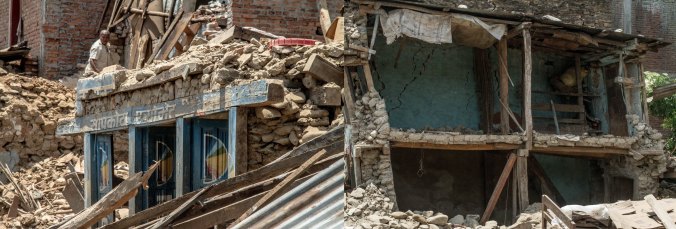
7_Damaged house.anup

© Anup Gurung

Our friends in Nepal were frantic, texting us asking for any means to get materials over to the remote villages. Aid organizations trucking supplies to villages were stopped along the roads by desperate, angry, and hungry people who lived right along the road who also had seen no relief. Supplies were ripped from trucks and middlemen sold them at high prices to anyone who would pay. These were the stories coming out of Nepal.
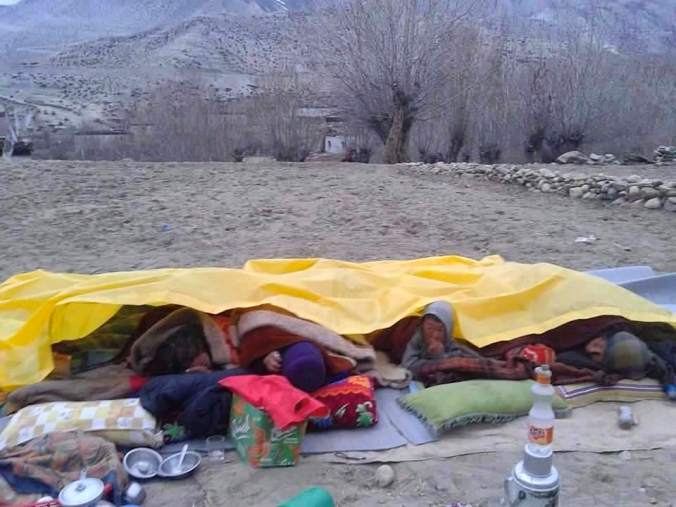
GhillingSleep_DL

Our friends in the Mustang village of Ghiling had no housing. They were surviving below-freezing temperatures living under a tarp as their homes were destroyed.

My mountaineering/photographer friend, Jake Norton, and I immediately set up a Facebook group with a few more friends who could brainstorm together to come up with a solution. We all had experience in Nepal or with disaster relief and we had a unique idea we wanted to test: Could we start a person-to-person underground railroad to bring relief to the blank spots on the media map, the forgotten corners of Nepal where people were in trouble, circumventing customs altogether? Through each of our own personal friendships and connections, we created a network of travelers to Nepal who could carry duffels as excess baggage with them on airlines. As tourists entering the country, they whisked right through customs and our friends, Nepali mountaineers, kayakers, and guides, could then get the supplies and health care up to far flung villages. They were local, knew the terrain well, and could take on any conditions or logistics thrown their way. The idea was bold, would involve a worldwide network, the complicity of some airlines, and some social media hacks to pull it off.

Jonathan's bags_DL

Jonathan Marrs’ luggage, filled with tents, tarps, and medical supplies for Nepal.

Through the help of The Buy Nothing Project, we immediately set to work in the major cities where we have thriving local gift economies. Seattle was our first test: Shelley Schwinn, the project’s coordinating admin, posted to some 500 groups in greater Seattle and through friends who own the Nepali clothing company, Sherpa Adventure Gear, we sent off 22 duffels in a private shipping container they were able to put on Northwest Airlines just as they would a regular clothing shipment to Nepal.
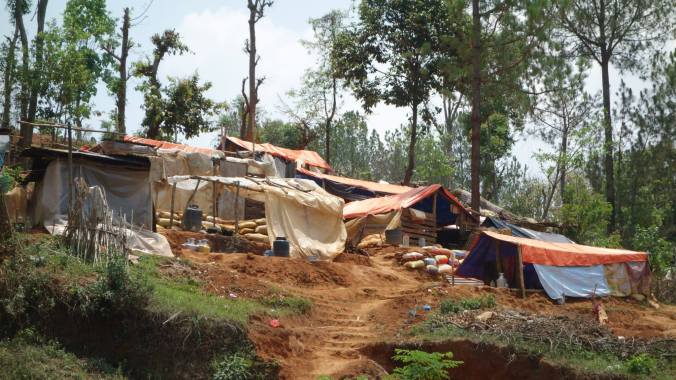
Listi VDC

One tarp per family in Listi, VDC, to keep them dry from monsoonal rains, thanks to Ang Tshering Lama. © Ang Tshering Lama

We then got word out through The Buy Nothing Project and our own social networks in all major cities that we were looking for anyone headed to Nepal, to add a few additional pieces to their luggage. We would take care of the airlines side of the equation, petitioning excess baggage departments and receiving waivers from them for humanitarian relief. United Airlines and Etihad were our most supportive airlines, waiving hundreds of bags through their systems as accompanied excess loads headed to the Himalaya with doctors, climbers, scientists, filmmakers, and relief volunteers. Our requests for donations through social media came with this preamble:

We’re a person-to-person gifting network working to provide temporary shelter for the marginalized people left homeless by the April 25 earthquake in Nepal. We’re a worldwide network of mountaineers, filmmakers, doctors, scientists, and Nepalis creating an underground railroad to the most affected villages, delivering pre-packed duffel bags filled with family-size tents and tarps into the hands of anyone willing to ship them or courier them into Nepal.

Friends in Boulder, Colorado networked in their climbing community for duffels, tents, tarps and medicines needed, while the Buy Nothing groups in San Francisco, Indiana, Ohio, Washington DC, Massachusetts, and New Hampshire rallied to find the same. It was a race against time, matching travelers with fully-packed duffels and a welcoming committee on the Nepal side who would pick them up at the airport, gather the duffels from them, and take them to their destination in Kathmandu.

Krissy Moses, Lindsey MacMillan

Two bags at a time, thanks to Krissy Moses, Lindsey MacMillan, and Sapan Ghimire

Our Facebook group was mission control, the inner workings of our hacker culture we’d set up to circumvent all roadblocks. But new ones came at us every day, and we’d then have to come up with a counter-move, much like Minecraft. We built secret tunnels to get duffels into Nepal in broad daylight.

In the end, in 2 months’ time, our Person 2 Person 4 Nepal network, was able to collect, ship, and deliver 240 duffels, filled with over 700 family-size tents & tarps, 100 solar chargers, blankets, medical supplies, and hundreds of solar lights at little to no cost to us, all before the monsoon arrived. These supplies are valued at over $67,000.

P2P4Ngraphic

We believe this kind of person-to-person worldwide network can make a difference in any disaster and is a viable alternative model to work in parallel with the larger aid agencies on the ground. When a landslide struck Oso, WA The Buy Nothing Project was able to get over 4 tons of food and supplies to the people of Oso, well before the Red Cross arrived. People naturally want to help. Harnessing that rush-to-help through local gift economies and social networks can have a huge impact when organized directly with those affected. Aid organizations always say, “Don’t give things, give money. And, don’t go there yourself.” In our experience, this advice is ill-given, as supplies and food in Nepal were scarce. Bringing the supplies there, in person, was necessary.

31_Thank You.Anup

© Anup Gurung

The individual stories of our Nepal efforts are quite wonderful: United Airlines pilot, Matt Murray for example, volunteered to fly for free as a passenger on his days off to singlehandedly jet 100 duffels of tents and tarps to Nepal.

Matt

United Airlines Pilot, Matt Murray, with his relief duffels

An Everest climber, David Carter, took time off from work in Indiana to fly to Nepal with 2 of his friends, just to courier 100 solar chargers for us. These chargers have been instrumental in helping the people of Rasuwa and the Langtang village survivors in particular. It’s the individual stories that tell a broader narrative of how community-based sharing and gift economy networks can mobilize to make a difference in times of need. We’re using the connectedness we experience through social media to transform our professional and social networks of trust into action on the ground.

14_TakingRiceHome.Anup

Our mountaineer/kayaker friends brought thousands of pounds of rice and supplies up to forgotten villages. ©Anup Gurung

The blue stars on this map below highlight our distribution areas for temporary shelter and life-saving supplies compared to the people most in need, post-earthquake, in Nepal.

Screen Shot 2016-01-26 at 11.14.58 AM

You’ll see the results of this effort in the NOVA documentary airing tomorrow night (Wednesday, January 27th, 2016) at 9pm. You’ll see the local hands-on rescue team of Nepali Nurses and outdoor athletes who took matters into their own hands to bring relief to people in the hinterland. You’ll see volunteer American doctor, Bruce Gardner, bringing simple medical care to those who might need it — wellness checks, follow-through care for those more deeply affected by the earthquake. And you’ll see the utter devastation wrought by a 7.8 earthquake that could have been much worse.

BT0C5522

Dr. Bruce with Seema Tamang, who was buried for 24 hours under the rubble of her home. ©Liesl Clark

We have so many of you to thank. Please watch the film and share this graphic with friends and family as an example of what’s possible, to let them know that people can connect-the-dots to create an international gift economy, a social movement jetting, trucking, and hand-carrying supplies to people in need on the other side of the globe. If we had to do it again, we would, and we’ll keep working to bring what’s needed to our friends, old and new, in Nepal.

Ghiling

My dear friend Karsang finally had a roof over her head, thanks to a caring network of friends in Nepal.
Give Books + Rebuild Libraries = Earthquake Relief

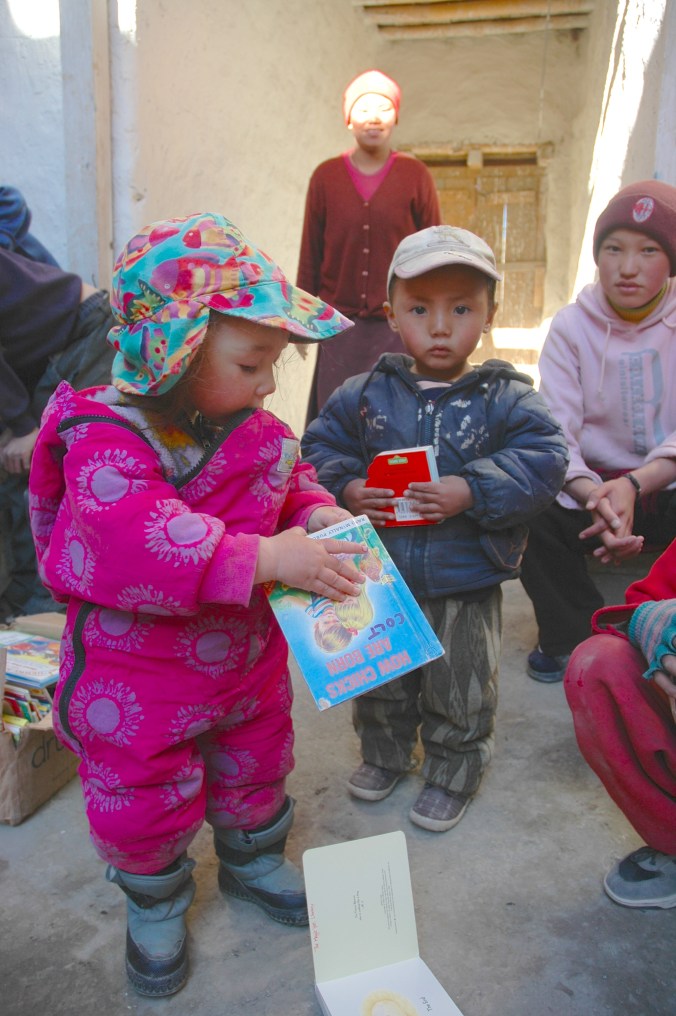
Students at Tsarang's Ani School with books in hand. © Liesl Clark

The girls at Tsarang’s ani school want to thank you deeply for the books you’ve donated to our Magic Yeti Library in their beautiful school. This is a well-loved library and put to use each day. Bringing new boxes to the girls is one of my family’s greatest joys and among the earliest memories for our children, who have collected their own books (and books from friends) and donated them here since they were 18 months-old. The girls at the ani school are such lovely inquisitive students who are in excellent health. Our expedition doctor, Steve Overman, checked them out and found only a few toothaches and common colds. They had many questions for us and couldn’t wait to dive into the new boxes of books.
IMG_7357 © Liesl Clark

Alas, the earthquake that devastated Nepal on April 25th, 2015 took a terrible toll on our Phortse Library in Solukhumbu and devastated the Thame library and school.

Myl Phortse2

Earthquake damage done to the shelves and books in the Phortse Magic Yeti Library.

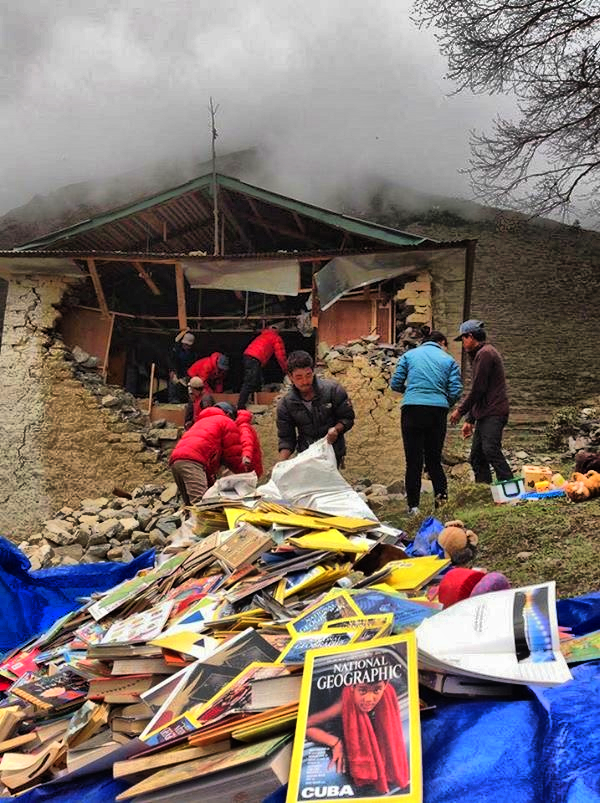
The Phortse building’s walls collapsed, but luckily no one was inside, as the earthquake occurred mid day on Saturday, when the library was closed (the library is open every day before and after school.) The books had to be rescued from the rubble, stored in the nearby school and our friends’ homes for several months until the walls and roof of the community building could be rebuilt.

IMG_5645_DL

Rescue and Recovery of Our Books and Magazines in the Phortse Magic Yeti Library.

Thanks to donations from you, our supporters, friends, and family, and also thanks to a grant from the Simon Family Foundation, the library is now intact and books are back on the shelves!

Phudoma Jenni

Librarian, Phudoma, with The Alex Lowe Charitable Foundation’s director, Jennifer Lowe-Anker, in the rebuilt Phortse library.

Screen Shot 2016-01-25 at 8.57.53 AM

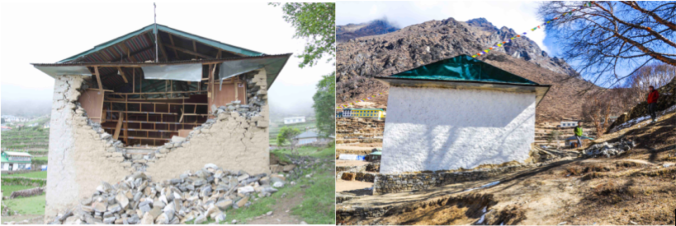
Damaged South Wall: Repaired South Wall!

We deeply appreciate your donations of well-loved children’s books and cash donations through the Alex Lowe Charitable Foundation, enabling the rebuilding of the libraries and the children’s tomes to be read over and over again in Phortse, and our 6 other Magic Yeti Libraries. If you’re interested in helping to bring literacy to our remote village libraries in Mustang and Solukhumbu, please click on the donate button in the lower right hand corner of our Magic Yeti page here.

Checks can go to the Alex Lowe Charitable Foundation (ALCF):

Mailing address:

P.O. Box 6666

Bozeman, MT 59771

And if you’d like to do a book drive at your school or work, we’d love to hear from you and help guide you. Since we no longer have a shipper for books from the US to Nepal, they’ll have to be sent, media rate, directly to our friend and agent, Jiban Ghimire, in Nepal:

Shangri-la Nepal

GPO 6802, Panchakanya Chowk

Kapan 03, Kathmandu, Nepal

http://www.shangrilanepal.com

T+[977 1] 481 0373, 481 0387

F +977 1 481 1317

M +977 985 103 5161

Skype: trekandclimb

Luckily, in the image below, in the second largest village in Upper Mustang that boasts the winter palace of the historic Mustang Kings, the girls and the library were all safe from the rocking of the earthquake.

Magic Yeti Book Delivery Day in Tsarang © Liesl Clark

If you haven’t had a chance to help us out in person, we welcome volunteers joining us on our trips to Nepal for our library projects and we can always use cash contributions to keep the books moving uphill to the rooftop of the world. We’ve seen such improvement in students’ performance when they have a small library of books at their fingertips, books that help answer their questions about the world, or enable them to learn the English language through stories written for their age levels.  Dual language books written in their own language (Nepalese) are extremely popular, too. We set aside a good part of our budget to purchase local Nepali/English books from Room to Read, based in Kathmandu.

DSC_0747

Our 18-month-old daughter, Cleo, donating some of her favorite books to the students at the Tsarang ani school. © Liesl Clark

Thank you for your help in bringing literacy, and some of the greatest stories around the world, to the villages of Tsarang, Phortse, Khumjung, Thame, Kagbeni, Chhoser, and Samdzong!

MYLsign1.jpg