DIY Stone Pillars & Planters

We simply have too many rocks in our soil. When we harvest potatoes, there are many false alarms on harvest day as perfect potato-shaped rocks are  procured from the soil rather than spuds. So when we cleared a new spot to add planting space to our veggie garden this summer, we had a pile of waste as a result — rocks. What to do with the rock pile? I thought about giving them away in our local Buy Nothing group (yes, I’ve seen people post that they want rocks on our neighborhood Buy Nothing group), but then the hoarder in me took over and we chose to make stone pillars instead. It’s quite easy, but there are a few tricks you’ll need to know about to pull this artistic gardenscaping off well.

First, you’ll need chicken wire. Make sure your chicken wire holes are not too wide for the size of your rocks.

1) You’ll need to cut a rectangle of chicken wire out, about 2.5 to 3 feet high (depending on how high you want your pillars to be) by 4 to 5 feet wide. Wrap the wire around, into a cylindrical shape and hook it together with the wire ends you’ve created in your wire-cutting process. Make sure you leave no wire ends poking out anywhere as those could be a hazard for passers-by. You now have a cylinder cage for your rocks.

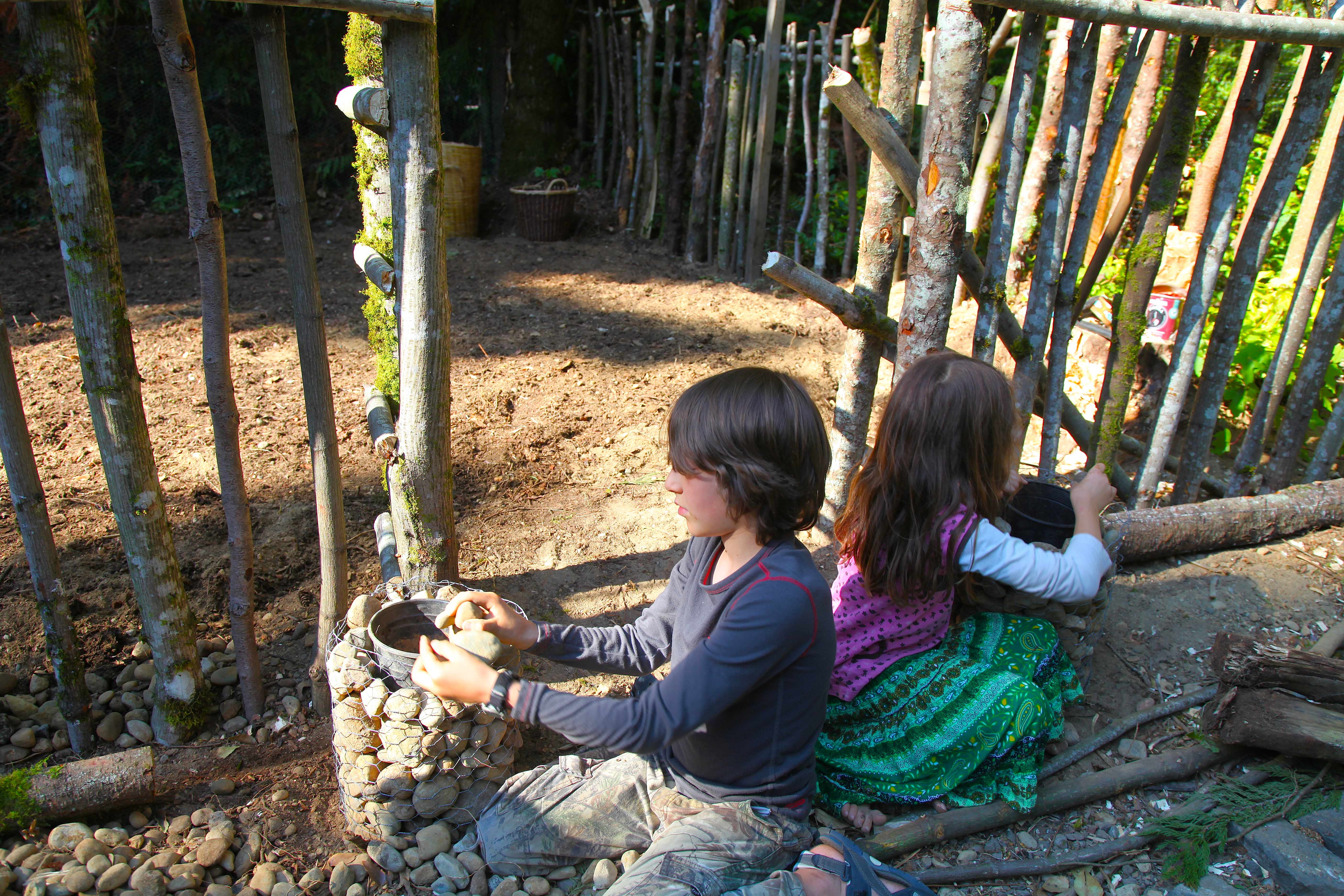
2) Then, start filling your chicken wire cylinder with rocks! The trick is to place your largest spuds, I mean stones, on the outside of the wire so they block the smaller ones from falling through the mesh. My son and daughter love filling the pillars up with the stones they bring in on their wheelbarrows.

3) Fill until your cylinder is full, brimming with stones to give a pretty fieldstone pillar affect to your favorite spaces.

Now, Make Stone Pillar Planters!

We love our pillars around the pond so much, and found we had plenty more rocks to deal with, so we created 2 more pillars with the added feature of a planter inside. Here’s how:

Fill your stones only 1/3 of the way up your chicken wire cylinder. Then, add a gallon or half gallon plastic or clay pot inside so the pot’s rim is flush with the top of the chicken wire cylinder.

Fill in around the outside edges of the pot with stones and completely cover up the pot from the outside, all the way to the rim of the pillar.

Then, plant your favorite flower in the pot as you would any planter!

Chive Salsa

In which chives and mint are combined to make a stunning salsa.

Chives and Mint Work Together For Salsa

I’m not one to follow recipes to the letter so feel free to add and subtract as you see fit for your tastebuds.

We have a lot of chives in the garden at the moment and since this is the time for gathering and preparing foods the year ahead, we make salsas, jams, and pestos like crazy around here throughout the spring and summer. This salsa is savory with a hint of mint to give a fresh taste in place of tomatoes which take their sweet time to make an appearance around here. This green salsa-like paste goes well with quesadillas, grilled fish, and burritos.

Start with a bunch of chilves from the garden.

1 bunch chives

6-8 fresh mint leaves

1 garlic scape (or clove of garlic)

1/2 bunch cilantro (about a handful (I use stems, too, but that’s up to you))

1 jalapeno pepper

3/4 teaspoon sea salt

2 Tablespoons water

Roast your pepper in the oven until it’s blackened or do it over the stove. Sweat your pepper for 20 minutes or so in a jar or paper bag, then remove the stem and seeds. I roast mine on my camp stove toaster that we use for our off-the-grid toast.

Roasting a pepper on my camp stove toaster (I love this thing.)

Throw everything in your Cuisinart or food processor and let it rip until the salsa looks like salsa. If you don’t have a food processor, using a mortar and pestle works perfectly, simply add the water last. I use a rock salt sea salt and grind it in the mortar and pestle as it tastes so wonderful that way!

I grind my own sea salt in a heavy mortar and pestle on the floor.

If you amend this recipe with your own additions or subtractions, please let me know what works for you in the comments below.

8 Rhubarb Uses

Rhubarb has a 4,700-year-old history, its origins coming from a couple of remote regions in Tibet. I’ve simply known rhubarb as a weird-looking sour stalk with an enormous leaf that makes its presence known in many North American gardens around Mother’s Day when we bake our family favorite: strawberry rhubarb pie. As far as fruit pies are concerned, nothing compares.

Strawberry rhubarb pie. © Liesl Clark

Is rhubarb a fruit or a vegetable? It’s actually a veggie, but in this country it took a court case to establish rhubarb officially as a fruit. According to Wikipedia, “Rhubarb is usually considered to be a  vegetable; however, in the United States, a New York court decided in 1947 that since it was used in the United States as a fruit, it was to be counted as a fruit for the purposes of regulations and duties.”

This year's rhubarb is, well, GIANT. © Liesl Clark

And it’s a versatile “fruit” at that. Aside from dessert (and using it as an umbrella), what else can you do with this weird plant?

1) Put those leaves in your compost. They’ll break down quickly.

2) Hair Dye: Rhubarb root and leaves can be used for hair dye. One recipe here will give you a pink look, the other a beautiful brown.

3) Pot Cleaner: If you want to give your pots an added shine, use rhubarb leaves and the stalk, too. The high oxalic acid content in the leaves renders them toxic, so take care to not ingest them. But they’re fine to handle and use on your pots.

IMG_5112

4) Insecticide: The rhubarb leaf is quite toxic. Even insects steer clear of it. Here are 2 recipes to keep your plants bug free.

Use rhubarb leaves as insecticide. © Liesl Clark

5) Juice: Try your hand at making rhubarb shrub. What? Shrub. It’s an American classic. And it’s bubbly and tasty. You’ll see.

6) Make a rhubarb liquor! I just chop up my extra rhubarb and put it in a jar with about a cup or so of added sugar and some vodka. Cover it for at least a month, shake it every few days. The longer you let it infuse with rhubarb flavor, the better. You’ll end up with a pink and yummy sweet and sour hooch for your favorite martini.

IMG_2385

Drink only a drop at a time. This rhubarb hooch is strong!

7) Juice it! I can vouch for the fact that a few tablespoons of fresh rhubarb juice, mixed with carrot juice, orange juice and pomegranate juice is absolutely amazing.

IMG_2334

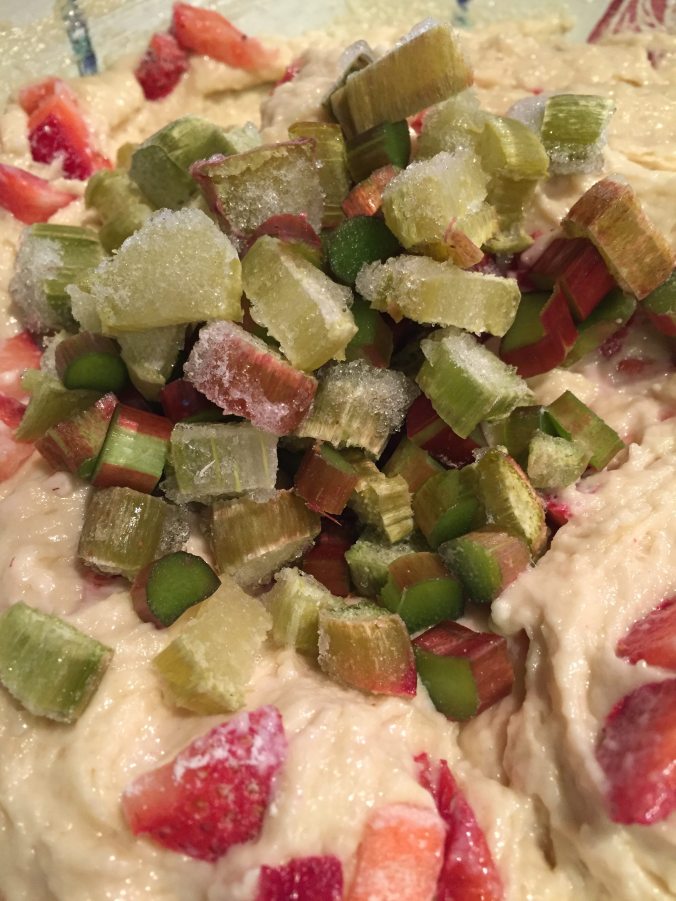
Strawberry rhubarb yogurt muffins, Photo: Liesl Clark

8) Just keep it on hand, chopped up and in the freezer, for all of your baking needs. We throw bits of in all of our muffins throughout the year.

IMG_2325

That’s ice, not sugar, on our stash of frozen rhubarb.

What rhubarb uses can you add?

25 Trellises From Your Trash

Trellises are about as easy to come by as planters. Almost anything that’s upright and has a few arm-like features can be climbed upon by plants. This list will definitely get you thinking about what you can place in your garden for vertical fun:

1) Sticks are the original trellis. If you have sticks available, place them in a tripod-like structure, like a tipi, or if your sticks have many branches, just sink one stick into the ground with many branches for your peas or other veggies to climb upon.

A Stick Trellis for Peas

2) Bike Trellis: Line up a few bikes, or bike parts, and you have a colorful trellis for your plants. Imagine peas growing on this cute bike fence…

A Bike Fence in Paonia.

3) Patio Umbrella Trellis: A broken patio umbrella can have a second life as a trellis. I have one in my garden now.

A Broken Patio Umbrella Turned Trellis. Photo © Liesl Clark

4) Bamboo and String Trellis: For your more delicate vines a bamboo frame for string is a beautiful trellis.

5) Tipi Trellis: With some long sticks, you can make a tipi trellis that serves to hold up your veggies and vines while providing a great green space for the kids.

6) Wagon Wheel Trellis: Wagon wheels make pretty trellises for climbing roses.

7) Old Window Frame with Chicken Wire: Use an old frame as a trellis with chicken wire attached.

8) Step Ladder Trellis: An old step ladder is an easy trellis to set up.

9) Bike Wheel Trellis: The photo here says it all. It’s a bike wheel totem trellis.

9) Wooden Coat Hanger Trellis: With an accordion-style wooden coat hanger, a few pencils and a paint stirrer, you’ll have a trellis.

10) Screen Door Trellis: Like the old window frame, an old screen door frame works beautifully as a trellis against your house.

11) Ski Trellis: Use skis to set up a trellis for your raspberries.

12) Bookshelf Trellis: An interesting book shelf partially buried in the dirt could make a nice trellis.

13) Sawhorse Trellis: A sawhorse or 2 can make an instant garden trellis.

14) Old Chair Trellis: Use an old wooden chair for a trellis.

15) Stretch of Picket Fence Trellis: If you have a length of picket fence, try using that as a trellis.

16) Rain Pipe Trellis: Our drain pipe on our house is serving as a trellis, and the clapboards, too. Some plants can climb anything.

Rain Pipe Trellis

17) Fence Trellis: Just use a section of your fence to allow a flowering climber, like clematis, take over.

A section of our garden fence is a clematis trellis.

18) Chicken Wire Trellis: Don’t think I need to explain that one.

19) Ladder Trellis: An old ladder can hold up grape vines. You can add some bright paint to give it some pizazz.

20) Barbed Wire Trellis: If you’re handy like this Etsy artist, try making a barbed wire trellis. They’re beautiful.

20-25) Read our original post on DIY trellises for 5 more ideas including a headboard trellis, a baby crib trellis, and innovative stick trellises.


Patio Umbrella Pea Trellis

Trellises can be made from just about anything with a little height and some expansiveness. When a patio umbrella broke in half recently due to high winds, I saw a nice pea trellis-in-the-making.

A Broken Patio Umbrella Turned Trellis. Photo © Liesl Clark

I couldn’t wait to get these images out because I’m excited about this garden hack, so you have to use your imagination. OK, don’t laugh, the peas are just sprouting but there are signs of promise to come.

Just Sproutin'. Peas are reaching toward their patio umbrella trellis.

The next time you have a patio umbrella that breaks in half, save the inner wooden part for a pea trellis in your garden. Take the canvas off and you’ll see that what remains is the perfect shape, octopod-like, that will serve you for many years. If you want to see how it’ll look with a little more vegetative matter around it, aristonorganic has a great pic to give you some perspective. I think I’ll paint mine a bright red with some leftover paint for some added garden color.

A broken patio umbrella soon to be a pea trellis.

Oh, and if you’re wondering what to do with the fabric of your umbrella, sun-drenched as it is, take it to your nearest The North Face store for recycling through their Clothes the Loop program. They’ll take all of your textiles and shoes for reuse and recycling. Don’t hesitate, because there’s a store discount waiting for you in exchange for your used clothing or textiles.

But I have to show you something pretty incredible. My friend, Michelle, is an extremely talented seamstress. She took one of my worn out patio umbrellas and turned the fabric into a post apocalyptic recycled outfit for her daughter. Seriously! It’s so cool, you have to check this reuse out! 

Reusing Pickle Juice

We love our Claussen pickles (they’re one of the few commercial brands of food we buy) and for years I’ve regretfully poured the pickle juice out, until my passion for reuse got the better of me and we did an experiment.

Claussen Kosher Dill Pickle Juice, Sans Pickles. Photo © Liesl Clark

We sliced some beautiful spanish onion very thinly and threw it in the pickle juice sans pickles. A few hours later, the pickled onions were perfect! We’ve been enjoying them ever since. They go nicely on a salad, in guacamole, in tuna salad sandwiches and would likely be perfect for hamburgers and hot dogs. My children eat them straight out of the jar.

Thinly sliced Spanish onion is perfect for pickling. Photo © Liesl Clark

I did a little research across several discussion boards, to make sure reusing the juice is okay, and here’s what I learned: You can definitely reuse the juice to pickle fresh or blanched veggies in your refrigerator. Some people expressed concern about the health risks in reusing pickle juice for a new stash of pickled somethings. But almost all sites concluded that you should simply use your best judgement. Many admitted even drinking the stuff. Perusing the web showed me that there are pickle  juice-reusers out there who have been doing it for years. With good instincts and taste buds, and as long as you only reuse the pickle juice for short-term pickling in the refrigerator (no more than a couple of weeks), I think your re-pickles will be worth the risk.

Pickled onion. Yum. Photo © Liesl Clark

Some people add a teaspoon of kosher salt and another of distilled white vinegar to the jar to ensure a strong brine.

We’ve even started pickling our fresh-laid (hard boiled) eggs in there for a delicious lunch snack for the kids when cucumbers aren’t in season. Vegetables to definitely try are: Green tomatoes, green beans, cucumbers, cauliflower, and mushrooms (very short term pickling). I’d like to also try a kimchi experiment with cabbage and carrots and use the pickle juice when I’m brining my favorite kimchi.

Of course, the one down-side to Claussen pickles is that they’re not entirely plastic-free. There’s that little plastic neck thing that corporate food tends to have around it to prove that no one has tampered with the glass jar. Local organic pickles don’t have those annoying plastic sealers and most of us are used to hearing that “pop” when a jar of safely-canned food is opened. You can always make your own pickles. We do, when they’re in season, and we have a great refrigerator pickle recipe for you here.

Organic Homemade Refrigerator Pickles. Photo © Liesl Clark

Other pickle juice reuse ideas that I’ve discovered?

1) I found one reference online that said you can clean your copper pots with pickle juice. Just dip your sponge in the juice and polish away!

2) Make a salad dressing using your pickle juice.

3) Try your hand at Polish pickle rye bread.

4) Pickletinis: Mix pickle juice with a dash of vodka or gin. I dare you to try one. Or, just do a pickleback shot: One shot of Irish whiskey and one shot of pickle juice.

5) Some extreme athletes have claimed that pickle juice helps them fight dehydration and cramping.

6) Fight colds with your pickle juice! Here are some words from a reader: “When my throat starts getting scratchy and I can tell I’m coming down with a sore throat, I take a big swig of pickle juice, and another in a few hours if need be. Not sure why, but it never fails to wipe out that nasty sore throat before it takes hold.”

Do you have any pickle juice reuses to share? Please do in the comments below!

Dust to Dust: Closing The Loop With Ceramics

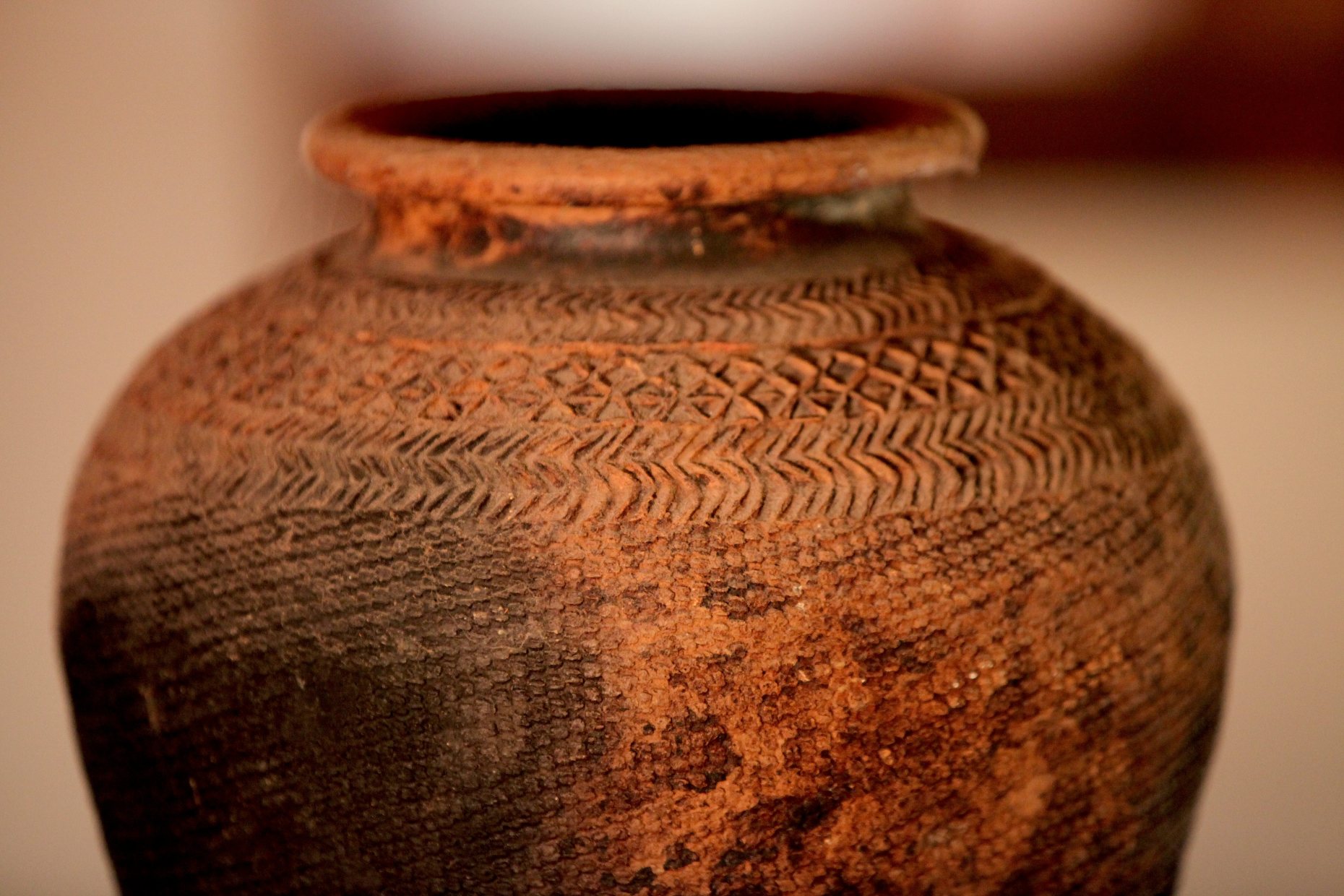
Antique Ceramic Collected at the Beginning of My Ceramics Phase. Photo © Liesl Clark

I have a thing about earthen hand-made ceramics. They’re beguiling. Especially the ones made before the (pottery) wheel, with their human thumb-prints inside a perfect sphere. I’ve been collecting them, along with wheel-thrown pots from exotic locales, for years.

This one's from Kitale, Kenya, on the border with Uganda. I acquired it when I made a film about the mountain elephants there. Photo © Liesl Clark

But more recently, we’ve had some losses with this highly impermanent material. I fully understand why ancient people found ceramics of such use. They were sustainable, made from a renewable resource — the clays of our Earth. So, when one broke or became worn, it wasn’t a big deal. You could always get another.

IMG_2431 Photo © Liesl Clark

But the really old pots, today, are either well-loved or have value. Here’s our story:

It was a dark and stormy night. The wind moaned through the windows, but then a bang happend inside the house that caused us to shudder in our beds. It wasn’t from the tree-branch-driven tumult outside, but from some lurking creature on the inside.

Within seconds the gig was up when we heard a “meow” and I knew our furball had done some terrible deed.

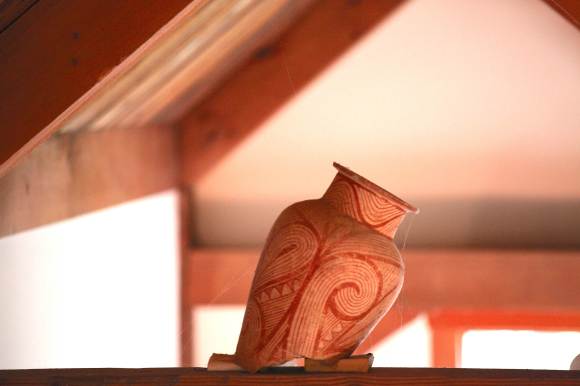
True to her mischievous ways, Willa had knocked a very old pot from one of our ceiling beams. It was a pot that I had brought back from Thailand when I was in my twenties. It was made in Burma and the patterns on it were stunning. Its twin still sits up on a beam, surely tempting our vixen.

Ancient Pots on Wooden Beams. Only Safe Place in the House. Until Willa. Photo © Liesl Clark

Why do I have old clay pots on our beams? Their earthy colors and feminine curves feel like a good combination with the hand-hewn beams from first-growth douglas fir recycled from Seattle’s oldest piers. With children and pets in this house, the 35-foot-high beams were the only place I could think to store the fragile pots out of the way of balls, feet, tails, claws, spills. Who knew that the cat could get up so high and push a pot from its perch?
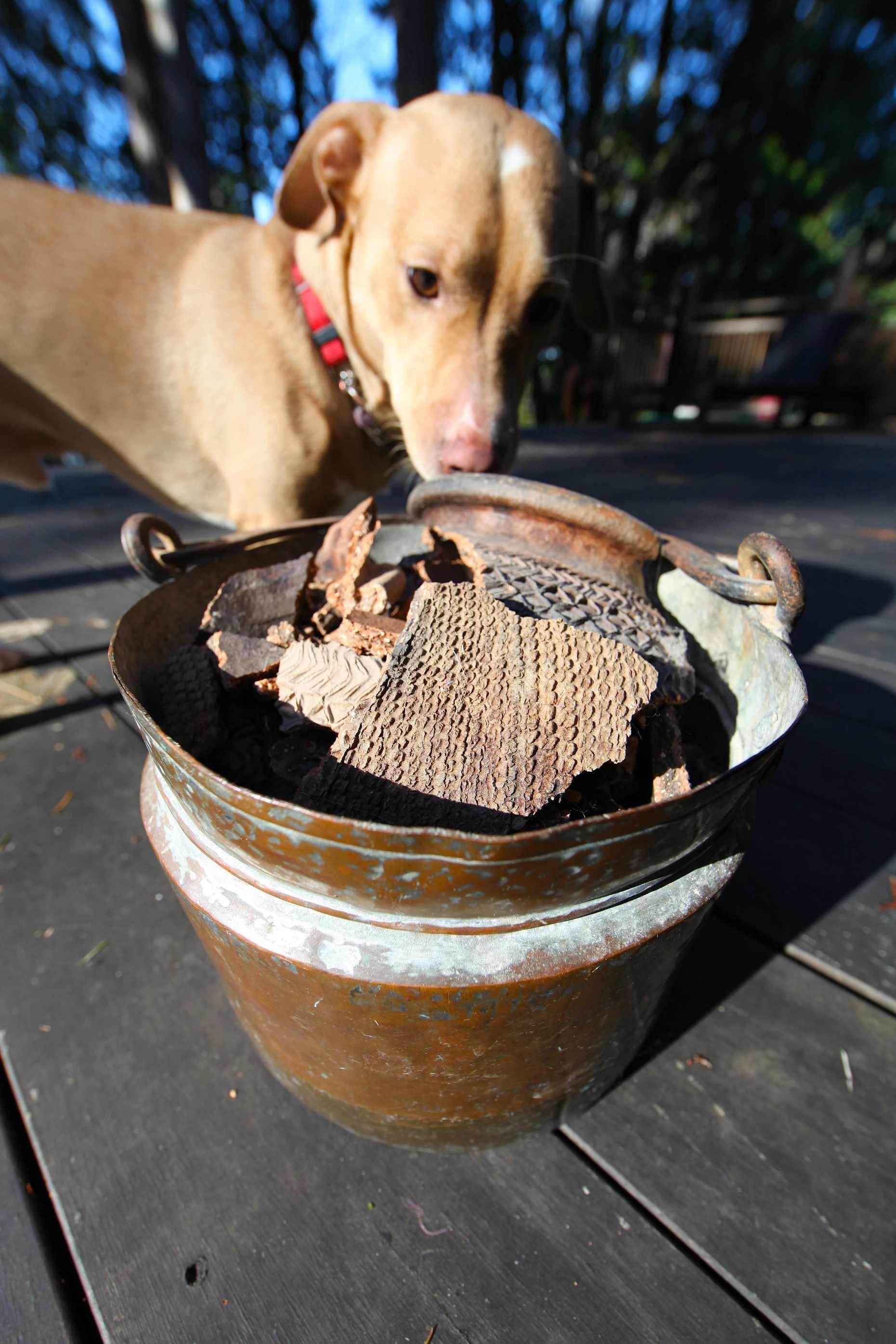
The Burmese Pot Turned Potshards. Photo © Liesl Clark

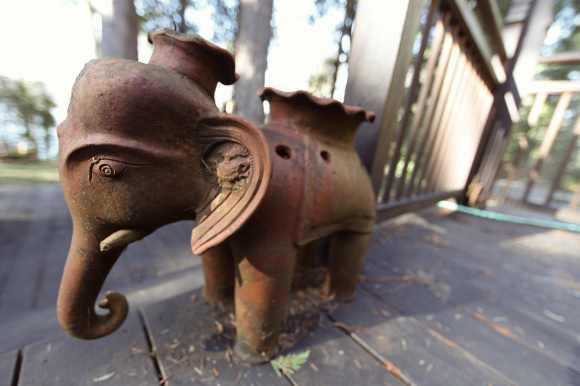
Then, a week later, Willa the cat jumped onto a terra cotta elephant we had brought back from Nepal. This lovely strawberry planter was outside on our deck and somehow she managed to smash it to pieces.
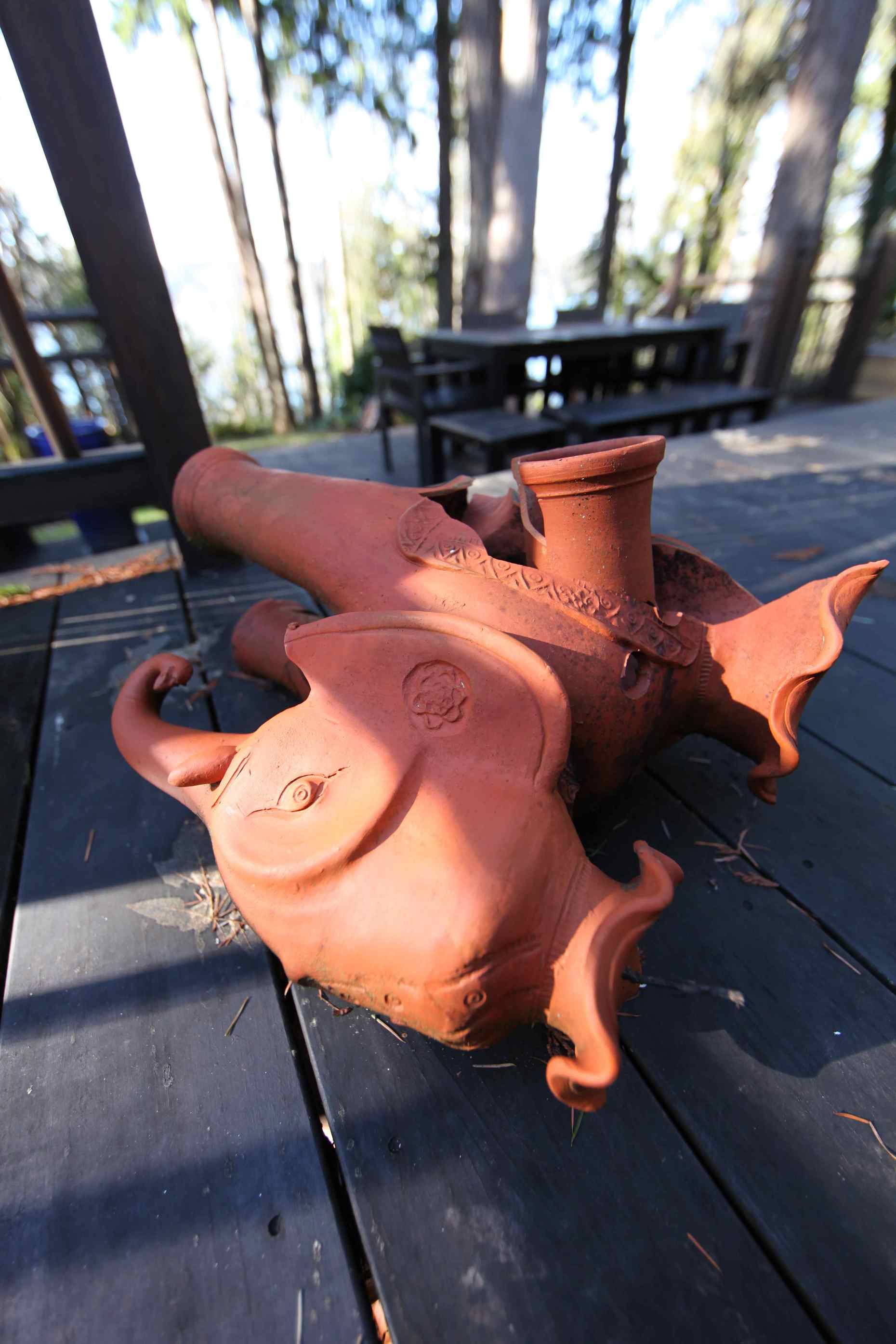
Broken Terra Cotta Elephant. Photo © Liesl Clark

Here is it's twin. Photo © Liesl Clark

I’m losing patience with our whiskered she-devil.

She's Not Very Buddha-like. See The Beams Way Up High? Photo @ Liesl Clark

And now I have a new waste stream to deal with: Broken terra cotta pots.

What to do? A couple days of research yielded some decent options:

Drainage: Break up your pots and use as drainage under eaves of your house to encourage draining the rainwater away from the house. You can also break up the pieces to use as drainage in the bottom of large pots. The terra cotta actually absorbs a good amount of water, aiding in the drainage process wicking water away from the source but also absorbing some for plants above if they’re deep inside a pot.

Garden Bed Edging: Partially buried pieces of terra cotta pots can make a nice garden border or edging, or a feature unto itself in your flower bed.

IMG_2266

This dragon, on the edge of a broken pot likes to eat dirt.

Plug Up Holes in Your Chicken Yard: Our chicken yard needs some repair, especially in the places where the chickens have dug holes along the fence. We use broken terra cotta pieces to repair these holes to ensure digging raccoons, mink, and rats don’t get in. Yes, I said rats. They crawl through holes they make and then snuggle up in the shredded paper bedding underneath their nest boxes.

Broken terra cotta pots plug up holes in our chicken yard to keep the vermin away. Photo © Liesl Clark

Buried Pot Whimsy: Half bury a broken pot and add a plant inside to give off the effect of an overturned pot buried over time with your pretty perennial taking over. It’s a cool effect, especially with succulents. I think I’ll half-bury our elephant so it looks like it’s clawing its way out from the depths of the Earth.

Make a Fairy Garden: Broken pots can be reassembled into a little world for miniatures.

Make Ceramic Mosaic Pieces: Potshards and any broken ceramics, like dishes and mugs, can be the ingredients for lovely mosaics used in garden stepping stones, large pots, or even furniture.

Our local mosaic artist, Gillian Allard, collects her ceramics from yard sales, and large rummage sales like our Rotary Auction. She teaches classes on mosaics, so she’s always looking. In addition to ceramics and tiles, Gillian incorporates broken glass, buttons, jewelry and beads into her mosaics. I plan on giving her a broken mirror (cat did that one, too) that she’ll surely use. So, if you have broken ceramics, do find a local mosaic artist to pass them on to. Or, offer them up on your local Buy Nothing group.

Blue Daisy Stepping Stone:  From a broken serving platter and gems purchased at the Rotary Auction. Photo © Gillian Allard

The Zero Waste Institute has in interesting take on ceramics I tend to agree with: They came from the Earth so why not simply return them to earth? They suggest grinding them down to a powder and then reusing that powder to make more ceramics. Makes good sense. We should have community ceramics-grinding mills so we could fully close the loop and make new ceramics from old ones.

IMG_2275 Photo © Liesl Clark

These little ceramic deities sit under one of our apple trees.

I think I’ll do that with my old Burmese pot, unless anyone can give me a better reuse. Dust to dust, right? Send it back to the Earth. And perhaps the kids and I can have a little ceremony when we do it, celebrate the passing of a beautiful hand-made pot made from the earth half way around the Earth as we distribute its dust throughout the forest whose rich green could certainly absorb the minerals and clays used in the old pot.

Chickens and ceramics go well together on our property. Photo © Liesl Clark

A landscaper friend of ours says we should save some of the ground-up clay for our compost bin and gardens. It’s fine, he says, to add it to our soil, especially the sandy and loamy areas.

If you add a little chicken poop to your clay soil, all's well. That's why I like ceramics around my chicken compound. Photo © Liesl Clark

But more importantly, we’ll save a few select pieces of our Burmese pot for our sacred tree, as mementos. Sacred tree? Yes, everyone should have a sacred tree on their land.

Meet our sacred tree, where ceramic offerings are made.  Photo © Liesl Clark

It’s a tree of your choosing that’s important or sacred to you for any reason. Maybe it’s in a central part of your property, at the heart of your land. Or maybe it’s just a cool-looking tree, with all sorts of nooks and crannies for you and your children to place lovely offerings. Our tree is both central (2 trees, a madrona and a douglas fir, growing from one spot) and cool-looking. Sometimes we light butter lamps at its base at night, but mostly we place ancient salegrams and special broken and found ceramics at the base.

The kids love searching for the ceramics throughout the seasons to see how the tree is enveloping into its mass the special deities we’ve planted there.

Ganesh, now enveloped in a douglas fir. Photo © Liesl Clark

IMG_2288 Photo © Liesl Clark

Not too long ago, ceramics were one of the only forms of waste left behind by a community or indeed an entire civilization. My husband, 2 children and I spend a month each year in Nepal filming, exploring remote cliff caves, and searching for the ceramics of an ancient people that were among the first to settle permanently in the Himalaya. Their broken ceramics, tiny shards we find in open fields that would’ve once been their settlements, are the first clue we search for: their trash, among the only remaining evidence of a people long gone. These are undiscovered cultures that thrived in the Himalaya 3,000 years ago, and all that remains are their ceramics, their metal implements, gold and silver funerary masks, their glass and stone beads, wooden coffins, silk, and their bones. That’s it! And their funerary pots, made of a dark clay, are stunning.

3000 year old funerary pots recovered from caves in Mustang, Nepal. Photo © Pete Athans

3000 year old ceramic pots found in the caves of Mustang. Photo © Liesl Clark


When you gain an appreciation for mini masks made of earth, you put them everywhere. They connect you with the past and maybe even the future when your clay object will be a part of the earth again.

In Kathmandu, you can still buy yogurt in clay pots. It’s beautiful and delicious yogurt, made and sold in disposable ceramic pots. The idea is that the clays are from the valley, so you can simply dispose of the pots outside your door (which many people do) or with your organics in the compost. I think at one time the pots were reused. These beautiful ceramic pots sure beat plastic. We save them and bring many home along with the little terra cotta wax tea lights that cost pennies each. The little pots replace plastic pots in our children’s playhouses.

Now, after dreaming with me in ceramics, imagine our material culture today and what people will find left behind by us earthlings some 3,000 years from now? I’d like to believe that we’ll clean up all the plastics and return one day to a world where we’d simply find sustainably packaged goods, just like we used to do long before plastics ever existed.

Do you have a ceramics reuse? Please share it with us.

Worm Ball Composting

Did you know that earthworms communicate through touch? According to a study in Belgium, worms are communal, they don’t act singularly. So, when they are presented with a problem, like cold temperatures, predators nearby, or a dramatic change in their environment, they gravitate towards each other finding solace in a unique herd mentality. Once a decision is made, they will move en mass to their agreed upon destination.

Worm ball composting is a technique I learned from my friend, Dawa Sherpa, who, for years, farmed worms in his compost in Nepal. I used to have a worm compost bin that was separate from my regular compost, until Dawa showed me how to simply combine the two, creating a fast-and-furious compost system aided by the thousands of worms we added to our three compost bins.

IMG_2231

The key is to have a closed system, so the worms don’t get out. Our red worms are now stuck inside our black bins, because the “floor” of the bins is gravel and they have plenty of organic matter to digest in the bins. We used to have “native” worms in our bins, but interestingly enough, I don’t see many of the native worms in there anymore. The red worms process much more matter in a day, so we’re happy to see their population growing.

IMG_2253

So, what’s a worm ball? It’s what worms do when they’re scared and want to run away from predators. Worm balls are the key to separating out the beautiful composted/worm tailings from the worms themselves. Here are the steps to harvesting your beautiful compost and saving the worms therein:

BT0C1522

A little hill of compost is the trick to getting worms to head for the center.

  1. First, grab a tarp and put it out in the sun.
  2. Dump a bucket of your worm-laden compost in on the tarp and make a dome shaped pile.
  3. Place another empty bucket next to you with a handful of compost in it. This will be your worm bucket.
  4. Take the compost from the sides of your hill and pile it on top, continuing to make it a hill shape. The worms will flee away from the sun to the inner part of your hill. They naturally feel the vibration of your hands moving the dirt on the outside of the hill and they crawl hellbent for the center.
  5. As you collect compost from the outside of the hill and sift through it, place all worms that you find into your worm bucket. Place all compost into your other empty bucket. This is the gold you can save to fertilize your gardens.
  6. As you work through all of the compost on the sides of the hill, you’ll end up with a big worm ball in the center. Take the ball and place it in your worm bucket which you can then return to your worm composter so they continue to eat through your organics. Be sure to have some of their favorite fodder left there for them and enough moisture in your compost bin to help them work their way back inside your compost pile.

    Here’s a video of a handful of worms found in the center of my compost hill:

    If you run across any eggs, be sure to put them back into your compost bin. Here’s what the eggs look like:

    IMG_2236

    And this is what they look like in the compost:

    IMG_2237

Do you have any worm stories to share?

Shredded Paper Chicken Bedding

IMG_2261

It’s simple. Just ask your friends and neighbors for their shredded paper. Don’t buy wood shavings! You really don’t need to. Since shredded paper can’t be recycled in most municipalities, and your friends will be happy to give you theirs. Or, hit up your office, or friends who work in an office setting. All I can say is, this stuff is great as chicken bedding in a coop.

Shredded Paper Bedding Photo © Liesl Clark

When it’s time to clean out your chicken coop. Put the paper and chicken droppings in your compost bin. It’ll get that bin cooking, adding much-needed nitrogen to your organic waste. My compost bins are a red-worm mega-composting colonies. It doesn’t take long for the dropping-laden shredded paper to turn into this:

IMG_2259

And when you take that beautiful compost out to the garden and dress your veggie beds with it, you’ll get this:

IMG_2262

Corn Mache in January. It grows in the early winter here in the Northwest. Great for salads.

What do you use for chicken bedding? Please let us know!

IMG_2260

Fastest Caesar Salad Dressing, Plastic-Free

Fresh Salad Dressings Made in Bulk in Glass Jars Will Get You to Eat Your Greens. Photo © Liesl Clark

We’re big on salads, growing greens for 12 months of the year. And often, the only thing hindering us from making a salad for lunch or dinner is…the dressing. If you don’t have one ready to just throw on your greens, chances are you’ll skip the salad on a busy day. Solution? Make a big batch of the most delicious dressing you can cobble together so it lasts several weeks in the fridge.

So, get out your favorite bottles or jars because we’ve got a fabulous dressing that’ll keep you and your loved ones wanting salad at all meals:

Liesl’s Faux Caesar Salad Dressing:

Plenty of Garlic. Photo © Liesl Clark

Crush about 4-6 cloves of garlic. We use a garlic crushing stone.

A Garlic-Crushing Stone is Fast and Easy. Photo © Liesl Clark

Place in your favorite jar and add 1/2 Cup extra virgin olive oil.

Olive Oil is Always at Hand. Photo © Liesl Clark

Add about a tablespoon of fish sauce. Fish sauce? Yes, fish sauce, as found in Thailand, Vietnam, and in the Philippines is a savory seasoning staple in our household. It serves as an easy alternative to anchovies in this recipe. Be sure to buy it in a glass bottle.

No Need For Anchovies! Get Fish Sauce in a Glass Jar. Photo © Liesl Clark

Add about 1/2 cup freshly grated parmesan cheese.

Fresh Salad Dressings Made in Bulk in Glass Jars Will Get You to Eat Your Greens. Photo © Liesl Clark

Add a tablespoon or 2 of red wine vinegar or homemade vinegar from your fruit scraps.

Adding Vinegar to Taste is Best. Photo © Liesl Clark

Done! Every time you use the dressing, you can add a little more parmesan cheese for added flavor. Also, it’s easy to adjust the amount of vinegar and fish sauce to taste. Every fish sauce tastes a little different from the next brand and vinegars, too, can be stronger than others. We use anything from our homemade red wine, cider, and blackberry vinegars to malt vinegar. Our children just love this dressing. Enjoy!