Hang Children’s Art From a Stick

How to simply display your children's art. Photo © Liesl Clark

Children’s art is precious. Do you have a good way to display it? We frame some of our favorites, but wall space is a premium in this house and the refrigerator can only hold a few masterpieces. Inspired by Suburban Pioneers’ use of a stick to display photos, I decided to try my hand at creating a stick art hanging system for our home office wall suited for enjoying children’s artistic creations.

Art on a Stick. Our New and Easy Hanging System. Photo © Liesl Clark

We have no lack of sticks out here under the canopy of trees in the Northwest, so my daughter and I tiptoed out to the forest and found ourselves a very long thin branch with some moss and lichen on it.

Three long nails, a stick, some wire, and some clothes pins or large clips is all you need. Photo © Liesl Clark

I hammered three nails into the wall to hold it in place, and wrapped some wire around the branch and nails to secure it. Then I used the same scrap wire to attach some clothes pins and large clips to the branch for holding the artwork.

Leave the moss intact and use a wire to afix your clothes pins and clips to your stick. Photo © Liesl Clark

Voila! A stick-centered art display.

Branch Out With Your Children's Art. Photo © Liesl Clark

How do you display your children’s art?

The Adventures of Blue Bear

DSC_0723

Photo © Liesl Clark

There once was a time, not too long ago, when our children were very small but what some might call brave. They ventured (as they still do) each year to the other side of the planet, to the Himalayas, and those first years were precious because they didn’t know they were doing something special.

DSC_0566

Photo © Liesl Clark

They thought everyone travelled to the base of Mount Everest to live the good life.

DSC_0700_DL.png

Their years spent over the winter months with our Sherpa family, Ang Temba and Yangin, in the village of Khunde at 12,600 feet, are among the happiest months of our lives. We had no distractions, committing our time to the children’s well-being up there, enjoying the simple pleasures of family company and the rhythms of Himalayan winter life. The life lessons the village taught us over the years are the reason why we’ve created this blog.

Finn Yakboy

Photo © Liesl Clark

One of those winters, we met Peter Olander, who volunteered to join us in Phortse, a village just a few hours beyond Khunde, where we established our second Magic Yeti Children’s Library in the Solu-Khumbu district of Nepal. Peter’s patience with the quixotic movements of our children on the trail, sometimes like herding cats, and his selfless dedication to the families of Phortse, humbled us deeply. He came to know how important a little bear named “Blue” was to our children’s movement up the trail. Blue Bear strapped himself in with 3-year-old Finn on every journey, whether it be by horse or the back of his Mom, Dad, or a dzopkyo (a cross between a cow and a yak.)

DSC_0733

Photo © Liesl Clark

We later learned of Peter’s talents as an artist and storyteller. Please join us in reading his book about Finn and Blue Bear. This tiny blue denim bear was a little boy’s purpose on the world’s highest mountain trails just a few years ago:

Peter caught the essence of the magic of the Khumbu, the mysticism, and a child’s imagination that can be sparked by books and stories about children like Finn and his intrepid bear. Peter is uploading the story page-by-page (it takes time) to his website, and his paintings are original works of beauty that we cherish deeply. Thank you, Peter, for this gift, and for capturing these moments that transcend time to a place and a people graced by the compassion of mountain deities.

Click this image to get to the story:

(Readers, please check back, on Peter’s website, to follow Blue Bear’s story!)

DSC_0086

Photo © Peter Athans

8 Reuses For Unmatched Socks

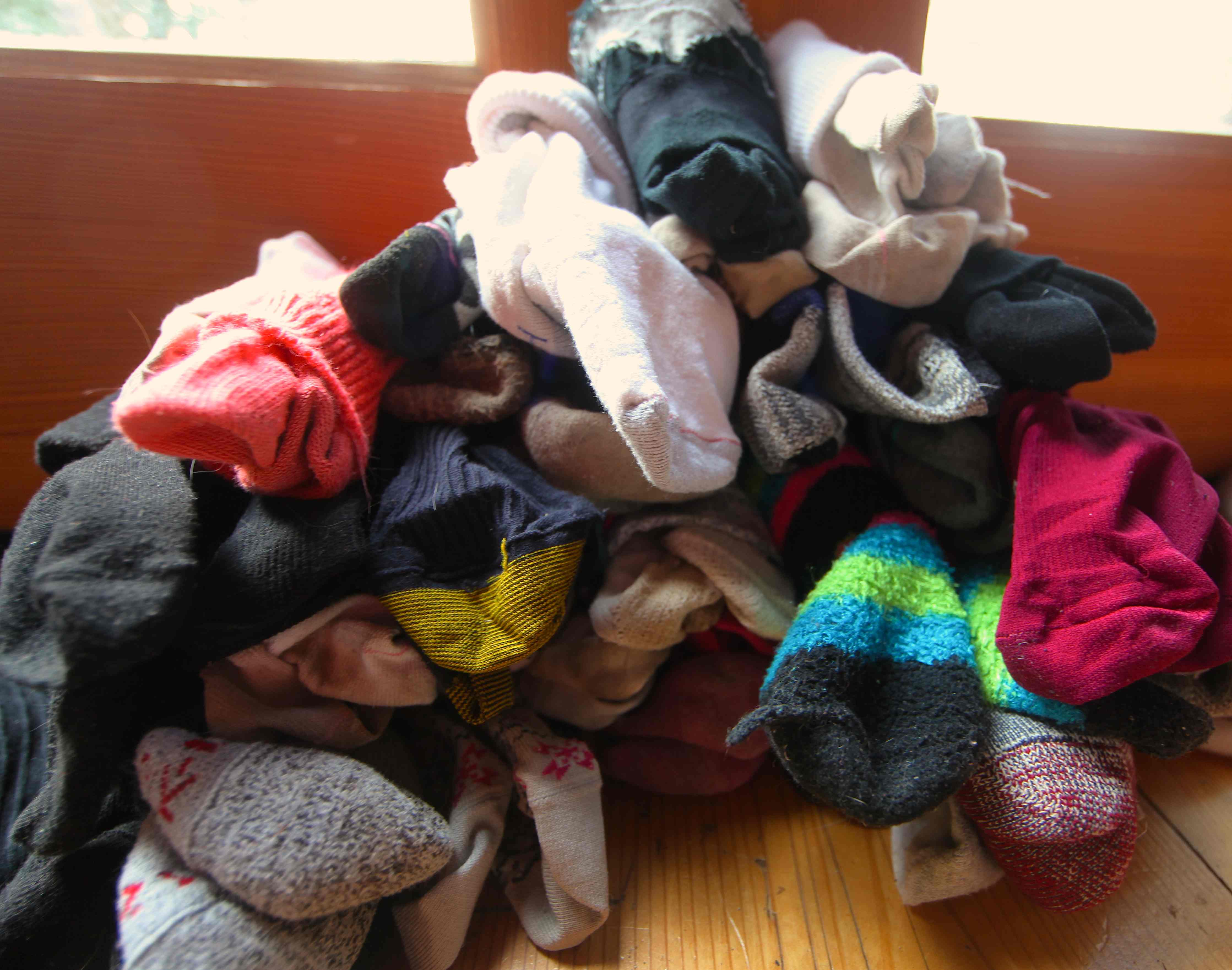
Sock Singles Party on Our Floor. Photo © Liesl Clark

We all know about sock-hungry dryers. Well, I believe drawers are sock-eaters, too. Somehow socks go into dresser drawers in pairs but come out as singles, forever abandoning the sacred union. We started a special box of single socks a few months ago and decided it was high time we searched the house for all socks to take a full tally of the situation.

Sorting Socks is Sorta Fun. Photo © Liesl Clark

Sorting Socks is Sorta Fun. Photo © Liesl Clark

It was the perfect task for a 7 year old, searching through every drawer in the house and coming up with nearly 100 single socks! The laundry room coughed up a few more. Then, we got to work with our matching game. Thirty pair were reunited! But sadly, about 40 odd socks now have no mate. What to do?

Reunited Socks After Nearly a Year. Photo © Liesl Clark

I’m vowing to have a moratorium on sock-buying for at least a year, or until our dryer and drawers have consumed them all. This family has way too many socks. In the meantime here’s a list of what we’re doing with our 40 odd socks:

1) A few special unions have been created, and we look forward to showing them off at school as soon as possible.

Do you approve of this union. Speak now or forever hold your peace. Hey, mismatched socks are in! Photo © Liesl Clark

2) I put one in the freezer to use over our ice pack. It’ll protect a child’s skin against that cold pack.

Single sock turned ice pack cover. This penguin motif seemed appropriate. Photo © Liesl Clark

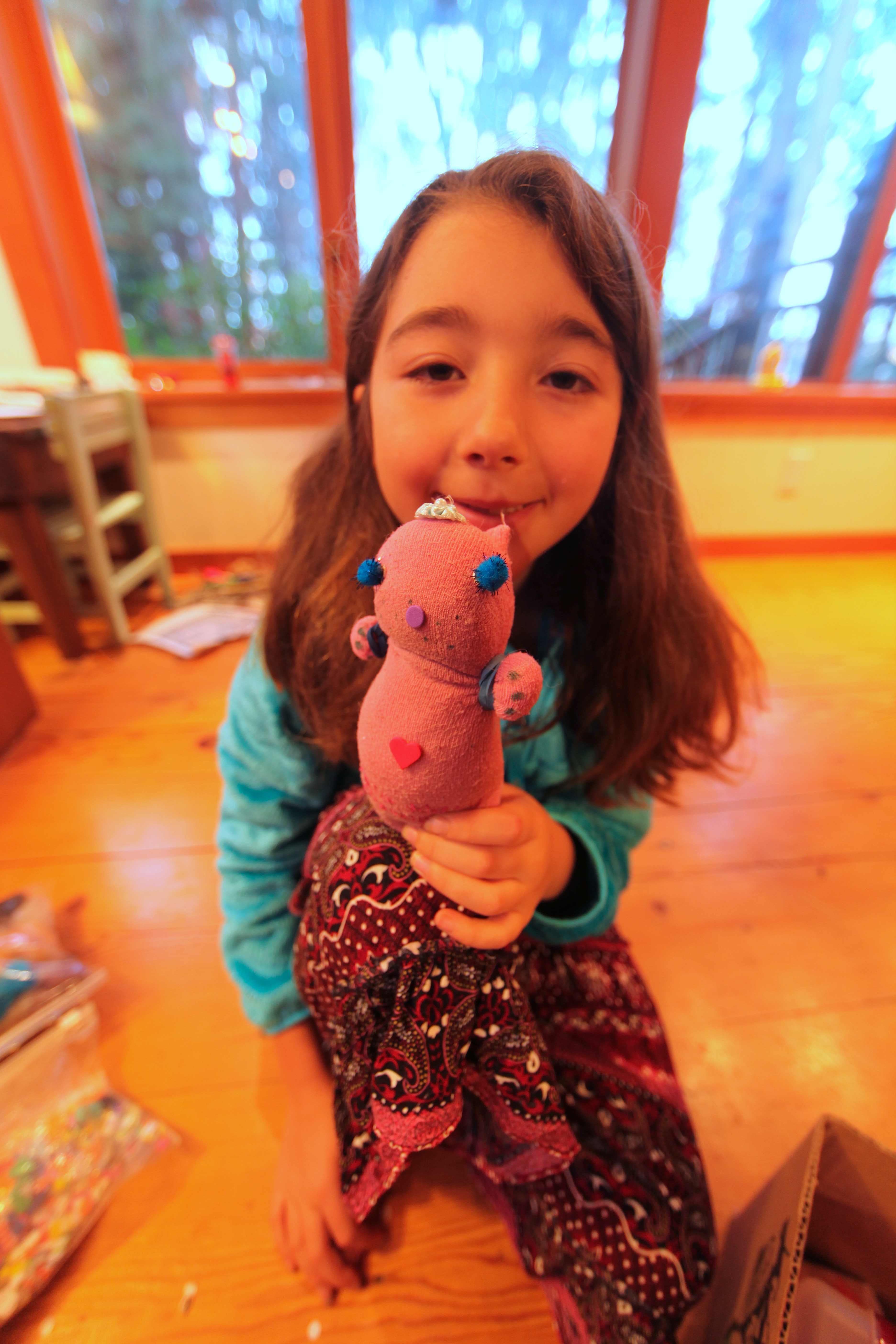
3) The 7-year-old, has her sights set on a few sock creatures, like this adorable sock hippo named “Emma” that she made the other day.

Sock + Rubber Bands + Bits & Bobs = Sock Hippo. Photo © Liesl Clark

4) I invented a new type of yarn, like T-shirt yarn, but it’s….Sock Yarn! This stuff is easy and kinda cool to make.

My new favorite "ribbon." Sock Yarn. Photo © Liesl Clark

First, find a single sock and cut strips into it without fully reaching the edge. A great photo that explains it in a tutorial for T-shirt yarn is here. You’ll then cut diagonally, linking the strips together in a spiral cut. It’s easy!

Cut strips into your sock but not all the way to the edge. Photo © Liesl Clark

Then stretch your sock yarn out so it curls in on itself:

Stretch Your Sock Yarn to Let It Curl. Photo © Liesl Clark

You might attract a feline in the process. Sock yarn makes an excellent cat play toy.

Kitties live for soft sock yarn. Photo © Liesl Clark

Willa. Ready to Wear Her Sock Yarn. Photo © Liesl Clark

Roll your yarn into a ball and you’re done!

Sock Yarn. Try It. Photo © Liesl Clark

Sock Yarn. Try It. Photo © Liesl Clark

5) A travel utensil holder is a sock reuse I’ve been meaning to do. Now it’s done.

Sock Travel Utensil Holder. Photo © Liesl Clark

Just use a piece of your sock yarn to tie it shut.

Sock Ribbon to Tie Up Your Sock Utensil Holder. Photo © Liesl Clark

Socks make excellent pencil holders too, just use an extra thick sock.

6) I saved a few socks for our rag basket, for dusting and other fine-rubbing I might need to do on furniture or countertops.

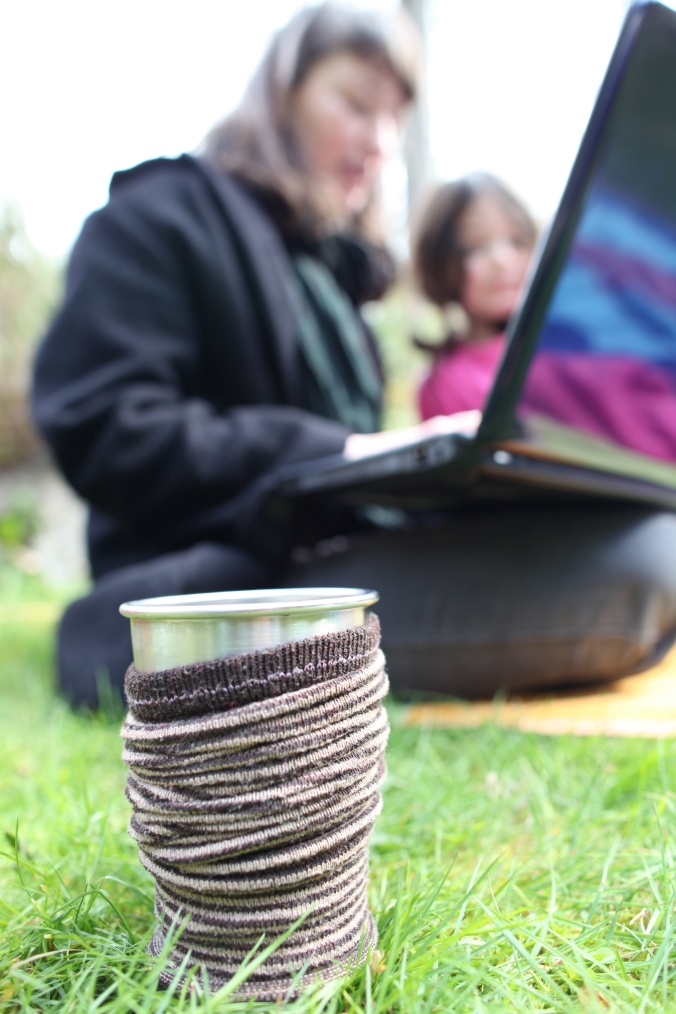
7) Cut the toe section out and use your sock tube as a travel coffee mug cozy.

sockcozy

My Favorite Sock Reuse: Travel Coffee Mug Cozy © Liesl Clark

8) The rest went back into the super duper sock box under the bed in waiting for sock sorting day next year when I vow yet again to never buy new socks and then learn how to darn the odd ones that remain. Actually, each week on laundry day we take the single socks and open up the box to see if the missing mates are inside. I have the box sorted by color, darks to lights, so the task goes quickly:

IMG_1750

Can you believe how many unmatched socks we have?

Do you combine unmatched socks, in an effort to stave off buying yet another pair? Or is there a special reuse you’d love to share? We have a few hundred more you might want to check out at our Trash Backwards app.

Click Through for Sock Reuses at Trash Backwards.

Rockin’ Valentines

IMG_1729

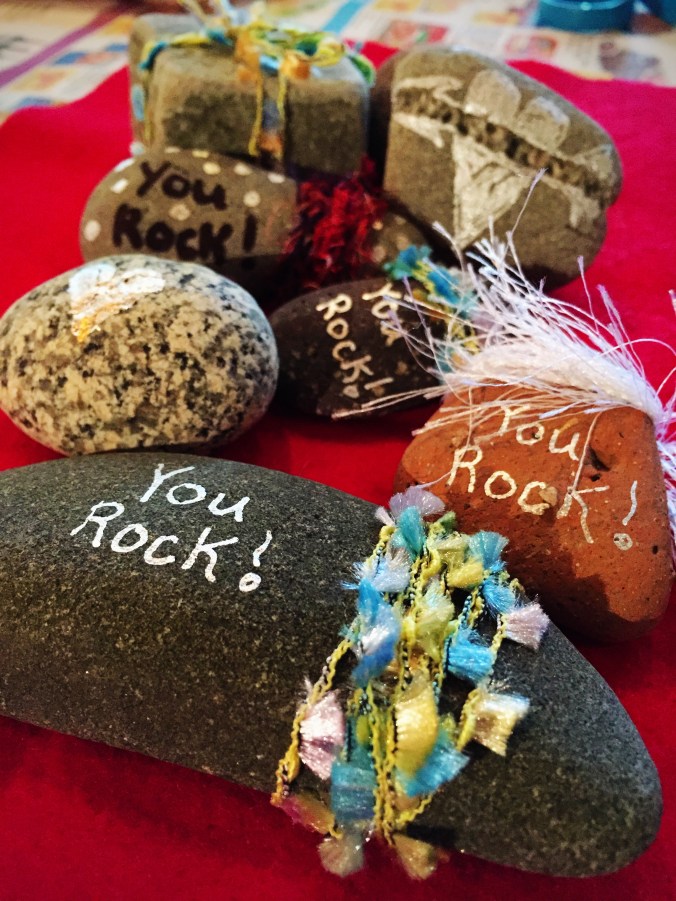
Gratitude to all of you who venture here to read about our trials and jubilations as we journey toward a lower impact life. These little rocks were gathered down at our nearby beach and turned into missives of love and positive affirmation by my daughter for her classmates and friends.

IMG_1730

A few stones and some scrap yarn brought smiles to 26 fourth grade students, proof that the simple things in life can still be perceived as beautiful and grounding. We wish you a happy Valentines Day, a day of love and kindness, and a break from it all.

IMG_1731

Love and gratitude,

Liesl, Pete, Finn & Cleo

Zero Waste Vacuum Cleaning

By Liesl Clark

Using a vacuum cleaner in a (trying to get close to) zero waste home can be challenging, if you don’t have a bagless vacuum. Here’s what I’ve discovered over the years about reducing vacuum cleaning waste from my household:

Skip the Vacuum Cleaner Altogether? Now wait! Don’t stop reading because you think I’ve gone too far here. I can attest to the fact that in places where vacuum cleaners don’t exist, brooms can definitely do the trick! You just need a really great stiff broom for picking up the dirt. And, there’s no method better than taking your carpet outside and shaking it or beating it with a broom. If you have wall-to-wall carpet, I guess you’re out of luck, but a good stiff broom can do wonders.

I’ve had a few house cleaners help me in my day, and I’m always amazed to see how many of them choose to use the vacuum cleaner without first sweeping up the wooden floor. Broom and dustpan are the fastest route to frugal and zero waste floor-cleaning. I even have a cool collection of brooms I’ve gathered from all over the planet. In my travels to homes far from the conveniences of electricity and vacuums, I’ve witnessed the cleaning of rugs and carpets the old-fashioned-and-often-much-cleaner-way. Soft brooms sweep the often dirt floors, and stiff brooms are used to sweep the carpets. I’m amazed at how efficient they are so we use a broom on our carpets much of the time.

My Favorite Broom, Natural & Sustainable, Great for Wood Floors, Photo © Liesl Clark

Outside, we have a game of trying to shake a carpet with a partner on the other end and see who gets shaken-off first.

Empty the Bag! We used to have a vacuum we loved, but it came with bags that fill up and must be thrown out….or do they? After accumulating a few full bags, tossing ’em, and buying more (they’re expensive!) I discovered it was almost as easy to empty them into our brush pile outside and reuse them! We’d reuse our bags at least 30 times. Emptying the vacuum cleaner bags is an opportunity my children fight over. It’s fun. Really. Especially when we find a long-lost (and favorite) plastic baby goat in there. Those little baubles that get sucked up by the vacuum are given a second life.

See How Fun It Is? Photo © Liesl Clark

Now, a very ecologically-sound friend of mine says, “No, No! don’t empty those vacuum-cleaner bags because the dust and dirt in your home is toxic from the detritus that comes from your asbestos-bearing furniture or PVC and BPA-laden rugs.” I do respect her point, but I have to argue that our own dirt off our shoes is likely from the garden, our furniture is almost all made of natural materials, our home is recycled old timbers, and our carpets are antique natural-fiber carpets from Tibet and Egypt that we’ve bought from people we know, colored with vegetable dyes. I think we’re pretty safe. But this is not to say that everyone is safe to dump out their vacuumed dust into the environment. But aren’t our landfills part of our environment?

My Full Vacuum Cleaner Bag, Photo © Liesl Clark

I often empty our vacuum cleaner dust into our compost bin, except we find myriad little plastic bits from art projects that I try to take out by hand and throw back into the art bin (truly.) If you think your home and furniture (including mattresses) are mostly plastic-free, the dump-out-your-vacuum-bag-contents method of frugal vacuuming might be for you.

Dusting the Compost & Pulling the Plastic Out Later, Photo © Liesl Clark

Otherwise, there are bagless vacuums on the market these days. We’ve just acquired one, so our days of bag saving are over and we just dump our floor dust right into the compost. These days, it’s mostly dog and cat hair. I’d love to hear what you do with the dust and dirt from your home?

Fun with vacuum cleaner bags, Photo © Liesl Clark

Please note: If you have allergies or a particular sensitivity to dust, wearing a handkerchief or just mask around your mouth and nose is advised. Another friend empties her vacuum particulates into a plastic bag first, and then dumps it into her compost, to prevent the dust particles from escaping into the air. Shaking  out your vacuum cleaner bag is fun, especially when you know you’re defying the marketing department of your vacuum cleaner company. And, hey, you might find your lost wedding ring or favorite bauble for the effort.


Fun Emptying Vacuum Cleaner Bags, Photo © Liesl Clark

DIY Mason Jar Soap Dispenser

I’ve eyed the useful mason jar soap dispensers made by creative people and thought I’d try to make one myself. Was it difficult? Not at all. This DIY project takes a few minutes to pull off.

All you need is a mason jar with a wide mouth lid, a push pump from a discarded soap or hand cream dispenser (I had to cut mine down so it would fit in my pint jar,) a pair of pliers, and a Sharpie.

Mason Jar + Lid, Pliers, Sharpie, and Pump. Photo © Liesl Clark

Find the center of your flat mason jar lid and punch a hole in it with a can opener (oh right, that’s one more tool you’ll want.)

Making Your Center Hole. Photo © Liesl Clark

I was able to make a hole quite easily with my pliers. Draw a circle around the hole that’s in the center of your lid, is in my first picture, and start to pull the hole apart, making it wider and wider.

Starting to Make Your Center Hole Wider. © Liesl Clark

You simply keep pulling the pieces of metal wider and wider around the edges of your circle until they’re just wide enough for your pump to fit through.

It Will Start To Look Like a Flower. Photo © Liesl Clark

When you have sufficient room for your pump, slip it through but try to keep the fit quite tight.

Thread The Pump Through the Hole. Photo © Liesl Clark

I pressed the edges of the metal lid down tight against the lid to prevent any future cuts when I need to add soap to my dispenser. You can use a silicone sealant to lock the pump down to its center hole and smooth out your sharp edges.

Sealed Soap Dispenser. Photo © Liesl Clark

This whole project took 5 minutes once I had gathered my supplies.

DIY Soap Dispenser, Ready For Use. Photo © Liesl Clark

When we went away on vacation our cat knocked over a pretty glass dispenser I gave my husband for Christmas. My husband is the dishwasher after dinner and I wanted him to feel like he had a cool “tool” to use at the sink.

Our cool new kitchen 'tool:" Our DIY soap dispenser. Photo © Liesl Clark

We mostly use baking soda for our dishes, but this liquid soap gives great suds if you like ’em and makes a mild hand soap, too. Our current liquid soap is an extremely watered-down (like 6:1 water to soap) biokleen dish soap.

DIY Dish Soap Dispenser. Photo © Liesl Clark

Valentines: The Original Folk Art Scrap Hack

Handmade Paper Valentines, An Original Folk Art. Photo © Liesl Clark

I remember having to make valentines cards in elementary school for each of my classmates. The handmade cards tended to come from whatever scrap paper, lace, and paper doilies we had around our home. Each valentine was different, a scrapper’s attempt at making beauty from what was available.

Scraps of Paper. All You Need to Make an Original Valentine. Photo © Liesl Clark

And then things changed, and there was a new ethic afoot: Skip the handmade valentine and buy a mass-produced version for your friends, complete with a stash of sweets. All you had to do was fill in your name, the recipient’s name, and add a packet of hearts. It certainly was a time-saver, but these so-called valentines felt like a cop-out and an opportunity for some not-so-creative folks to make money off of us. I’m still a big fan of the hand-crafted valentine. You might say the valentine is an original form of folk art, and some still practice it today.

Our kids, over the past few years, have been assigned, at school, to make valentines for their classmates from materials found in their home. Alas! We could bring back the tradition. Here are a few examples I’ve pulled from our photos over the years:

1) The Traditional Scrap Paper Valentine:  We first gathered our scrap paper and cut out traditional hearts on card stock we had rescued from the landfill. We also save pretty scrap paper from magazines and junkmail so we have plenty of colors and textures to choose from for projects like this.

Cutting, folding, and gluing paper is all it takes to make a valentine. Photo © Liesl Clark

2) A Scrap Fabric Valentine:  Then we found some pretty scrap fabric and cut out hearts to glue to the reclaimed card stock. Those felt a little more 3D and folksy.

Add a fabric scrap to your valentine for a more 3D effect. Photo © Liesl Clark

3) Bookmark Valentines:  Cut long strips of paper about 2 inches wide by 6 inches long.

Paper strips from handmade paper. Photo © Liesl Clark

Punch a hole (we punched a star, really) into one end of each strip.

Punching a hole in the end of your strip. Photo © Liesl Clark

Tie a little ribbon or scrap fabric through the star, and you’ll have bookmarks ready to decorate as useful valentines.

Bookmark Valentines are Useful. Photo © Liesl Clark

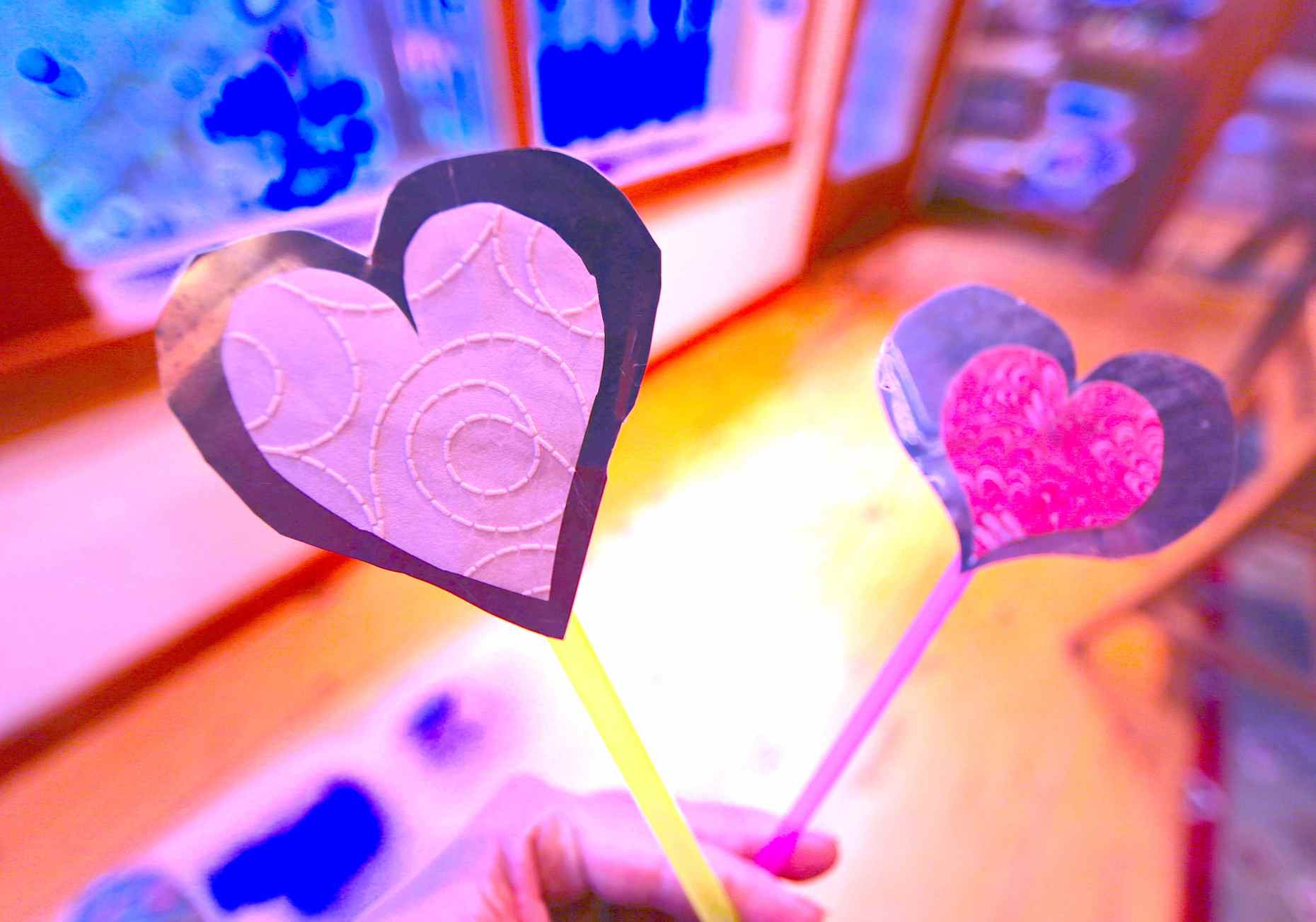
4) Valentine Heart Wands: In our pantry, we found some pie tins and colorful plastic straws we had found on the beach, saved, and washed. These would become our raw ingredients for heart wands we made for several of the students:

Heart wands are easy. All you need are pie tins, straws, and a glue gun. Photo © Liesl Clark

Cut a heart out of your pie tin and glue it to the end of a straw. They work with pretty sticks, too. And if you want to embellish your silvery pie tin heart, you can glue a smaller heart to your tin heart.

Hearts of Paper and Hearts of Tin. Photo © Liesl Clark

The Tin Man would be proud.

Heart Wands From Pie Tins and Straws. Photo © Liesl Clark

We've been making these for years. Photo © Liesl Clark

5) Wire and Yarn Hearts:  We often craft wire hearts from scavenged wire and then wrap them in yarn. The children love hanging them around the garden. The little heart below was made by my daughter when the deer ate her bleeding hearts. She was so saddened by the loss of her hearts, she placed a fence around them and crafted this wire heart on the outside for the deer to eat, still leaving them something to enjoy. The sweetness of a 6-year-old is undying.

A wire and yarn heart to help protect the bleeding hearts from the deer. Photo © Liesl Clark

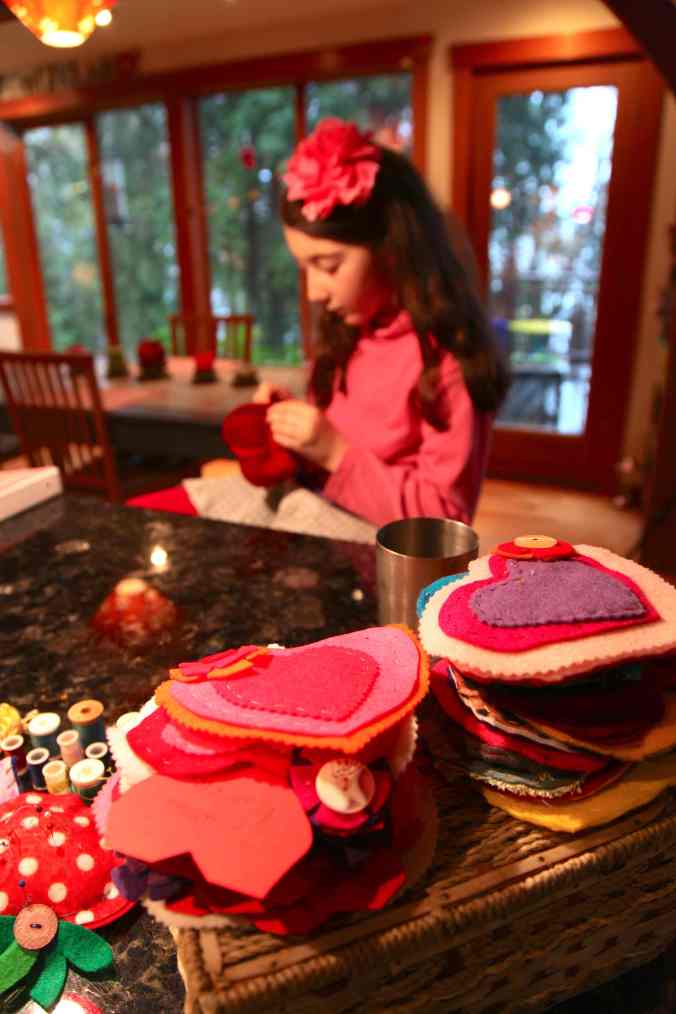
6) Classic Hand-Stitched Valentine: My daughter love to sew by hand. These hand-stitched valentines took her a month to make, but she poured her love and talent into each one. She left a little pocket in each to be filled with organic jelly beans, her favorite treat we buy in bulk at our local store. These are pretty easy to make so long as you have felt. We asked for felt on our local Buy Nothing group, and neighbors had plenty to share! She cut out hearts in varying sizes with my pinking shears and then layered them and sewed them together, leaving a pocket at the top.
IMG_0347

7) Produce Sticker Heart:  This one might be a bit of a stretch, but for those health-conscious sweethearts in your life, why not craft a produce sticker heart valentine? It was a cathartic exercise, for me, because those plastic stickers to announce that we’ve bought organic produce bother me greatly. No tutorial necessary, right?

Produce Stickers are Pink and Perfect for this Healthy-Heart Valentine. Photo © Liesl Clark


Send in a picture of your own homemade valentines. We’d love to share them with all our sweethearts.

Swiss Chard Is Two Veggies In One

Don’t throw those swiss chard stalks out! We’ve discovered a delicious thing or 3 to do with them.

Swiss Chard Stalks are Pretty and Delicious. Photo © Liesl Clark

I’m ashamed to say our swiss chard has been languishing in the garden because our family just hadn’t taken to these easy-to-grow greens, until now…

Swiss Chard From the Winter Garden Being Washed in the Farm Sink. Photo © Liesl Clark

First, separate your chard leaves from the stalks and cut your stalks into 4″ long pieces. Save them in  a bowl. Aren’t they pretty?

Chard Stalks in a Bowl Awaiting Further Instructions. Photo © Liesl Clark

Spicy Swiss Chard Chips:

We all know what kale chips are. Well, try making chips with your swiss chard, too. They’re a delicious and nutritious substitute for potato chips. By adding a little garlic powder, salt, and some chili powder, you won’t be able to eat just one.

Turn your oven to 275 degrees. Place your chard pieces on a baking sheet or glass baking pan. Add a tablespoon of olive oil per baking pan and toss the chard leaves with equal amounts of sea salt and garlic powder and chili powder. That’s it! Add your spice to taste and be sure to not make it too salty.

Bake for 20 minutes and then turn the leaves over and bake another 10 minutes if needed. Your bake time depends on your baking dish.

Spicy Swiss Chard Chips Disappear Quickly. Photo © Liesl Clark

Enjoy!

Chard Stalk Pickles:

Now take your stalks and if you have a bottle of Claussen pickle juice waiting for something delicious to throw in, just stuff a few of your raw stalks in the bottle and within a few hours you’ll have delicious chard stalk pickles. My kids love them.

Raw Claussen Swiss Chard Stalk Pickles. Photo © Liesl Clark

I found another recipe for delicious pickled swish chard stalks at Cookistry. But if you want to read my entertaining version with home-grown photography, here we go:

Blanch your stalks in boiling salted water for about 3-4 minutes. You want them to stay crunchy so be sure to not overcook them. Drain the stalks and try a few at this stage. Aren’t they delicious? We loved the slightly salted cooked stalks so much we saved a few and had them as a side dish with dinner.

Find a mason jar or 2 and put your stalks in them.

Then, bring the following ingredients to a boil and make sure everything is completely dissolved:

2 cups water
3/4 cup white vinegar
1  1/2 teaspoons salt
2  1/2 teaspoons sugar

Pour your water into your mason jars with chard stalks in them and screw the tops on. Put them in the refrigerator when they’ve cooled and you can enjoy these pickles for a few weeks.

Pickled Chard Stalks. Photo © Liesl Clark

Do you have a favorite chard stalk recipe? I was so excited to find a way to save them from the compost bin or chicken yard I’d love to learn of other chard stalk rescue recipes.

Force Winter Twigs For Indoor Spring Color

IMG_1688

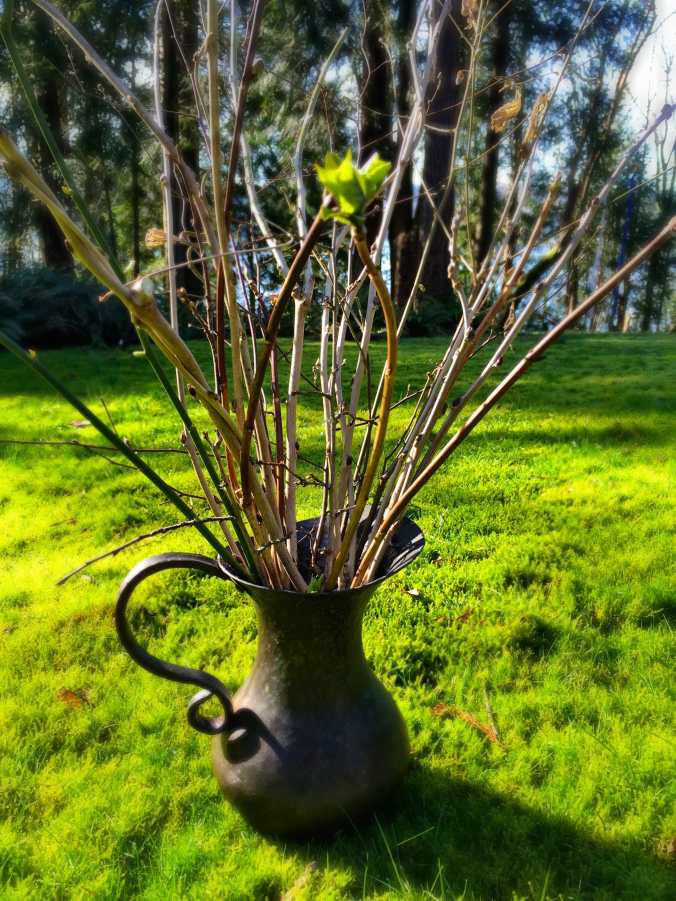
Yesterday, while the birds were gossiping with spring chatter on one of our first days above 50 degrees in weeks, I noticed some pruned wisteria sticks were still in our perennial garden, left over from when my husband had pruned the flowering wisteria last fall. It’s been an extremely wet winter, and I was surprised to find that the wisteria sticks had buds on them. The moisture of the winter rains sustained the cuttings, so they were still alive!

Inspired by Cathy’s “In a Vase on Monday” series, where she puts whatever might be green, even in the dead of winter, into a vase and writes about it, I looked at those wisteria sticks and thought perhaps I could force them for early blooms. And then this post, at Frogend Dweller’s Blog, rocked my Monday, with the reminder that we can collect many different flowering twigs, place them in a vase filled with water, and watch them open over the course of late winter and early spring. I promptly walked around our property and found that there were plenty of twigs barely hanging onto some of our flowering shrubs and trees, having been blown down by winter winds. I grabbed my sharpest pruning shears and gathered what I could:

IMG_1686

The varying colors of the stems are stunning in the mid-winter light. From left to right my budding twig offerings are as follows:

Hydrangea

Asian Plum

A Rose of Some Sort (Oh gosh! I just don’t know what kind it is!)

Wisteria

Alder (yes?)

And…um…well….er…I just don’t know what the last one is on the right. Another variety of alder?

Ok, so I don’t know all of my trees and shrubs, but 50% isn’t bad. And then Willa caught wind of the spring fever and wanted to pretend she was one of the sticks, too.

IMG_1689

I love how the plum branches have a little moss on them. Did I mention how wet our winters are here?

IMG_1687

The twigs were arranged in the nearest watering pot and placed in one of our favorite windows, under the grape pergola with the twists of vine shadows playing with the mid-day light that floods our dining area.

IMG_1691

The children and I can’t wait to see what blooms we’ll get from our forced twigs. Be sure to get outside, in the upcoming days, to clip a few flowering twigs of your own to bring some spring leaves and blossoms indoors while you wait out the chills of winter to come.

IMG_1692

Special thanks to Frogend Dwellers Blog and Rambling in the Garden for your inspiration. You’ve taken the bite out of winter. I’ve been enjoying your writings immensely.

Oh, and if anyone can help me identify the 3 varietals of twigs I missed, please comment below!

DIY Cat Scratching Post

Give your kitty what she wants and make a real-tree natural cat scratching post! My theory is that your average carpet-remnant cat scratch tree only encourages your furball to scratch up your carpet or upholstery. If you give your cat what she wants, an actual tree branch to sharpen her nails on, she’ll leave your furniture alone. That’s what our cat does…mostly.

A Real Tree Cat Scratch Tree!

So, we went out to our brush pile and found the perfect curving fat tree limb with two Y branches growing from it so our kitty could have a few spots to climb to. I found a piece of particle board to screw the sawed-off limb onto. It was as simple as that. This scratching post has lasted 4 years and our cat still uses it happily.

We often attach bits of string with fun things for our kitty to bat at, to make it a fun playspace for her.

She loves her real tree cat scratch tree.

But here’s the best thing about this cat gym: When we’re done with it, we can break it down and burn it in our fireplace. No issues about waste here.

Do you have a DIY cat scratching post you can share here?