Swiss Chard Is Two Veggies In One

Don’t throw those swiss chard stalks out! We’ve discovered a delicious thing or 3 to do with them.

Swiss Chard Stalks are Pretty and Delicious. Photo © Liesl Clark

I’m ashamed to say our swiss chard has been languishing in the garden because our family just hadn’t taken to these easy-to-grow greens, until now…

Swiss Chard From the Winter Garden Being Washed in the Farm Sink. Photo © Liesl Clark

First, separate your chard leaves from the stalks and cut your stalks into 4″ long pieces. Save them in  a bowl. Aren’t they pretty?

Chard Stalks in a Bowl Awaiting Further Instructions. Photo © Liesl Clark

Spicy Swiss Chard Chips:

We all know what kale chips are. Well, try making chips with your swiss chard, too. They’re a delicious and nutritious substitute for potato chips. By adding a little garlic powder, salt, and some chili powder, you won’t be able to eat just one.

Turn your oven to 275 degrees. Place your chard pieces on a baking sheet or glass baking pan. Add a tablespoon of olive oil per baking pan and toss the chard leaves with equal amounts of sea salt and garlic powder and chili powder. That’s it! Add your spice to taste and be sure to not make it too salty.

Bake for 20 minutes and then turn the leaves over and bake another 10 minutes if needed. Your bake time depends on your baking dish.

Spicy Swiss Chard Chips Disappear Quickly. Photo © Liesl Clark

Enjoy!

Chard Stalk Pickles:

Now take your stalks and if you have a bottle of Claussen pickle juice waiting for something delicious to throw in, just stuff a few of your raw stalks in the bottle and within a few hours you’ll have delicious chard stalk pickles. My kids love them.

Raw Claussen Swiss Chard Stalk Pickles. Photo © Liesl Clark

I found another recipe for delicious pickled swish chard stalks at Cookistry. But if you want to read my entertaining version with home-grown photography, here we go:

Blanch your stalks in boiling salted water for about 3-4 minutes. You want them to stay crunchy so be sure to not overcook them. Drain the stalks and try a few at this stage. Aren’t they delicious? We loved the slightly salted cooked stalks so much we saved a few and had them as a side dish with dinner.

Find a mason jar or 2 and put your stalks in them.

Then, bring the following ingredients to a boil and make sure everything is completely dissolved:

2 cups water
3/4 cup white vinegar
1  1/2 teaspoons salt
2  1/2 teaspoons sugar

Pour your water into your mason jars with chard stalks in them and screw the tops on. Put them in the refrigerator when they’ve cooled and you can enjoy these pickles for a few weeks.

Pickled Chard Stalks. Photo © Liesl Clark

Do you have a favorite chard stalk recipe? I was so excited to find a way to save them from the compost bin or chicken yard I’d love to learn of other chard stalk rescue recipes.

Clothes The Loop With The North Face

I’m excited to make a huge discovery, for those of us who ache when we throw into the landfill big chunks of plastic that could likely be repurposed into something else. The North Face stores will take not only your old clothes, shoes, and outdoor gear like backpacks and tents, but they’ll also take your old ski boots! Please read this article by my husband that tells you all about this great initiative.

By Pete Athans

Living on an island means we don’t have access to a lot of services and conveniences. We like that.

My 7-year-old daughter on a ferry boat ride to our Puget Sound island. Photo © Liesl Clark

A 35-minute ferry ride delivers us into what feels like the bowels of Seattle, ejecting ferry-riders beneath a highway underpass, a continuous stream of cars, buses and trucks humming above. Just around the corner from the hum of the waterfront is one of The North Face’s first stores to open in the U.S.

Delivered by ferry to the Seattle waterfront. Photo © Liesl Clark

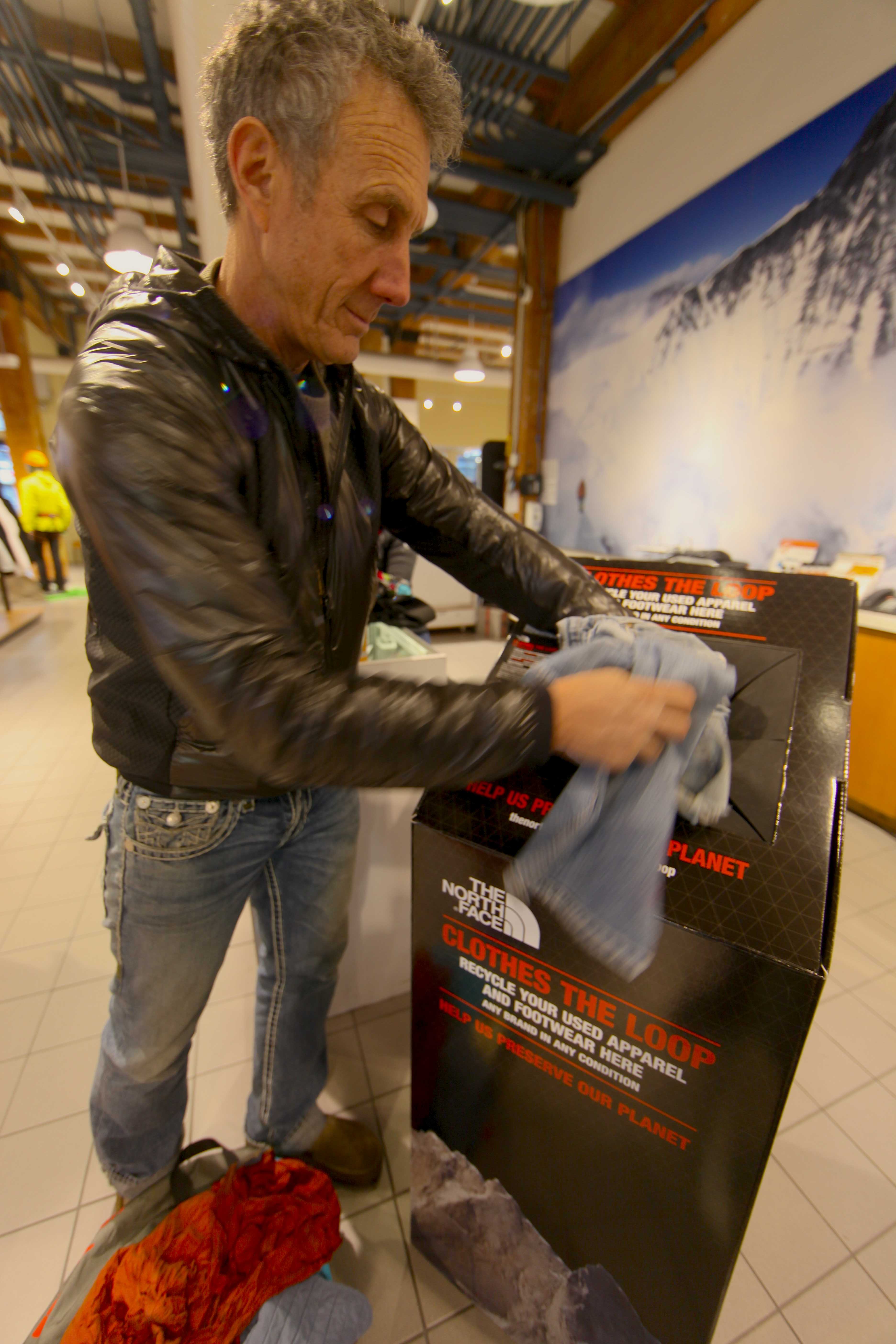
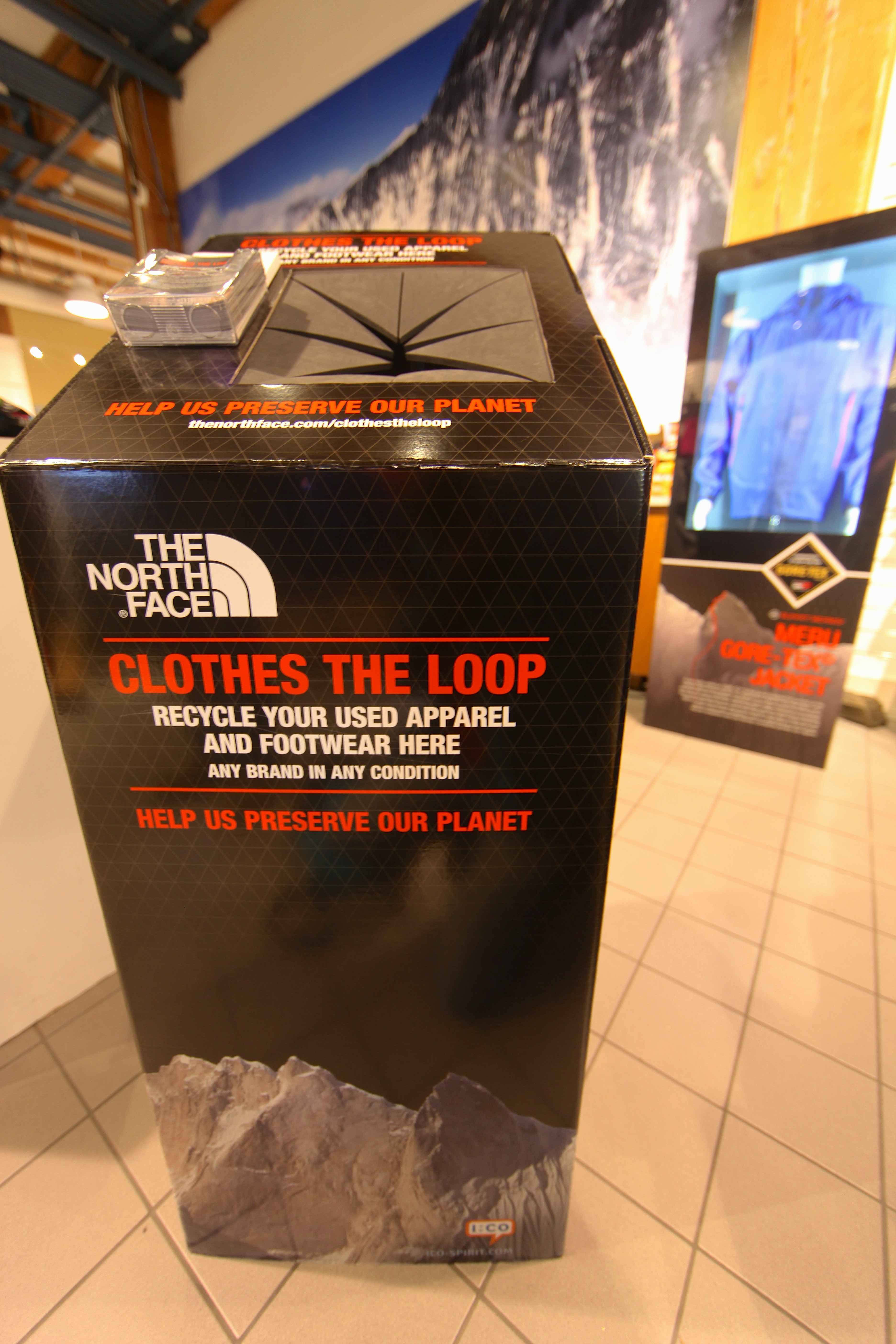
I’ve worked for the company for nearly 30 years, and I still love walking into this special Seattle space. Behind the modern store facade, you still have a sense of the original post and beam construction, probably used for shipping or as a warehouse years ago. Today, I’m even more proud to step into the store with my family, carrying our used clothing, textiles, and gear that we aren’t able to sustainably throw away on our small island. In fact, most people have a tough time finding places to discard used clothing and specialized outdoor gear in this country. But every store in the US that The North Face operates now has a “Clothes The Loop” box where you can drop off your used and worn-up clothes, gear, and shoes. You’ll get a discount on your next purchase at The North Face store as a reward for your efforts.

Here’s how you can find a store near you that is participating in this program. Click on their Find A Store link. Then, at the bottom of the map, click on the boxes that say “The North Face Stores” and “The North Face Outlets.” Those are the stores owned and operated by The North Face that have this program.

Denim has value. Don't throw it away! It can be used as insulation. Photo © Liesl Clark

The North Face has initiated this much-needed clothing, gear, and shoe recycling program, they call “Clothes the Loop,” in a partnership with I:CO an international textile and shoe recycler that breaks materials down into 400 categories for carpet padding, stuffing for new toys, and fibers for new clothing. I:CO currently processes about 500 tons of used items every day in 74 countries. They have collection points all over Europe and in the USA.

Drop your old apparel, any brand, into a "Clothes the Loop" bin at The North Face store.

Here’s a list of the kinds of items you can take to your nearest store and put in their box:

Old Clothing

Shoes

Hiking Boots

Rope

Bed Spreads

Sheets

Table Cloths

Fabric Scraps

Ski Boots

Backpacks

Tents

Climbing Harnesses

Pillows

Stuffed Animals

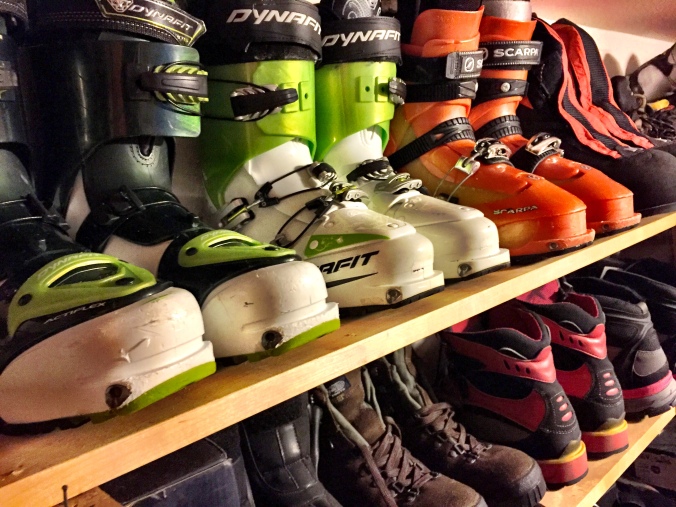
We’ve taken samplings of just about everything on the list above to their store. It’s reduced our family’s solid waste significantly each year. According to the EPA Office of Solid Waste, Americans throw away more than 68 pounds of clothing and textiles per person per year, and this figure is rapidly growing. Add your outdoor gear to that figure and surely it’s over 100 pounds. We’re very excited to hear that they’ll take ski boots. Before this, there were no options in the Seattle area and most cities for ski boot recycling.

IMG_1496

Our family has a lot of boots, for every kind of snow sport. We’re probably not unlike many families. © Liesl Clark

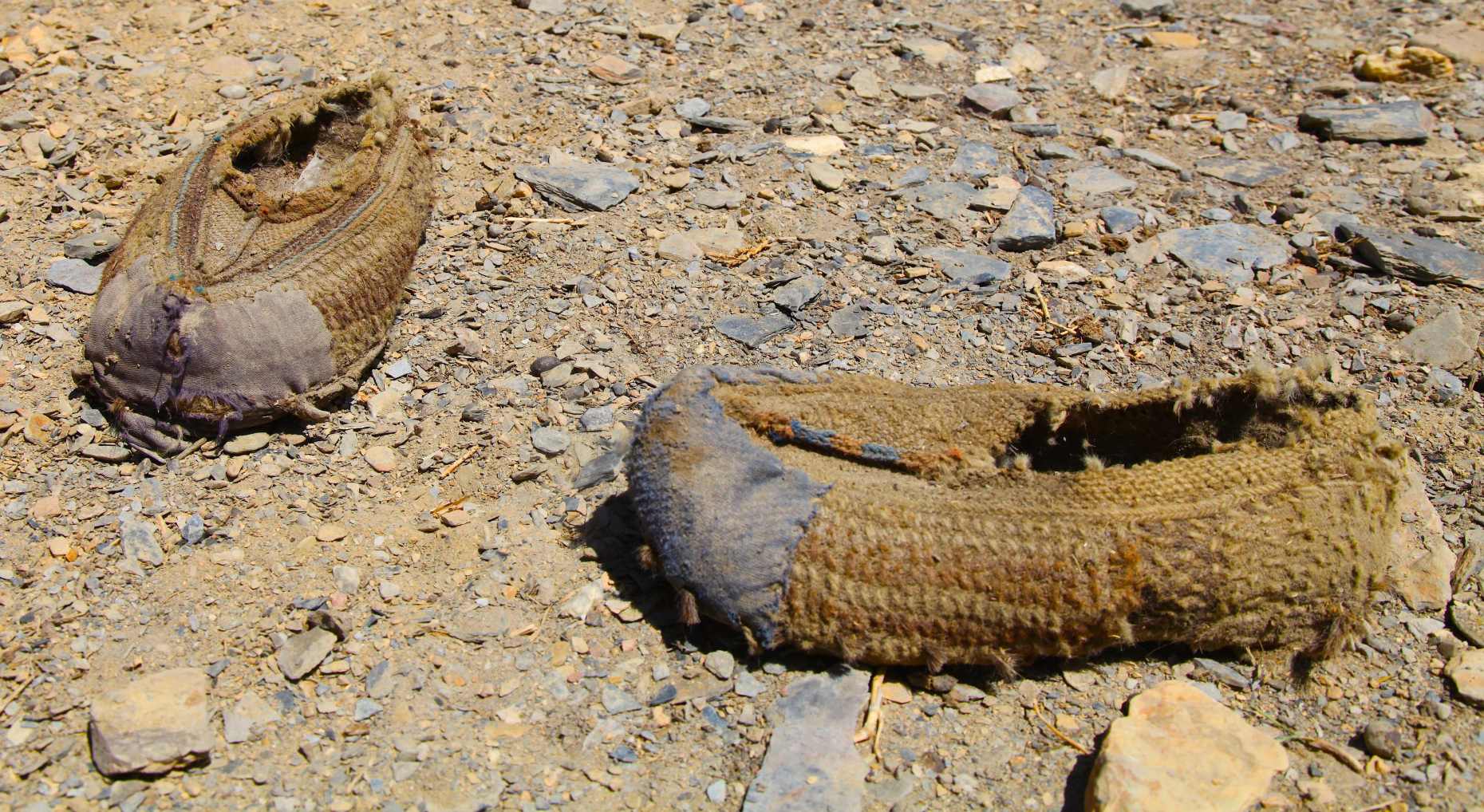
Before you take your items in to The North Face, if any of them are usable, please try to give them away to someone who might be able to use them, through a project like your local Buy Nothing group. When my family travels to the Himalaya, we always bring a few extra duffels of clothing and shoes. We work with communities in Upper Mustang who are in dire need of good shoes.

Since children grow so fast, it isn’t hard to pass on our own children’s lightly worn fleece, outerwear, hiking boots, hats and gloves to kids in remote mountain communities. It’s the least we can do in a high mountain environment where people only have access to poorly made Chinese apparel.

A child in Samdzong getting medical care from our expedition doctor. Photo © Liesl Clark

My children on their way to Upper Mustang, Nepal. Photo © Liesl Clark

My children on their way to Upper Mustang, Nepal. Photo © Liesl Clark

If we’re more mindful of our textile and outdoor gear waste, we can each make a difference. We know the textile industry adds tremendous environmental stress on our planet, but by giving away our usable our clothing and gear and then recycling what’s un-wearable, we can reduce the demand for virgin materials in new clothing and conserve the energy that goes into making fibers for fabrics.

Recycling your worn out textiles and shoes at The North Face is fun. Photo © Liesl Clark

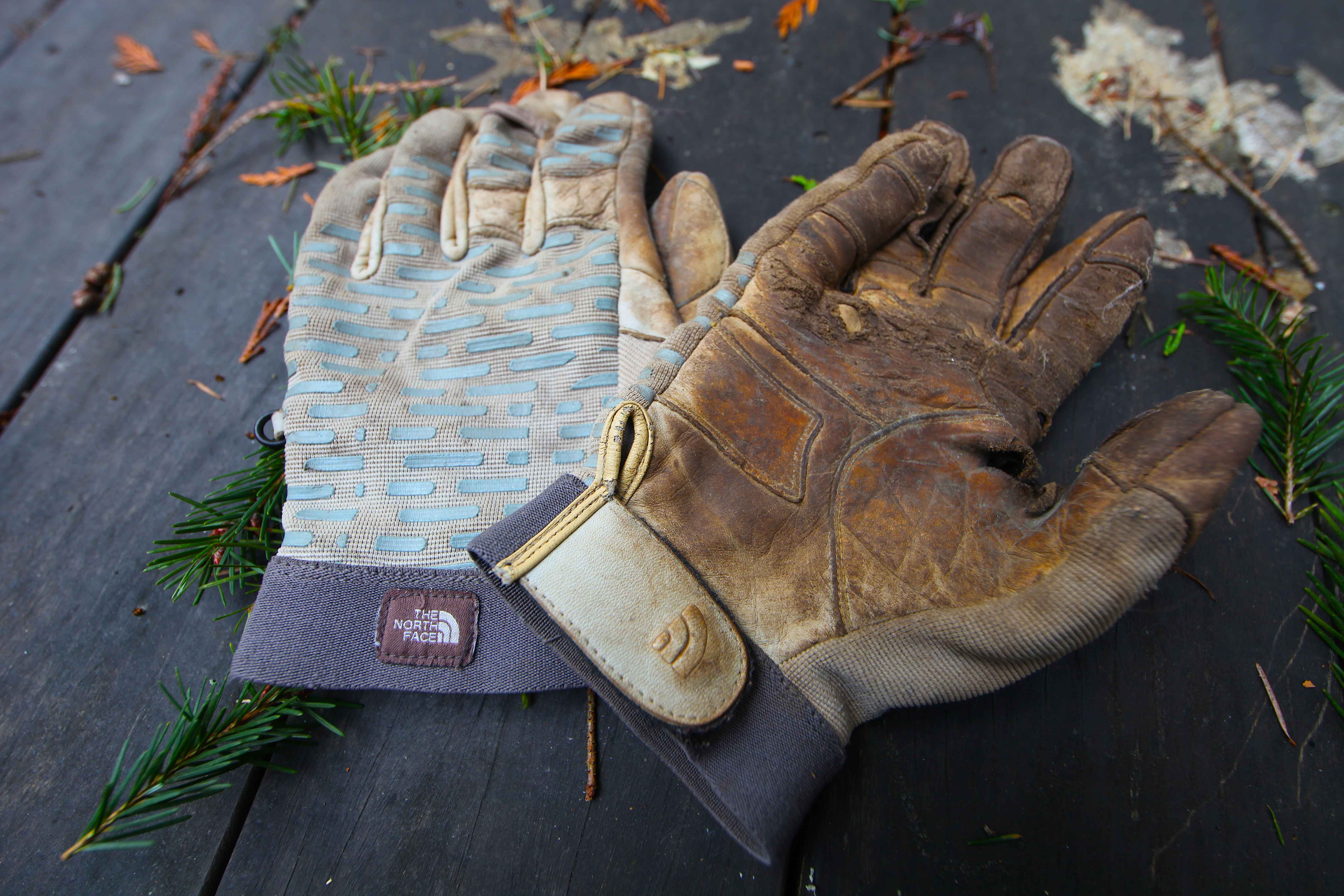
For us islanders, this new drop box at The North Face will be a welcome destination for fabrics and apparel we’ve been stockpiling in our homes in hopes that a recycler would appear in our midst. Your jeans that have holes in the knees and gloves that are nearly shredded from outdoor use are welcome at the Clothes the Loop bin.

My favorite TNF gloves, now safely in the bin. Photo © Liesl Clark

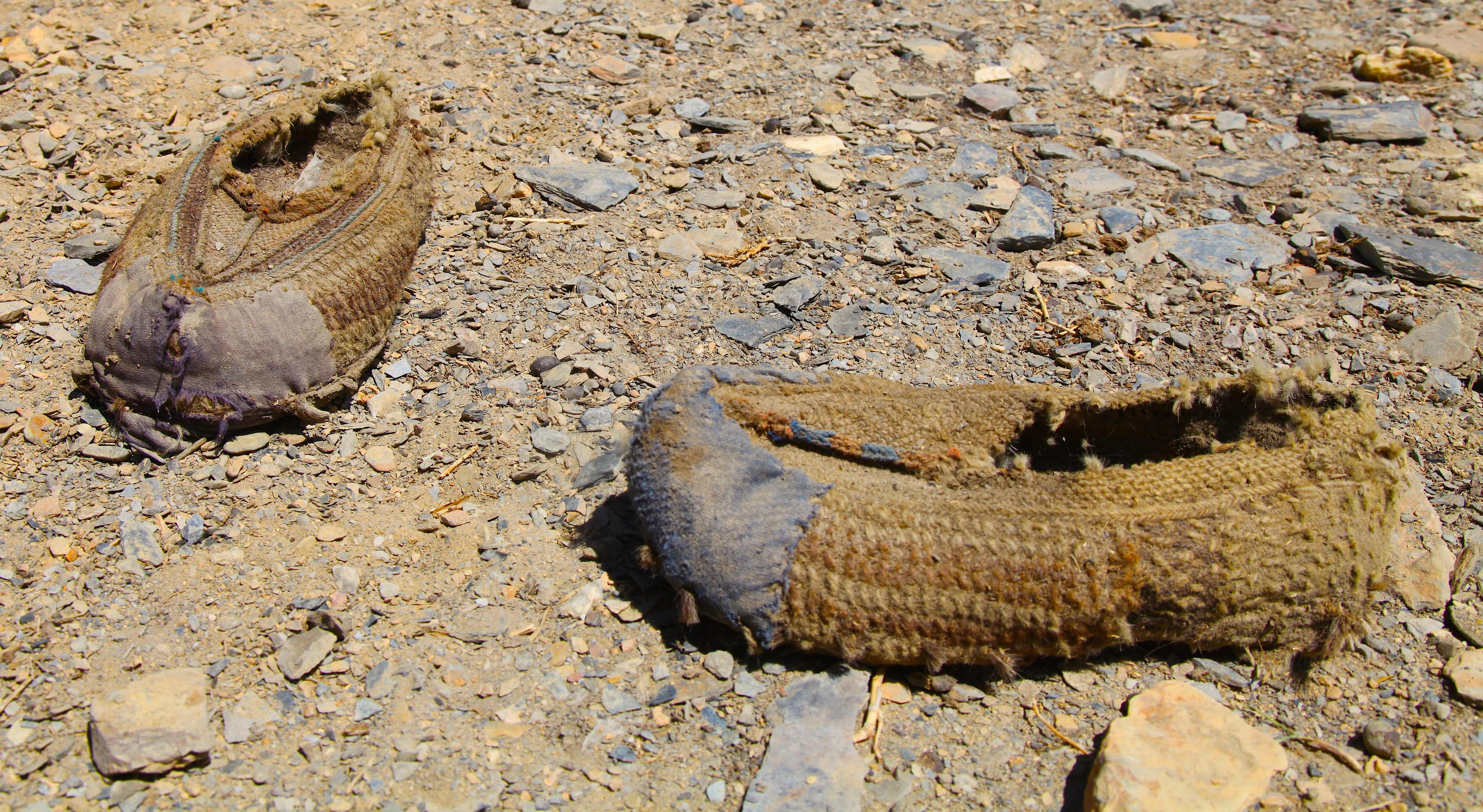
Hope to see you there, recycling your hole-y socks and dented hats.

IMG_3361 Photo © Liesl Clark

Olive Oil Tin Turned Celery Container

I love olive oil tins. They’re reminiscent of the Old World where reuse of large tins is commonplace. When I think of how I’ve seen olive oil tins reused, I imagine geraniums on a sunny step in colorful olive oil planters in Italy or hammered out oil tins used as roofing or wall siding in Nepal.

2 Lovely Olive Oil Tins, What To Do? Photo © Liesl Clark

I saved a couple of tins this year and other than using them as a flower vase, I couldn’t think if anything special to do with them. And then my son started having a celery craving. I hate storing celery (or anything) in plastic bags in the refrigerator, so we started storing it in large mason jars with a a couple inches of water for the stalks to stay fresh. And then the idea hit me: Turn an olive oil tin into a refrigerator celery container. It holds 2 large celery bunches perfectly!

First Use an Old-Style Can Opener. Photo © Liesl Clark

You’ll need a Swiss Army-style jack knife with a can opener to remove the oil tin lid. And if that doesn’t work, get out the tin snips. Make sure you bend and file down all rough and sharp edges.

Our new celery tin. Photo © Liesl Clark

Be sure to put a few inches of water in your tin to keep the celery crisp and fresh. Then, throw it in the fridge! Our celery lasts weeks in this custom-made tin crisper.

A Tin of Celery Works Beautifully in our Plastic-Free Fridge. Photo © Liesl Clark

Gone are the days of limp celery in the vegetable drawer.

Celery in a Tin in a Plastic-Free Fridge. Photo © Liesl Clark

Backyard 7 Summits Project: Kitsap County’s Highest Peak

By Cleo Clark-Athans, Grade 4

IMG_475892539-11

Climbing Gold Mountain © Liesl Clark

We did it!

We reached the highest point in our county today. It’s called Gold Mountain and is only 1,687 feet high. It took about an hour and 10 minutes to get to the top. Two miles to the summit, but it was straight up through a thick forest, until we hit a logging road with extraordinary views.

IMG_1327

We could see across many lakes and Hood Canal to the Olympic Mountains out on the Peninsula. My brother was happy to get to the top, with sweeping views and high winds.

IMG_1328

Million Dollar View, 50 Miles Wide © Liesl Clark

Although our county doesn’t have extremely high peaks, I’m planning to climb all 7 of the highest mountains as part of my Backyard Seven Summits Project, an attempt to get kids outdoors to explore the high points in their own counties.

IMG_1329

Gold Mountain Lets You See From Sea to Summit © Liesl Clark

We’ve done 2 out of 7 summits and they’re all beautiful hikes, in the Blue Hills of Kitsap County. Most people don’t even know about these peaks. They’re hilltops for all of us to get on top of for great expansive views of a luscious green landscape from the sea to the glaciers on the highest points of the Olympic Peninsula.

IMG_1331

Sibling Time Together © Liesl Clark

The journey down is like a dream, easy, and it goes by fast, with so much to see on the horizon miles and miles away. But if you watch your feet there are semi-precious stones to be found on these trails, like agates. We learned this from a man we met on the trail. He also said he saw fresh puma tracks. Hiking gets people outside but it also gets people to talk to each other.

IMG_1325

PNW Whimsey © Liesl Clark

There’s plenty to marvel at when you just get outside. Our dog, Sailor, knows this.

Have you climbed your own seven summits in your neighborhood? If so, please write in the comments below so we can hear about your adventures.

IMG_1324

The Backyard Seven Summits Project © Liesl Clark

Water Cress Pesto

Feeding my family by way of mid-winter foraging always feels like a triumph. Although there’s little in the garden these days, when we go on hikes on our hill, we find water cress in the places where the springs are running freely. The winter rains have been incessant, so this year the cress is abundant.

IMG_1187

We collect handfuls of it each week and turn it into a spicy pesto the kids love on pasta. It’s a quick dinner for a busy mama to make.

IMG_1124 copy


Water Cress Pesto (a.k.a. Water Cresto)

4 Cloves Garlic

1/2 Cup Walnuts or Pine Nuts

(put the garlic and nuts in your food process or and run it until they’re completely turned into small bits) Add:

1 1/2 – 2 Cups Water Cress, washed

1/4 Cup Olive Oil

1/4-1/2 Cup Parmesan Cheese (in small chunks)

Process the rest of the ingredients together until you have nice green paste. Toss it with your favorite pasta.

IMG_1126 copy

Enjoy!

20 Banana Peel Uses

The Miraculous Banana and Its Peel. Photo © Liesl Clark

The Miraculous Banana and Its Peel. Photo © Liesl Clark

The banana peel, like coffee grounds, tea leaves, and orange peels has a lot of beneficial qualities that’ll make you think twice the next time you toss it in the trash. We’ve gathered 20 of the best banana peel uses for you to try:

1) Shoe Polish: Did you know banana peels (on the inside) make a great shoe polish? Just rub it around your shoe and then buff it with a soft cloth.

2) Teeth Whitener: Rub the inside of your banana peel on your teeth to whiten them. Apparently, the manganese, magnesium and potassium helps whiten the enamel of your teeth.

3) Wart Cure: It only takes 1-2 weeks to remove a wart with a banana peel.

4) Itch Soother: Banana peels can help relieve bug bites and poison ivy. It won’t remove the oils that cause the itching but it’ll soothe the bite or rash altogether.

5) Monkey Party: Have a Curious George party and put 30 peels on your deck for the kids to slip around on! (Just kidding.)

6) Silverware Polish: Blend banana peel with water and use on your silver to take the tarnish off with a soft cloth.

7) Meat tenderizer: Some people add a banana peel to their roast and it’ll add just enough moisture to ensure that roast doesn’t get too dry.

8) Splinter Removal: Banana peels help ease splinters out of your skin. Place banana peel on a splinter with athletic tape for a while and then try to ease the splinter out.

9) Aphid Control: Aphids don’t like banana peels. If you bury some around your roses or other plants aphids love (like cauliflower), you’ll deter them from coming around.

10) Rose Food: Here are a few great recipes for feeding your roses with banana peels that are rich in calcium and magnesium, as well as many other trace minerals that your flowers love.

11) Bruise Patrol: Banana peels on the inside, if rubbed on a bruise, will aid in making it disappear.

12) Compost: Banana peels break down pretty quickly and add wonderful nutrients to your soil. Throw them in your compost!

13) Acne: Banana peels rubbed on your acne will help in the acne curing process.

14) Dry Skin Cure: If you have psoriasis, try rubbing the inside of a banana peel on your affected areas twice a day and you’ll see the dry scaly skin dissipate.

15) Banana Boat Campfire Dessert: This recipe will please all who are sitting around the campfire.

16) Hemorrhoid  Cure: Yup, you guessed it. As with acne, banana peels help cure hemorrhoids.

17) Banana Peel Message: Leave a message for your child on their banana peel by pricking out letters with a toothpick, the skin will bruise and there will be a dark brown message for your sweetie by lunchtime.

18) Tomato Plant Fertilizer: Wrap a banana peel around your tomato starts when you plant them in the garden and they’ll enjoy the nutrients from the peel as they grow throughout the summer.

19) Banana Peel Steamed Pork and Rice: Try this recipe out for size.

20) Anti Depressant: Researchers have found that drinking boiled banana peel water (or juicing the peel) can ease depression.

What are you doing with your banana peels?

Easy DIY Hair Detangler

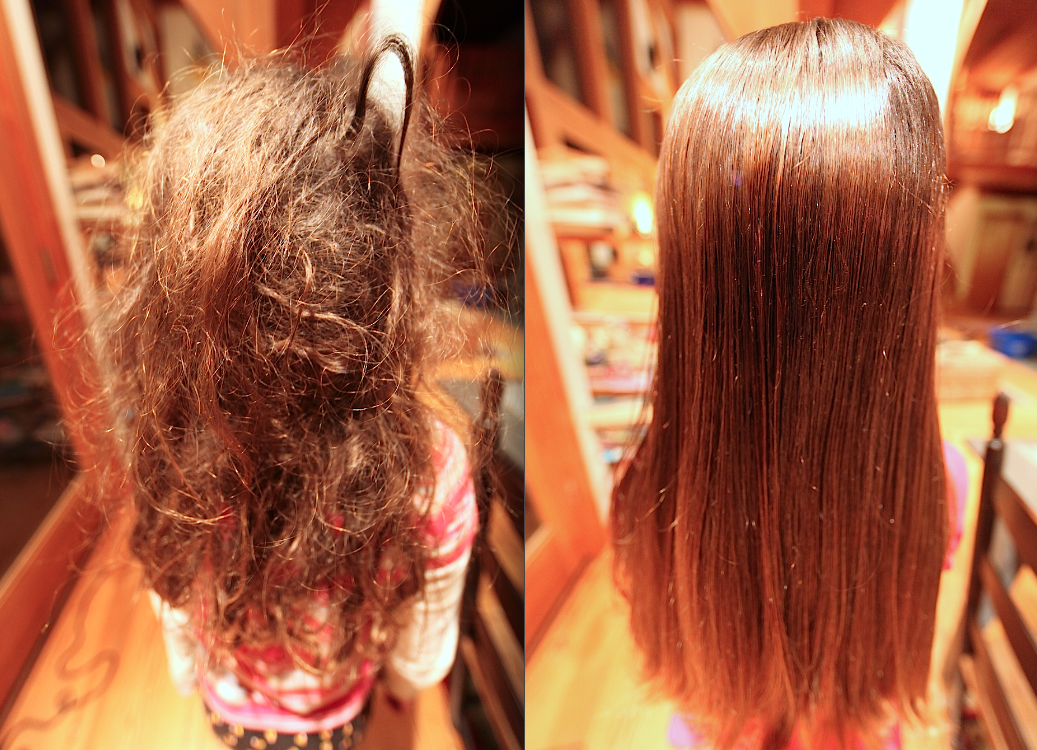
DIY Detangler Before and After. Photo © Liesl Clark

Detangle yourself from purchasing unnecessary hair products when the secret to getting difficult-to-brush curly or coarse hair tangle-free is oil and water. We’ve learned this secret the hard way. With a daughter who loves her hair long, but doesn’t love to brush it, we end up with tangled dreadlocks in a matter of hours. And sleeping on them makes the tangles multiply.

Rather than buying yet another bottle of detangler, we came up with the perfect solution. Put some of your favorite oils in some water in a pretty bottle that has a spray pump on the top of it. That’s the secret! An attractive bottle, oil and water.

Our detangler bottle is an old Aveda bottle. Photo © Liesl Clark

Be sure to shake the bottle before spraying it on your hair. We take the added step of doing the major detangling when her hair is wet. It seems to ease the pain for our 10-year-old who won’t let me near her locks with a brush.

What oils to use?

We simply looked in our cabinet and found some delicious-sounding massage oils and have used those. The key is to choose an oil as a base and then add a few drops of essential oil for a soothing scent.

These are our favorite oils to use as a base:

Coconut oil (heated up)

Avocado oil

Apricot oil (this was a bottle given to us from our women friends in the village of Kagbeni in Nepal, they use it on their hair daily)

Olive oil (then add a favorite essential oil)

Jojoba oil

Sweet almond oil

Possible essential oils to use:

Geranium oil

Lavender essential oil

Rosemary

Chamomile

Peppermint

Grapefruit seed extract

Round up your favorite oils to mix with water for a DIY detangler. Photo © Liesl Clark

Start with a 5:1 ratio of water to oil and, depending on how thick your hair is, you might want to increase the oil part of the equation. For our daughter, we’re comfortable at 3:1.

As her Daddy says, “Goodbye Buffalo Soldier Girl!” — at least for this week.

Let us know how your water and oil hair detangler goes, in the comments below!

DIY Dishwasher Rinse Aid

What the heck is rinse aid and why do we need it? If you have hard water, you might want to get rid of the those residue spots left over by the drops of water on your glassware. A rinse aid has a surfactant in it that prevents your water from leaving droplets on your dishes. But you should know that many rinse aids have toxic ingredients that I doubt you’d want to have on any surface that holds your food and drink. I’ll quote Treehugger here to outline the ingredients in question:


  • Sodium tripolyphosphate: High concern for general ecotoxicity.
  • Methylchloroisothiazolinone: High concern. The US EPA reports the LC50 value is very toxic to aquatic life.
  • Antiredeposition agent: Moderate concern for cancer, respiratory effects, kidney and urinary effects, general systemic/organ effects; and some concern for chronic aquatic toxicity, skin irritation/allergies/damage.
  • Troclosene sodium, dihydrate: Moderate concern for chronic aquatic toxicity, acute aquatic toxicity, respiratory effects; some concern for general systemic/organ effects, developmental/endocrine/reproductive effects, cancer, kidney and urinary effects, nervous system effects, digestive system effects, skin irritation/allergies/damage, damage to vision.
  • Oxybenzone: Moderate concern for developmental/endocrine/reproductive effects.


It turns out, you might not even need rinse aid. If your water isn’t hard, the little droplets left over on your dishes won’t leave a residue on them. Test your water, or better yet, go without rinse aid for some time and see what happens. But first, if you have residue on your dishes and glassware, cut the amount of detergent you use by half. Chances are you’re using too much.

If you have hard water, I sympathize. Ours is, too. Want to save some money, still have spot-free dishes, and do the right thing for the environment at the same time? Try this secret ingredient in that little rinse aid spot near where the detergent goes:

White vinegar.

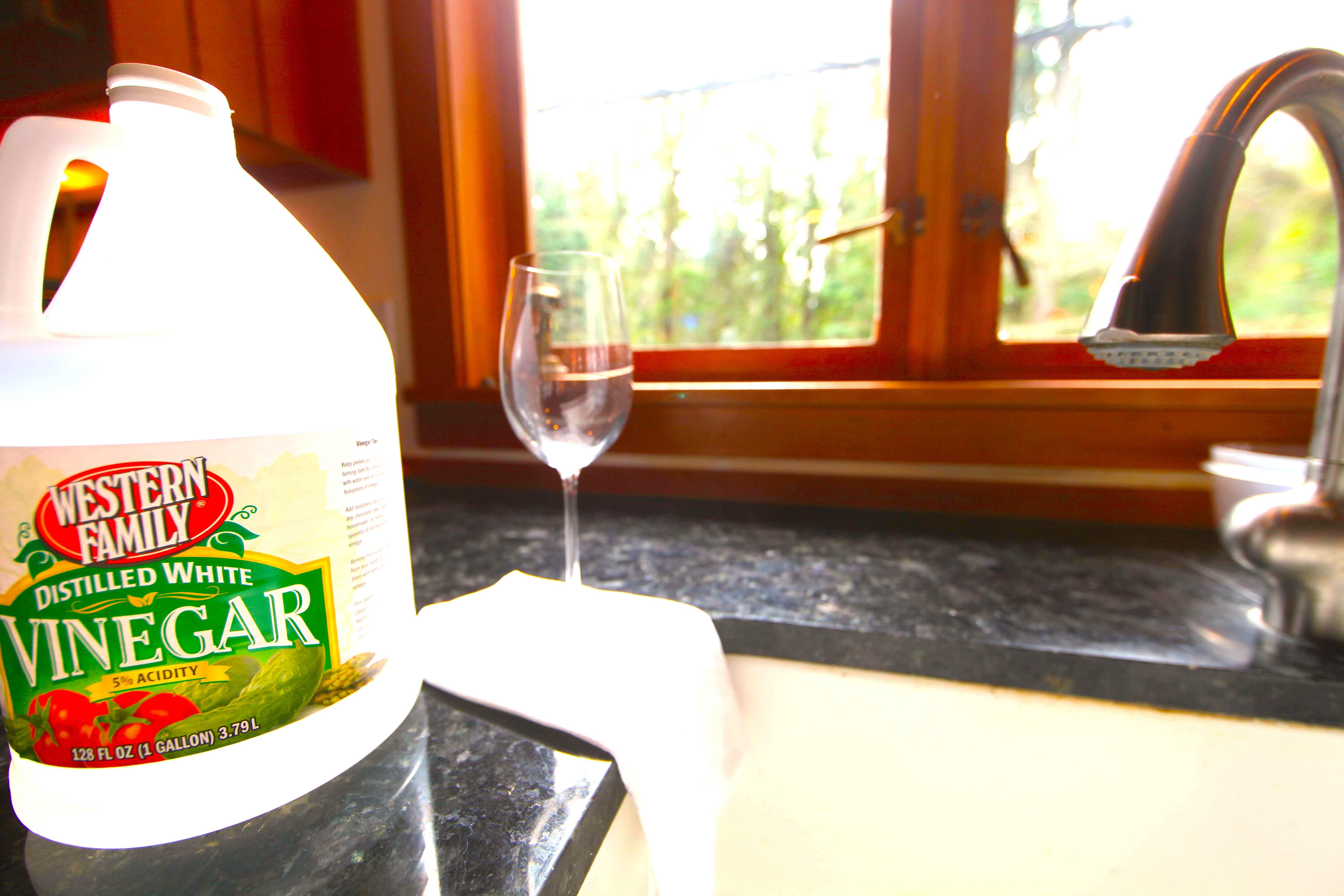
Distilled white vinegar as a rinse agent in your dishwasher will render your glassware shiny and streak-free. Photo © Liesl Clark

That’s all you need. Replace your rinse agent with vinegar and you’ll get the same if not better results. But a word of caution: if you have rubber parts in the slot where the rinse aid goes, don’t put the vinegar in there. Apparently, vinegar can corrode rubber. I know of some people who skip putting the vinegar in that special slot for the rinse aid and just put it in a small cup in the upper shelf so it can splash out over time. Either way, you’ll save a bundle, reduce your plastic footprint and keep chemicals off your plates and out of your gray water.

Distilled white vinegar to the rescue! Use this instead of expensive rinse agents. Photo © Liesl Clark

The interior of our dishwasher is metal and we’ve used vinegar now for over 3 years with no problems to the parts. I’m not sure how a plastic-interior dishwasher will take to vinegar in the reservoir and would love to hear from others who have used it.

We buy our white vinegar in bulk and then put the vinegar for our rinse aid in a plastic bottle that squirts.

Find a good squirt bottle to convert into your rinse aid dispenser. Photo © Liesl Clark

It’s stored under the sink right next to the dishwasher. You’ll likely find a good bottle in your own trash to reuse as your vinegar rinse aid dispenser, or simply reuse your rinse aid bottle.

Crystal clear dishes again. Photo © Liesl Clark

Homemade Crackers, Sans Plastic

We love crackers. But there are 2 reasons why we just don’t buy them very often:

1) They cost about $5/box in our local supermarket.

2) About 99.9% of them come with some sort of unrecyclable plastic packaging. Here’s a snappy little video to give you a sense of the mechanics (and carbon footprint) involved in packaging a small cluster of crackers into a plastic-molded container for you.

The Diverse Types of Cracker Packaging Boggle the Mind

We started looking into making our own crackers and are thrilled to report that you can make your own delicious artisan-style crackers with excellent results and they’re incredibly easy to make. We’ve tried several recipes and this post aims at pointing you toward 3 of the best!

1) We first went to our guru for all things kitchen at Rock Farmer and found a great recipe for gluten-free crackers. I’ve taste-tested many of them and can attest to their deliciousness.

2) We then went for full gluten plus a little butter to boot and found a great recipe that was so pleasing we didn’t have a cracker left an hour after baking them. The addition of seeds like dill makes these pretty special. The recipe is at Slim-Shoppin and I substituted a tea towel for the wax paper with no problem.

Homemade Seed Crackers, Recipe at Slim-Shoppin. Photo © Liesl Clark

3) A final contender for best easy delicious crackers on the Web, is at Girlichef. These are absolutely divine olive-oil crackers with lots of seeds again and it was the photography of the crackers in a mason jar that caught my attention. And I thought I had the only crackers-in-a-mason-jar kitchen. Please note that 150 grams of flour = about 1 and 1/4 cups flour. Do roll all your crackers out as thin as you can. Makes for that crunchy cracky texture we all call crackers!

So far, the only plastic-free crackers to buy that I can find are Ryvita crackers.

(Sigh)


DIY Plastic Bag Dryer

Here’s an admission: We wash and dry all of our used plastic bags and then reuse them. Since the polyethylene in our bags will still be here in 2516, it’s hard for me to think of these things as a single-use product. Since plastic bags will still be here, but in tiny micro-pieces out in our environment, in 500 years, why not use them as long as we can? With a little water and soap, they’re ridiculously easy to clean. The drying of plastic bags just takes some thought.

My mother uses her refrigerator magnets and then sticks her bags to her fridge for drying. I think it makes her fridge look like the bag monsters we see at environmental events. Other folks just stick them onto the water faucet for drying, or on a nearby plant (the bag serves to then water the plant, yo!)

Well, I like to have a little drying station right near the sink where the bags can be hung easily. To that end, my sister gave me a wooden Gaiam plastic bag dryer a few years ago and this thing is now an everyday-used staple in our kitchen.

Gaiam Bag Dryer, Photo © Liesl Clark

Gaiam Bag Dryer on My Sill © Liesl Clark

But here’s the thing: You can make your own from items you have in your house right now. Take a toothbrush holder (or if you don’t have one of those, just use a mason jar) and stuff some pebbles into it. Then poke chopsticks through the toothbrush holder holes and lodge them into the pebbles to set them firmly apart. If you’re using a mason jar, drill some chopstick-width holes into the top and insert chopsticks. Place your bag-holder by your sink and wash, hang, and reuse your plastic  bags with glee!

toothbrush-holder-bag-dryer

DIY Bag Dryer © Liesl Clark

I’ve used a pretty vase, too, for this purpose as well, making sure I have a method for firmly setting the chopsticks in place. If you have some pretty sticks to use, like curly willow, rather than chopsticks, you can make an artistic-looking bag dryer for your sink that looks beautiful at all times. Jewelry trees are also cool to use. Have fun with it, because the end game is to create a space for drying plastic bags, like Ziplocs, so you never have to buy them again. We haven’t bought any in about 10 years and although we mostly use glass these days, the reusable bags come in handy for all kinds of projects the kids have at school or at home for holding things.

I posted a link to this article on my Facebook page and, what do you know, so many of my friends are willing to admit they, too, wash their plastic bags and dry them. There were so many different ways of drying the bags, I had to share them here. Check this out:

Anahata: I use, wash, dry and reuse. To dry I just slip half of a clean dishtowel into the bag and fold the other half over the outside. Then, I roll it up and the majority of the surface moisture is absorbed in the towel.

David: Liesl, bit mundane – decline plastic bags when offered but stuff used bags into my back pocket for picking up dog shit later [not sure about the energy cost to me or the planet of washing and drying] the trash hereabouts is incinerated and turned into heat and, as far as I know, toxin-free compost.

Jake: We’ve been doing this for years – not a problem at all! Yes, our cleanliness police love to think it’s dangerous, but like you said, no different than washing and reusing a pan or a plate. We wash lightly – depending on what was in it – sometimes just a rinse, and then hang on a wooden drier like in your pic. We also reuse other bags from food items, so rarely if ever need to buy plastic bags, etc. Frighteningly, I still have a tube of Saran wrap in our drawer from college – it’s now become a bit of a pride point. Thanks for sharing and encouraging us all to be a bit more friendly to the planet, and to ourselves!…Such simple things that make a big difference if everyone does it!

Melissa: I have seen too much plastic in the ocean, during dives, to be able to stay unaware. I source food not packaged in plastic to the best of my ability and if we do end up with plastic packaging, it had to be reusable if not recyclable. Plastic zip bags of hemp hearts or wild rice, for example, get rinsed and just turned over atop of utensils in their drying basket beside the sink where the drip dry for reuse. They tend to hold up significantly better than the zip lock type bags that are made with the intention of being used once and then tossed (shudder).

Jeanne: I have always washed them out with sudsy water, rinse, then I hang upside down on a wooden spatula smile emoticon I was lucky to grow up with resourceful Scot father. We didn’t use paper towel much either, and when we did, it also hung on the wooden spatula! So I’ve been doing this my whole life. I applaud all you do and you inspire!!!

Lissa: I used to use clothespins to pin them to a thin curtain rod in my kitchen window, but there was never enough room for all of the bags. Now we use a baby bottle drying rack.

Of course I got the baby bottle drying rack from my Buy Nothing group.

Ann: I put a pair of tongs in them and put them on the dish drainer, facing up. They dry out nicely that way.

Robynn: We wash them and then air dry on a mitten rack. I found it yeears ago in some crazy catalog and thought is would be perfect for bags. It makes me crazy to have them dry on the cooking utensils since they always seem to be in the way. We can get 10 bags (or 5 pairs of mittens!) on the rack!

Caroline: I dry them on slotted spoons, single chopsticks of varius sizes (missing their mates), I loved drying them on a mitten wrack as Robynn mentined but said wrack is in use for drying doggie raincoats & such nowadays.

Robynn: I dry the doggie rain coats & dog towels on a quilt racks that seem to pop up at the Salvation Army iwth increasing frequency. Home carpenters made some great sturdy racks to hold those heavy handmade quilts – but now no one seems to put (have?) quilts on them any more! smile emoticon

Caroline: I also use a large glass vase I got from Value Village for 50 cents years ago. I use branches that fall from trees, ut them in the vase & use them to dry plastic bags.

Tammy: yup, turn inside out, wash and they stay up alone, drying on the counter. dont buy anything ,just turn inside out and wash” For soups and messy stuff, ziplock has some great containers

Sandie: I put mine over mason jars and let them dry out or use a large wooden spoon in a jar for the larger bags.

Deidra: I’ve been looking into the fabric/oil cloth type that are dishwasher safe. My boys tend to not save the plastic ones no matter how much I cringe.
Shanda: I reuse mine over and over. I rarely wash them, though. If it’s merely a little moisture from the produce, I just dry them on the fridge with magnets. I only wash if the produce goes bad, or if the bags contained meat.

Stephanie: We use our wine rack as a bag dryer.

Stephanie Browne's photo.


What does your bag-drying rig look like?