15 Reuses For Your Live Christmas Tree

Each year's Christmas tree is reused on our property. © Liesl Clark

Each year’s Christmas tree is reused on our property. © Liesl Clark

Before you send your live Christmas tree out on the curb for yard waste pickup or to the Boy Scouts for recycling, there may be another use that’s perfect for you and your tree.

  1. Kindling: Throw your live tree in your brush pile, let it cure, and then cut it up for kindling for next fall.
  2. Save Your Perennials from Freezing: Cover your perennial beds with your cut up pine boughs to either insulate them from future sub-zero weather, or for preserving the piled up snow that’s already on them. Repeated freeze-thaw cycles can kill your best perennials.
  3. Trivets and Coasters: Cut 1” disks from the trunk to make trivets or coasters. It’s a fun project for the kids
  4. Bird Feeder: Prop up your tree outside in the back yard and trim it with strings of popcorn and birdseed ornaments so your wild birds can have a winter feast.
  5. Do Something Really Cool With Your Tree: Fabien Cappello fashioned stools from abandoned Christmas trees on the streets of London.
  6. Plant Stakes: If you don’t have access to sticks in the woods near you, strip the branches of their needles and use them to stake your indoor plants that need some extra support.
  7. Pea Sticks: You can use the stripped branches as pea sticks later in the spring. Criss-cross them to make a trellis for your peas to grow up.
  8. Marshmallow Sticks: Those same pea sticks can then be used as marshmallow-roasting sticks in the summer.
  9. Garden Edging: Cut the trunk into disks to use as a garden border if you line them up on their sides and dig them 2” into the soil. These look really pretty on the garden’s edge.
  10. Fire Starter: We save some of our needles to use in our homemade fire starters.
  11. Potpourri: Use the needles for a homemade balsam potpourri.
  12. Garden Path: Use the disks cut from your tree trunk as flat stepping “stones” in your garden path. If you have a chipper, the wood chips from your tree can make nice garden path material, too.
  13. Erosion Barrier: We have used past trees along a slope on our property to help prevent a slope from slipping. This is our ongoing brush pile that is stabilizing the slope and holding up our lawn above it nicely.
  14. Habitat: If your tree ends up in your brush pile, or out in a spot on your property, it provides cover for birds and little rodents, making a safe habitat for plenty of critters. Some experts claim that throwing a tree into your pond can provide safe cover for your fish.
  15. Save the Blue Herons: In Illinois a special Christmas tree recycling program reuses the trees as nesting materials in a blue heron rookery.
    Our Elves © Liesl Clark

    Our Elves © Liesl Clark

    What do you do with your tree? Are there any other reuses that we didn’t include?

Easiest Prettiest Ornament You’ll Ever Make

As we’re just two days to Christmas, I’ll keep this brief. But suffice it to say, this is a great children’s activity in the days before Christmas.

Items Needed:

1 Plastic Lid

Non-stick cooking oil or spray

Glue

Leftover beads, sequins, glitter, sparkly stuff

We even used some beach glass and small shells from the beach

Piece of ribbon or yarn

All you need is to pull a plastic dairy tub lid out of the recycle bin, like a large yogurt container lid. The 4″ wide version works well but you can use a small one, too, for a smaller ornament. Spray or lightly oil with non-stick cooking oil. Then pour glue into the lid. Start placing your items in the glue spaced nicely around and don’t be shy just throw it all in there. Be sure to also stick a loop of yarn or ribbon at the top to act as your hanging ribbon. Wait for a couple of days for the glue to dry. If you place your lids in the sun or in a warm place the drying time goes faster. When it’s dry, just flex the lid around a bit and the ornament will come off easily! You end up with a pretty ornament that glows and sparkles with Christmas lights behind it. Easy!

Easy Peasy Pretty Ornament From a Plastic Lid Mold

Easy Peasy Pretty Ornament From a Plastic Lid Mold

Handmade Candles, Sharing Economy Style

Handmade Marbled Wax Scrap Candle

Handmade Marbled Wax Scrap Candle

I love making something from nothing, or at least something that costs us nothing. Our friends are kind enough to endure our yearly candlemaking and candlegiving tradition, and we boast about the fact that these candles are all made from the wax scraps friends and neighbors share with us.

Here’s how it’s done:

  1. We take old candles, or the lumps of wax left over after you’ve burned yours out, and turn them into new candles, recycling the wicks and all.
Scrap Wax From Gifted Scrap Candles © Liesl Clark

Scrap Wax From Gifted Scrap Candles © Liesl Clark

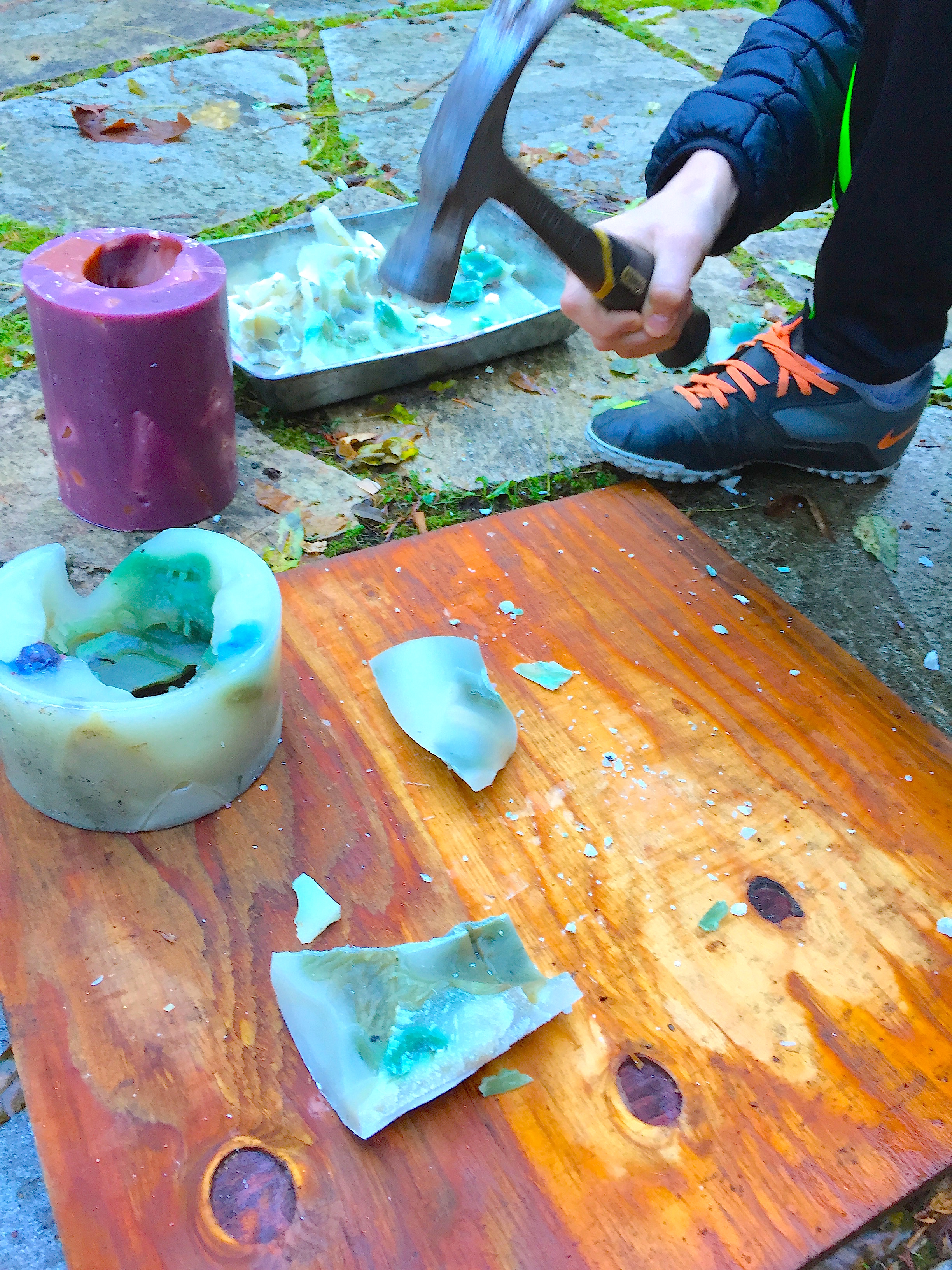
2) Using a hammer on a wooden board is our preferred method for chunking out candle wax, but we also create our own colors of melted wax, pour it into a brownie pan, let it dry and then hammer the 1-2 inch wax into pieces.

Hammering Out Wax Chunks From Used Candles © Liesl Clark

Hammering Out Wax Chunks From Used Candles © Liesl Clark

3) We have candle moulds in many shapes and fill them with chunks we create out of the used candles. Be sure to remove the wicks from the old candles and any burned parts.

Place your scrap wax inside your candle moulds.

Place your scrap wax inside your candle moulds.

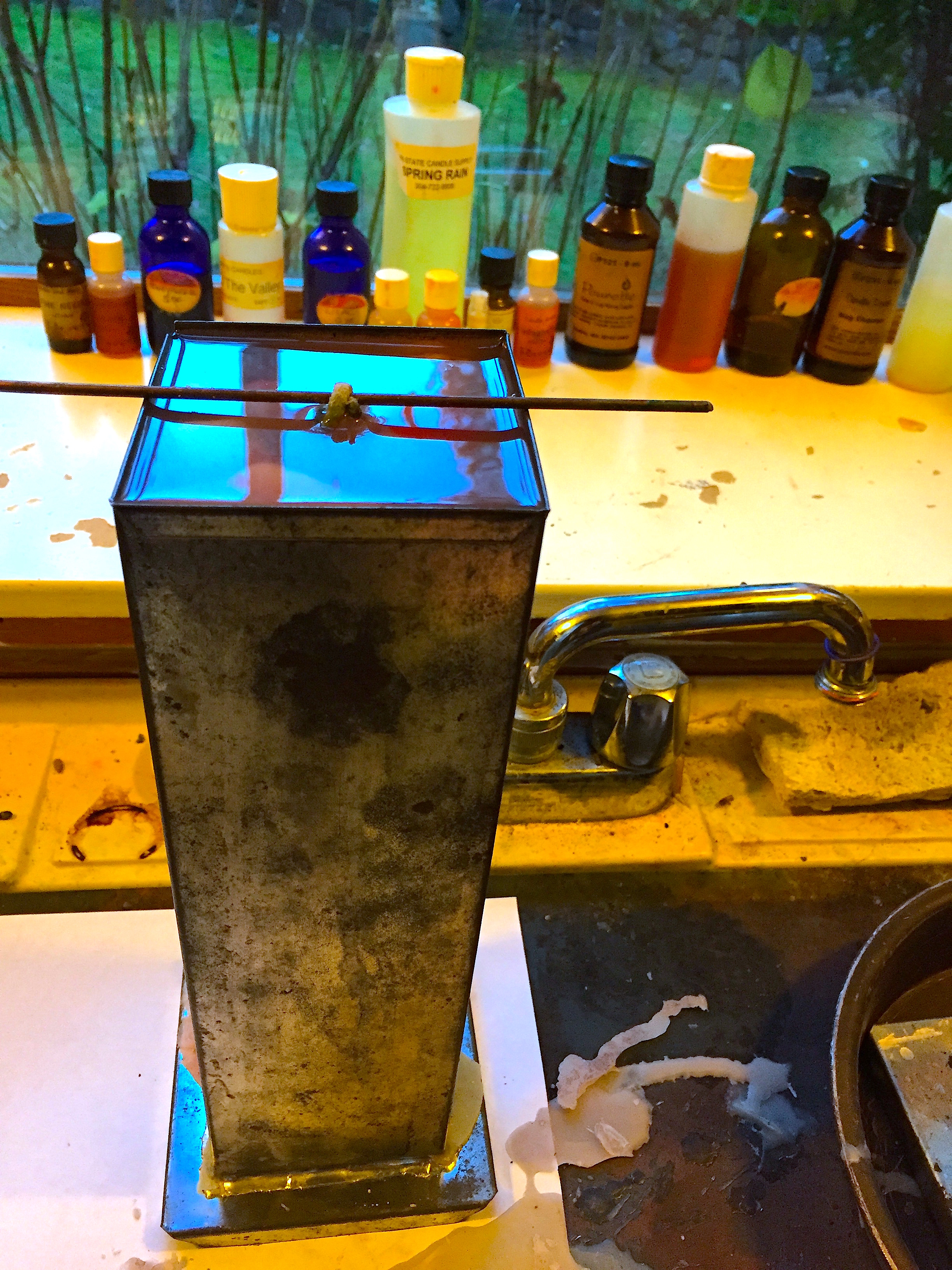
4) We use wicks from old candles that we melt down and recycle them as wicks for our new candles and string the wicks into our moulds.

5) We then melt down a contrasting color of wax from saved old candles to pour into the moulds around the colored chunks. A drop or two of an essential oil can provide some aromatherapy for those in the room when your burn your new candle.

Pour Your Melted Wax Over the Chunk-Stuffed Mould. © Liesl Clark

Pour Your Melted Wax Over the Chunk-Stuffed Mould. © Liesl Clark

6) Let your mould sit overnight to solidify and cool. In the morning, pull your candle free from the mould.

IMG_0676 copy 2

Enjoy!

© Liesl Clark

© Liesl Clark

Doll Ornaments

Most of our ornaments are handmade or free finds we’ve rescued from the landfill. That’s not to say our tree looks like it’s decorated with junk. Quite the contrary. Each little piece has a story to it: where was it ‘recovered’ or who created it.

We love to find small dolls the children are finished playing with and turn them into ornaments. This one’s so easy it takes all of 30 seconds to make…er…once your glue gun is heated up.

Doll Ornaments, Photo © Liesl Clark

Doll Ornaments Look Like Angels, Photo © Liesl Clark

All you’ll need is:

An assortment of dolls

A glue gun

Scissors

Ribbon

All you need to make your dolly-ments, Photo © Liesl Clark

All you need to make your dolly-ments, Photo © Liesl Clark

Glue the ribbon together into a loop. Then glue the loop to the back of your doll. Ours have hats which make the gluing really easy. Now hang your dolly-ments onto the tree! Other toys lend themselves to ornamentdom if you’re so inclined. We’ve made lego ornaments, matchbox carnaments — you get the picture.

How I Kicked the Plastic Food Container Habit

I have a thing about plastic. After picking up several hundred pounds of it off our beaches, and then returning home to find the same stuff in our everyday household items, especially in the kitchen cupboards holding our food, I decided to go cold turkey and threw all of our kitchen cupboard plastics out of the house.

Zero Waste Kitchen Tips photo © Liesl Clark

Zero Waste Kitchen Tips photo © Liesl Clark

I gave away our tupperware and all of our Teflon-coated pans and appliances on our local Buy Nothing group (I was really going deep with the anti-plastic thing). Plastic travel mugs, water bottles, our rice cooker, breadmaker, and food dehydrator were not welcome in our home. We took stock of the things that we typically bought in plastic packaging: Rice that came in plastic bags as well as various grains, pastas, nuts, and dried fruit. How was a family to switch completely to non-plastic-packaged staples?

Plastic-Free Bulk Options: Oils & Maple Syrup Stored in Glass. Our Own Honey, too is Stored in Glass. Photo © Liesl Clark

Plastic-Free Bulk Options: Oils & Maple Syrup Stored in Glass. Our Own Honey, too is Stored in Glass. Photo © Liesl Clark

Bulk Up: Our answer was in bulk foods. I can go to our local store with my own containers and buy most of what we need from our bulk department. I invested in some large glass jars and store almost everything in them (you can see brewer’s yeast in our last plastic containers in the upper left corner there — it’s mostly used for our pets).

Storage Jars for Sugar, Nuts, and Grains. Photo © Liesl Clark

Storage Jars for Sugar, Nuts, and Grains. Photo © Liesl Clark

An even cheaper solution is to join a local organic bulk food delivery service where I can get large amounts of staple foodstuffs on the cheap. For us, this option makes sense because we eat rice and dhal (red lentils) many times a week like most people do on the Indian subcontinent. Since we’ve raised our children to be accustomed to simple meals, we don’t want to start them on too many processed foods at this stage in their development. So, dhal bhat it is, along with Indian and Thai curries and lots of variations on rice and bean Mexican-style dishes. The kids love pasta, too, so we get all of it in bulk.

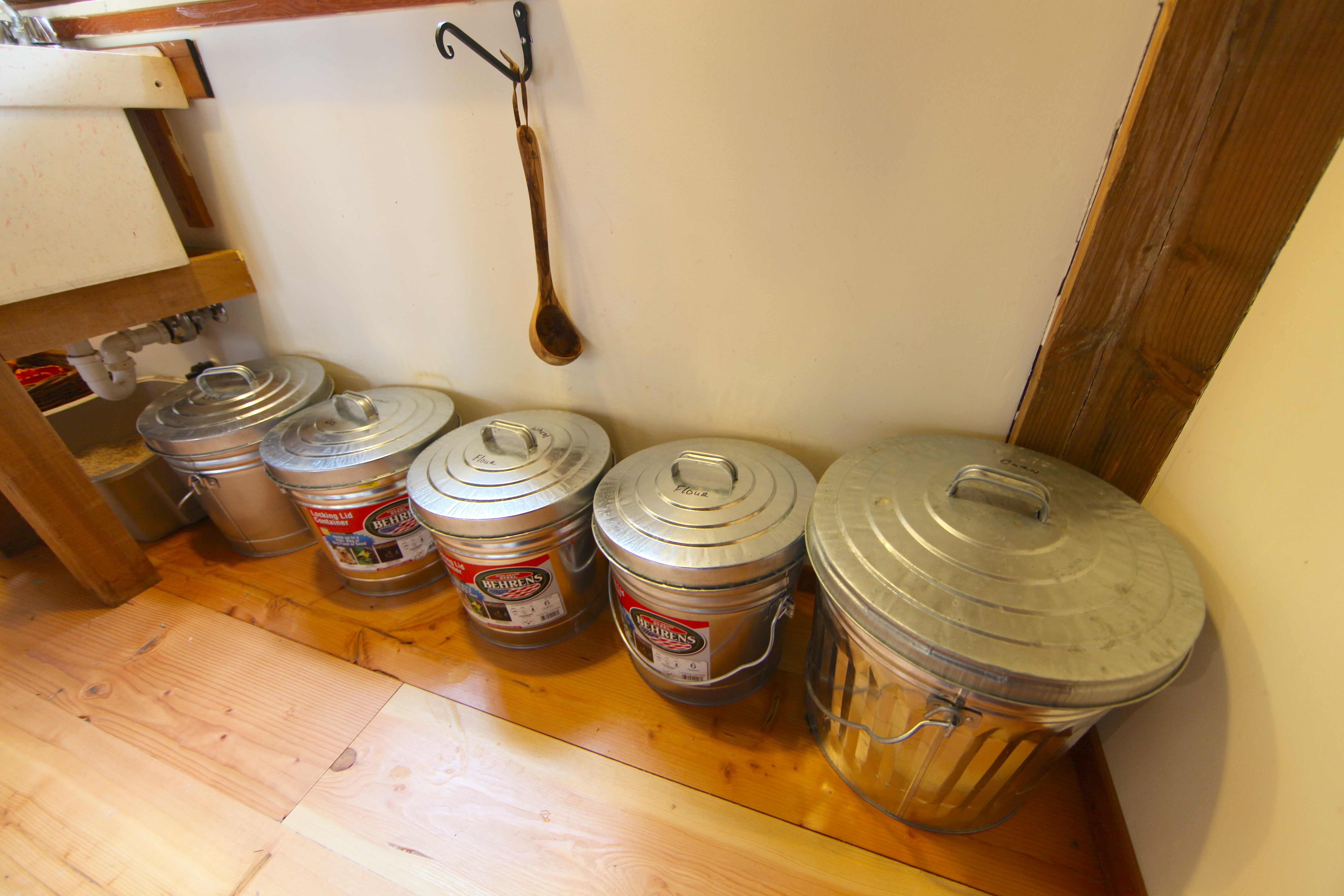
Bulk-Style Food Storage. Photo © Liesl Clark

Bulk-Style Food Storage. Photo © Liesl Clark

Rice comes in 25 and 50 lb bags, dhal in 25 lbs and I buy flour in 50 lb bags since we bake our own bread. Pastas comes in 10 lb increments as well as all of our nuts and dried fruits. The large bags of flour and grains are then stored inside galvanized metal bins in our pantry.

Flour Procured From the Organic White Flour Bin. Photo © Liesl Clark

Flour Procured From the Organic White Flour Bin. Photo © Liesl Clark

Loving the Bulk Bin Life. Photo © Liesl Clark

Loving the Bulk Bin Life. Photo © Liesl Clark

When we run out of power, we have enough staples of one sort or another to keep us going, with a veggie garden, plenty of berries and fruit trees to round out our produce needs. Even the chickens and bees contribute to our overall food production on this micro-farm.

Bright Lights Chard in the Garden. Photo © Liesl Clark

Bright Lights Chard in the Garden. Photo © Liesl Clark

Was it difficult to move away from plastics in the kitchen? Remarkably, no. As soon as we stopped buying single or even 1-week-lasting servings of things from the grocery store, we saw the plastics disappear. We do occasionally buy things like tortilla chips for the guacamole we make (avocados from CA of course.) They come in a crinkly chip bag, so we’re not completely devoid of plastics. Although, I’m considering getting them in bulk from our local Mexican restaurant. They make them by hand and I can just order them as takeout in my own container! We also see plastic rings around some of the glass store-bought items we get, like mayonaise. But our “trash” is truly minimal, now that the common grocery store plastic packaging has been greatly reduced.

If you want to give it a try, zero wasting your cupboards, feel free to ask questions here. Your cupboards will look beautiful and your whole foods diet will bring about healthy eating habits that your body will thank you for. Or if you live nearby, I’d be happy to help you do it in person, a sort of in-home plastic-free cupboard consultancy, if you’re interested. Feel free to connect in the comments below!

Stop Junk Mail With PaperKarma

Be mindful of your paper karma. This one's worth reducing. Photo © Liesl Clark

Be mindful of your paper karma. This one’s worth reducing. Photo © Liesl Clark

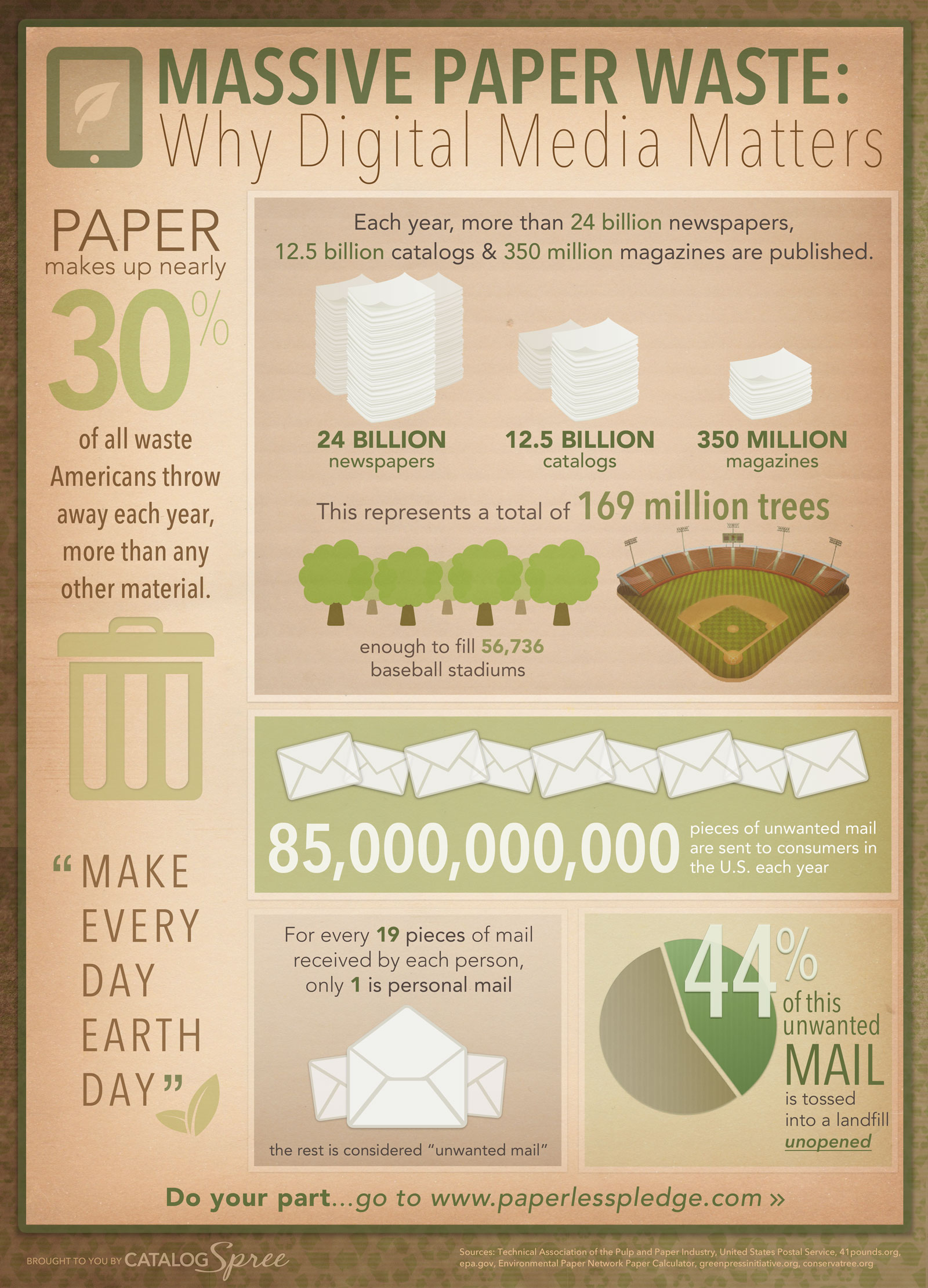
According to some estimates, the average US household receives 850 unsolicited pieces of mail each year. Our household was once way over that average, and for years I tried to reduce it. I can say, two and a half years after subscribing to PaperKarma, that our junk mail is now GREATLY reduced! PaperKarma is my personal junk mail pitbull, chasing that unwanted paper advertising away, nipping at the heals of those bold solicitors, telling them to remove me, forever, from their memory banks.

Here’s a picture of one month’s-worth of junk mail, two years ago, sitting on my desk:

One month of junk mail -- unsolicited. Photo © Liesl Clark

One month of junk mail — unsolicited. Photo © Liesl Clark

Today, that pile is about a quarter as high.

Enter PaperKarma.

As a Buddhist, I admit I was immediately drawn to the app.

I’m on every do-not-send-list I could possibly sign up for through the Direct Marketing Association, and I’ve diligently kept up with Catalog Choice in getting rid of unwanted (that means all) catalogs, but I still find that I have to call companies in-person to request no more catalogs around Christmas-time. My last ditch effort was to try the mobile app called PaperKarma.

PaperKarma, a free app that'll reduce your junk mail for you.

PaperKarma, a free app that’ll reduce your junk mail for you.

This app, named “The Catalog Killer” by Entrepreneur Magazine is FUN! Imagine receiving an unwanted piece of mail, taking a picture of it, hitting a button and seeing all future solicitations from said company (eventually) disappear forever. That’s what PaperKarma offers. And I can tell you from experience that they follow through with their promise. Since I started reducing my own paper karma we’re definitely receiving less junk mail. Some days we even receive, gasp, no mail. A few pieces of unwanted mail keep trickling in, but they’re ones we haven’t reported to PaperKarma yet. So I diligently send a quick picture to the PaperKarma bot that gracefully sends a notice to the offender to make sure they, ahem, TAKE ME OFF THEIR MAILING LIST.

PaperKarma is like having a mail (not male) secretary who handles something that’s offensive to you which you have scant time to deal with. I feel like the CEO of my mailbox domain every time I get a notice from PaperKarma saying they’ve successfully reached one of those corporations I didn’t ask to be targeted by. This is what apps were meant to be: our behind-the-scenes-clean-up-our-messes-while-defending-our-ideals-and-hence-saving-the-environment-type of digital enterprise. PaperKarma is also local, i.e. they’re Seattle-based and we’re just a hop on a ferry away, so I feel like we’re supporting a local enterprise that has huge national environmental impact.

CS-Earth-Day-Infographic-2013

If you have a smartphone, download PaperKarma — it’s free. If “karma,” like “samsara,” is an action or deed that brings light upon the cyclical reality of cause-and-effect, PaperKarma’s bots are truly karmic. Join me in looking forward to getting a rare piece of junk mail, just to experience the sweet pleasure of being a tattle-tale, reporting that offender to PaperKarma’s database that’ll set in motion the cause-and-effect of requesting to be removed from unwanted mailing lists. Federal law says companies must comply if such a request is made. And if they don’t, PaperKarma will check in with you to see who’s not listening and follow through on your behalf. Your personal paper-chasing lawyer, getting it done. It’s joyful, this process, and will save hundreds and thousands of trees as well as carbon in the delivery of your unwanted mail and wasted marketing brain cells on people like you and me.

25 Uses for Silica Gel

The Many Uses of Silica Gel. Photo © Liesl Clark

The Many Uses of Silica Gel. Photo © Liesl Clark

Silica gel is one of those little-understood materials. Although the little silica gel packets say “Do Not Eat, Throw Away” that doesn’t mean you have to follow this misguided advice and think the little gels are poisonous. You’ve likely unknowingly put some in your mouth already or rubbed it all over your body as it’s used in some toothpastes and also exfoliants. They’re a non-toxic inert desiccant that will dry out anything they sit near. Their uses are many and hence it’s worth thinking twice about throwing them away. I collect them and share them in my local Buy Nothing group every 6-13 months with artists and others who praise their worthiness for reuse.

The Carolina Poison Center has this to say about silica gel:

“The gels are a form of silicic acid, which is similar to sand. Silica gel is non-toxic, meaning that it is not poisonous if eaten. The package says “DO NOT EAT” because (1) it is not food, and (2) it could be a choking hazard.”

The ASPCA also deems it nontoxic, usually producing only mild stomach upset, which typically resolves with minimal to no treatment for your pet.

So, now that we’ve determined it’s not a poison to be avoided, we’d like you to not throw it away because those little packets are useful! Silica gel can be reused over and over again and has some excellent applications in the home and office.

This list will go from the most obscure reuses to the most common:

1) If you have trouble keeping your car windshield from fogging due to moisture trapped in your car, place a couple of silica packets on the dashboard and they’ll go to work for you.

2) Put a silica gel packet inside your halloween pumpkin to stave off the mold.

3) Extend the life of your razor blades by placing silica gel packs in an airtight container with silica gel.

4) Throw in your ice skating bag to help keep the blades from oxidizing.

5) Store a few with your fishing gear, especially dry flies.

6) Fight mold! Stash silica packets in the damp corners of your home.

7) (My favorite.) Use silica gel packets as tiny throw pillows for your doll house. If you cover them with scrap fabric, all the better.

8) Use a little in your kitty litter. Your commercial kitty litter manufacturer does.


9) Put packets of silica gel in with your silverware. It slows down the tarnishing process.

10) Place them inside your camera cases, with lenses, to keep your equipment dry.

11) Put silica gel in with your boxes of stored photos and slides to preserve them longer.

12) Your down jackets and down sleeping bags will benefit from a few packets of silica gel to keep moisture out.

13) Put a few packets in with your garden seeds to keep them dry.

14) Stash a packet or 2 with your jewelry to prevent tarnishing

15) All keepsakes in the attic in boxes can benefit from a few silica packets nearby.

16) Keep a couple packs in the pockets of your luggage to keep your clothes and travel items dry.

17) Silica gel and dried flowers are excellent friends.

18) Store them with your electronics.

19) If you have video tapes, DVDs or old audio cassettes, silica gel would be welcome nearby.

20) If you think your silica gel has been exposed to a lot of moisture, you can put them in a 150 – 200 degree oven for a few minutes to dry them out and restore them to functionality again.

21) If you still have silica gel packets hanging about, pass them on to a receptive neighbor through your local Buy Nothing group. Share them, so no one ever has to actually buy them.

22) Use them with your kids to teach about volume. Here’s how one science teacher writes: “I use them in science class. The students love playing with the silica balls when they swell up with water. We measure how much water they can absorbe by measuring them when they are dry then measuring again after a few hours.”

23) When your cell phone falls in the dink, place several packets in a ziplock bag with your wet phone. Leave for 12-24 hours and check for signs of any remaining condensation on lenses, etc. You may just save your cell phone!

24) Another reader tells us that if you put your hearing aid in a ziploc bag overnight with silica gel it can help to keep the moisture out of the hearing aid.

25) Melita tells us they’re a huge help with dirty diapers: “I tape them to the top of the rubbish bin I put nappies in. It absorbs the smells. Every week I change them over. Works a treat!

Don’t stop at 25!

26) Put them in an airtight container with your leftover nori. It’ll keep your nori crisp, not gummy.

27) If you have trouble with dampness in our under-sink cabinet, causing all sorts of damage or the dishwasher powder box to get damp and clump up. Silica gel to the rescue! Throw some packets in with your dishwasher powder.

If you have more reuses for these little packets, please share them here.

20 Reuses For Orange Peels

Citrus Peels Have Many Reuses. Photo © Molly McCoy

We’ve been going through a lot of satsumas and clementines lately. This time of year, we save the skins for reuse. Turns out orange peel skin, and citrus peel in general, whether it’s dried orange peel or fresh, is a versatile material used widely from the kitchen, to the garden, and in the fireplace. If you don’t compost, here are our top 20 orange peel uses to entice you to keep them out of your garbage.

1) Make a natural cleaning product. It will work wonders in your house and office and is really easy to make. Saves a bundle, too.

DIY All-Purpose Household Cleaner

2) Dry your orange peels and use as fire starter. They’re naturally flammable and burn longer than your ordinary stick.

3) Orange peels in water make a great insect repellant for the home. Keep ’em out!

4) Create an orange peel candle.

5) Orange peel essential oil is a really strong ingredient to add to any natural house cleaning product.

6) Put all your orange peels in the compost for natural fertilizer for your garden.

7) Use your peels for orange zest in recipes.

8) Place some dried peels in your old brown sugar to make sure it doesn’t solidify due to moisture.

9) Make spiced candied orange peel and give it as a gift.

10) Orange peel roses look beautiful as a centerpiece.

11) Try your luck with an orange peel sugar scrub to kiss winter skin goodbye.

12) Start your garden early by growing seedlings in a citrus peel starter pot.

13) Squeeze orange peels onto your dryer lint to enhance their ability as fire starter fodder.

14) Dried orange peels can extend the life of your potpourri.

15) Orange peel deodorizer: Put a few orange peels in the bottom of your trash cans. They are a great deodorizer.

16) Natural mosquito repellent: Try rubbing orange peels over your skin to deter those bugs.

17) Make an orange peel bird feeder for the birds.

18) Simmer with your favorite whole spices like allspice, cinnamon, and cloves to create a lovely aroma in your home.

19) Make some cool looking orange peel teeth for Halloween.

20) Occasionally put an orange peel down into the garbage disposal to clean out your disposal and make it smell fresh.

Don’t stop at 20!

21) Craft some adorable orange peel boats with the kids.

What do you do with your orange peels?

Have Yourself a Handmade Christmas

In our house, Christmas is a special time to create things together and follow traditions we’ve established since our children were born. There are so many wonderful projects to undertake together: Wreath-making, gingerbread house constructing, ornament crafting, cookie baking, tree-finding, gift-making, creative wrapping, card-garlanding, and candle-making. Every day our activity advent-ure calendar is filled with yet another family-bonding event that makes this time of year so alluring. I try my best to use this special time as a model for the rest of the year. The lessons learned from these projects spill over to the new year and beyond as we work together to create outdoor garden and play spaces, grow our own food together, and transform everyday things back into useful items for our household.

Felted wool elf hats are easy for children to make. Photo © Liesl Clark

Felted wool elf hats are easy for children to make. Photo © Liesl Clark

Elf Hats: If you have an old wool sweater, either green or red, felt it and then have the kids craft little elf hats. They’re really easy to sew together and embellishing them with your saved-up scraps of fabric, ribbon, bells will make them a permanent part of Christmases to come.

Edible Zero Waste Snowmen: If your children are having a Christmas gathering or a party at school, they can contribute to the party by making zero waste snowman treats! How are they zero waste? We buy the candies from our supermarket’s bulk bin, the marshmallow bag can be recycled with plastic bags, the baking cups are compostable (and the box recyclable), the sprinkles container can be recycled, the toothpicks are compostable, and the toothpick box can be recycled with our paper.

Little Marshmallow Snowmen, A Zero Waste Treat Handmade by Kids

Little Marshmallow Snowmen, A Zero Waste Treat Handmade by Kids

We love these little snowmen because they’re fun to make and appeal to the nut-free gluten-free crowd. We use our favorite vegan marshmallows, Dandies, which are smaller than traditional marshmallows.

Marshmallow Stacking is Fun, Photo © Liesl Clark

Marshmallow Stacking is Fun, Photo © Liesl Clark

First thread 3 marshmallows through a toothpick leaving the end of the toothpick sticking out. Next, place a spice gumdrop on the snowman’s head for a hat, spearing it with the toothpick tip. Use another toothpick to poke eyes and buttons into the marshmallows. Press jimmies or sprinkles into the holes for eyes and buttons. Break the toothpick in half and place them in as arms for your snowmen and women.

Enough for the Entire Class, Photo © Liesl Clark

Enough for the Entire Class, Photo © Liesl Clark

Use some paper baking cups (stack 2 together so they’re sturdy enough for small hands) to hold your snowpeople in a bed of organic jelly beans — just enough to make any child’s mouth water.

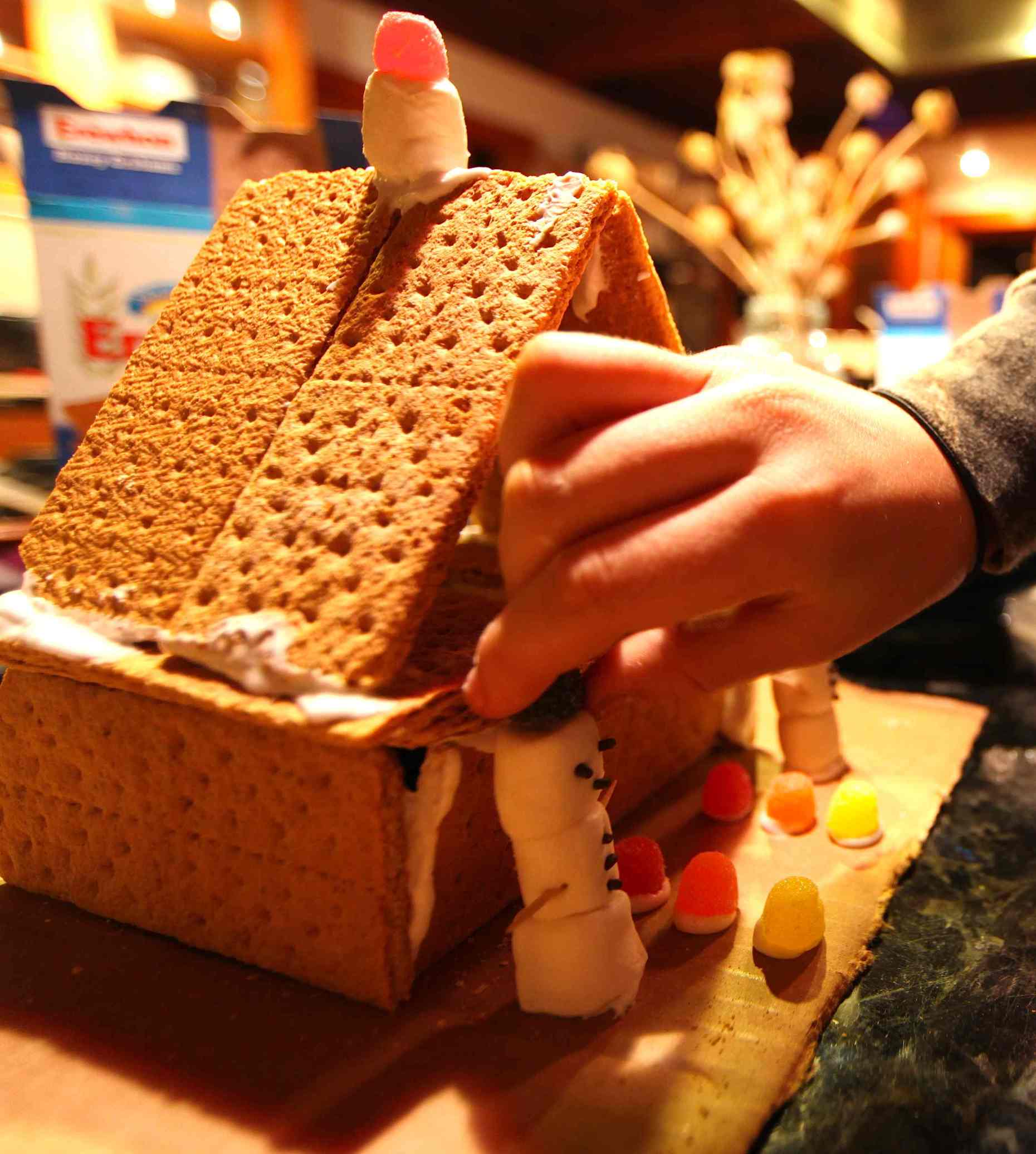
Graham Cracker Gingerbread Houses: Another zero waste edible we love to create are our holiday graham cracker gingerbread houses. With the leftover jelly beans, gum drops, snowmen and some powdered sugar and graham crackers, we were able to build little houses for display on the dining room table.

Graham Cracker House Magic, Photo © Liesl Clark

Handmade Christmas Magic, Photo © Liesl Clark

The key is to have good “sugar glue” by making your own royal icing. I had a cup of powdered sugar, some cream of tartar and an egg in the hen house so we were able to whip up the icing and the rest was our own hands.

Cottage Construction Zone, Photo © Liesl Clark

Cottage Construction Zone, Photo © Liesl Clark

All on a Fancy Cardboard Platter

All on a Fancy Cardboard Platter

How to Recycle Aerosol Cans

I was driving down the road and lo and behold, a gaggle of aerosol cans could be seen by the roadside. There were 5 of them, all cans of whipped cream, their tops off, strewn to indicate someone wanted to get them quickly out of their possession. It was less than a week since Halloween so I deduced they were a discard from a Halloween reveler who didn’t want to be caught with evidence of whipped-up foul play.

Roadside aerosols, Photo © Liesl Clark

I pulled over and threw the sticky mess into the back of my car. What was I to do now with these cans? Do they go in recycling, in the garbage, or is there another alternative for aerosol cans?

Aerosol Cans Are Made of Metal and Can Be Thrown in Scrap Metal, Photo © Liesl Clark

Most people don’t realize that in many areas you can recycle aerosol cans. They typically don’t go in your regular recycling but can go in your local scrap metal bin. Metal has value. Check with your regional government recycling website to see where they recommend you put aerosol cans. But there’s one hitch to this process: You need to make sure all the aerosols, i.e. the gas is fully expended. So, use up what’s inside that spray can of yours and then make extra sure you’ve let all the compressed gas go. Here’s a You Tube video to show you how to fully expend your aerosols, if you’re a purist. This way the pent up gas won’t be a hazard to workers at waste facilities. Word has it that many an aerosol can, when included with garbage and pressed down in a crusher, have exploded in the face of workers around garbage trucks and transfer stations. To ensure their safety, please expend all of the contents of your aerosol cans.

Expend All Gas in Aerosol Cans, Photo © Liesl Clark

If you have a partially used can of something, like spray paint or even shaving cream, you’ll need to take it to your local household hazardous waste facility. They will expend the aerosols for you to make sure this potentially dangerous can of goods doesn’t wreak havoc. You might consider Freecycling your can of stuff if it’s only partially used. Chances are one of your neighbors will enjoy taking your aerosol stuffs off your hands and use up the contents of the can for you. In my case, I had the help of my dog and my gourmand chickens.

Find Someone Who Could Use Up The Contents of Your Aerosol Can, Photo © Liesl Clark

Gourmand Chickens Love Whipped Cream, Photo © Liesl Clark

If you want to be really cool you could reuse your can, like the artists at Can Love do, and create amazing works of art from all the parts of your beautiful aerosol can. No matter how you look at it, that aerosol can has no reason to end up in a landfill or incinerator. The stuff it’s made of is a resource to someone.

Oh, and you might try to look into alternatives to aerosols and those plastic-and-metal canisters in the first place, like this super delicious post about whipped cream less plastic.

Do you have any aerosol can adventures to share with us? Please do.