Yarn Scraps Are For The Birds

Spring is in the air! Save some scraps and bits to offer to your songbirds for spring nest-building. An old suet feeder will do the trick. At this time of year our feathered friends need all the help they can get.

Here are some great items that you can include:

Natural fiber yarn

String

Horsetail Hair

Shredded Paper

Feathers

Hay

Straw

Wool

Small Fabric Scraps

Cotton Balls

Cotton Wadding from Aspirin Bottles

Dried Moss

Twigs

Leaf Stems

Dog Hair

Cat Hair

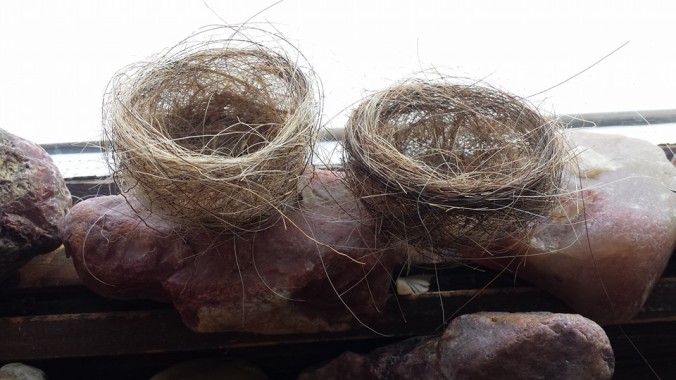
So, don’t throw your yarn scraps and other bits away. Save them for the birds! In Paonia, Colorado, one spring, my son found the most unique birds nest, made entirely of yarns, hay, polyfibers, human hair, horsetail, and string.

IMG_4213 Photo © Liesl Clark

Backyard 7 Summits Project: Kitsap County’s Highest Peak

By Cleo Clark-Athans, Grade 4

IMG_475892539-11

Climbing Gold Mountain © Liesl Clark

We did it!

We reached the highest point in our county today. It’s called Gold Mountain and is only 1,687 feet high. It took about an hour and 10 minutes to get to the top. Two miles to the summit, but it was straight up through a thick forest, until we hit a logging road with extraordinary views.

IMG_1327

We could see across many lakes and Hood Canal to the Olympic Mountains out on the Peninsula. My brother was happy to get to the top, with sweeping views and high winds.

IMG_1328

Million Dollar View, 50 Miles Wide © Liesl Clark

Although our county doesn’t have extremely high peaks, I’m planning to climb all 7 of the highest mountains as part of my Backyard Seven Summits Project, an attempt to get kids outdoors to explore the high points in their own counties.

IMG_1329

Gold Mountain Lets You See From Sea to Summit © Liesl Clark

We’ve done 2 out of 7 summits and they’re all beautiful hikes, in the Blue Hills of Kitsap County. Most people don’t even know about these peaks. They’re hilltops for all of us to get on top of for great expansive views of a luscious green landscape from the sea to the glaciers on the highest points of the Olympic Peninsula.

IMG_1331

Sibling Time Together © Liesl Clark

The journey down is like a dream, easy, and it goes by fast, with so much to see on the horizon miles and miles away. But if you watch your feet there are semi-precious stones to be found on these trails, like agates. We learned this from a man we met on the trail. He also said he saw fresh puma tracks. Hiking gets people outside but it also gets people to talk to each other.

IMG_1325

PNW Whimsey © Liesl Clark

There’s plenty to marvel at when you just get outside. Our dog, Sailor, knows this.

Have you climbed your own seven summits in your neighborhood? If so, please write in the comments below so we can hear about your adventures.

IMG_1324

The Backyard Seven Summits Project © Liesl Clark

Garden Glove Love


Roadside Garden Glove. Photo © Finn Clark

It all started on a bike ride. We kept seeing garden gloves along the side of the road. In fact, we had seen the gloves lying there for weeks and finally decided to pick them up. One by one, over the course of about 2 weeks, we had managed to collect 20 pairs!

I Have Good Garden Glove Karma. Photo © Liesl Clark

We’re an island of avid gardeners, farmers, and a world-famous garden tour called “Bainbridge in Bloom.” Twelve months of gardening weather here on Puget Sound has afforded us 4 seasons of dirt digging. The problem is that the gardeners’ (or perhaps it’s the hired landscapers’) gloves too often end up along the sides of the roads, having fallen from the backs of landscaper’s trucks, farmers’ tractors, or islander’s cars. Being a food-grower myself, I couldn’t just let those gloves rot in the ditches.

Garden Gloves Rain or Shine. Photo © Finn Clark

My children and I have been collecting them: pulling to the side of the road, jumping out of the car, jumping back in, celebrating, for a year now and have 45 pairs plus about 50 singles ready for a mate. Do you have a single garden or work glove awaiting a partner? Don’t throw it out! Send it to us so we can marry it to one we have here because their next life is going to be GOOD.

We have gloves in every color. Photo © Liesl Clark

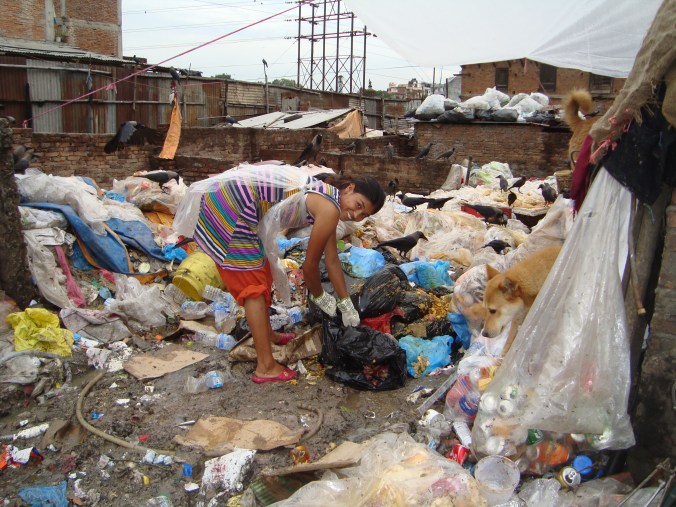
All pairs of gloves we reunite will go to Kathmandu to protect the hands of the rag pickers there. Life as a rag picker is tough, really tough, and many are children in their pre-teens. These kids, and plenty of adults, make a living picking through other people’s trash to compile enough polyethylene plastic or PET plastic bottles to send to India for recycling. It’s a decent living, but the conditions are among the worst on the planet.  We want to help by giving them the garden gloves we’ve found on our streets and in your garden sheds.

Give Garden Gloves or Help in Other Ways to Improve Conditions for the Rag Pickers of Kathmandu. Photo © Liesl Clark

My children and I made a movie about the rag pickers in Kathmandu. If you have a few minutes, this film short will give you a brief look into the work they do:

Most rag pickers have no gloves at all. They pick bare-handed through broken glass and human excrement to find their quarry, and the best protection they can have, in my humble estimation, is for their hands (of course it doesn’t hurt to have a face mask, too.) We’ve seen some rag pickers with just one glove, as that’s all they have.

Packed to the Gills, Ready for Zero Waste Travel

In August, we’ll be headed to Nepal again, to give gloves to Kathmandu’s rag pickers to aid in protecting them from the unsanitary conditions in which they work daily. Over two hundred rag pickers work at the city’s dump some 50 miles from Kathmandu. But countless children pick plastics from the Bagmati River as well as the streets of Kathmandu, and having a glove or two could save a child from infection, disease, and dysentery which comes with the territory.

Trash Day Curbside Pile in Kathmandu, Flattened by Rush-Hour Traffic

Want to help us protect the rag pickers, those moving Kathmandu’s trash backwards into new goods, to help reduce the mountains of garbage in the foothills of the Himalaya? There are 3 things you can do to help:

1) Use our Trash Backwards app and indicate when you’ve done something good. By clicking the “I Did It” button on any individual solution, you show us that you’ve changed your behavior to help reduce waste. These simple clicks that show what you’ve done to reduce, reuse, and recycle provide us with data to indicate whether a social movement like ours that educates through social media can make a difference. Every “I Did It” click means we can do some good, too. It’s a one-for-one correlation between your action at home/in the office and our action worldwide. For every “I Did It” click in our app, we’ll do our own good: We’ll hand out a pair of gloves to a rag picker, we’ll remove batteries from a water source in a village, we’ll collect plastics from rivers and shorelines, we’ll conduct a village waste audit. Every action you do enables us to do our greater good and ultimately find the support to do even more! So, please visit us at TrashBackwards.com and find some solutions to our global waste that you can undo in your own small scale, then hit the “I Did It” button and we’ll do the same. The more you do, the more we’ll do in return.

2) Send us your odd (or pairs of) garden gloves. We’ll likely have a match and can then get them into the hands of someone in need. Please know that the conditions are deplorable for a rag picker. Gloves could save someone from infection and truly make a difference. Does one glove have a hole in the thumb but the other is fine? Send us the good one!

Garden Glove Love

6027 NE Baker Hill Road

Bainbridge Island, WA 98110

3) Simply help fund our efforts to improve the lives of Kathmandu’s rag pickers and kids in higher villages. You can do so by donating much needed funds to the Alex Lowe Charitable Foundation so we can get our duffel bags of gloves (we donate shoes and books too) over to Nepal and remove toxic waste from the highest watersheds in the world while also helping to increase literacy in local villages. As little as $20 can go such a long way in Nepal. We’ve been bringing children’s books by porter, yak, horse, and donkey up to the highest villages in the Himalaya for 7 years now, and have opened 7 children’s libraries called The Magic Yeti Libraries. We bring books up and toxics down. Our target this summer is to remove batteries, CFL light bulbs, and plastics from the rivers, streams, irrigation ditches and water supply of villages between 9,000 and 14,000 feet. We’ll get these toxic materials out of the pristine waters and bring them down to a municipal organization that can dispose of them responsibly. We all live downstream of these waters, but for those who live in the villages nearby, the battery and plastics-laden streams need to be cleaned up as soon as possible.

Garden Glove Love was inspired by England’s Glove Love campaign, a nationwide movement to rescue single gloves and give them a new life on the hands of eager people wanting to help reduce our overall impact on the environment.

Start today with your efforts to reduce your own impact on our planet by doing some good with the stuff you already have in your life. Reduce, reuse, re-gift, repair, and rethink your material assets as you use our Trash Backwards web app and you’ll inevitably help others and our planet, too.

20 Banana Peel Uses

The Miraculous Banana and Its Peel. Photo © Liesl Clark

The Miraculous Banana and Its Peel. Photo © Liesl Clark

The banana peel, like coffee grounds, tea leaves, and orange peels has a lot of beneficial qualities that’ll make you think twice the next time you toss it in the trash. We’ve gathered 20 of the best banana peel uses for you to try:

1) Shoe Polish: Did you know banana peels (on the inside) make a great shoe polish? Just rub it around your shoe and then buff it with a soft cloth.

2) Teeth Whitener: Rub the inside of your banana peel on your teeth to whiten them. Apparently, the manganese, magnesium and potassium helps whiten the enamel of your teeth.

3) Wart Cure: It only takes 1-2 weeks to remove a wart with a banana peel.

4) Itch Soother: Banana peels can help relieve bug bites and poison ivy. It won’t remove the oils that cause the itching but it’ll soothe the bite or rash altogether.

5) Monkey Party: Have a Curious George party and put 30 peels on your deck for the kids to slip around on! (Just kidding.)

6) Silverware Polish: Blend banana peel with water and use on your silver to take the tarnish off with a soft cloth.

7) Meat tenderizer: Some people add a banana peel to their roast and it’ll add just enough moisture to ensure that roast doesn’t get too dry.

8) Splinter Removal: Banana peels help ease splinters out of your skin. Place banana peel on a splinter with athletic tape for a while and then try to ease the splinter out.

9) Aphid Control: Aphids don’t like banana peels. If you bury some around your roses or other plants aphids love (like cauliflower), you’ll deter them from coming around.

10) Rose Food: Here are a few great recipes for feeding your roses with banana peels that are rich in calcium and magnesium, as well as many other trace minerals that your flowers love.

11) Bruise Patrol: Banana peels on the inside, if rubbed on a bruise, will aid in making it disappear.

12) Compost: Banana peels break down pretty quickly and add wonderful nutrients to your soil. Throw them in your compost!

13) Acne: Banana peels rubbed on your acne will help in the acne curing process.

14) Dry Skin Cure: If you have psoriasis, try rubbing the inside of a banana peel on your affected areas twice a day and you’ll see the dry scaly skin dissipate.

15) Banana Boat Campfire Dessert: This recipe will please all who are sitting around the campfire.

16) Hemorrhoid  Cure: Yup, you guessed it. As with acne, banana peels help cure hemorrhoids.

17) Banana Peel Message: Leave a message for your child on their banana peel by pricking out letters with a toothpick, the skin will bruise and there will be a dark brown message for your sweetie by lunchtime.

18) Tomato Plant Fertilizer: Wrap a banana peel around your tomato starts when you plant them in the garden and they’ll enjoy the nutrients from the peel as they grow throughout the summer.

19) Banana Peel Steamed Pork and Rice: Try this recipe out for size.

20) Anti Depressant: Researchers have found that drinking boiled banana peel water (or juicing the peel) can ease depression.

What are you doing with your banana peels?

DIY Dishwasher Rinse Aid

What the heck is rinse aid and why do we need it? If you have hard water, you might want to get rid of the those residue spots left over by the drops of water on your glassware. A rinse aid has a surfactant in it that prevents your water from leaving droplets on your dishes. But you should know that many rinse aids have toxic ingredients that I doubt you’d want to have on any surface that holds your food and drink. I’ll quote Treehugger here to outline the ingredients in question:


  • Sodium tripolyphosphate: High concern for general ecotoxicity.
  • Methylchloroisothiazolinone: High concern. The US EPA reports the LC50 value is very toxic to aquatic life.
  • Antiredeposition agent: Moderate concern for cancer, respiratory effects, kidney and urinary effects, general systemic/organ effects; and some concern for chronic aquatic toxicity, skin irritation/allergies/damage.
  • Troclosene sodium, dihydrate: Moderate concern for chronic aquatic toxicity, acute aquatic toxicity, respiratory effects; some concern for general systemic/organ effects, developmental/endocrine/reproductive effects, cancer, kidney and urinary effects, nervous system effects, digestive system effects, skin irritation/allergies/damage, damage to vision.
  • Oxybenzone: Moderate concern for developmental/endocrine/reproductive effects.


It turns out, you might not even need rinse aid. If your water isn’t hard, the little droplets left over on your dishes won’t leave a residue on them. Test your water, or better yet, go without rinse aid for some time and see what happens. But first, if you have residue on your dishes and glassware, cut the amount of detergent you use by half. Chances are you’re using too much.

If you have hard water, I sympathize. Ours is, too. Want to save some money, still have spot-free dishes, and do the right thing for the environment at the same time? Try this secret ingredient in that little rinse aid spot near where the detergent goes:

White vinegar.

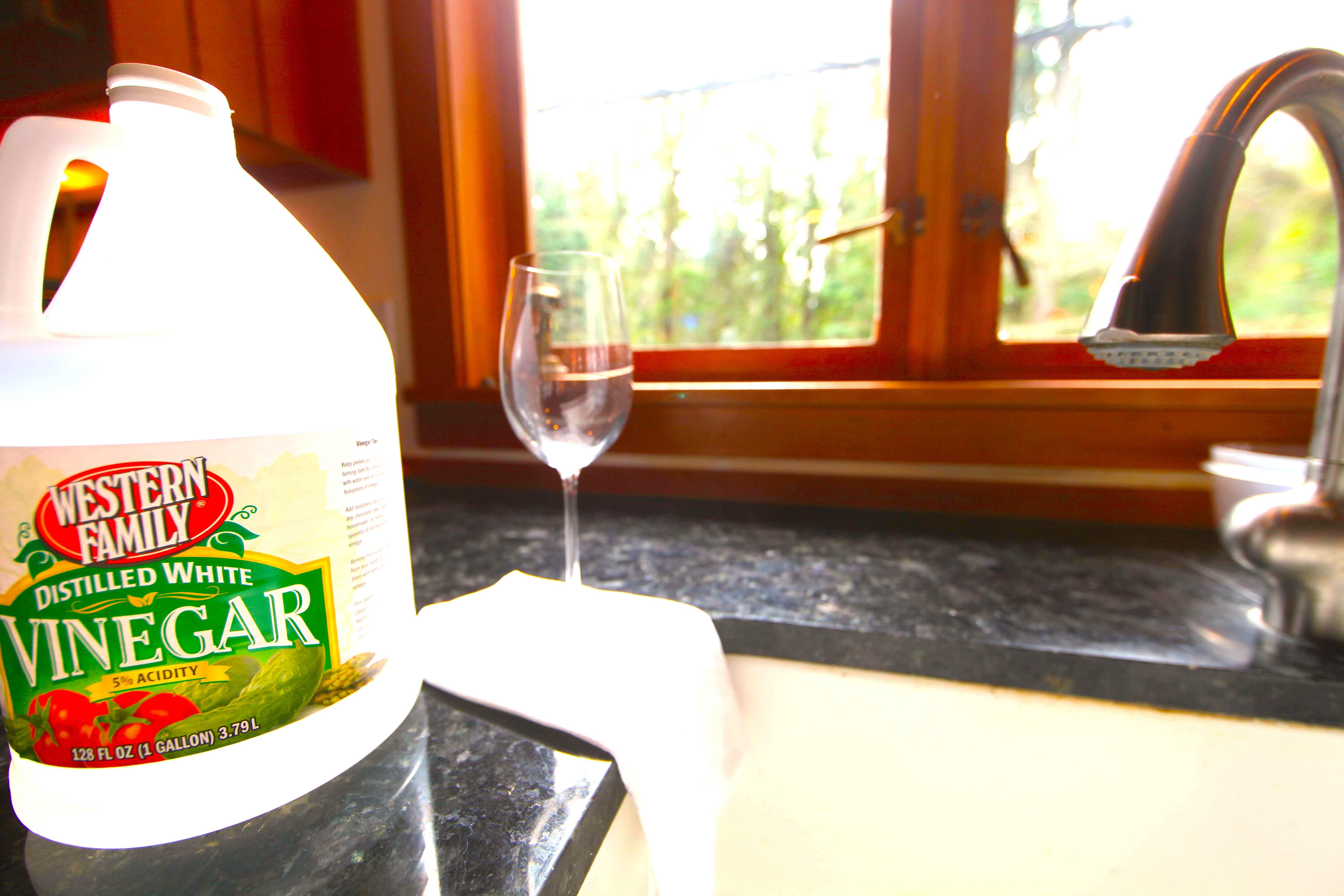
Distilled white vinegar as a rinse agent in your dishwasher will render your glassware shiny and streak-free. Photo © Liesl Clark

That’s all you need. Replace your rinse agent with vinegar and you’ll get the same if not better results. But a word of caution: if you have rubber parts in the slot where the rinse aid goes, don’t put the vinegar in there. Apparently, vinegar can corrode rubber. I know of some people who skip putting the vinegar in that special slot for the rinse aid and just put it in a small cup in the upper shelf so it can splash out over time. Either way, you’ll save a bundle, reduce your plastic footprint and keep chemicals off your plates and out of your gray water.

Distilled white vinegar to the rescue! Use this instead of expensive rinse agents. Photo © Liesl Clark

The interior of our dishwasher is metal and we’ve used vinegar now for over 3 years with no problems to the parts. I’m not sure how a plastic-interior dishwasher will take to vinegar in the reservoir and would love to hear from others who have used it.

We buy our white vinegar in bulk and then put the vinegar for our rinse aid in a plastic bottle that squirts.

Find a good squirt bottle to convert into your rinse aid dispenser. Photo © Liesl Clark

It’s stored under the sink right next to the dishwasher. You’ll likely find a good bottle in your own trash to reuse as your vinegar rinse aid dispenser, or simply reuse your rinse aid bottle.

Crystal clear dishes again. Photo © Liesl Clark

DIY Plastic Bag Dryer

Here’s an admission: We wash and dry all of our used plastic bags and then reuse them. Since the polyethylene in our bags will still be here in 2516, it’s hard for me to think of these things as a single-use product. Since plastic bags will still be here, but in tiny micro-pieces out in our environment, in 500 years, why not use them as long as we can? With a little water and soap, they’re ridiculously easy to clean. The drying of plastic bags just takes some thought.

My mother uses her refrigerator magnets and then sticks her bags to her fridge for drying. I think it makes her fridge look like the bag monsters we see at environmental events. Other folks just stick them onto the water faucet for drying, or on a nearby plant (the bag serves to then water the plant, yo!)

Well, I like to have a little drying station right near the sink where the bags can be hung easily. To that end, my sister gave me a wooden Gaiam plastic bag dryer a few years ago and this thing is now an everyday-used staple in our kitchen.

Gaiam Bag Dryer, Photo © Liesl Clark

Gaiam Bag Dryer on My Sill © Liesl Clark

But here’s the thing: You can make your own from items you have in your house right now. Take a toothbrush holder (or if you don’t have one of those, just use a mason jar) and stuff some pebbles into it. Then poke chopsticks through the toothbrush holder holes and lodge them into the pebbles to set them firmly apart. If you’re using a mason jar, drill some chopstick-width holes into the top and insert chopsticks. Place your bag-holder by your sink and wash, hang, and reuse your plastic  bags with glee!

toothbrush-holder-bag-dryer

DIY Bag Dryer © Liesl Clark

I’ve used a pretty vase, too, for this purpose as well, making sure I have a method for firmly setting the chopsticks in place. If you have some pretty sticks to use, like curly willow, rather than chopsticks, you can make an artistic-looking bag dryer for your sink that looks beautiful at all times. Jewelry trees are also cool to use. Have fun with it, because the end game is to create a space for drying plastic bags, like Ziplocs, so you never have to buy them again. We haven’t bought any in about 10 years and although we mostly use glass these days, the reusable bags come in handy for all kinds of projects the kids have at school or at home for holding things.

I posted a link to this article on my Facebook page and, what do you know, so many of my friends are willing to admit they, too, wash their plastic bags and dry them. There were so many different ways of drying the bags, I had to share them here. Check this out:

Anahata: I use, wash, dry and reuse. To dry I just slip half of a clean dishtowel into the bag and fold the other half over the outside. Then, I roll it up and the majority of the surface moisture is absorbed in the towel.

David: Liesl, bit mundane – decline plastic bags when offered but stuff used bags into my back pocket for picking up dog shit later [not sure about the energy cost to me or the planet of washing and drying] the trash hereabouts is incinerated and turned into heat and, as far as I know, toxin-free compost.

Jake: We’ve been doing this for years – not a problem at all! Yes, our cleanliness police love to think it’s dangerous, but like you said, no different than washing and reusing a pan or a plate. We wash lightly – depending on what was in it – sometimes just a rinse, and then hang on a wooden drier like in your pic. We also reuse other bags from food items, so rarely if ever need to buy plastic bags, etc. Frighteningly, I still have a tube of Saran wrap in our drawer from college – it’s now become a bit of a pride point. Thanks for sharing and encouraging us all to be a bit more friendly to the planet, and to ourselves!…Such simple things that make a big difference if everyone does it!

Melissa: I have seen too much plastic in the ocean, during dives, to be able to stay unaware. I source food not packaged in plastic to the best of my ability and if we do end up with plastic packaging, it had to be reusable if not recyclable. Plastic zip bags of hemp hearts or wild rice, for example, get rinsed and just turned over atop of utensils in their drying basket beside the sink where the drip dry for reuse. They tend to hold up significantly better than the zip lock type bags that are made with the intention of being used once and then tossed (shudder).

Jeanne: I have always washed them out with sudsy water, rinse, then I hang upside down on a wooden spatula smile emoticon I was lucky to grow up with resourceful Scot father. We didn’t use paper towel much either, and when we did, it also hung on the wooden spatula! So I’ve been doing this my whole life. I applaud all you do and you inspire!!!

Lissa: I used to use clothespins to pin them to a thin curtain rod in my kitchen window, but there was never enough room for all of the bags. Now we use a baby bottle drying rack.

Of course I got the baby bottle drying rack from my Buy Nothing group.

Ann: I put a pair of tongs in them and put them on the dish drainer, facing up. They dry out nicely that way.

Robynn: We wash them and then air dry on a mitten rack. I found it yeears ago in some crazy catalog and thought is would be perfect for bags. It makes me crazy to have them dry on the cooking utensils since they always seem to be in the way. We can get 10 bags (or 5 pairs of mittens!) on the rack!

Caroline: I dry them on slotted spoons, single chopsticks of varius sizes (missing their mates), I loved drying them on a mitten wrack as Robynn mentined but said wrack is in use for drying doggie raincoats & such nowadays.

Robynn: I dry the doggie rain coats & dog towels on a quilt racks that seem to pop up at the Salvation Army iwth increasing frequency. Home carpenters made some great sturdy racks to hold those heavy handmade quilts – but now no one seems to put (have?) quilts on them any more! smile emoticon

Caroline: I also use a large glass vase I got from Value Village for 50 cents years ago. I use branches that fall from trees, ut them in the vase & use them to dry plastic bags.

Tammy: yup, turn inside out, wash and they stay up alone, drying on the counter. dont buy anything ,just turn inside out and wash” For soups and messy stuff, ziplock has some great containers

Sandie: I put mine over mason jars and let them dry out or use a large wooden spoon in a jar for the larger bags.

Deidra: I’ve been looking into the fabric/oil cloth type that are dishwasher safe. My boys tend to not save the plastic ones no matter how much I cringe.
Shanda: I reuse mine over and over. I rarely wash them, though. If it’s merely a little moisture from the produce, I just dry them on the fridge with magnets. I only wash if the produce goes bad, or if the bags contained meat.

Stephanie: We use our wine rack as a bag dryer.

Stephanie Browne's photo.


What does your bag-drying rig look like?

25 Reuses For Tea Leaves

The Many Uses for Tea Leaves. Photo © Liesl Clark

1) Tea: Reuse your tea leaves for….more tea! Just reinfuse.

2) Compost: Tea leaves are an excellent material for your compost, tea bags and all.

3) Worm Food: Worms love used tea leaves as much as coffee grounds.

4) Eye Compress: Place cool wet used tea bags (or loose tea even) over your eyes to remove the puffiness (eyes closed, please). Tea is an anti-inflammatory and it can also remove rings under your eyes. Pink eye and styes are also combatted by used tea bag compresses.

5) Sting or Itch Remover: Used wet tea is known to remove itchiness from rashes and stings. Try it!

6) Deodorizer: From removing odors from your fridge to your carpet and dog bed, dry used tea is a wonder stink remover.

7) Acne Prevention: Green tea leaves rubbed over your face helps prevent acne.

8) Incense: Add some tea leaves to your favorite incense and burn it. It adds a nice smell.

9) Foot Deodorizer: If you have bad smelling feet, soak them in a bowl or sink full of brewed used tea leaves.

10) Insect Repellant: Burn dried tea leaves outside if mosquitoes are a problem. They don’t like the odor.

11) Plant Water: Used tea leaves soaked in water for a day makes excellent plant water/fertilizer and mulch.

12) Fertilizer: Here’s a good article on using tea leaves as fertilizer.

13) Window Cleaner: Long-steeped used tea leaves make a great window washing liquid.

14) Make Chagra: Chagra is a used tea leaf product made in Japan that essentially is used in the household for many of the ideas above — deodorizers and fertilizers.

15) Floor and Furniture Shine: Mop floors and wipe down furniture with brewed used tea leaves. The tannins in the tea will add a shine to your wood.

16) Toilet Stain Remover: Try pouring your wet used tea leaves into the bottom of your toilet where you might have stains. Leave them there for a while and then flush ’em down the toilet. They might help remove your toilet stains.

17) Hair Dye: Dye your hair in black tea (save up your used tea bags for this) and see if you like the results. Tea will also add shine to your hair.

18) Soothe Burns and Sunburns: A teabag with wet leaves can help soothe your burns.

19) Rose Food: Roses love the tannins in tea.

20) Meat Tenderizer: Soak meat in a tea leaf infusion to tenderize.

21) Tea Dye Your Fabrics: For an antique look try dying your garment in tea.

22) Carpet Freshener: Sprinkling dried tea leaves over the carpet and vacuuming up removes odors and dust.

23) Raise Silk Worms: Silk worms love lea leaves. Start your own farm.

24) Wart Remover: Tea is reportedly an excellent wart remover. Apply wet leaves or used tea bag to warts and eventually they’ll disappear.

25) Divine Your Fortune: Reading tea leaves, or tasseography, is an ancient craft. Learn it.

Do you have more tea reuses to add?

DIY Dryer Lint Fire Starters

By Finn Clark

Finn's DIY Fire Starters

We live in the Northwest where the winters are long and wet. Like most 9-year-olds, I’m interested in (and learning about) fire and what my parents call “combustibles.”

I like to forage for wood with my wood-cutting tools.

Our home is heated almost entirely by wood and since we forage for our own wood in our forest, it’s often pretty wet. I decided it was time to make some fire starters for cold wet nights when nothing wants to burn. These things will definitely help start your wet wood burning, especially if you use 2-3 of them. Here’s how:

The things you'll need: Lint, egg cartons, wax scraps, string, shredded paper, matches.

Gather together:

Lint

Egg Cartons

Wax Scraps (we melt ours into pie tins for easy re-melting)

Wick String or Just Plain String,

Shredded Paper, Paper Scraps, and/or Sawdust

Matches

Melt your wax and dip the wick string in it to make a true wick.

Next, you’ll need to melt down your wax scraps. I place our previously-melted wax scraps in a pie tin with another pie tin underneath and place the double-layer pie tins over our pilot light on the stove. That’s enough to melt the wax in the tins and it’s safe for little hands like mine that could get burned by the wax. Dip your string in the melting wax to make a true candle wick. They burn more slowly and readily with the wax infusion.

Mix your lint and shredded paper (and saw dust if you have it) together in a big bowl.

While your wick is drying, mix all your lint with shredded paper and you can add sawdust and small wood chips if you have them.

Really really mix it well.

I think I like the mixing part the best.

Cut your wicking into little wicks.

Now that your wick is dry, you can cut it into small 2-3 inch wicks for each fire starter.

Stuff your dry ingredients (wick in the middle) into each egg carton cup.

Now you can stuff your lint mixture into the egg carton cups. We take a small handful, wrap it around a wick, and then jam it (with the wick standing up in the middle like a candle wick) into each cup.

Pour your melted wax over the whole mess. Lots of it.

We then pour our melted wax over the top of the paper/lint/wick-filled egg carton. I let my mom do it because even though we have 2 pie tins under the wax, it could spill and hurt me.

Another angle of Mom doing the pouring. It was cold in our house so she's wearing a down vest. That's why we needed fire starters -- to get the fire started.

Do you see little matches standing up in the back row there? That’s my secret ingredient. I like to use matches dipped in wax as my wicks. They’re actually home-made water-proof matches but that’s another post for a later time. They work really really well as wicks, too.

These are my fire starters.

When your wax has solidified and cooled, the fire starters are ready to be used. Simply rip off a single cup at a time and light your wick when you’ve placed your fire starter where you want it in your well-laid fire.

Lighting our fire starter is the best best part.

Now we get to enjoy a warm winter wet wood fire.

Our warm winter fire by home-made fire starters brings smiles.

DIY Kitchen Compost Pails

My new favorite kitchen thing is a thing I’m reusing for something else.

Romertopf oven turned kitchen counter compost container. © Liesl Clark

Ta da! My new swank kitchen countertop compost holder! It’s a Romertopf oven turned compost collector that actually looks nice on the kitchen counter and it has a lid, too.

Romertopf Oven/Compost Container with Lid. © Liesl Clark

This new beauty is a replacement for our last counter compost container that was made of plastic and do you know what it did? It cracked. No surprise, right?

What's in Our Compost? Paper scraps, hair, pet fur, wax paper, egg shells, cotton fabrics, string....

I was determined to find a non-plastic container and the terra cotta Romertopf is perfect for the job. Here’s other wonderful thing about this compost container:

Design your cupboard so you can hide the compost container. © Liesl Clark

It fits in a little spot we designed inside the trash/recycling cupboard where we can store our compost under the counter most of the time. It’s the perfect size for said slot.

Done.

No need to buy a compost container (I’m amazed to see that compost pails cost anywhere from $20 t0 $60!)

And, what’s with the charcoal filters the store bought compost holders have? If you just empty your compost pail into your compost every day, there’s no need for odor control, right? And, lining it with a plastic bag? Just. No. The whole point in having a compost pail is to tip the thing over in your compost, take it back into the kitchen and wipe/wash it out. Enough said.

Did you know that if you compost your food scraps (and the other things we know can go into a compost), you can reduce your waste by 60%? That’s a great reduction in your trash bill. Between our chickens, guinea pig, dog, and worms, our compost is reduced by 2/3 each day as these critters get first dibs on the kitchen scraps.

I looked around on the internet, and found a few other innovative reuses for a kitchen compost caddy. My favorites were a vintage ice bucket and a, get this, mason jar.

What do you hold your kitchen scraps in, destined for the compost bin?

Roadside Bottles: The Great American Beverage Crisis

Our nearest store is less than a mile away. Occasionally, my kids and I take a walk or bike ride there so they can have an ice cream. We run down a long hill and always bring a bag to collect the roadside trash. Each time we do this, we pick up more than 100 beverage containers. Why do Americans spend so much money on drinks when water out of the tap is, most often, clean and free? And why do we throw our drink containers out on the road? Here’s a general inventory of the kinds of beverage bottles we pick up:

Beverage Containers Picked Up on Just One Side of the Road. Photo © Liesl Clark

We find glass bottles including large and mini wine bottles, aluminum cans, box wine, plastic water and soda bottles, plastic cups with lids and straws, and single-use coffee cups. Why the need to have a drink while driving? If you’re on a long road trip, I can understand why you’d have a beverage by your side. But we live on an island 2 miles wide by 6 miles long and no single trip is very long. Why is the car the place where beverages must be consumed and then discarded? Surely, the beverages are not coming from pedestrians.

We Filled Our Bag With Bottles and Cans in a Matter of Minutes. Photo © Liesl Clark

The Keep America Beautiful campaign conducted a study of 240 roadways across the country and determined that there are approximately 6,729 pieces of litter per mile of roadway (on each side) in the United States. My road is certainly no exception and we could likely come up with that many pieces of litter along our little roadside. The study also found that the majority of roadside litter comes from motorists (53%) with pedestrians contributing some 23%.

My theory is that it’s less about the car and more about the road’s proximity to a convenience store. The shop is stocked with juices, sodas, coffee, and alcohol, so our road is hit with the litter from those who’ve just purchased a convenient drink. The Keep America Beautiful study found that roads near a convenience store tended to have 11% more litter. No surprise. And beverages figure high in the overall item percentages.

Here’s the depressing statistic: 40 – 60% of roadside waste comes from beverage containers. Why? We live in a country where tap water is readily available and quite drinkable. If you’re not convinced, go to any developing country and you’ll see how water out of a tap can threaten your life. Most of those containers are also recyclable, so if recycling were truly working in our great nation, we wouldn’t see any drink containers on our roadsides, right? The Environmental Working Group published a study that claims, “Every 27 hours Americans consume enough bottled water to circle the entire equator with plastic bottles stacked end to end.”

Litter, furthermore, costs taxpayers a hefty sum each year. According to the Keep America Beautiful stats on roadside litter, litter cleanup costs the U.S. almost $11.5 billion each year.

Perhaps we need to require that each state has a bottle bill. At Oregon.gov, the statistics for the state’s beverage containers found along roadsides since the introduction of a bottle bill there are impressive: “In 1971, litter control was a primary reason for initiating the bottle bill.  Since then, the percentage of beverage containers among roadside litter has dropped from 40 percent to 6 percent.”

Kicking the convenience store single-use beverage fix is likely the best step an individual who wants to make a difference can take. That’s what I’ve done. When you discover the environmental impact of single-use beverage containers on the environment, a.k.a. the amount of energy , toxins, and virgin materials needed to produce that bottle or can that will likely go unrecycled, you might reconsider the need for that beverage. Bring your own bottle and fill ‘er up at the tap. Water is what your body needs. Save the wine and beer for your home, or dinner with friends, not your car. And if you’ve been out with your buddies and just want to get that stash of wine and beer out of your car to cut the clutter, find a dumpster or recycle bin, they’re usually right next to the convenience store where you bought the wine in the first place.

We Were Able to Recycle These Right Across From the Convenience Store. Photo © Liesl Clark

Single-use beverages and their containers are only benefiting the companies who manufacture them. American kids are over-consuming over-sweetened single-serving drinks and we have a juvenile obesity crisis to prove it. Who can blame kids, when according to this infographic, in 2008, Coca-Cola spent over $2.67 billion in advertising? Kids are their prime target.

My 9-Year-Old, Picking Up Your Wine and Beer Bottles Next to Our Driveway. Photo © Liesl Clark

I can tell you, from first-hand experience, that these roadside bottles are ending up in our watersheds and floating down into our oceans. Cars run over them and break them into smaller plastics, which also become part of our ocean ecosystem. The roadside ditches are filled with every kind of plastic and we know what’s in them washes downhill to our rivers, streams and seas. In my family, we consider recycling a last resort for our stuff as recycling requires more virgin materials to actually close the loop for things like plastic. We’re more about the other R’s, especially reducing and reusing. Reducing means refusing single-use disposables, taking action to pick up those that we find in the environment and bringing attention to them so others see their impact. Help curb our collective disposables habit by refusing them in the first place. Then move on to the next R and keep your reusable cup and bottle with you in your car for yet another laudable and sustainable R: Refill.

Klean Kanteen BPA-Free Water Bottles with custom The North Face Logo