Dust to Dust: Closing The Loop With Ceramics

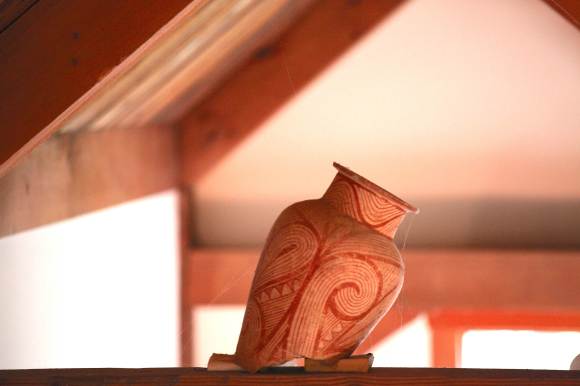
Antique Ceramic Collected at the Beginning of My Ceramics Phase. Photo © Liesl Clark

I have a thing about earthen hand-made ceramics. They’re beguiling. Especially the ones made before the (pottery) wheel, with their human thumb-prints inside a perfect sphere. I’ve been collecting them, along with wheel-thrown pots from exotic locales, for years.

This one's from Kitale, Kenya, on the border with Uganda. I acquired it when I made a film about the mountain elephants there. Photo © Liesl Clark

But more recently, we’ve had some losses with this highly impermanent material. I fully understand why ancient people found ceramics of such use. They were sustainable, made from a renewable resource — the clays of our Earth. So, when one broke or became worn, it wasn’t a big deal. You could always get another.

IMG_2431 Photo © Liesl Clark

But the really old pots, today, are either well-loved or have value. Here’s our story:

It was a dark and stormy night. The wind moaned through the windows, but then a bang happend inside the house that caused us to shudder in our beds. It wasn’t from the tree-branch-driven tumult outside, but from some lurking creature on the inside.

Within seconds the gig was up when we heard a “meow” and I knew our furball had done some terrible deed.

True to her mischievous ways, Willa had knocked a very old pot from one of our ceiling beams. It was a pot that I had brought back from Thailand when I was in my twenties. It was made in Burma and the patterns on it were stunning. Its twin still sits up on a beam, surely tempting our vixen.

Ancient Pots on Wooden Beams. Only Safe Place in the House. Until Willa. Photo © Liesl Clark

Why do I have old clay pots on our beams? Their earthy colors and feminine curves feel like a good combination with the hand-hewn beams from first-growth douglas fir recycled from Seattle’s oldest piers. With children and pets in this house, the 35-foot-high beams were the only place I could think to store the fragile pots out of the way of balls, feet, tails, claws, spills. Who knew that the cat could get up so high and push a pot from its perch?
The Burmese Pot Turned Potshards. Photo © Liesl Clark

Then, a week later, Willa the cat jumped onto a terra cotta elephant we had brought back from Nepal. This lovely strawberry planter was outside on our deck and somehow she managed to smash it to pieces.

Broken Terra Cotta Elephant. Photo © Liesl Clark

Here is it's twin. Photo © Liesl Clark

I’m losing patience with our whiskered she-devil.

She's Not Very Buddha-like. See The Beams Way Up High? Photo @ Liesl Clark

And now I have a new waste stream to deal with: Broken terra cotta pots.

What to do? A couple days of research yielded some decent options:

Drainage: Break up your pots and use as drainage under eaves of your house to encourage draining the rainwater away from the house. You can also break up the pieces to use as drainage in the bottom of large pots. The terra cotta actually absorbs a good amount of water, aiding in the drainage process wicking water away from the source but also absorbing some for plants above if they’re deep inside a pot.

Garden Bed Edging: Partially buried pieces of terra cotta pots can make a nice garden border or edging, or a feature unto itself in your flower bed.

IMG_2266

This dragon, on the edge of a broken pot likes to eat dirt.

Plug Up Holes in Your Chicken Yard: Our chicken yard needs some repair, especially in the places where the chickens have dug holes along the fence. We use broken terra cotta pieces to repair these holes to ensure digging raccoons, mink, and rats don’t get in. Yes, I said rats. They crawl through holes they make and then snuggle up in the shredded paper bedding underneath their nest boxes.

Broken terra cotta pots plug up holes in our chicken yard to keep the vermin away. Photo © Liesl Clark

Buried Pot Whimsy: Half bury a broken pot and add a plant inside to give off the effect of an overturned pot buried over time with your pretty perennial taking over. It’s a cool effect, especially with succulents. I think I’ll half-bury our elephant so it looks like it’s clawing its way out from the depths of the Earth.

Make a Fairy Garden: Broken pots can be reassembled into a little world for miniatures.

Make Ceramic Mosaic Pieces: Potshards and any broken ceramics, like dishes and mugs, can be the ingredients for lovely mosaics used in garden stepping stones, large pots, or even furniture.

Our local mosaic artist, Gillian Allard, collects her ceramics from yard sales, and large rummage sales like our Rotary Auction. She teaches classes on mosaics, so she’s always looking. In addition to ceramics and tiles, Gillian incorporates broken glass, buttons, jewelry and beads into her mosaics. I plan on giving her a broken mirror (cat did that one, too) that she’ll surely use. So, if you have broken ceramics, do find a local mosaic artist to pass them on to. Or, offer them up on your local Buy Nothing group.

Blue Daisy Stepping Stone:  From a broken serving platter and gems purchased at the Rotary Auction. Photo © Gillian Allard

The Zero Waste Institute has in interesting take on ceramics I tend to agree with: They came from the Earth so why not simply return them to earth? They suggest grinding them down to a powder and then reusing that powder to make more ceramics. Makes good sense. We should have community ceramics-grinding mills so we could fully close the loop and make new ceramics from old ones.

IMG_2275 Photo © Liesl Clark

These little ceramic deities sit under one of our apple trees.

I think I’ll do that with my old Burmese pot, unless anyone can give me a better reuse. Dust to dust, right? Send it back to the Earth. And perhaps the kids and I can have a little ceremony when we do it, celebrate the passing of a beautiful hand-made pot made from the earth half way around the Earth as we distribute its dust throughout the forest whose rich green could certainly absorb the minerals and clays used in the old pot.

Chickens and ceramics go well together on our property. Photo © Liesl Clark

A landscaper friend of ours says we should save some of the ground-up clay for our compost bin and gardens. It’s fine, he says, to add it to our soil, especially the sandy and loamy areas.

If you add a little chicken poop to your clay soil, all's well. That's why I like ceramics around my chicken compound. Photo © Liesl Clark

But more importantly, we’ll save a few select pieces of our Burmese pot for our sacred tree, as mementos. Sacred tree? Yes, everyone should have a sacred tree on their land.

Meet our sacred tree, where ceramic offerings are made.  Photo © Liesl Clark

It’s a tree of your choosing that’s important or sacred to you for any reason. Maybe it’s in a central part of your property, at the heart of your land. Or maybe it’s just a cool-looking tree, with all sorts of nooks and crannies for you and your children to place lovely offerings. Our tree is both central (2 trees, a madrona and a douglas fir, growing from one spot) and cool-looking. Sometimes we light butter lamps at its base at night, but mostly we place ancient salegrams and special broken and found ceramics at the base.

The kids love searching for the ceramics throughout the seasons to see how the tree is enveloping into its mass the special deities we’ve planted there.

Ganesh, now enveloped in a douglas fir. Photo © Liesl Clark

IMG_2288 Photo © Liesl Clark

Not too long ago, ceramics were one of the only forms of waste left behind by a community or indeed an entire civilization. My husband, 2 children and I spend a month each year in Nepal filming, exploring remote cliff caves, and searching for the ceramics of an ancient people that were among the first to settle permanently in the Himalaya. Their broken ceramics, tiny shards we find in open fields that would’ve once been their settlements, are the first clue we search for: their trash, among the only remaining evidence of a people long gone. These are undiscovered cultures that thrived in the Himalaya 3,000 years ago, and all that remains are their ceramics, their metal implements, gold and silver funerary masks, their glass and stone beads, wooden coffins, silk, and their bones. That’s it! And their funerary pots, made of a dark clay, are stunning.

3000 year old funerary pots recovered from caves in Mustang, Nepal. Photo © Pete Athans

3000 year old ceramic pots found in the caves of Mustang. Photo © Liesl Clark


When you gain an appreciation for mini masks made of earth, you put them everywhere. They connect you with the past and maybe even the future when your clay object will be a part of the earth again.

In Kathmandu, you can still buy yogurt in clay pots. It’s beautiful and delicious yogurt, made and sold in disposable ceramic pots. The idea is that the clays are from the valley, so you can simply dispose of the pots outside your door (which many people do) or with your organics in the compost. I think at one time the pots were reused. These beautiful ceramic pots sure beat plastic. We save them and bring many home along with the little terra cotta wax tea lights that cost pennies each. The little pots replace plastic pots in our children’s playhouses.

Now, after dreaming with me in ceramics, imagine our material culture today and what people will find left behind by us earthlings some 3,000 years from now? I’d like to believe that we’ll clean up all the plastics and return one day to a world where we’d simply find sustainably packaged goods, just like we used to do long before plastics ever existed.

Do you have a ceramics reuse? Please share it with us.

Worm Ball Composting

Did you know that earthworms communicate through touch? According to a study in Belgium, worms are communal, they don’t act singularly. So, when they are presented with a problem, like cold temperatures, predators nearby, or a dramatic change in their environment, they gravitate towards each other finding solace in a unique herd mentality. Once a decision is made, they will move en mass to their agreed upon destination.

Worm ball composting is a technique I learned from my friend, Dawa Sherpa, who, for years, farmed worms in his compost in Nepal. I used to have a worm compost bin that was separate from my regular compost, until Dawa showed me how to simply combine the two, creating a fast-and-furious compost system aided by the thousands of worms we added to our three compost bins.

IMG_2231

The key is to have a closed system, so the worms don’t get out. Our red worms are now stuck inside our black bins, because the “floor” of the bins is gravel and they have plenty of organic matter to digest in the bins. We used to have “native” worms in our bins, but interestingly enough, I don’t see many of the native worms in there anymore. The red worms process much more matter in a day, so we’re happy to see their population growing.

IMG_2253

So, what’s a worm ball? It’s what worms do when they’re scared and want to run away from predators. Worm balls are the key to separating out the beautiful composted/worm tailings from the worms themselves. Here are the steps to harvesting your beautiful compost and saving the worms therein:

BT0C1522

A little hill of compost is the trick to getting worms to head for the center.

  1. First, grab a tarp and put it out in the sun.
  2. Dump a bucket of your worm-laden compost in on the tarp and make a dome shaped pile.
  3. Place another empty bucket next to you with a handful of compost in it. This will be your worm bucket.
  4. Take the compost from the sides of your hill and pile it on top, continuing to make it a hill shape. The worms will flee away from the sun to the inner part of your hill. They naturally feel the vibration of your hands moving the dirt on the outside of the hill and they crawl hellbent for the center.
  5. As you collect compost from the outside of the hill and sift through it, place all worms that you find into your worm bucket. Place all compost into your other empty bucket. This is the gold you can save to fertilize your gardens.
  6. As you work through all of the compost on the sides of the hill, you’ll end up with a big worm ball in the center. Take the ball and place it in your worm bucket which you can then return to your worm composter so they continue to eat through your organics. Be sure to have some of their favorite fodder left there for them and enough moisture in your compost bin to help them work their way back inside your compost pile.

    Here’s a video of a handful of worms found in the center of my compost hill:

    If you run across any eggs, be sure to put them back into your compost bin. Here’s what the eggs look like:

    IMG_2236

    And this is what they look like in the compost:

    IMG_2237

Do you have any worm stories to share?

Letting Go of Honey Hill Farm

JPEG image-74D81F27B287-11

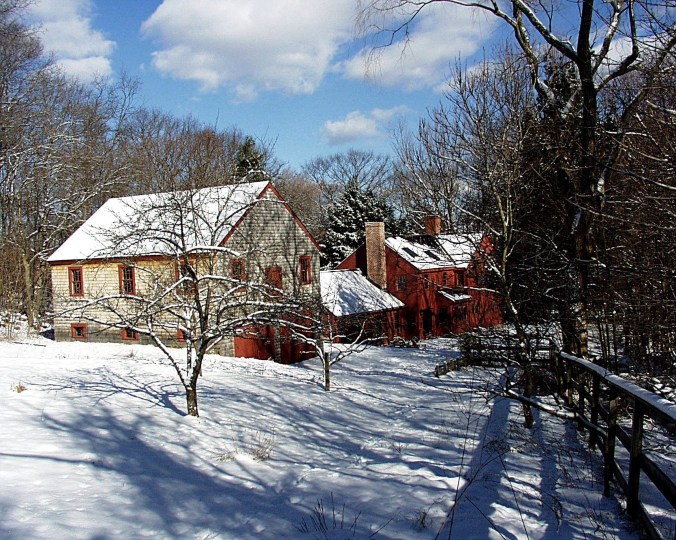
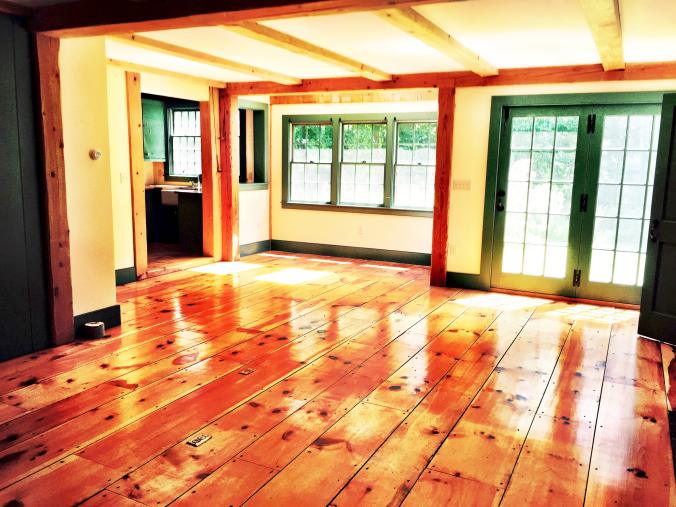
Our daughter was born here. It’s a 300-year-old beautifully renovated farm that is a testament to the impermeability of time, weather, and wear on a well-loved home. Our babies lived the first years of their lives swinging in their car seats from the 1705 beams, crawling on the wide pine floor boards, and sledding down through the apple orchard out behind the barn. The hill was where we kept bees and in our first year there 100 pounds of clover honey was harvested from three hives perched beyond the white pine. We sold the golden elixir on our porch to neighbors we met over time. It was an idyllic place to live, but alas it’s now time to let it go.

Sideoutback

The truth is, we haven’t lived there for the past 10 years.

JPEG image-74D81F27B287-5

Due to a need to move to the Pacific Northwest for work, we left our beloved New England farm and family 10 years ago, just before the market crashed. When housing prices plummeted, we knew we had to hold on to the home, and rent it out, to wait until the situation stabilized. In 3 months’ time, if all goes as planned, our farm will change hands, and become an experiential preschool for families who want to bring their children in close contact with the Earth.

Essex from street 2

Although we moved our primary “stuff” from the farm years ago, we’ve had to slowly get rid of the last bits and pieces that comprise a final vacating of a property.

JPEG image-74D81F27B287-6

These are the kinds of items most people simply throw away, too hurried to mindfully find new stewards for their still-useful items.

JPEG image-74D81F27B287-16

We travelled back to New England last summer to take 3 days to gift our stuff to members of our former community. I connected with the admin of the local Buy Nothing group and she let me temporarily join the group to post our remaining possessions to neighbors.

Screen Shot 2016-03-04 at 11.00.05 AM

Everything disappeared in a matter of hours. Paint, farm tools, antiques, old hardware, large work benches and potting tables were hauled off the property by people happy to come in their cars and trucks to reuse what we couldn’t fathom carting across the country to our home in the Northwest.

Screen Shot 2016-03-04 at 11.00.58 AM

We’re essentially masterminding a zero waste move.

JPEG image-74D81F27B287-8

Here are our best simple tips for a low impact move for anyone trying to reduce their waste when moving out of one property and into another:

  1. Create recycle/reuse waste streams in boxes for easy-to-recycle/reuse items: i) Regular commingled recycling (plastic bottles, glass and paper); ii) Plastic bags (to recycle at grocery stores); iii) Metal (to recycle in a metal recycling facility); iv) Office supplies (pencils, pens, paper clips, etc to give to a teacher or an office somewhere); v) Batteries (take them to your nearest battery recycling facility.)
  2. Don’t buy new boxes. Ask for them on your Buy Nothing group or get them from your nearest liquor store.
  3. Create collections to give away: It’s easier to commingle all of your hardware, or garden supplies, paint supplies, pet supplies, music, etc together to give to neighbors as collections of like-items rather than randomly giving away each item individually.
  4. Don’t buy paper for wrapping fragile items: Use newspaper (ask for it in your Buy Nothing group) or plastic bags, bubble wrap, and styrofoam that you’re planning on recycling,  or napkins, t-shirts, clothing to wrap around your glasses and fragile items for shipping. It saves money and waste.
  5. Even old paint can be reused: Before taking your remaining household hazardous waste to your hazardous waste facility, do check with neighbors to see if they’ll use it. We had people come to pick up our interior and exterior paint for their own projects.

JPEG image-74D81F27B287-3

What additional broad-strokes tips can you add to this list?

JPEG image-74D81F27B287-13

We’ll dearly miss our Essex home on the marshes. © Liesl Clark

Stop Friending Spammers

When an unknown person “friends” you on Facebook, do you accept their virtual friendship, without knowing who they are? For the past month, every day I’ve received about 5 new friend requests on Facebook from spammers. What’s disturbing is that many of them are friends of my real-world friends. Corporations and sponsoring organizations are ever-increasing the pressure they put on employees, sponsored athletes, independent filmmakers, freelance writers, and content producers to garner as many “friends” and followers as possible in social media. This encouragement to use social media as a platform to reach a broader audience means that spammers are easily getting in the door, and posting their unwanted advertising for more unwanted plastic crap. Or worse yet, they’re identity thieves looking for your financial information, or fake news spreaders, doing all they can to alter reality.

The irony is that this corporate push for employees to have a big social media footprint allows scammers to push the very products that are in competition with the corporations my inadvertent spam-supporting friends work for. Do you see where I’m going with this?

Let’s do our best to make sure we’re only friending real people who have real profiles. I’ve seen athletes and aspiring public figures approaching the coveted 5,000 friends mark,  yet at least a fifth of those so-called friends are spammers. In a culture that already has too much commercialization in our everyday lives, couldn’t we be more proactive in reporting the scammers and saying “no” to their friend requests, which only serve to boost their ability to spam unwanted advertising all over Facebook and other social media platforms?

*Go through your friends list and be sure the people you’re friends with are real people.

*Spammers often don’t bother to put a banner photo on their page.

*Spammers often have a male or female profile photo but their gender is marked as the opposite. This is a sure sign of a spammer.

*You’ll see pretty pictures of girls in their profile pictures.

*Hit the message button, and you’ll see what groups they’re in and your mutual connections. If you know this person is a spammer, take an extra step and let your mutual friends know he/she is a spammer, too.

*If a spammer is trying to friend you, you can friend them and then look at their profile for a few minutes to determine if you really want to be their friend. If not, unfriend them. And, if you think they’re a spammer, when you decline their friendship, there’s an option to mark them as spam. Do the right thing and call them out. Facebook will thank you.

Here are a few examples of my prospective “friends” that are sitting in my friend request queue this week. Meet Liam:

Screen Shot 2016-03-01 at 8.48.46 PM

As you can see, Liam loves Oakley sunglasses. But more importantly, you’ll see he’s friends with 7 of my very real friends. Note, too, that he doesn’t have a cover photo.

And here’s Mark:

Screen Shot 2016-03-01 at 8.53.41 PM

Mark with no cover photo only has 13 friends, and his understanding of his gender is all confused. You can see he/she updated her/his profile photo on January 28th.

Alina, too, is unclear whether she’s a he. If I want to see posts on Alina’s timeline, Facebook tells me I’ll have to accept his friend request.

Screen Shot 2016-03-01 at 8.56.11 PM

And then there’s the very attractive Detweiler Roy Robert. He, too, just opened his Facebook account and quickly replaced his male mug with these attractive images of porn star, Kelsey Hess. (I only know that because I did a Google Image search of this cover photo and found several articles about spammers stealing her photos.)

Screen Shot 2016-03-01 at 8.57.17 PM

It’s no surprise that 97% of Detweiler’s 45 friends are male, and that he has joined some of the largest Facebook groups around (with over 8,000 and 9,000 members.)

If you’d like to know how to identify a scammer, like Detweiler, on Facebook, here are some further pro tips I’ve received from admins who regularly monitor groups with large numbers of members:

How to Identify Spammers:

1)  Very little normal social networking activity.

2)  New account.

3) Often there’s a lack of a cover photo (the long banner photo at the top of a personal Facebook account.)

4) Large number of Group memberships. Spammers typically are members of 100’s of groups all which have high membership like a thousand or more members. They also tend to be members of groups that start with the same letter of the alphabet and bear no relation to one another. They use apps to quickly join those groups. Our Buy Nothing local gift economies are increasingly getting requests to join from such scammers.

5) Fake profile picture, (for example, a pretty young female.) Simply do a Google Image search of their cover image or profile photo. Spammers steal photos from catalogues and other websites.

6) Gender confusion. Name is female but the pronoun associated with it is male and vice versa.

How to Report a Spammer:

Go to their account and report the account. Or, hit “Delete Request” and then hit the button “Mark as Spam.”

What are typical Spammers Spamming?

1) Sunglasses – often with a pretty young woman profile picture, the account usually belongs to a male.  You’ll find many are from Asian locations, but lately there have been more African spammers.

2)  Shoe sellers – Similar to Sunglass sellers.

3)  Low airfare sellers.

4) Money lenders – Often 45-55 year old man profiles, from Begium/France etc., wanting to “help end poverty” and such with easy to get low interest loans.  These scammers are known to steal personal/financial information.

This last category of scammers is of most concern. Let’s do our best to report spammers to Facebook. They manually review every report. And if you don’t mind, and you’re a Facebook friend of mine, can I let you know when I’ve received a friend request from one of your fake lovelies? I’d welcome it if you did the same for me.


10 Toughest Steps to Reduce Your Plastic Footprint

If you’ve followed our guides to zero waste, which are simple ideas to get you thinking about reducing unnecessary plastics in your home environment, you’re doing really well! But you’ll likely still have plastics in your trash can every day, like I do. These are the toughest steps we take to get beyond our fear of being judged and push through the next level of plastic-free(dom) and even closer to zero waste:

1) Figure out what your biggest plastic vice is and find a plastic-free alternative. One of my family’s weaknesses is Amy’s frozen organic burritos. My children love them and they’re easy to heat up for school lunches. But we also love to eat burritos and enchiladas for dinner from delicious dried black beans that we slow cook and then assemble the burritos and enchiladas from scratch. Solution? Make an extra-large batch of burritos on burrito night and save them for school lunches. You can even freeze quite a few so you have your very own Amy’s-style yummies to keep the earthlings happy at school.

Amy's Burrito Packaging Isn't Recyclable. So, We Try To Make Our Own. Photo © Liesl Clark

If your vice is raw bars or granola bars and snack bars, find a baker near you who makes them and order them plastic-free. On Bainbridge Island, Rebecca makes Rawbecca Bars that are better than anything I’ve ever purchased in a store. She’ll make them for you in bulk, in many flavors, and totally plastic-free. We’ve ordered them in bulk to take on our expeditions in the Himalayas because they last over a month. Our local bakery also makes some unbelievably tasty peanut butter raw bars that I can order up waste-free.

We love crackers but can’t find our favorite varieties without plastic packaging. And our homemade crackers are better than any bought in a store. So, once in a while, we’ll make our own to help reduce our impact. And we’ll make enough for 2-3 days. They go fast.

Homemade Seed Crackers, Recipe at Slim-Shoppin. Photo © Liesl Clark


2) Stop buying plastic containers and come to love glass. I love glass containers of all sizes and can’t find anything that I can’t store in them.

Peek in my fridge and you'll find jars of all shapes and sizes: Patron bottle for flax seed oil, homemade yogurt in a large mason jar, homemade salad dressing in a jam jar and bulk yeast for our bread in another mason jar. Photo © Liesl Clark

3) Buy your cheese plastic-free. This might take some hutzpa on your part, but if you talk sweetly to your deli counter people, they’ll likely let you buy their bulk (often gourmet) cheese without any of their packaging. Just bring your own container and act confidently when you ask if they can just put their cheese it it. Smile, say “cheese.” Then, at home, store it in a beautiful glass cheese container. It stays fresher longer and looks delicious in there.

IMG_3147 Photo © Liesl Clark

We store our cheese in a large glass container, like our friends in France do. © Liesl Clark

4) Same goes for meat and fish. Buy it fresh, bring your own container, and store in glass.

5) Just say “no” to plastic clamshells. Clamshells? These are the polystyrene boxes that hold fresh berries and cherry tomatoes. Yes, it might mean you’ll have to say goodbye to these delicious food items until they’re in season and you can get them at your local farmer’s market. Refusing them sends a message to your grocer that you just won’t buy produce in that packaging. Better yet, take a letter to your grocery store’s customer service department and let them know that you, and a whole lot of other people in our community, are refusing to buy fresh produce in clamshells.

Clamshell Polystyrene Packaging Can't Be Recycled Where We Live. Photo © Liesl Clark

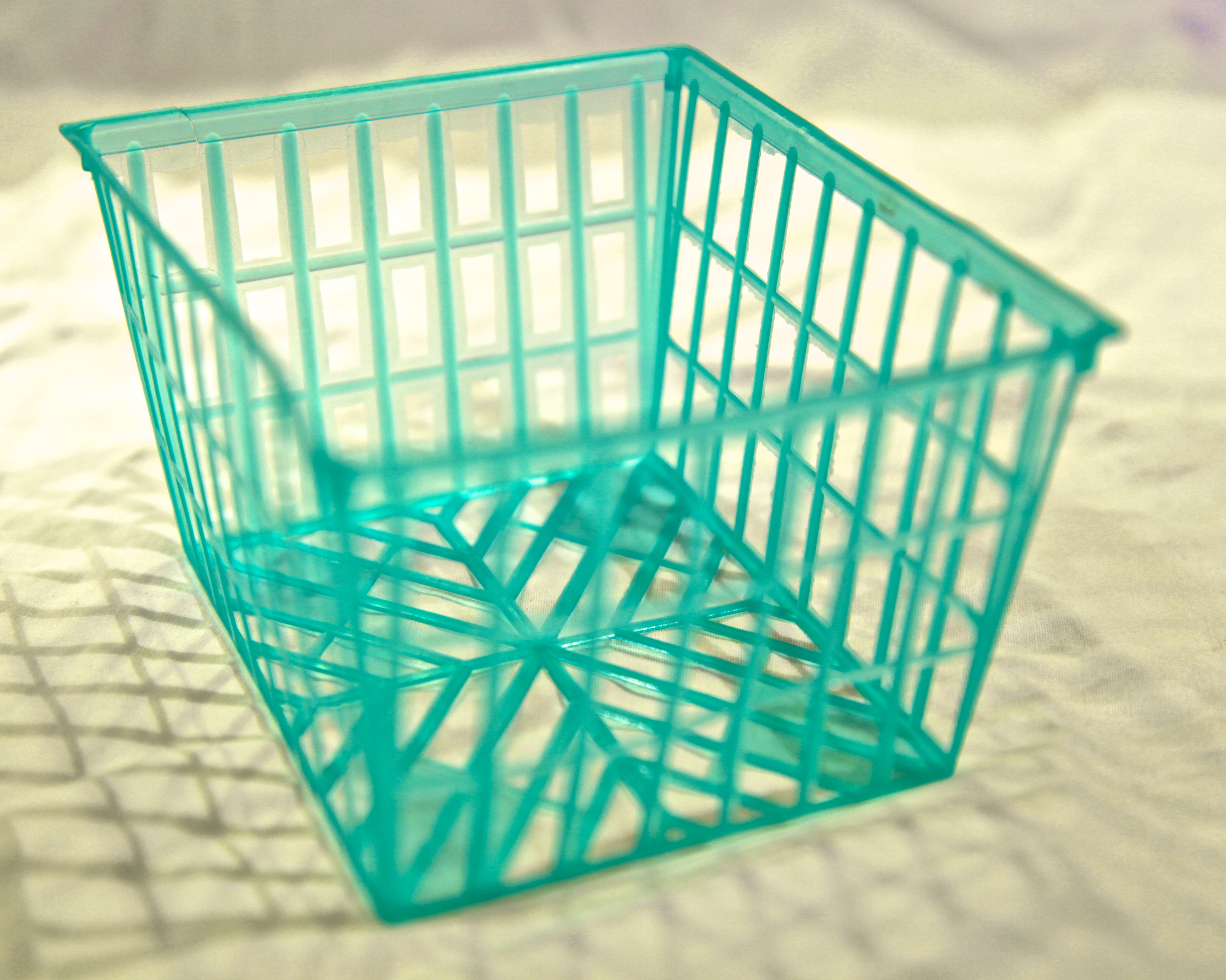
6) Say “no” to plastic mesh produce baskets (see above.) And use our letter to your grocer to do some good.

Plastic Mesh Produce Basket

7) Flowers don’t need to be wrapped in plastic for the journey home. First let your florist know you’ll carry them home sans plastic in your bag or basket, or your own two hands like you do at the farmer’s market or from your garden to your table.

Plastic-free flowers have less impact. Photo © Liesl Clark

8) Try a less plastic toothbrush. It’ll make you feel good. Some are so plastic-free they can be used as kindling when you’re done with them.

Toothbrushes Made Entirely of Bamboo are an Excellent Plastic-Free Alternative

9) Switch to homemade powder toothpaste. I’m still perfecting our recipe, but it’s basically baking soda, a few drops of stevia and a few drops of organic peppermint extract. The kids like it and we’ve reduced our toothpaste tube waste significantly.

DIY Zero Waste Toothpaste and Miswak Toothbrush Sticks, photo by Rebecca Rockefeller

10) Exert your buying power by choosing products that are entirely plastic-free. You’ll thank yourself later when your wood/metal/rubber/glass item is still functioning years later. I can attest to this for useful household items I’ve bought like pencil sharpeners, colanders, cheese graters (ones with plastic handles break), rakes, rubber spatulas (that’s why they call them rubber and the wooden handles are nicer to hold), soup ladles, straws (glass ones have a lifetime guarantee). My list could go on and on. I’ve never regretted purchasing a sometimes more expensive plastic-free item.

What are the toughest steps that you’ve taken to reduce the persistent plastics that you can’t seem to eradicate from your bin? Please let us know in the comments below so we can all try to come up with solutions together to help you reduce them.

DIY Tooth Powder (Plastic-Free Toothpaste)

When you’re trying to go plastic-free, toothpaste is a crux issue for most people. But crux no more! We have a plastic-free toothpaste/tooth powder recipe that’ll keep you happy and make you wonder why we all strayed from this basic recipe years ago in the first place.

Plastic-Free Tooth Powder is Easy to Make. Photo © Liesl Clark

I remember the days of tooth powder. It came in a family-size metal bottle with a top on it that you could shake over your toothbrush and the powder would come out. Pretty basic. But this stuff was great and I wonder why we’ve replaced it with paste in a plastic tube?

My family has used variations of this recipe for the past 4 years, on-again and off-again, and we’re always happy when we get back to using it. The baking soda cleans my teeth better than any other toothpaste out there.

And it takes less than 3 minutes to put it together:

2 tablespoons Baking Soda

2 pipette stoppers-ful of liquid stevia (liquid stevia comes in glass jars with stoppers)

1/4 teaspoon organic peppermint flavor (It’s a combination of sunflower oil and peppermint oil)

1/8 teaspoon organic mint extract

Mix your ingredients together in a small bowl or small mason jar.

The next step is perhaps the toughest: Finding the right container to hold and apply your tooth powder with. I found a pretty vanilla extract bottle with a small lid that works perfectly. We just shake it over our toothbrushes over the sink and if any powder falls into the sink it’s an added bonus for cleaning the sink! Baking soda has many uses. Cleaning your teeth AND your sink are just 2 of them.

My vanilla jar with a pretty paper label. The kids love it and our sink stays extra clean! Photo © Liesl Clark

So, why not give it a try? You’ll love the clean feel of this toothpaste/powder. It’s truly somewhere half-way in between a paste and a powder and feels great!

And to the question of toothbrushes:

A Bamboo Toothbrush With Plastic-Free Toothpaste is How We Roll at Chez Trash Backwards. Photo © Liesl Clark

Toothbrushes wash up on our beaches much too often, presumably because of the sewage that oft seeps into Puget Sound and the Pacific. Imagine that, some people flush their old toothbrushes down the toilet.

Going plastic-free in the bathroom is a great way to reduce our overall impact. Our post on toothbrushes can help you find ones that have less plastic and we’ve also found some helpful reuses for your old brushes so they can be utilized for special jobs around the house.

How To Fix Dead Ballpoint Pens

I promise, I haven’t gone off the deep end. I hate to throw things away that don’t need to be tossed, and most pens that stop writing can be fixed in a matter of seconds.

Fix Those Pens

We had a few hundred pens to test after having collected them from boxes bound for a dumpster. Sure, we had saved them from the landfill, but did they work? Most did, but the 30 or so that wouldn’t write just needed a little nudge. The roller ball was locked in place by dried-up ink from lack of use and we decided to put an age-old remedy to the test. If you put the tip of a ballpoint pen in a flame for a second or two it heats up the ball and gets it moving again.

Moving parts are all that’s needed when you know there’s still ink in that pen. Here’s how we did it. This ain’t rocket science:


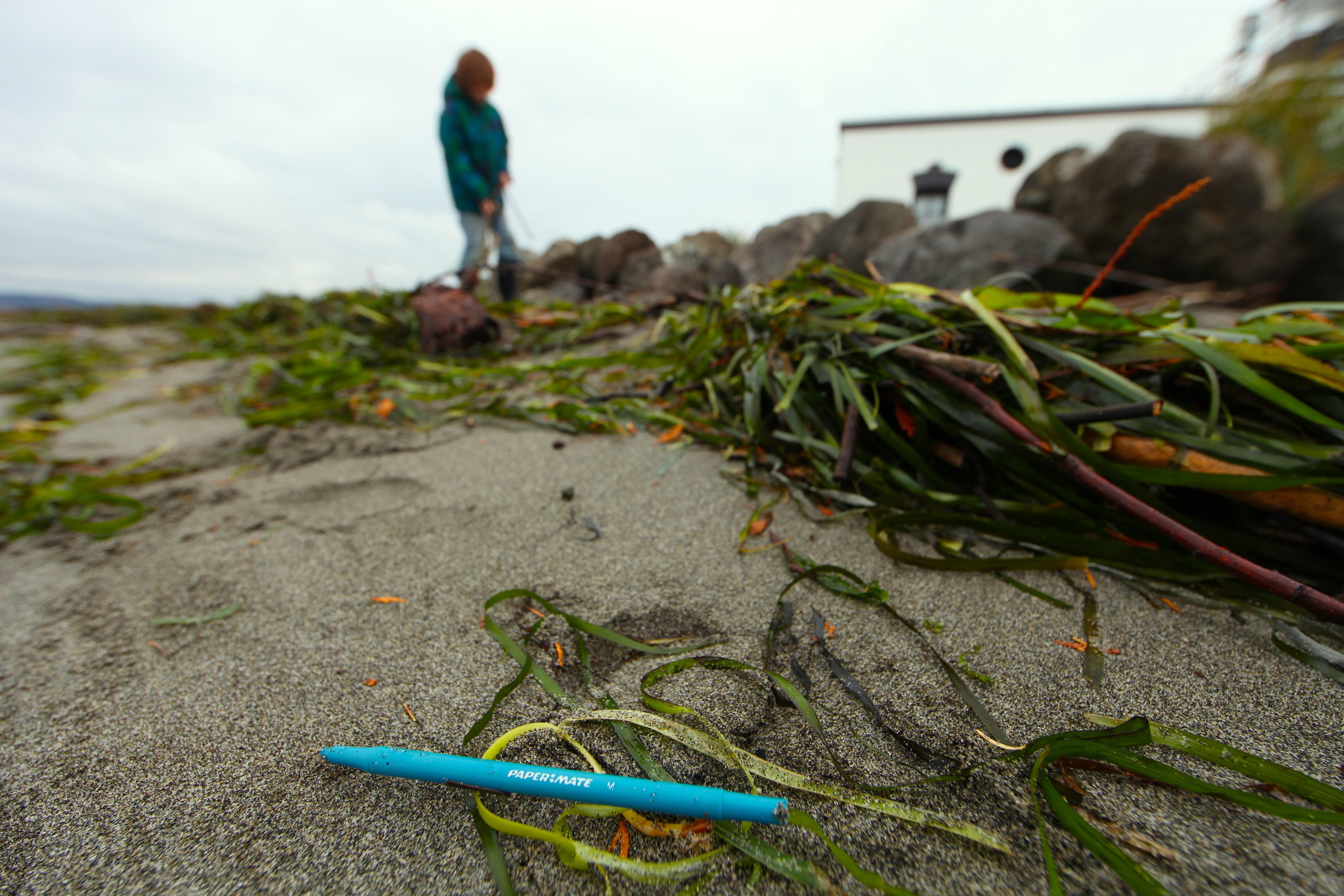
I had 2 excellent lab testers to do the job. The result? Thirty pens saved! And, why do we do this? Because we find too many plastic pens out in the environment, on our beaches, sides of roads, sidewalks. Every time we go to the beach or to town, we find pens.

Papermate Washed Ashore at Point No Point, WA © Liesl Clark

Paper Mate Washed Ashore at Point No Point, WA © Liesl Clark

I don’t think I’ll ever need to buy a pen again. They’re everywhere, and most are made of plastic so they’re here to stay, forever. Let’s try to fix the ones that don’t work and give them a second, third, and fifth life if necessary. And when all the plastic pens have been used up, we can start buying one special metal pen a year, like my husband does. He carries it with him and uses it religiously, because it’s his one pen, his favorite pen, meticulously made, and ready for him to write beautiful things because it’s well made and doesn’t dry up so easily.

My Pet Peeve About Pet Poop

Warning: The contents of this blog post might be disturbing, if you don’t like thinking about, or looking at, s**t.

Imagine hiking along a pristine trail in the Pacific Northwest with your dog. It’s a perfect spot with majestic trees, spring birds singing their first songs of spring. But your eye is caught by not one, but four or five little wads of plastic bags, placed carefully along the trail, loaded with a hiker’s canine crap. The numbers of plastic bags filled these days with dog waste on the trail can be quite shocking. Are pet owners intending to leave these plastic methane bombs there for me to pick up? Or, are they planning to come back one day to gather up the not-so-hermetically-sealed pathogen-filled goodies?  I believe they think they’re doing the environment a favor by just bagging them up in plastic, assuming they’ve done their service to the planet, thinking, “No methane escaping today!”

IMG_1425

Which is worse? This plastic bag or what’s inside? Well, now both are there to stay, on the trail. And the methane’s out of the bag. Sailor doesn’t know what to make of it.

I’m not going to get into the reasons why dog owners are bagging Fido’s fecal stuff. Suffice it to say, tail-wagger’s turds are one of the biggest contributors to water pollution in urban and suburban settings. We live on an island where we’re surrounded by Puget Sound. Everything ends up in our waters, given our torrential rains. So, doggie’s doodoo left in the rain can be considered the next nutrient to enter the Sound. But there’s definitely nothing nutritious about the stuff.

IMG_1441

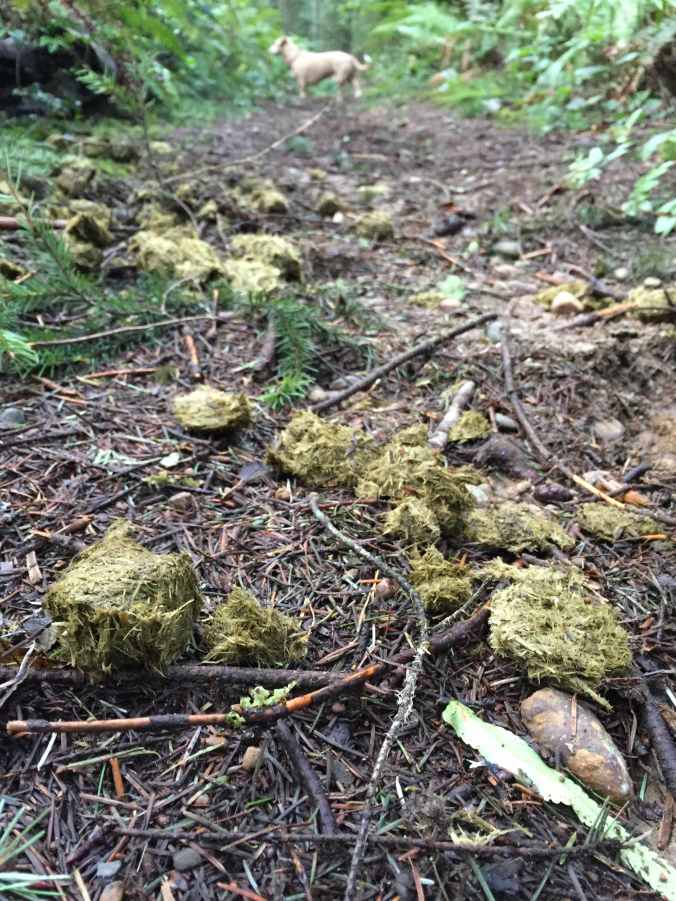
This isn’t Sailor’s poop. Just another example of what’s found trailside on our island paths. Trowel anyone? This might be the most environmentally-sound means of pet waste disposal.

We use a Bokashi Pet Waste Composter for our cat’s waste, and since our dog mostly poops in one spot on our property, we’re doing our best to bring it inside and flush it down the toilet. He eats no meat, mostly our veggie meals, and a few bites of the cat’s dry food each day. The EPA says flushing is the most environmentally-sound thing we can do with Rover’s #2, considering we live just feet from Puget Sound. But putting your dog’s fecal matter into a plastic bag and leaving it on the trail to stay forever is, by my calculations, two counts of littering.

IMG_1416

One of my favorite authors, Susan Freikel, who wrote Plastic: A Toxic Love Story, summarizes the situation perfectly in a recent article for LiveScience:

Dogs can harbor lots of viruses, bacteria and parasites — including harmful pathogens like e coli, giardia and salmonella. (A single gram contains an estimated 23 million bacteria.) Studies have traced 20 to 30 percent of the bacteria in water samples from urban watersheds to dog waste. Just two to three days of waste from 100 dogs can contribute enough bacteria, nitrogenand phosphorous to close 20 miles of a bay-watershed to swimmingand shellfishing, according to the U.S. Environmental Protection Agency.It also can get into the air we breathe: a recent study of air samples in Cleveland, Ohio, and Detroit, Mich., found that 10 to 50 percent of the bacteria came from dog poop.

I understand the reasoning behind bagging your pet’s waste. But (wait for it) I’ve seen hundreds of pet waste bags, still filled with said waste, washed up on beaches along our shorelines. These floaters stay extra-buoyant in their plastic packaging. It’s one kind of plastic waste we’ve had to leave out there on the beaches as we can’t bring ourselves to pick it up. I have visions of whales and sea lions ingesting the knotted bags of eco-dog-love left behind by doo-gooders of Puget Sound.

Is there a more environmentally friendly way to dispose of our pet’s waste? According to this Huffington Post article, Paul Canella’s Poop Bags are biodegradable. But, those presumably will just go into the landfill, with the same toxins and microbes deemed unhealthy to humans leaching into our watersheds. Some scientists suggest that burying your dog’s waste, as you would your own, might be the best method for disposal along the trail. One foot deep, below the runoff zone, is safe. Are you willing to start digging in your public park? Probably not.

We have a bit of a merde mess in our over-poopulated urban settings, but in a few places, like Portland and Boulder, enterprising people have developed pet waste processing companies that compost your four-legged friend’s feces. It turns out hot commercial composters could actually use Fido’s fuel. One dog-friendly park, in Gilbert, AZ, lets you toss your turds into a bin that turns it into a flame for a lantern in the park while you let your dog have some off-leash fun.

IMG_1782

Yet another plastic-encapsulated trailside turd.

The plastic bagging of dog droppings just isn’t cutting it. We’re making a bigger mess of things in our wild places, watersheds, and maritime environments. There are now flushable bags made for caca collection, and this might be one of the easiest and eco-aware options out there.

IMG_1445

Vegetarian waste left behind by horses is of no concern.

Until we have anaerobic pet waste composters in each city, we’ll have to settle for the lesser evils available to us for disposing of it. And the next time I come across plastic-sealed scat, I have a pocketful of hand-written notes that I plan to leave behind, scribbled on paper, to accompany the abandoned excrement: “Did you forget this? This PPOO (plastic poo) needs a PPU (prompt pickup) by you.”


Zero Waste Vacuum Cleaning

By Liesl Clark

Using a vacuum cleaner in a (trying to get close to) zero waste home can be challenging, if you don’t have a bagless vacuum. Here’s what I’ve discovered over the years about reducing vacuum cleaning waste from my household:

Skip the Vacuum Cleaner Altogether? Now wait! Don’t stop reading because you think I’ve gone too far here. I can attest to the fact that in places where vacuum cleaners don’t exist, brooms can definitely do the trick! You just need a really great stiff broom for picking up the dirt. And, there’s no method better than taking your carpet outside and shaking it or beating it with a broom. If you have wall-to-wall carpet, I guess you’re out of luck, but a good stiff broom can do wonders.

I’ve had a few house cleaners help me in my day, and I’m always amazed to see how many of them choose to use the vacuum cleaner without first sweeping up the wooden floor. Broom and dustpan are the fastest route to frugal and zero waste floor-cleaning. I even have a cool collection of brooms I’ve gathered from all over the planet. In my travels to homes far from the conveniences of electricity and vacuums, I’ve witnessed the cleaning of rugs and carpets the old-fashioned-and-often-much-cleaner-way. Soft brooms sweep the often dirt floors, and stiff brooms are used to sweep the carpets. I’m amazed at how efficient they are so we use a broom on our carpets much of the time.

My Favorite Broom, Natural & Sustainable, Great for Wood Floors, Photo © Liesl Clark

Outside, we have a game of trying to shake a carpet with a partner on the other end and see who gets shaken-off first.

Empty the Bag! We used to have a vacuum we loved, but it came with bags that fill up and must be thrown out….or do they? After accumulating a few full bags, tossing ’em, and buying more (they’re expensive!) I discovered it was almost as easy to empty them into our brush pile outside and reuse them! We’d reuse our bags at least 30 times. Emptying the vacuum cleaner bags is an opportunity my children fight over. It’s fun. Really. Especially when we find a long-lost (and favorite) plastic baby goat in there. Those little baubles that get sucked up by the vacuum are given a second life.

See How Fun It Is? Photo © Liesl Clark

Now, a very ecologically-sound friend of mine says, “No, No! don’t empty those vacuum-cleaner bags because the dust and dirt in your home is toxic from the detritus that comes from your asbestos-bearing furniture or PVC and BPA-laden rugs.” I do respect her point, but I have to argue that our own dirt off our shoes is likely from the garden, our furniture is almost all made of natural materials, our home is recycled old timbers, and our carpets are antique natural-fiber carpets from Tibet and Egypt that we’ve bought from people we know, colored with vegetable dyes. I think we’re pretty safe. But this is not to say that everyone is safe to dump out their vacuumed dust into the environment. But aren’t our landfills part of our environment?

My Full Vacuum Cleaner Bag, Photo © Liesl Clark

I often empty our vacuum cleaner dust into our compost bin, except we find myriad little plastic bits from art projects that I try to take out by hand and throw back into the art bin (truly.) If you think your home and furniture (including mattresses) are mostly plastic-free, the dump-out-your-vacuum-bag-contents method of frugal vacuuming might be for you.

Dusting the Compost & Pulling the Plastic Out Later, Photo © Liesl Clark

Otherwise, there are bagless vacuums on the market these days. We’ve just acquired one, so our days of bag saving are over and we just dump our floor dust right into the compost. These days, it’s mostly dog and cat hair. I’d love to hear what you do with the dust and dirt from your home?

Fun with vacuum cleaner bags, Photo © Liesl Clark

Please note: If you have allergies or a particular sensitivity to dust, wearing a handkerchief or just mask around your mouth and nose is advised. Another friend empties her vacuum particulates into a plastic bag first, and then dumps it into her compost, to prevent the dust particles from escaping into the air. Shaking  out your vacuum cleaner bag is fun, especially when you know you’re defying the marketing department of your vacuum cleaner company. And, hey, you might find your lost wedding ring or favorite bauble for the effort.


Fun Emptying Vacuum Cleaner Bags, Photo © Liesl Clark

Clothes The Loop With The North Face

I’m excited to make a huge discovery, for those of us who ache when we throw into the landfill big chunks of plastic that could likely be repurposed into something else. The North Face stores will take not only your old clothes, shoes, and outdoor gear like backpacks and tents, but they’ll also take your old ski boots! Please read this article by my husband that tells you all about this great initiative.

By Pete Athans

Living on an island means we don’t have access to a lot of services and conveniences. We like that.

My 7-year-old daughter on a ferry boat ride to our Puget Sound island. Photo © Liesl Clark

A 35-minute ferry ride delivers us into what feels like the bowels of Seattle, ejecting ferry-riders beneath a highway underpass, a continuous stream of cars, buses and trucks humming above. Just around the corner from the hum of the waterfront is one of The North Face’s first stores to open in the U.S.

Delivered by ferry to the Seattle waterfront. Photo © Liesl Clark

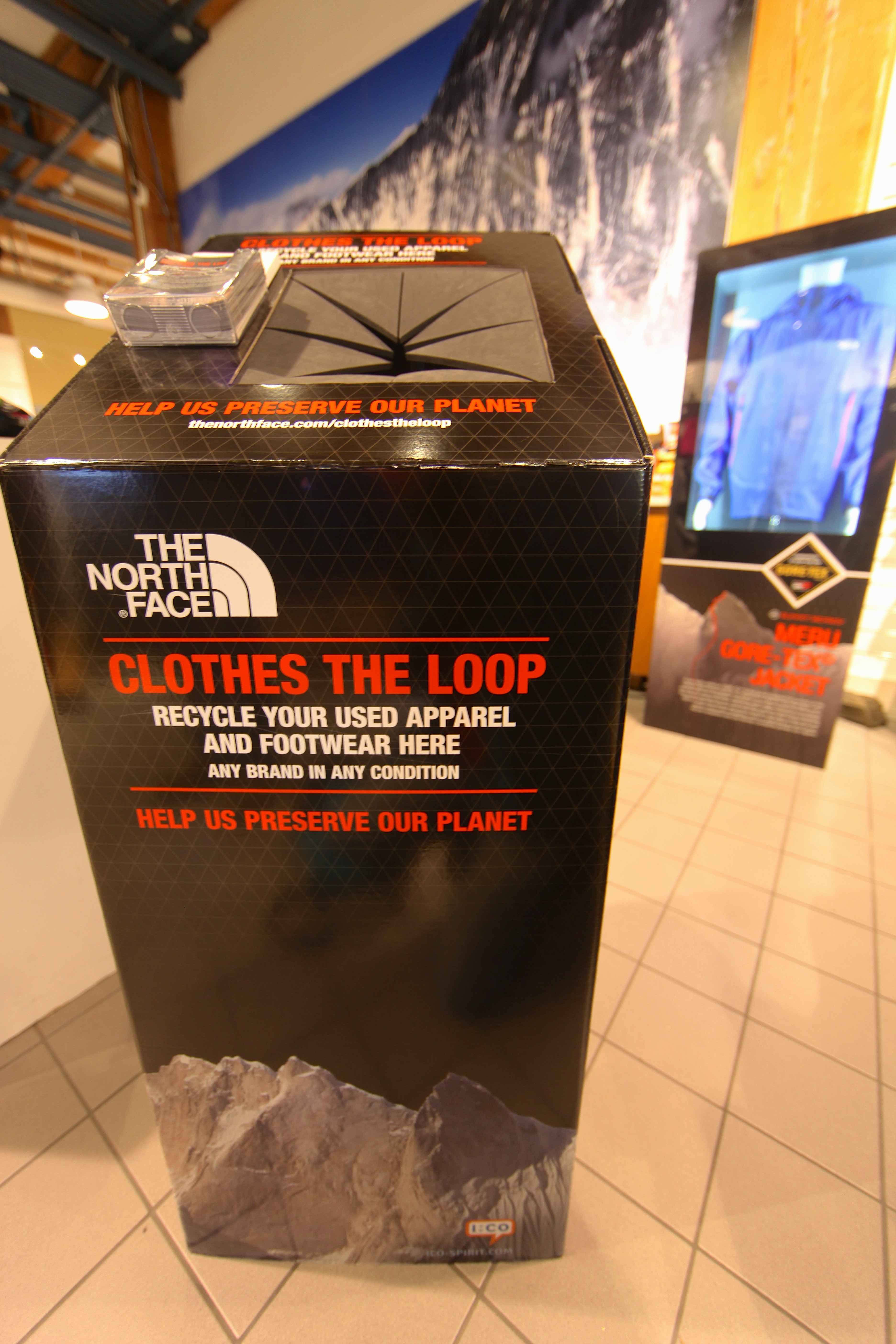
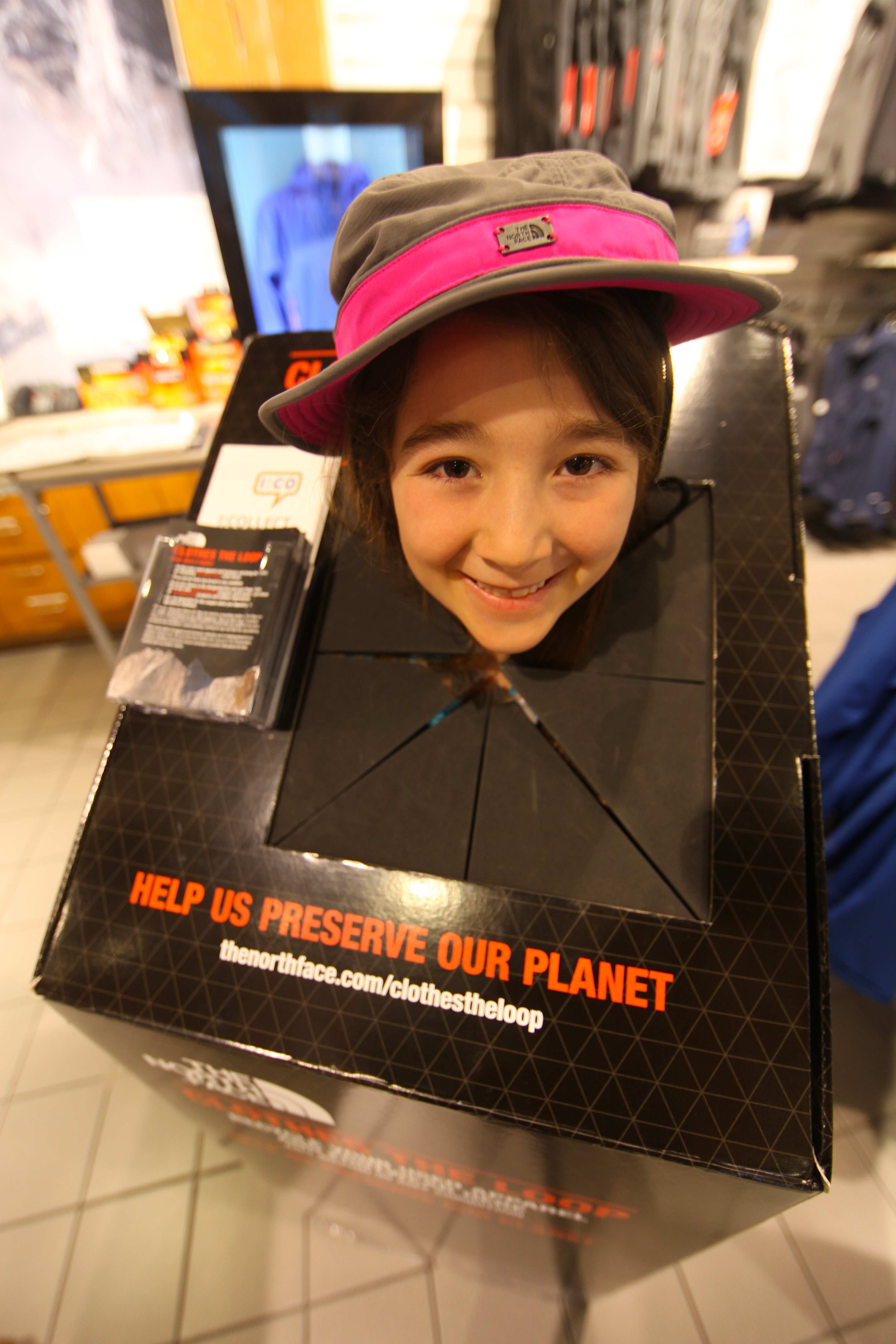
I’ve worked for the company for nearly 30 years, and I still love walking into this special Seattle space. Behind the modern store facade, you still have a sense of the original post and beam construction, probably used for shipping or as a warehouse years ago. Today, I’m even more proud to step into the store with my family, carrying our used clothing, textiles, and gear that we aren’t able to sustainably throw away on our small island. In fact, most people have a tough time finding places to discard used clothing and specialized outdoor gear in this country. But every store in the US that The North Face operates now has a “Clothes The Loop” box where you can drop off your used and worn-up clothes, gear, and shoes. You’ll get a discount on your next purchase at The North Face store as a reward for your efforts.

Here’s how you can find a store near you that is participating in this program. Click on their Find A Store link. Then, at the bottom of the map, click on the boxes that say “The North Face Stores” and “The North Face Outlets.” Those are the stores owned and operated by The North Face that have this program.

Denim has value. Don't throw it away! It can be used as insulation. Photo © Liesl Clark

The North Face has initiated this much-needed clothing, gear, and shoe recycling program, they call “Clothes the Loop,” in a partnership with I:CO an international textile and shoe recycler that breaks materials down into 400 categories for carpet padding, stuffing for new toys, and fibers for new clothing. I:CO currently processes about 500 tons of used items every day in 74 countries. They have collection points all over Europe and in the USA.

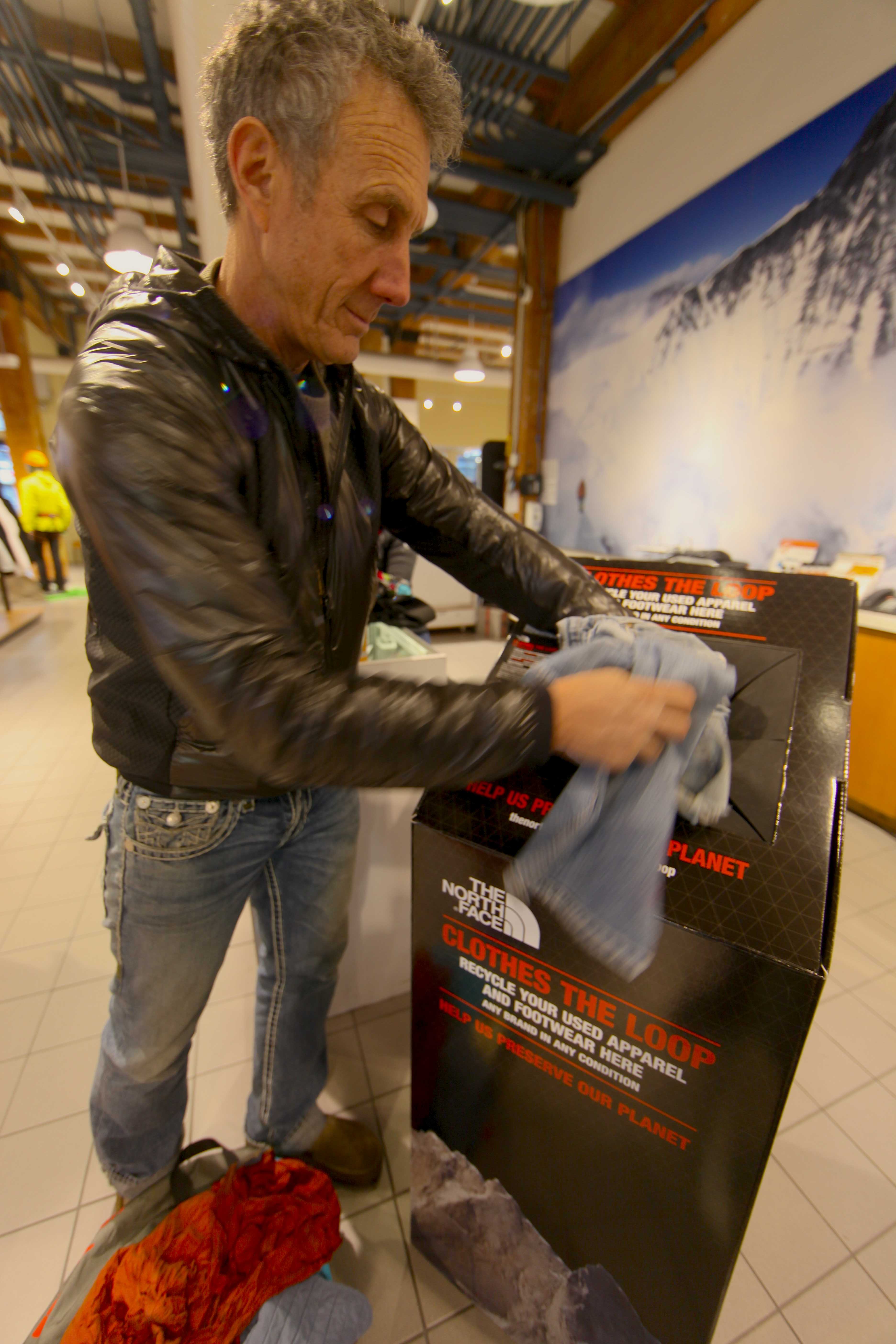
Drop your old apparel, any brand, into a "Clothes the Loop" bin at The North Face store.

Here’s a list of the kinds of items you can take to your nearest store and put in their box:

Old Clothing

Shoes

Hiking Boots

Rope

Bed Spreads

Sheets

Table Cloths

Fabric Scraps

Ski Boots

Backpacks

Tents

Climbing Harnesses

Pillows

Stuffed Animals

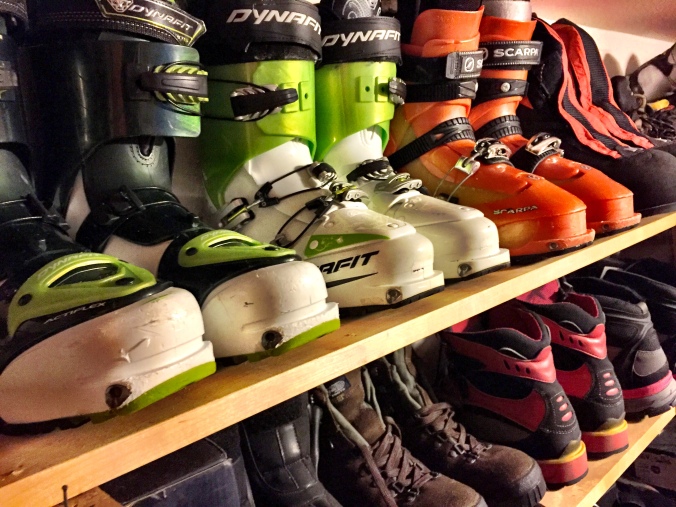
We’ve taken samplings of just about everything on the list above to their store. It’s reduced our family’s solid waste significantly each year. According to the EPA Office of Solid Waste, Americans throw away more than 68 pounds of clothing and textiles per person per year, and this figure is rapidly growing. Add your outdoor gear to that figure and surely it’s over 100 pounds. We’re very excited to hear that they’ll take ski boots. Before this, there were no options in the Seattle area and most cities for ski boot recycling.

IMG_1496

Our family has a lot of boots, for every kind of snow sport. We’re probably not unlike many families. © Liesl Clark

Before you take your items in to The North Face, if any of them are usable, please try to give them away to someone who might be able to use them, through a project like your local Buy Nothing group. When my family travels to the Himalaya, we always bring a few extra duffels of clothing and shoes. We work with communities in Upper Mustang who are in dire need of good shoes.

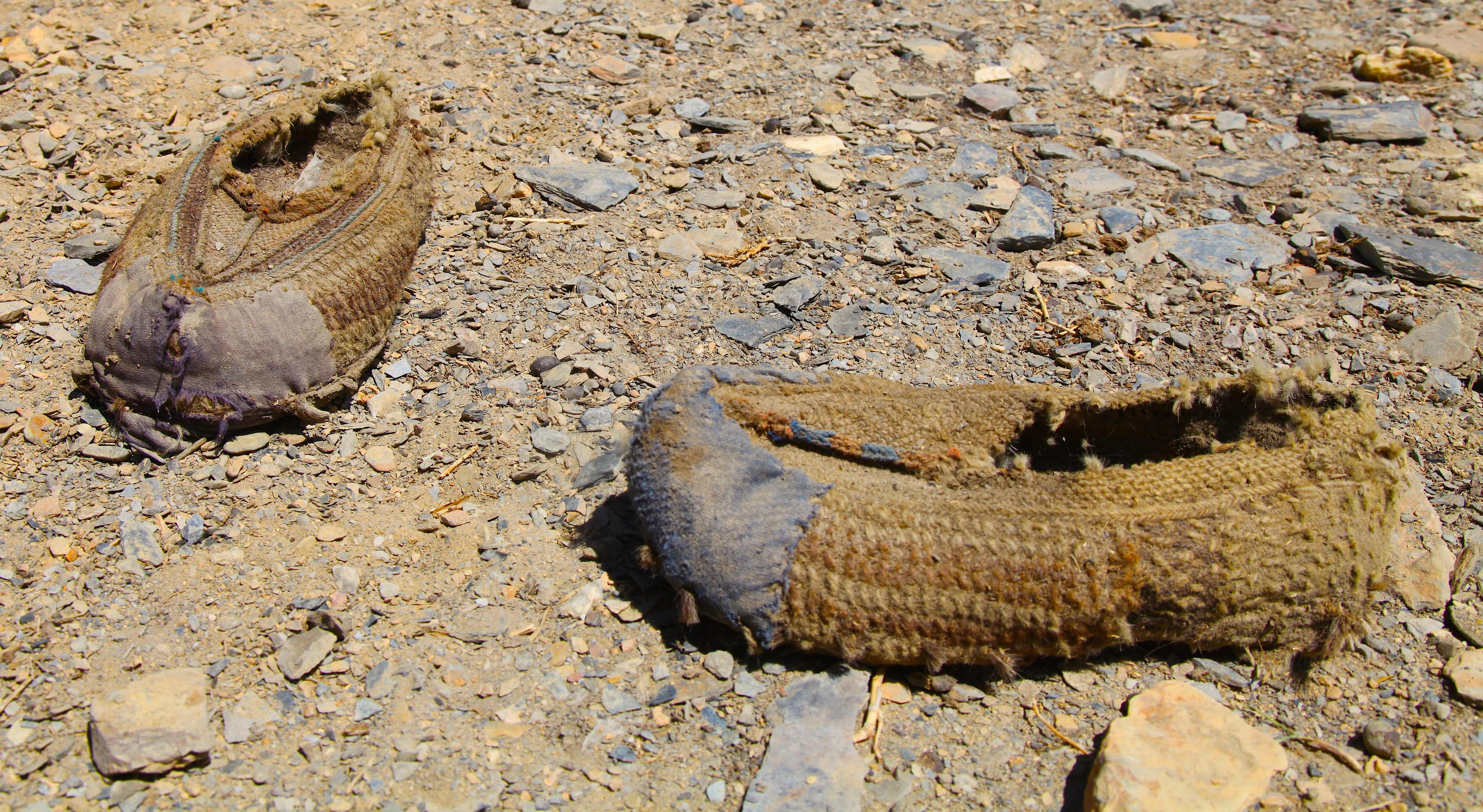
Since children grow so fast, it isn’t hard to pass on our own children’s lightly worn fleece, outerwear, hiking boots, hats and gloves to kids in remote mountain communities. It’s the least we can do in a high mountain environment where people only have access to poorly made Chinese apparel.

A child in Samdzong getting medical care from our expedition doctor. Photo © Liesl Clark

My children on their way to Upper Mustang, Nepal. Photo © Liesl Clark

My children on their way to Upper Mustang, Nepal. Photo © Liesl Clark

If we’re more mindful of our textile and outdoor gear waste, we can each make a difference. We know the textile industry adds tremendous environmental stress on our planet, but by giving away our usable our clothing and gear and then recycling what’s un-wearable, we can reduce the demand for virgin materials in new clothing and conserve the energy that goes into making fibers for fabrics.

Recycling your worn out textiles and shoes at The North Face is fun. Photo © Liesl Clark

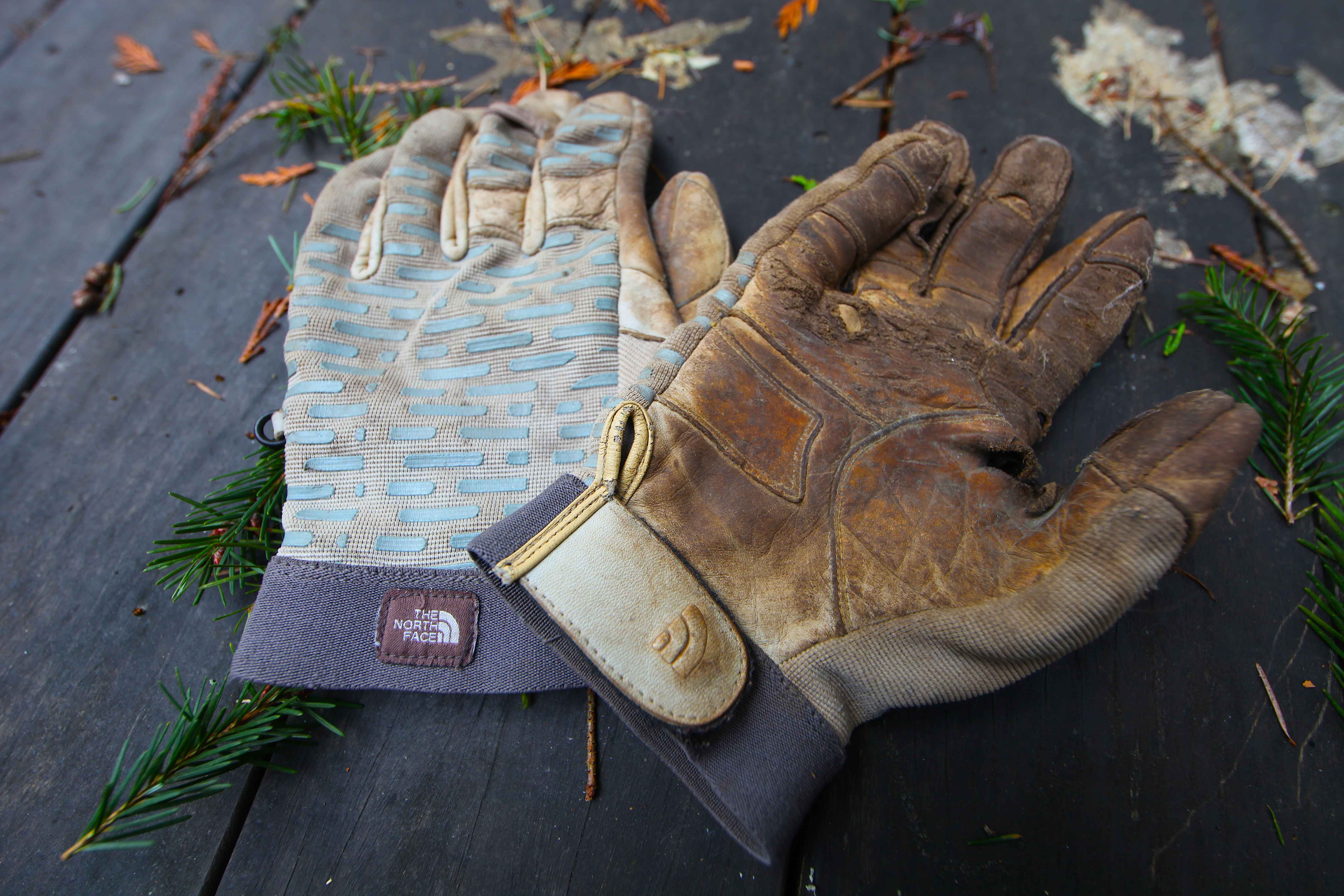
For us islanders, this new drop box at The North Face will be a welcome destination for fabrics and apparel we’ve been stockpiling in our homes in hopes that a recycler would appear in our midst. Your jeans that have holes in the knees and gloves that are nearly shredded from outdoor use are welcome at the Clothes the Loop bin.

My favorite TNF gloves, now safely in the bin. Photo © Liesl Clark

Hope to see you there, recycling your hole-y socks and dented hats.

IMG_3361 Photo © Liesl Clark