Green Guide To Recycling Ski Gear

By Mr. Everest

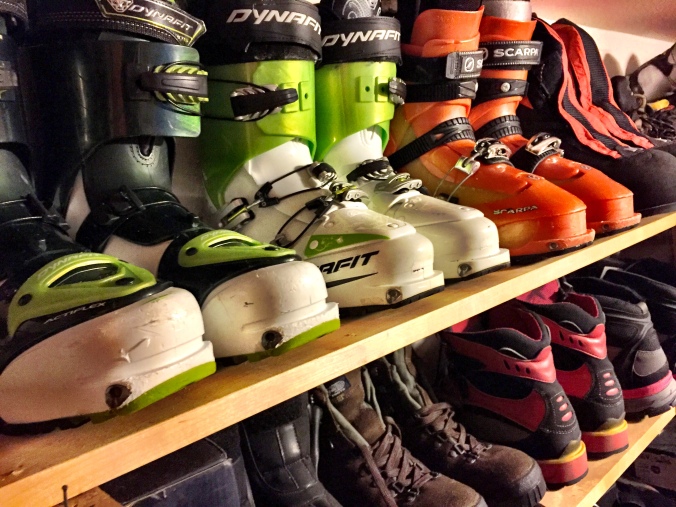
Ski Equipment Doesn't Have to Go to the Landfill. Photo © Liesl Clark

We’re at the height of the ski season and if you’re like me, this is a great time to start demo-ing new gear. But what to do with the old? Here are a few options I’ve been able to find:

SELL
You can always list your gear on Craigslist or take it to Play It Again Sports to find a buyer.

GIVE
Joining your local Buy Nothing group and giving them away to your neighbors is a great way to keep your ski and snowboard gear out of landfills and still cruising the slopes. Some people are cool with using outdated gear. My wife, for example, skied the slopes for 15 seasons on her old Black Diamond AT gear. And our 12 year old son is going to give them a try on his first hut trip this week.

Donate your gear to a local youth ski program or adaptive ski program. If you check with your ski areas or local ski shops, you’ll most likely find a program that would be happy to use your equipment that’s in good condition and not outdated. Snowpals of Tahoe is just one example.

REUSE
You could always start your own ski swap, enticing others in your community to bring their gear so families can outfit the kids with neighbor’s hand-me-downs. It’s a great way to keep skiing affordable for us all.

Out With the Old and In With the New. Outfitting Your Family in New Ski Gear Means You Need to Find Green Means to Get Rid of Your Old Gear. Photo © Pete Athans

Yankee Magazine has a great article, with plans, showing you how to make your own ski Adirondack chair. Some people build cool fences with stockpiled skis.


RECYCLE
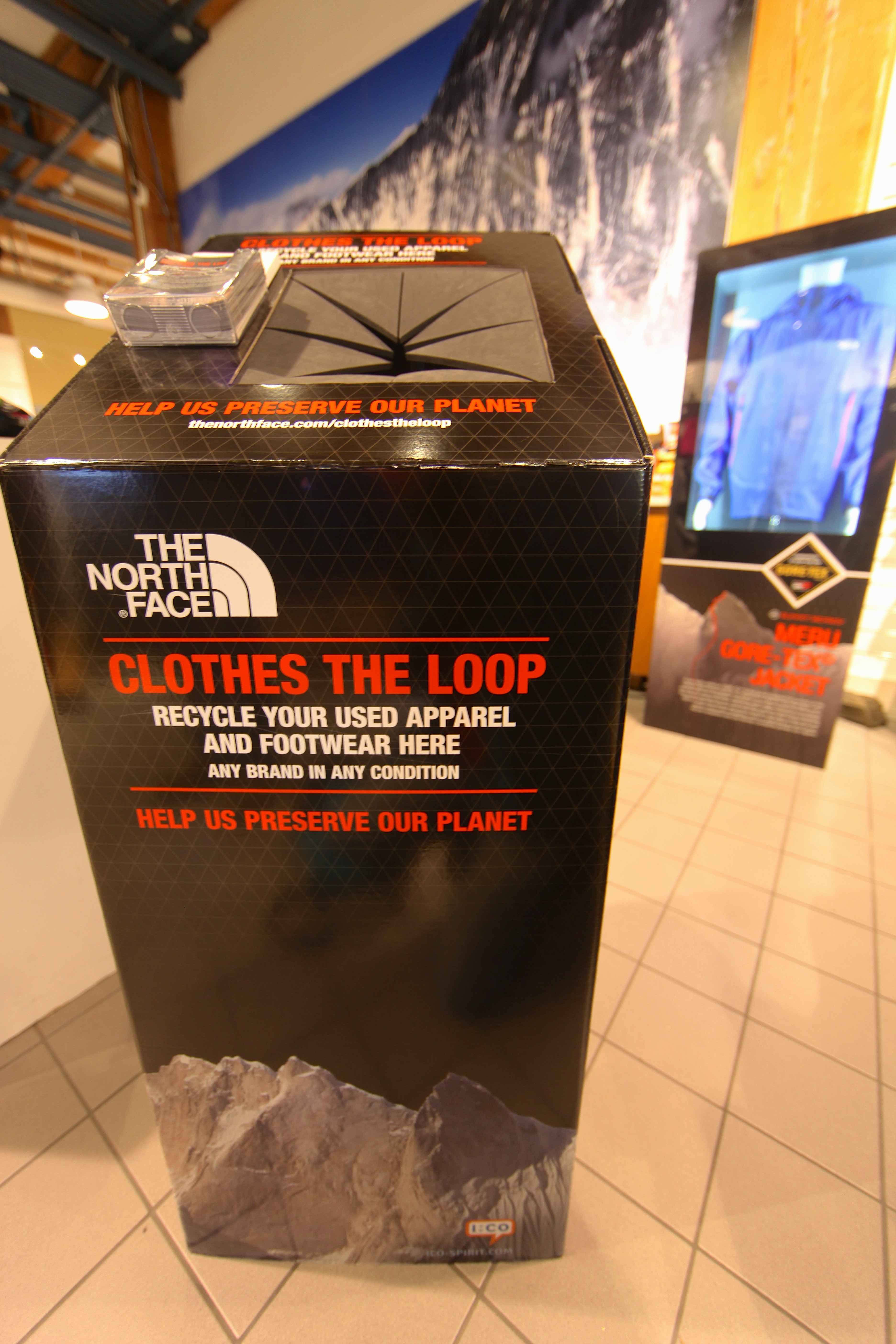
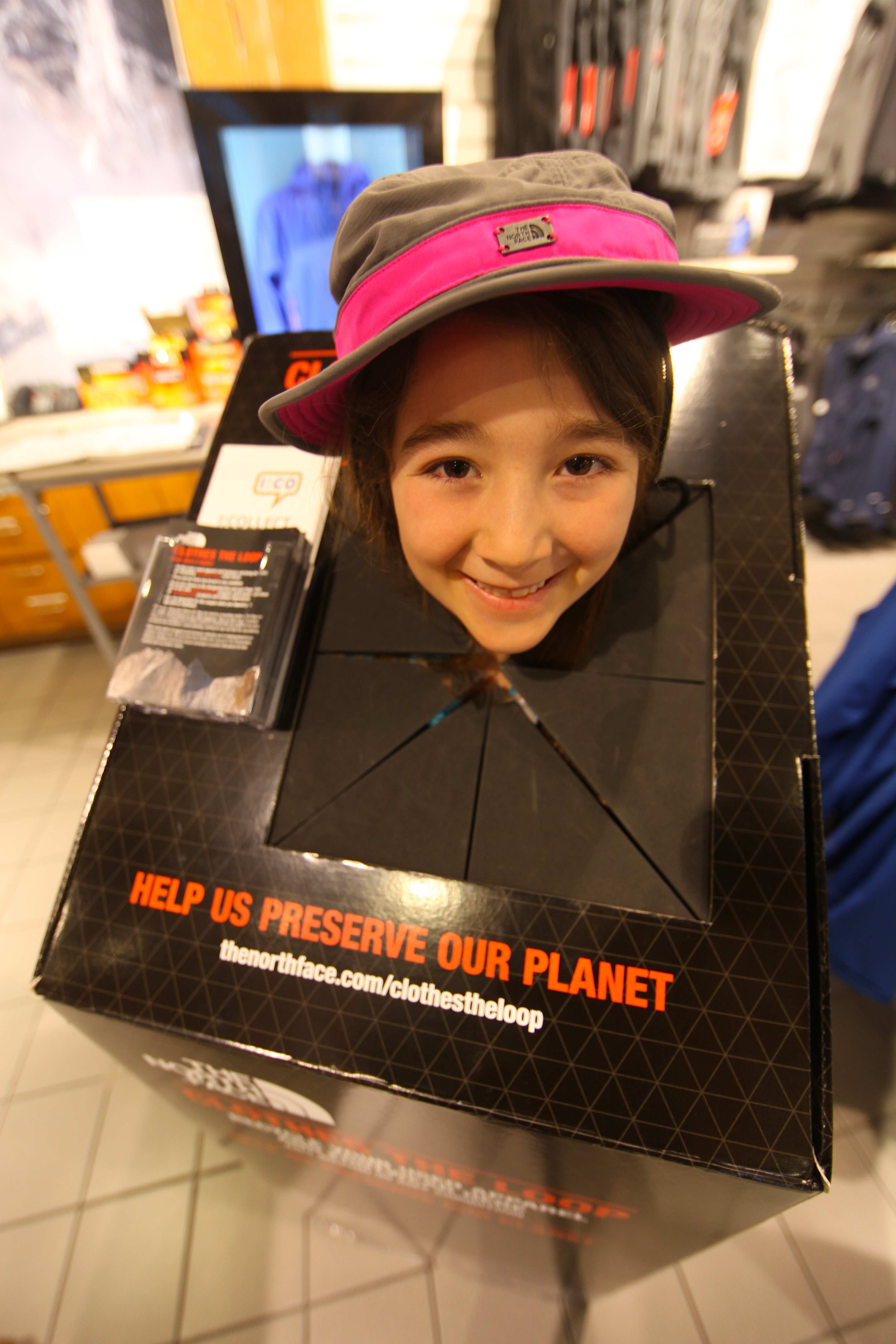
The North Face stores will take all of your ski clothing (hats, gloves, pants, bibs, jackets, socks), ski boots, goggles, and ski helmets. Their Clothes The Loop program sends the gear to a company called I:CO which shreds it into its elements and makes new products with it. My article about this great program goes more into depth about this the Clothes The Loop initiative in all of The North Face stores, and where to find those stores.

Ski poles? They’re mostly made of metal, so taking them to your nearest metal recycling center might be your best bet. Poles haven’t changed much over the years, though, so be sure to try giving them away before you send them to metal recycling.

If you live or ski in Colorado or Utah, a great ski industry recycling service was set up by the Snow Sports Recycling Program, which recycles ski gear collected at participating stores. I can’t find a list of the stores any longer but calling the phone number listed on the page, under “Waste Not” could likely get you the names of stores near you that’ll recycle your old gear. This program turns your gear into chips that will be turned into new goods. They’ll take skis, snowboards, boots, helmets, bindings and poles. These materials create waste streams that are approximately 5% steel, 25 % aluminum, 60% plastic and the balance are wood and fiberglass, all reusable in new applications.

JPEG image-790B5550467E-1 2

Ski Poles Are Mostly Made of Metal © Liesl Clark

If you live near Aspen, CO you can contact Reeski to see if they’ll take your skis and boards to turn into cool looking furniture.

There’s no need for our gear to end up in the landfill. If you’re stumped about a particular item and want to find a reduce, reuse, recycle option for it, drop us a line in the comments below and we’ll get on it.

How To Fix Dead Ballpoint Pens

I promise, I haven’t gone off the deep end. I hate to throw things away that don’t need to be tossed, and most pens that stop writing can be fixed in a matter of seconds.

Fix Those Pens

We had a few hundred pens to test after having collected them from boxes bound for a dumpster. Sure, we had saved them from the landfill, but did they work? Most did, but the 30 or so that wouldn’t write just needed a little nudge. The roller ball was locked in place by dried-up ink from lack of use and we decided to put an age-old remedy to the test. If you put the tip of a ballpoint pen in a flame for a second or two it heats up the ball and gets it moving again.

Moving parts are all that’s needed when you know there’s still ink in that pen. Here’s how we did it. This ain’t rocket science:


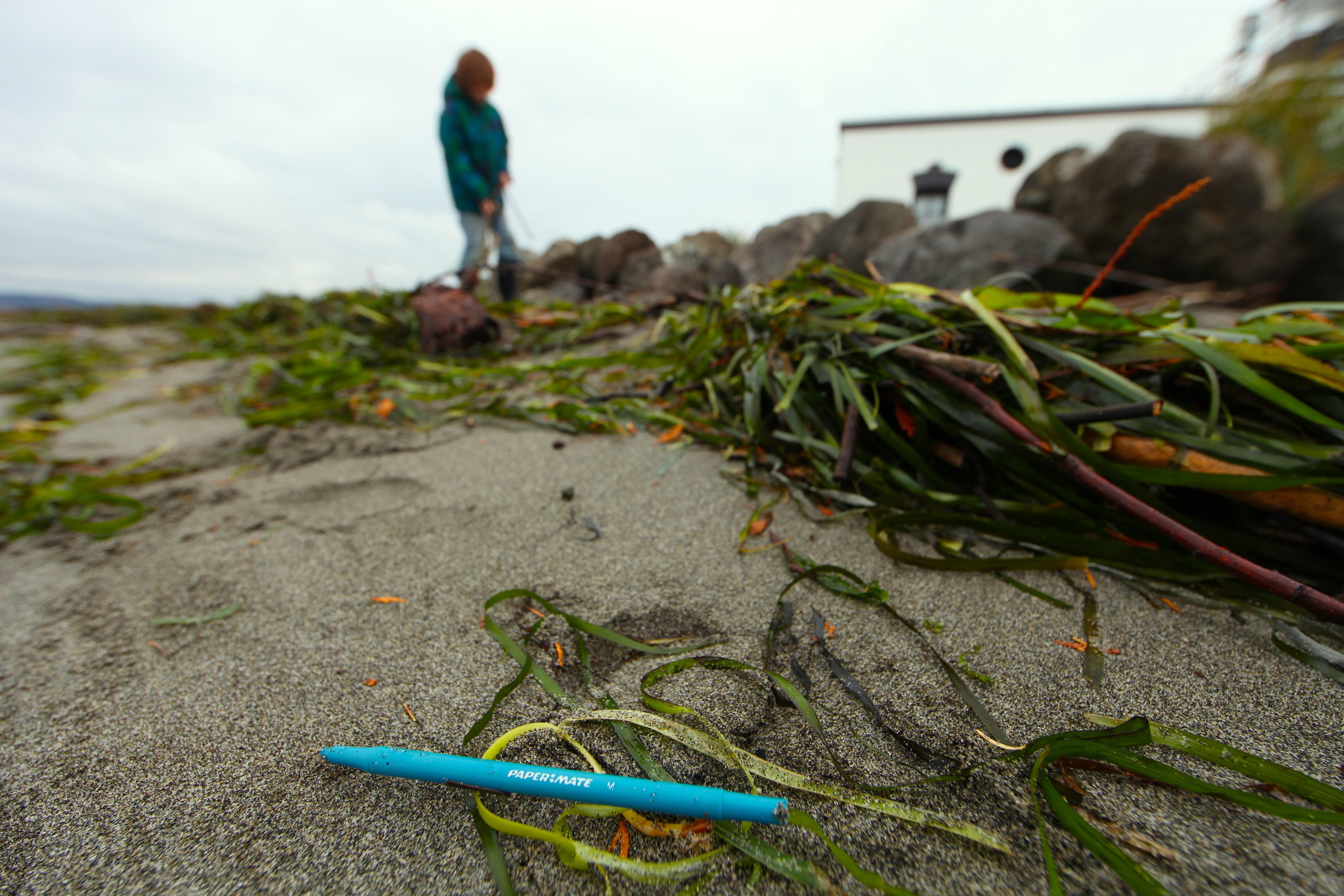
I had 2 excellent lab testers to do the job. The result? Thirty pens saved! And, why do we do this? Because we find too many plastic pens out in the environment, on our beaches, sides of roads, sidewalks. Every time we go to the beach or to town, we find pens.

Papermate Washed Ashore at Point No Point, WA © Liesl Clark

Paper Mate Washed Ashore at Point No Point, WA © Liesl Clark

I don’t think I’ll ever need to buy a pen again. They’re everywhere, and most are made of plastic so they’re here to stay, forever. Let’s try to fix the ones that don’t work and give them a second, third, and fifth life if necessary. And when all the plastic pens have been used up, we can start buying one special metal pen a year, like my husband does. He carries it with him and uses it religiously, because it’s his one pen, his favorite pen, meticulously made, and ready for him to write beautiful things because it’s well made and doesn’t dry up so easily.

My Pet Peeve About Pet Poop

Warning: The contents of this blog post might be disturbing, if you don’t like thinking about, or looking at, s**t.

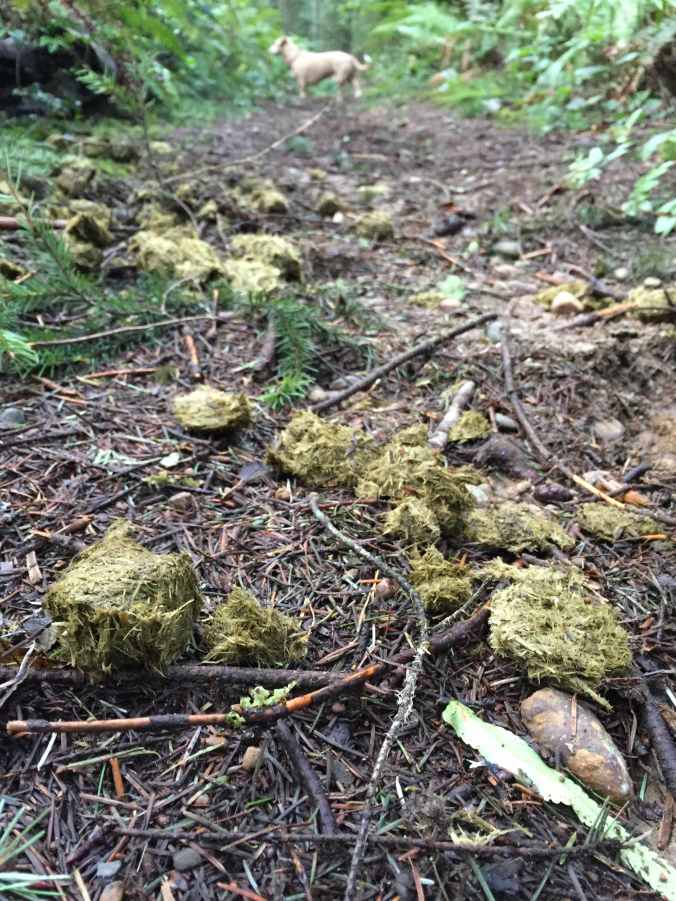
Imagine hiking along a pristine trail in the Pacific Northwest with your dog. It’s a perfect spot with majestic trees, spring birds singing their first songs of spring. But your eye is caught by not one, but four or five little wads of plastic bags, placed carefully along the trail, loaded with a hiker’s canine crap. The numbers of plastic bags filled these days with dog waste on the trail can be quite shocking. Are pet owners intending to leave these plastic methane bombs there for me to pick up? Or, are they planning to come back one day to gather up the not-so-hermetically-sealed pathogen-filled goodies?  I believe they think they’re doing the environment a favor by just bagging them up in plastic, assuming they’ve done their service to the planet, thinking, “No methane escaping today!”

IMG_1425

Which is worse? This plastic bag or what’s inside? Well, now both are there to stay, on the trail. And the methane’s out of the bag. Sailor doesn’t know what to make of it.

I’m not going to get into the reasons why dog owners are bagging Fido’s fecal stuff. Suffice it to say, tail-wagger’s turds are one of the biggest contributors to water pollution in urban and suburban settings. We live on an island where we’re surrounded by Puget Sound. Everything ends up in our waters, given our torrential rains. So, doggie’s doodoo left in the rain can be considered the next nutrient to enter the Sound. But there’s definitely nothing nutritious about the stuff.

IMG_1441

This isn’t Sailor’s poop. Just another example of what’s found trailside on our island paths. Trowel anyone? This might be the most environmentally-sound means of pet waste disposal.

We use a Bokashi Pet Waste Composter for our cat’s waste, and since our dog mostly poops in one spot on our property, we’re doing our best to bring it inside and flush it down the toilet. He eats no meat, mostly our veggie meals, and a few bites of the cat’s dry food each day. The EPA says flushing is the most environmentally-sound thing we can do with Rover’s #2, considering we live just feet from Puget Sound. But putting your dog’s fecal matter into a plastic bag and leaving it on the trail to stay forever is, by my calculations, two counts of littering.

IMG_1416

One of my favorite authors, Susan Freikel, who wrote Plastic: A Toxic Love Story, summarizes the situation perfectly in a recent article for LiveScience:

Dogs can harbor lots of viruses, bacteria and parasites — including harmful pathogens like e coli, giardia and salmonella. (A single gram contains an estimated 23 million bacteria.) Studies have traced 20 to 30 percent of the bacteria in water samples from urban watersheds to dog waste. Just two to three days of waste from 100 dogs can contribute enough bacteria, nitrogenand phosphorous to close 20 miles of a bay-watershed to swimmingand shellfishing, according to the U.S. Environmental Protection Agency.It also can get into the air we breathe: a recent study of air samples in Cleveland, Ohio, and Detroit, Mich., found that 10 to 50 percent of the bacteria came from dog poop.

I understand the reasoning behind bagging your pet’s waste. But (wait for it) I’ve seen hundreds of pet waste bags, still filled with said waste, washed up on beaches along our shorelines. These floaters stay extra-buoyant in their plastic packaging. It’s one kind of plastic waste we’ve had to leave out there on the beaches as we can’t bring ourselves to pick it up. I have visions of whales and sea lions ingesting the knotted bags of eco-dog-love left behind by doo-gooders of Puget Sound.

Is there a more environmentally friendly way to dispose of our pet’s waste? According to this Huffington Post article, Paul Canella’s Poop Bags are biodegradable. But, those presumably will just go into the landfill, with the same toxins and microbes deemed unhealthy to humans leaching into our watersheds. Some scientists suggest that burying your dog’s waste, as you would your own, might be the best method for disposal along the trail. One foot deep, below the runoff zone, is safe. Are you willing to start digging in your public park? Probably not.

We have a bit of a merde mess in our over-poopulated urban settings, but in a few places, like Portland and Boulder, enterprising people have developed pet waste processing companies that compost your four-legged friend’s feces. It turns out hot commercial composters could actually use Fido’s fuel. One dog-friendly park, in Gilbert, AZ, lets you toss your turds into a bin that turns it into a flame for a lantern in the park while you let your dog have some off-leash fun.

IMG_1782

Yet another plastic-encapsulated trailside turd.

The plastic bagging of dog droppings just isn’t cutting it. We’re making a bigger mess of things in our wild places, watersheds, and maritime environments. There are now flushable bags made for caca collection, and this might be one of the easiest and eco-aware options out there.

IMG_1445

Vegetarian waste left behind by horses is of no concern.

Until we have anaerobic pet waste composters in each city, we’ll have to settle for the lesser evils available to us for disposing of it. And the next time I come across plastic-sealed scat, I have a pocketful of hand-written notes that I plan to leave behind, scribbled on paper, to accompany the abandoned excrement: “Did you forget this? This PPOO (plastic poo) needs a PPU (prompt pickup) by you.”


Zero Waste Vacuum Cleaning

By Liesl Clark

Using a vacuum cleaner in a (trying to get close to) zero waste home can be challenging, if you don’t have a bagless vacuum. Here’s what I’ve discovered over the years about reducing vacuum cleaning waste from my household:

Skip the Vacuum Cleaner Altogether? Now wait! Don’t stop reading because you think I’ve gone too far here. I can attest to the fact that in places where vacuum cleaners don’t exist, brooms can definitely do the trick! You just need a really great stiff broom for picking up the dirt. And, there’s no method better than taking your carpet outside and shaking it or beating it with a broom. If you have wall-to-wall carpet, I guess you’re out of luck, but a good stiff broom can do wonders.

I’ve had a few house cleaners help me in my day, and I’m always amazed to see how many of them choose to use the vacuum cleaner without first sweeping up the wooden floor. Broom and dustpan are the fastest route to frugal and zero waste floor-cleaning. I even have a cool collection of brooms I’ve gathered from all over the planet. In my travels to homes far from the conveniences of electricity and vacuums, I’ve witnessed the cleaning of rugs and carpets the old-fashioned-and-often-much-cleaner-way. Soft brooms sweep the often dirt floors, and stiff brooms are used to sweep the carpets. I’m amazed at how efficient they are so we use a broom on our carpets much of the time.

My Favorite Broom, Natural & Sustainable, Great for Wood Floors, Photo © Liesl Clark

Outside, we have a game of trying to shake a carpet with a partner on the other end and see who gets shaken-off first.

Empty the Bag! We used to have a vacuum we loved, but it came with bags that fill up and must be thrown out….or do they? After accumulating a few full bags, tossing ’em, and buying more (they’re expensive!) I discovered it was almost as easy to empty them into our brush pile outside and reuse them! We’d reuse our bags at least 30 times. Emptying the vacuum cleaner bags is an opportunity my children fight over. It’s fun. Really. Especially when we find a long-lost (and favorite) plastic baby goat in there. Those little baubles that get sucked up by the vacuum are given a second life.

See How Fun It Is? Photo © Liesl Clark

Now, a very ecologically-sound friend of mine says, “No, No! don’t empty those vacuum-cleaner bags because the dust and dirt in your home is toxic from the detritus that comes from your asbestos-bearing furniture or PVC and BPA-laden rugs.” I do respect her point, but I have to argue that our own dirt off our shoes is likely from the garden, our furniture is almost all made of natural materials, our home is recycled old timbers, and our carpets are antique natural-fiber carpets from Tibet and Egypt that we’ve bought from people we know, colored with vegetable dyes. I think we’re pretty safe. But this is not to say that everyone is safe to dump out their vacuumed dust into the environment. But aren’t our landfills part of our environment?

My Full Vacuum Cleaner Bag, Photo © Liesl Clark

I often empty our vacuum cleaner dust into our compost bin, except we find myriad little plastic bits from art projects that I try to take out by hand and throw back into the art bin (truly.) If you think your home and furniture (including mattresses) are mostly plastic-free, the dump-out-your-vacuum-bag-contents method of frugal vacuuming might be for you.

Dusting the Compost & Pulling the Plastic Out Later, Photo © Liesl Clark

Otherwise, there are bagless vacuums on the market these days. We’ve just acquired one, so our days of bag saving are over and we just dump our floor dust right into the compost. These days, it’s mostly dog and cat hair. I’d love to hear what you do with the dust and dirt from your home?

Fun with vacuum cleaner bags, Photo © Liesl Clark

Please note: If you have allergies or a particular sensitivity to dust, wearing a handkerchief or just mask around your mouth and nose is advised. Another friend empties her vacuum particulates into a plastic bag first, and then dumps it into her compost, to prevent the dust particles from escaping into the air. Shaking  out your vacuum cleaner bag is fun, especially when you know you’re defying the marketing department of your vacuum cleaner company. And, hey, you might find your lost wedding ring or favorite bauble for the effort.


Fun Emptying Vacuum Cleaner Bags, Photo © Liesl Clark

DIY Mason Jar Soap Dispenser

I’ve eyed the useful mason jar soap dispensers made by creative people and thought I’d try to make one myself. Was it difficult? Not at all. This DIY project takes a few minutes to pull off.

All you need is a mason jar with a wide mouth lid, a push pump from a discarded soap or hand cream dispenser (I had to cut mine down so it would fit in my pint jar,) a pair of pliers, and a Sharpie.

Mason Jar + Lid, Pliers, Sharpie, and Pump. Photo © Liesl Clark

Find the center of your flat mason jar lid and punch a hole in it with a can opener (oh right, that’s one more tool you’ll want.)

Making Your Center Hole. Photo © Liesl Clark

I was able to make a hole quite easily with my pliers. Draw a circle around the hole that’s in the center of your lid, is in my first picture, and start to pull the hole apart, making it wider and wider.

Starting to Make Your Center Hole Wider. © Liesl Clark

You simply keep pulling the pieces of metal wider and wider around the edges of your circle until they’re just wide enough for your pump to fit through.

It Will Start To Look Like a Flower. Photo © Liesl Clark

When you have sufficient room for your pump, slip it through but try to keep the fit quite tight.

Thread The Pump Through the Hole. Photo © Liesl Clark

I pressed the edges of the metal lid down tight against the lid to prevent any future cuts when I need to add soap to my dispenser. You can use a silicone sealant to lock the pump down to its center hole and smooth out your sharp edges.

Sealed Soap Dispenser. Photo © Liesl Clark

This whole project took 5 minutes once I had gathered my supplies.

DIY Soap Dispenser, Ready For Use. Photo © Liesl Clark

When we went away on vacation our cat knocked over a pretty glass dispenser I gave my husband for Christmas. My husband is the dishwasher after dinner and I wanted him to feel like he had a cool “tool” to use at the sink.

Our cool new kitchen 'tool:" Our DIY soap dispenser. Photo © Liesl Clark

We mostly use baking soda for our dishes, but this liquid soap gives great suds if you like ’em and makes a mild hand soap, too. Our current liquid soap is an extremely watered-down (like 6:1 water to soap) biokleen dish soap.

DIY Dish Soap Dispenser. Photo © Liesl Clark

Clothes The Loop With The North Face

I’m excited to make a huge discovery, for those of us who ache when we throw into the landfill big chunks of plastic that could likely be repurposed into something else. The North Face stores will take not only your old clothes, shoes, and outdoor gear like backpacks and tents, but they’ll also take your old ski boots! Please read this article by my husband that tells you all about this great initiative.

By Pete Athans

Living on an island means we don’t have access to a lot of services and conveniences. We like that.

My 7-year-old daughter on a ferry boat ride to our Puget Sound island. Photo © Liesl Clark

A 35-minute ferry ride delivers us into what feels like the bowels of Seattle, ejecting ferry-riders beneath a highway underpass, a continuous stream of cars, buses and trucks humming above. Just around the corner from the hum of the waterfront is one of The North Face’s first stores to open in the U.S.

Delivered by ferry to the Seattle waterfront. Photo © Liesl Clark

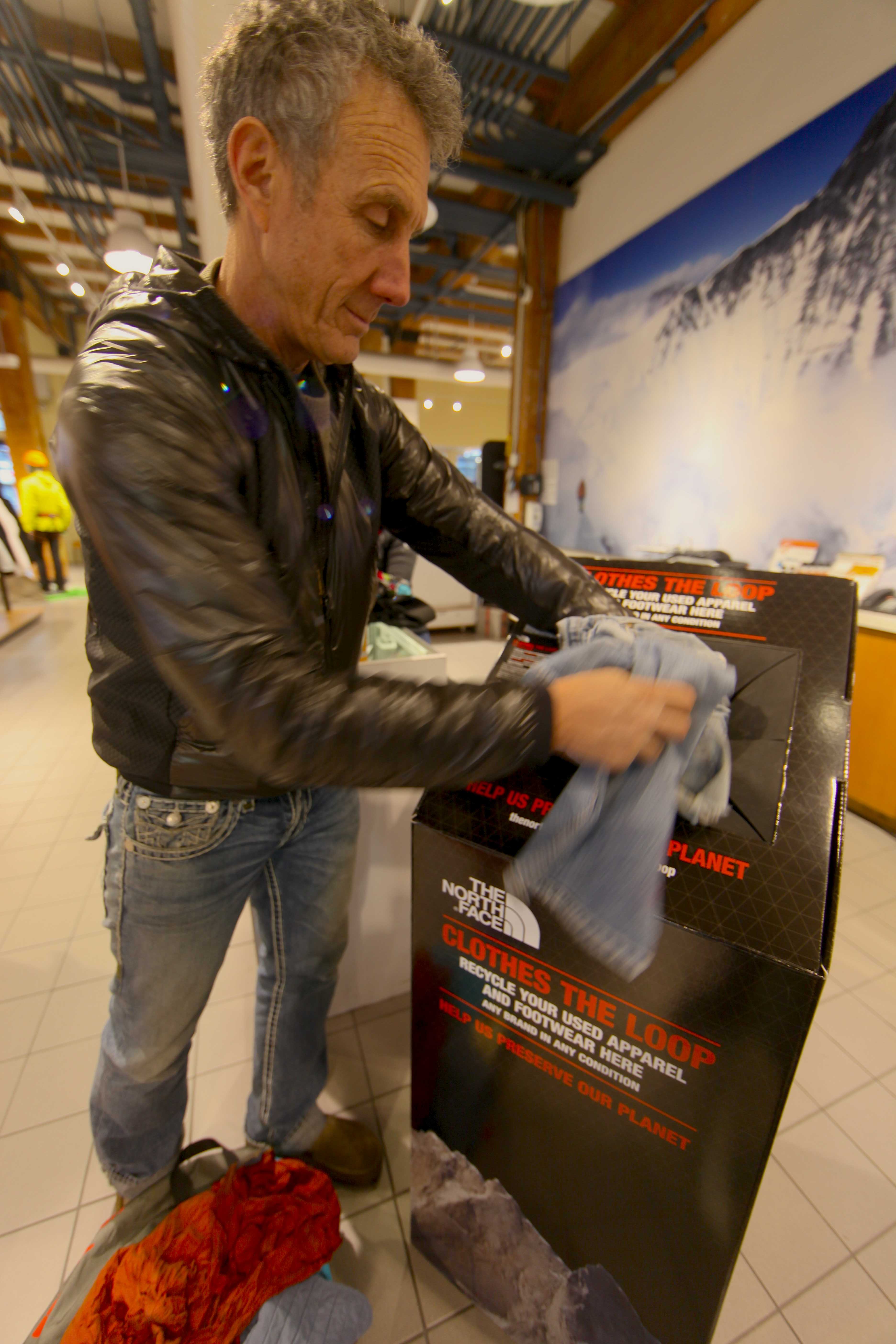
I’ve worked for the company for nearly 30 years, and I still love walking into this special Seattle space. Behind the modern store facade, you still have a sense of the original post and beam construction, probably used for shipping or as a warehouse years ago. Today, I’m even more proud to step into the store with my family, carrying our used clothing, textiles, and gear that we aren’t able to sustainably throw away on our small island. In fact, most people have a tough time finding places to discard used clothing and specialized outdoor gear in this country. But every store in the US that The North Face operates now has a “Clothes The Loop” box where you can drop off your used and worn-up clothes, gear, and shoes. You’ll get a discount on your next purchase at The North Face store as a reward for your efforts.

Here’s how you can find a store near you that is participating in this program. Click on their Find A Store link. Then, at the bottom of the map, click on the boxes that say “The North Face Stores” and “The North Face Outlets.” Those are the stores owned and operated by The North Face that have this program.

Denim has value. Don't throw it away! It can be used as insulation. Photo © Liesl Clark

The North Face has initiated this much-needed clothing, gear, and shoe recycling program, they call “Clothes the Loop,” in a partnership with I:CO an international textile and shoe recycler that breaks materials down into 400 categories for carpet padding, stuffing for new toys, and fibers for new clothing. I:CO currently processes about 500 tons of used items every day in 74 countries. They have collection points all over Europe and in the USA.

Drop your old apparel, any brand, into a "Clothes the Loop" bin at The North Face store.

Here’s a list of the kinds of items you can take to your nearest store and put in their box:

Old Clothing

Shoes

Hiking Boots

Rope

Bed Spreads

Sheets

Table Cloths

Fabric Scraps

Ski Boots

Backpacks

Tents

Climbing Harnesses

Pillows

Stuffed Animals

We’ve taken samplings of just about everything on the list above to their store. It’s reduced our family’s solid waste significantly each year. According to the EPA Office of Solid Waste, Americans throw away more than 68 pounds of clothing and textiles per person per year, and this figure is rapidly growing. Add your outdoor gear to that figure and surely it’s over 100 pounds. We’re very excited to hear that they’ll take ski boots. Before this, there were no options in the Seattle area and most cities for ski boot recycling.

IMG_1496

Our family has a lot of boots, for every kind of snow sport. We’re probably not unlike many families. © Liesl Clark

Before you take your items in to The North Face, if any of them are usable, please try to give them away to someone who might be able to use them, through a project like your local Buy Nothing group. When my family travels to the Himalaya, we always bring a few extra duffels of clothing and shoes. We work with communities in Upper Mustang who are in dire need of good shoes.

Since children grow so fast, it isn’t hard to pass on our own children’s lightly worn fleece, outerwear, hiking boots, hats and gloves to kids in remote mountain communities. It’s the least we can do in a high mountain environment where people only have access to poorly made Chinese apparel.

A child in Samdzong getting medical care from our expedition doctor. Photo © Liesl Clark

My children on their way to Upper Mustang, Nepal. Photo © Liesl Clark

My children on their way to Upper Mustang, Nepal. Photo © Liesl Clark

If we’re more mindful of our textile and outdoor gear waste, we can each make a difference. We know the textile industry adds tremendous environmental stress on our planet, but by giving away our usable our clothing and gear and then recycling what’s un-wearable, we can reduce the demand for virgin materials in new clothing and conserve the energy that goes into making fibers for fabrics.

Recycling your worn out textiles and shoes at The North Face is fun. Photo © Liesl Clark

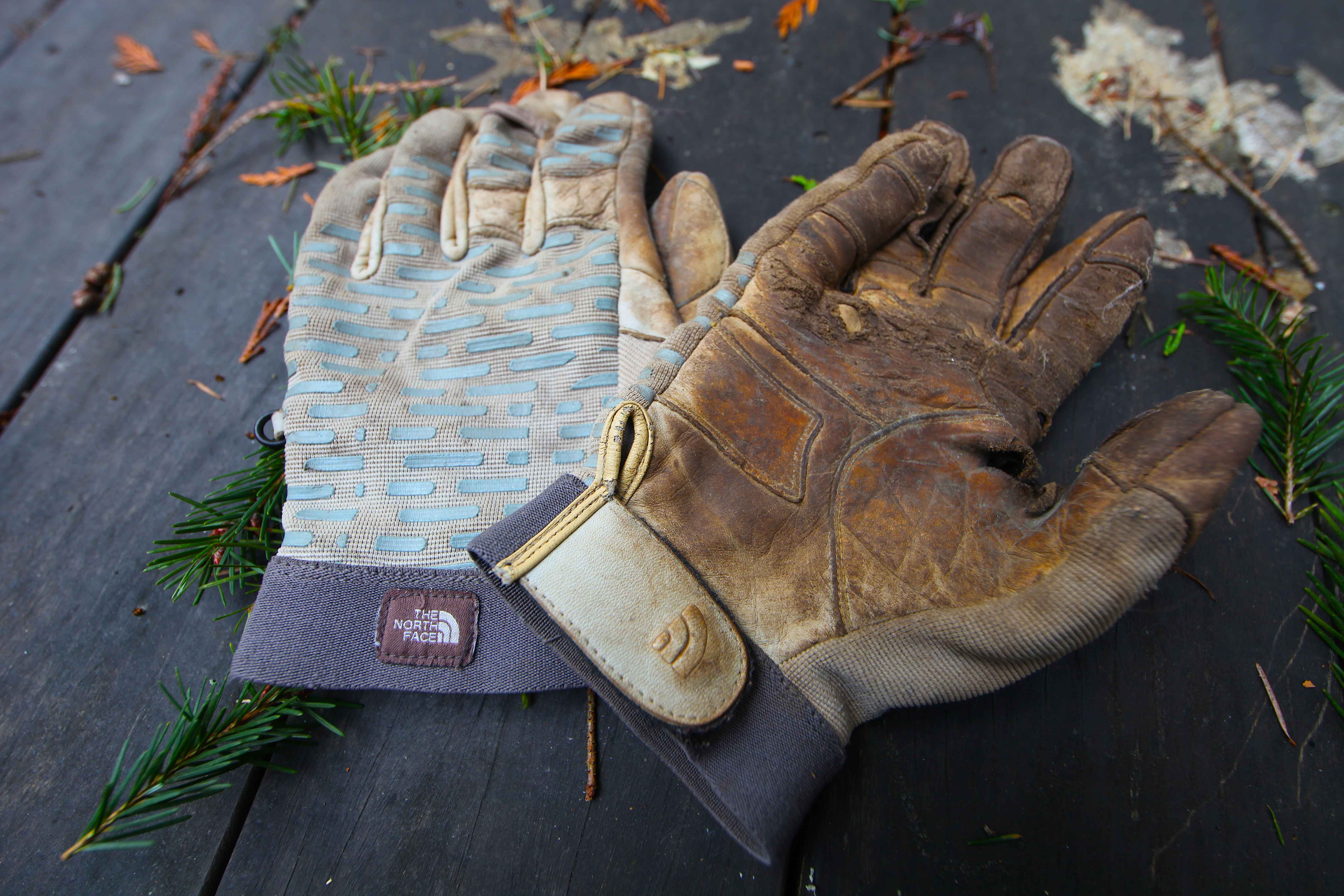
For us islanders, this new drop box at The North Face will be a welcome destination for fabrics and apparel we’ve been stockpiling in our homes in hopes that a recycler would appear in our midst. Your jeans that have holes in the knees and gloves that are nearly shredded from outdoor use are welcome at the Clothes the Loop bin.

My favorite TNF gloves, now safely in the bin. Photo © Liesl Clark

Hope to see you there, recycling your hole-y socks and dented hats.

IMG_3361 Photo © Liesl Clark

Garden Glove Love


Roadside Garden Glove. Photo © Finn Clark

It all started on a bike ride. We kept seeing garden gloves along the side of the road. In fact, we had seen the gloves lying there for weeks and finally decided to pick them up. One by one, over the course of about 2 weeks, we had managed to collect 20 pairs!

I Have Good Garden Glove Karma. Photo © Liesl Clark

We’re an island of avid gardeners, farmers, and a world-famous garden tour called “Bainbridge in Bloom.” Twelve months of gardening weather here on Puget Sound has afforded us 4 seasons of dirt digging. The problem is that the gardeners’ (or perhaps it’s the hired landscapers’) gloves too often end up along the sides of the roads, having fallen from the backs of landscaper’s trucks, farmers’ tractors, or islander’s cars. Being a food-grower myself, I couldn’t just let those gloves rot in the ditches.

Garden Gloves Rain or Shine. Photo © Finn Clark

My children and I have been collecting them: pulling to the side of the road, jumping out of the car, jumping back in, celebrating, for a year now and have 45 pairs plus about 50 singles ready for a mate. Do you have a single garden or work glove awaiting a partner? Don’t throw it out! Send it to us so we can marry it to one we have here because their next life is going to be GOOD.

We have gloves in every color. Photo © Liesl Clark

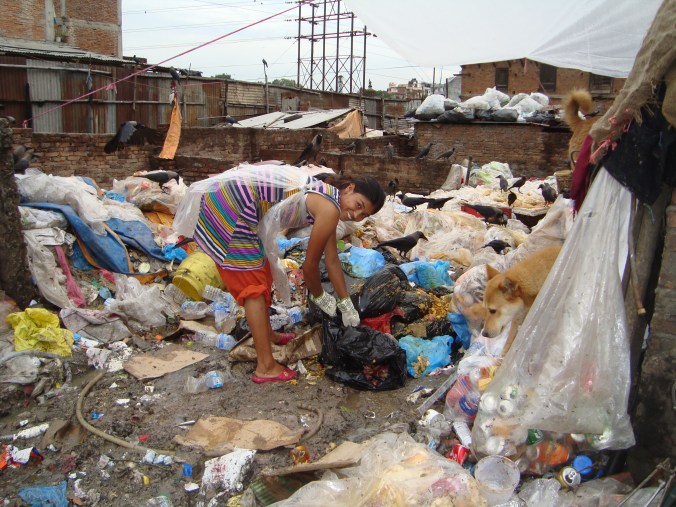
All pairs of gloves we reunite will go to Kathmandu to protect the hands of the rag pickers there. Life as a rag picker is tough, really tough, and many are children in their pre-teens. These kids, and plenty of adults, make a living picking through other people’s trash to compile enough polyethylene plastic or PET plastic bottles to send to India for recycling. It’s a decent living, but the conditions are among the worst on the planet.  We want to help by giving them the garden gloves we’ve found on our streets and in your garden sheds.

Give Garden Gloves or Help in Other Ways to Improve Conditions for the Rag Pickers of Kathmandu. Photo © Liesl Clark

My children and I made a movie about the rag pickers in Kathmandu. If you have a few minutes, this film short will give you a brief look into the work they do:

Most rag pickers have no gloves at all. They pick bare-handed through broken glass and human excrement to find their quarry, and the best protection they can have, in my humble estimation, is for their hands (of course it doesn’t hurt to have a face mask, too.) We’ve seen some rag pickers with just one glove, as that’s all they have.

Packed to the Gills, Ready for Zero Waste Travel

In August, we’ll be headed to Nepal again, to give gloves to Kathmandu’s rag pickers to aid in protecting them from the unsanitary conditions in which they work daily. Over two hundred rag pickers work at the city’s dump some 50 miles from Kathmandu. But countless children pick plastics from the Bagmati River as well as the streets of Kathmandu, and having a glove or two could save a child from infection, disease, and dysentery which comes with the territory.

Trash Day Curbside Pile in Kathmandu, Flattened by Rush-Hour Traffic

Want to help us protect the rag pickers, those moving Kathmandu’s trash backwards into new goods, to help reduce the mountains of garbage in the foothills of the Himalaya? There are 3 things you can do to help:

1) Use our Trash Backwards app and indicate when you’ve done something good. By clicking the “I Did It” button on any individual solution, you show us that you’ve changed your behavior to help reduce waste. These simple clicks that show what you’ve done to reduce, reuse, and recycle provide us with data to indicate whether a social movement like ours that educates through social media can make a difference. Every “I Did It” click means we can do some good, too. It’s a one-for-one correlation between your action at home/in the office and our action worldwide. For every “I Did It” click in our app, we’ll do our own good: We’ll hand out a pair of gloves to a rag picker, we’ll remove batteries from a water source in a village, we’ll collect plastics from rivers and shorelines, we’ll conduct a village waste audit. Every action you do enables us to do our greater good and ultimately find the support to do even more! So, please visit us at TrashBackwards.com and find some solutions to our global waste that you can undo in your own small scale, then hit the “I Did It” button and we’ll do the same. The more you do, the more we’ll do in return.

2) Send us your odd (or pairs of) garden gloves. We’ll likely have a match and can then get them into the hands of someone in need. Please know that the conditions are deplorable for a rag picker. Gloves could save someone from infection and truly make a difference. Does one glove have a hole in the thumb but the other is fine? Send us the good one!

Garden Glove Love

6027 NE Baker Hill Road

Bainbridge Island, WA 98110

3) Simply help fund our efforts to improve the lives of Kathmandu’s rag pickers and kids in higher villages. You can do so by donating much needed funds to the Alex Lowe Charitable Foundation so we can get our duffel bags of gloves (we donate shoes and books too) over to Nepal and remove toxic waste from the highest watersheds in the world while also helping to increase literacy in local villages. As little as $20 can go such a long way in Nepal. We’ve been bringing children’s books by porter, yak, horse, and donkey up to the highest villages in the Himalaya for 7 years now, and have opened 7 children’s libraries called The Magic Yeti Libraries. We bring books up and toxics down. Our target this summer is to remove batteries, CFL light bulbs, and plastics from the rivers, streams, irrigation ditches and water supply of villages between 9,000 and 14,000 feet. We’ll get these toxic materials out of the pristine waters and bring them down to a municipal organization that can dispose of them responsibly. We all live downstream of these waters, but for those who live in the villages nearby, the battery and plastics-laden streams need to be cleaned up as soon as possible.

Garden Glove Love was inspired by England’s Glove Love campaign, a nationwide movement to rescue single gloves and give them a new life on the hands of eager people wanting to help reduce our overall impact on the environment.

Start today with your efforts to reduce your own impact on our planet by doing some good with the stuff you already have in your life. Reduce, reuse, re-gift, repair, and rethink your material assets as you use our Trash Backwards web app and you’ll inevitably help others and our planet, too.

DIY Dishwasher Rinse Aid

What the heck is rinse aid and why do we need it? If you have hard water, you might want to get rid of the those residue spots left over by the drops of water on your glassware. A rinse aid has a surfactant in it that prevents your water from leaving droplets on your dishes. But you should know that many rinse aids have toxic ingredients that I doubt you’d want to have on any surface that holds your food and drink. I’ll quote Treehugger here to outline the ingredients in question:


  • Sodium tripolyphosphate: High concern for general ecotoxicity.
  • Methylchloroisothiazolinone: High concern. The US EPA reports the LC50 value is very toxic to aquatic life.
  • Antiredeposition agent: Moderate concern for cancer, respiratory effects, kidney and urinary effects, general systemic/organ effects; and some concern for chronic aquatic toxicity, skin irritation/allergies/damage.
  • Troclosene sodium, dihydrate: Moderate concern for chronic aquatic toxicity, acute aquatic toxicity, respiratory effects; some concern for general systemic/organ effects, developmental/endocrine/reproductive effects, cancer, kidney and urinary effects, nervous system effects, digestive system effects, skin irritation/allergies/damage, damage to vision.
  • Oxybenzone: Moderate concern for developmental/endocrine/reproductive effects.


It turns out, you might not even need rinse aid. If your water isn’t hard, the little droplets left over on your dishes won’t leave a residue on them. Test your water, or better yet, go without rinse aid for some time and see what happens. But first, if you have residue on your dishes and glassware, cut the amount of detergent you use by half. Chances are you’re using too much.

If you have hard water, I sympathize. Ours is, too. Want to save some money, still have spot-free dishes, and do the right thing for the environment at the same time? Try this secret ingredient in that little rinse aid spot near where the detergent goes:

White vinegar.

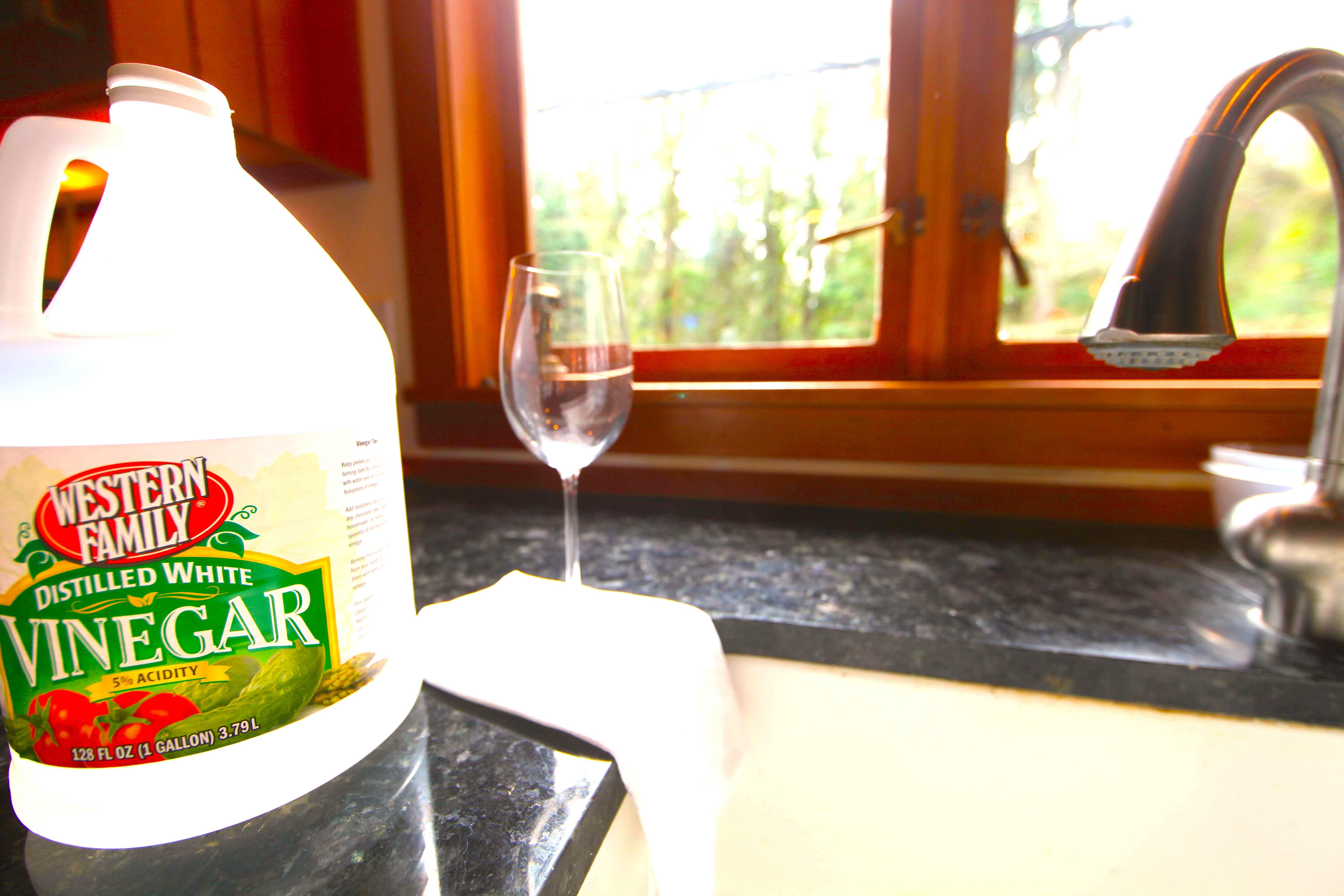
Distilled white vinegar as a rinse agent in your dishwasher will render your glassware shiny and streak-free. Photo © Liesl Clark

That’s all you need. Replace your rinse agent with vinegar and you’ll get the same if not better results. But a word of caution: if you have rubber parts in the slot where the rinse aid goes, don’t put the vinegar in there. Apparently, vinegar can corrode rubber. I know of some people who skip putting the vinegar in that special slot for the rinse aid and just put it in a small cup in the upper shelf so it can splash out over time. Either way, you’ll save a bundle, reduce your plastic footprint and keep chemicals off your plates and out of your gray water.

Distilled white vinegar to the rescue! Use this instead of expensive rinse agents. Photo © Liesl Clark

The interior of our dishwasher is metal and we’ve used vinegar now for over 3 years with no problems to the parts. I’m not sure how a plastic-interior dishwasher will take to vinegar in the reservoir and would love to hear from others who have used it.

We buy our white vinegar in bulk and then put the vinegar for our rinse aid in a plastic bottle that squirts.

Find a good squirt bottle to convert into your rinse aid dispenser. Photo © Liesl Clark

It’s stored under the sink right next to the dishwasher. You’ll likely find a good bottle in your own trash to reuse as your vinegar rinse aid dispenser, or simply reuse your rinse aid bottle.

Crystal clear dishes again. Photo © Liesl Clark

Homemade Crackers, Sans Plastic

We love crackers. But there are 2 reasons why we just don’t buy them very often:

1) They cost about $5/box in our local supermarket.

2) About 99.9% of them come with some sort of unrecyclable plastic packaging. Here’s a snappy little video to give you a sense of the mechanics (and carbon footprint) involved in packaging a small cluster of crackers into a plastic-molded container for you.

The Diverse Types of Cracker Packaging Boggle the Mind

We started looking into making our own crackers and are thrilled to report that you can make your own delicious artisan-style crackers with excellent results and they’re incredibly easy to make. We’ve tried several recipes and this post aims at pointing you toward 3 of the best!

1) We first went to our guru for all things kitchen at Rock Farmer and found a great recipe for gluten-free crackers. I’ve taste-tested many of them and can attest to their deliciousness.

2) We then went for full gluten plus a little butter to boot and found a great recipe that was so pleasing we didn’t have a cracker left an hour after baking them. The addition of seeds like dill makes these pretty special. The recipe is at Slim-Shoppin and I substituted a tea towel for the wax paper with no problem.

Homemade Seed Crackers, Recipe at Slim-Shoppin. Photo © Liesl Clark

3) A final contender for best easy delicious crackers on the Web, is at Girlichef. These are absolutely divine olive-oil crackers with lots of seeds again and it was the photography of the crackers in a mason jar that caught my attention. And I thought I had the only crackers-in-a-mason-jar kitchen. Please note that 150 grams of flour = about 1 and 1/4 cups flour. Do roll all your crackers out as thin as you can. Makes for that crunchy cracky texture we all call crackers!

So far, the only plastic-free crackers to buy that I can find are Ryvita crackers.

(Sigh)


DIY Plastic Bag Dryer

Here’s an admission: We wash and dry all of our used plastic bags and then reuse them. Since the polyethylene in our bags will still be here in 2516, it’s hard for me to think of these things as a single-use product. Since plastic bags will still be here, but in tiny micro-pieces out in our environment, in 500 years, why not use them as long as we can? With a little water and soap, they’re ridiculously easy to clean. The drying of plastic bags just takes some thought.

My mother uses her refrigerator magnets and then sticks her bags to her fridge for drying. I think it makes her fridge look like the bag monsters we see at environmental events. Other folks just stick them onto the water faucet for drying, or on a nearby plant (the bag serves to then water the plant, yo!)

Well, I like to have a little drying station right near the sink where the bags can be hung easily. To that end, my sister gave me a wooden Gaiam plastic bag dryer a few years ago and this thing is now an everyday-used staple in our kitchen.

Gaiam Bag Dryer, Photo © Liesl Clark

Gaiam Bag Dryer on My Sill © Liesl Clark

But here’s the thing: You can make your own from items you have in your house right now. Take a toothbrush holder (or if you don’t have one of those, just use a mason jar) and stuff some pebbles into it. Then poke chopsticks through the toothbrush holder holes and lodge them into the pebbles to set them firmly apart. If you’re using a mason jar, drill some chopstick-width holes into the top and insert chopsticks. Place your bag-holder by your sink and wash, hang, and reuse your plastic  bags with glee!

toothbrush-holder-bag-dryer

DIY Bag Dryer © Liesl Clark

I’ve used a pretty vase, too, for this purpose as well, making sure I have a method for firmly setting the chopsticks in place. If you have some pretty sticks to use, like curly willow, rather than chopsticks, you can make an artistic-looking bag dryer for your sink that looks beautiful at all times. Jewelry trees are also cool to use. Have fun with it, because the end game is to create a space for drying plastic bags, like Ziplocs, so you never have to buy them again. We haven’t bought any in about 10 years and although we mostly use glass these days, the reusable bags come in handy for all kinds of projects the kids have at school or at home for holding things.

I posted a link to this article on my Facebook page and, what do you know, so many of my friends are willing to admit they, too, wash their plastic bags and dry them. There were so many different ways of drying the bags, I had to share them here. Check this out:

Anahata: I use, wash, dry and reuse. To dry I just slip half of a clean dishtowel into the bag and fold the other half over the outside. Then, I roll it up and the majority of the surface moisture is absorbed in the towel.

David: Liesl, bit mundane – decline plastic bags when offered but stuff used bags into my back pocket for picking up dog shit later [not sure about the energy cost to me or the planet of washing and drying] the trash hereabouts is incinerated and turned into heat and, as far as I know, toxin-free compost.

Jake: We’ve been doing this for years – not a problem at all! Yes, our cleanliness police love to think it’s dangerous, but like you said, no different than washing and reusing a pan or a plate. We wash lightly – depending on what was in it – sometimes just a rinse, and then hang on a wooden drier like in your pic. We also reuse other bags from food items, so rarely if ever need to buy plastic bags, etc. Frighteningly, I still have a tube of Saran wrap in our drawer from college – it’s now become a bit of a pride point. Thanks for sharing and encouraging us all to be a bit more friendly to the planet, and to ourselves!…Such simple things that make a big difference if everyone does it!

Melissa: I have seen too much plastic in the ocean, during dives, to be able to stay unaware. I source food not packaged in plastic to the best of my ability and if we do end up with plastic packaging, it had to be reusable if not recyclable. Plastic zip bags of hemp hearts or wild rice, for example, get rinsed and just turned over atop of utensils in their drying basket beside the sink where the drip dry for reuse. They tend to hold up significantly better than the zip lock type bags that are made with the intention of being used once and then tossed (shudder).

Jeanne: I have always washed them out with sudsy water, rinse, then I hang upside down on a wooden spatula smile emoticon I was lucky to grow up with resourceful Scot father. We didn’t use paper towel much either, and when we did, it also hung on the wooden spatula! So I’ve been doing this my whole life. I applaud all you do and you inspire!!!

Lissa: I used to use clothespins to pin them to a thin curtain rod in my kitchen window, but there was never enough room for all of the bags. Now we use a baby bottle drying rack.

Of course I got the baby bottle drying rack from my Buy Nothing group.

Ann: I put a pair of tongs in them and put them on the dish drainer, facing up. They dry out nicely that way.

Robynn: We wash them and then air dry on a mitten rack. I found it yeears ago in some crazy catalog and thought is would be perfect for bags. It makes me crazy to have them dry on the cooking utensils since they always seem to be in the way. We can get 10 bags (or 5 pairs of mittens!) on the rack!

Caroline: I dry them on slotted spoons, single chopsticks of varius sizes (missing their mates), I loved drying them on a mitten wrack as Robynn mentined but said wrack is in use for drying doggie raincoats & such nowadays.

Robynn: I dry the doggie rain coats & dog towels on a quilt racks that seem to pop up at the Salvation Army iwth increasing frequency. Home carpenters made some great sturdy racks to hold those heavy handmade quilts – but now no one seems to put (have?) quilts on them any more! smile emoticon

Caroline: I also use a large glass vase I got from Value Village for 50 cents years ago. I use branches that fall from trees, ut them in the vase & use them to dry plastic bags.

Tammy: yup, turn inside out, wash and they stay up alone, drying on the counter. dont buy anything ,just turn inside out and wash” For soups and messy stuff, ziplock has some great containers

Sandie: I put mine over mason jars and let them dry out or use a large wooden spoon in a jar for the larger bags.

Deidra: I’ve been looking into the fabric/oil cloth type that are dishwasher safe. My boys tend to not save the plastic ones no matter how much I cringe.
Shanda: I reuse mine over and over. I rarely wash them, though. If it’s merely a little moisture from the produce, I just dry them on the fridge with magnets. I only wash if the produce goes bad, or if the bags contained meat.

Stephanie: We use our wine rack as a bag dryer.

Stephanie Browne's photo.


What does your bag-drying rig look like?