DIY Kitchen Compost Pails

My new favorite kitchen thing is a thing I’m reusing for something else.

Romertopf oven turned kitchen counter compost container. © Liesl Clark

Ta da! My new swank kitchen countertop compost holder! It’s a Romertopf oven turned compost collector that actually looks nice on the kitchen counter and it has a lid, too.

Romertopf Oven/Compost Container with Lid. © Liesl Clark

This new beauty is a replacement for our last counter compost container that was made of plastic and do you know what it did? It cracked. No surprise, right?

What's in Our Compost? Paper scraps, hair, pet fur, wax paper, egg shells, cotton fabrics, string....

I was determined to find a non-plastic container and the terra cotta Romertopf is perfect for the job. Here’s other wonderful thing about this compost container:

Design your cupboard so you can hide the compost container. © Liesl Clark

It fits in a little spot we designed inside the trash/recycling cupboard where we can store our compost under the counter most of the time. It’s the perfect size for said slot.

Done.

No need to buy a compost container (I’m amazed to see that compost pails cost anywhere from $20 t0 $60!)

And, what’s with the charcoal filters the store bought compost holders have? If you just empty your compost pail into your compost every day, there’s no need for odor control, right? And, lining it with a plastic bag? Just. No. The whole point in having a compost pail is to tip the thing over in your compost, take it back into the kitchen and wipe/wash it out. Enough said.

Did you know that if you compost your food scraps (and the other things we know can go into a compost), you can reduce your waste by 60%? That’s a great reduction in your trash bill. Between our chickens, guinea pig, dog, and worms, our compost is reduced by 2/3 each day as these critters get first dibs on the kitchen scraps.

I looked around on the internet, and found a few other innovative reuses for a kitchen compost caddy. My favorites were a vintage ice bucket and a, get this, mason jar.

What do you hold your kitchen scraps in, destined for the compost bin?

Roadside Bottles: The Great American Beverage Crisis

Our nearest store is less than a mile away. Occasionally, my kids and I take a walk or bike ride there so they can have an ice cream. We run down a long hill and always bring a bag to collect the roadside trash. Each time we do this, we pick up more than 100 beverage containers. Why do Americans spend so much money on drinks when water out of the tap is, most often, clean and free? And why do we throw our drink containers out on the road? Here’s a general inventory of the kinds of beverage bottles we pick up:

Beverage Containers Picked Up on Just One Side of the Road. Photo © Liesl Clark

We find glass bottles including large and mini wine bottles, aluminum cans, box wine, plastic water and soda bottles, plastic cups with lids and straws, and single-use coffee cups. Why the need to have a drink while driving? If you’re on a long road trip, I can understand why you’d have a beverage by your side. But we live on an island 2 miles wide by 6 miles long and no single trip is very long. Why is the car the place where beverages must be consumed and then discarded? Surely, the beverages are not coming from pedestrians.

We Filled Our Bag With Bottles and Cans in a Matter of Minutes. Photo © Liesl Clark

The Keep America Beautiful campaign conducted a study of 240 roadways across the country and determined that there are approximately 6,729 pieces of litter per mile of roadway (on each side) in the United States. My road is certainly no exception and we could likely come up with that many pieces of litter along our little roadside. The study also found that the majority of roadside litter comes from motorists (53%) with pedestrians contributing some 23%.

My theory is that it’s less about the car and more about the road’s proximity to a convenience store. The shop is stocked with juices, sodas, coffee, and alcohol, so our road is hit with the litter from those who’ve just purchased a convenient drink. The Keep America Beautiful study found that roads near a convenience store tended to have 11% more litter. No surprise. And beverages figure high in the overall item percentages.

Here’s the depressing statistic: 40 – 60% of roadside waste comes from beverage containers. Why? We live in a country where tap water is readily available and quite drinkable. If you’re not convinced, go to any developing country and you’ll see how water out of a tap can threaten your life. Most of those containers are also recyclable, so if recycling were truly working in our great nation, we wouldn’t see any drink containers on our roadsides, right? The Environmental Working Group published a study that claims, “Every 27 hours Americans consume enough bottled water to circle the entire equator with plastic bottles stacked end to end.”

Litter, furthermore, costs taxpayers a hefty sum each year. According to the Keep America Beautiful stats on roadside litter, litter cleanup costs the U.S. almost $11.5 billion each year.

Perhaps we need to require that each state has a bottle bill. At Oregon.gov, the statistics for the state’s beverage containers found along roadsides since the introduction of a bottle bill there are impressive: “In 1971, litter control was a primary reason for initiating the bottle bill.  Since then, the percentage of beverage containers among roadside litter has dropped from 40 percent to 6 percent.”

Kicking the convenience store single-use beverage fix is likely the best step an individual who wants to make a difference can take. That’s what I’ve done. When you discover the environmental impact of single-use beverage containers on the environment, a.k.a. the amount of energy , toxins, and virgin materials needed to produce that bottle or can that will likely go unrecycled, you might reconsider the need for that beverage. Bring your own bottle and fill ‘er up at the tap. Water is what your body needs. Save the wine and beer for your home, or dinner with friends, not your car. And if you’ve been out with your buddies and just want to get that stash of wine and beer out of your car to cut the clutter, find a dumpster or recycle bin, they’re usually right next to the convenience store where you bought the wine in the first place.

We Were Able to Recycle These Right Across From the Convenience Store. Photo © Liesl Clark

Single-use beverages and their containers are only benefiting the companies who manufacture them. American kids are over-consuming over-sweetened single-serving drinks and we have a juvenile obesity crisis to prove it. Who can blame kids, when according to this infographic, in 2008, Coca-Cola spent over $2.67 billion in advertising? Kids are their prime target.

My 9-Year-Old, Picking Up Your Wine and Beer Bottles Next to Our Driveway. Photo © Liesl Clark

I can tell you, from first-hand experience, that these roadside bottles are ending up in our watersheds and floating down into our oceans. Cars run over them and break them into smaller plastics, which also become part of our ocean ecosystem. The roadside ditches are filled with every kind of plastic and we know what’s in them washes downhill to our rivers, streams and seas. In my family, we consider recycling a last resort for our stuff as recycling requires more virgin materials to actually close the loop for things like plastic. We’re more about the other R’s, especially reducing and reusing. Reducing means refusing single-use disposables, taking action to pick up those that we find in the environment and bringing attention to them so others see their impact. Help curb our collective disposables habit by refusing them in the first place. Then move on to the next R and keep your reusable cup and bottle with you in your car for yet another laudable and sustainable R: Refill.

Klean Kanteen BPA-Free Water Bottles with custom The North Face Logo

30 Toothbrush Reuses Plus Options Plastic-Free

Brushing Your Teeth With Plastic:

OK, we’re not going to try to wean you from using toothbrushes…well…sort of. Although most toothbrushes of the world are made of plastic, we have to admit they’re very handy and, for the most part, do the trick. But once we started seeing a lot of toothbrushes lying on our favorite beaches, my children and I had to look into whether there are any environmentally-friendly alternatives. First, why are toothbrushes found on our beaches? Think, seeping sewage. Around our lovely little island, there are some old sewage pipes that are known to dump right into Puget Sound. And, you guessed it, people are flushing their plastics down the toilet. You can only imagine what other plastics we find, like tampon applicators and those single-use plastic floss applicator thingies.

Why are we concerned about brushing our teeth with plastic? Many toothbrushes are made with PVC and Bisphenol-A, known toxins that, frankly, should be banned from all toothbrushes. If you’re considering reducing your plastic footprint in the toothbrush department in the future, I found this great guide to BPA and PVC-free toothbrushes that might help you choose one less toxic. I also like to see what Beth Terry has to say on the subject, as she has put a lot of care into her research. Here are 4 less plastic alternatives that my family has tried:

1) We first got ourselves some bamboo toothbrushes and have enjoyed them immensely. Combined with our zero waste toothpaste, they’ve been getting our teeth and gums clean in a plastic-free way. When we’re done with the toothbrushes, they’ll be used as kindling for the fire or could even go into our compost!

2) My toothbrush before the bamboo one was a Radius toothbrush, made of recycled wood with a replaceable head. I love it, used it for years, replacing the head periodically until a crack developed where the head meets the handle. It was a good half-way alternative, but the large size did prove a bit cumbersome for travel. (However, on expeditions, just bringing the head was perfect for cutting down on weight)

3) Toothbrush before Radius, and a travel alternative that I used, was the Preserve toothbrush which I bought in a mail-back pouch that I promptly lost. Preserve takes back their toothbrushes when you’re done with them and recycles them along with other #5 plastics through their Gimme5 campaign. Many Wholefoods Markets have bins where you can drop off your toothbrush, along with dairy tubs like yogurt containers produced by Stonyfield Yogurt. These cradle-to-cradle practices are growing and we applaud Preserve, Wholefoods, and Stonyfield for making this a reality.

4) But (you knew I’d say that), plastic is plastic (it’s hard for me to imagine that there are zero health concerns about putting plastic in our mouths, now that I’ve been keeping up with the latest toxicology reports on plastics and the additives put in them.) And once you go down the plastic-free-living path, you start looking around for ALL your options and inevitably discover how people lived and kept their teeth clean long before plastic was invented. Which leads me to….”the traditional natural toothbrush”: Peelu miswaks.

Miswak Sticks are the New Toothbrush in Our Home

Now, these things are cool. And if you want to impress your next guests, rather than handing them a guest toothbrush to use, slip ’em a miswak stick and let ’em start chewing. Just as Native Americans once used bark for teeth cleaning, in Pakistan the peelu tree has for centuries been the traditional teeth cleaner of choice. I won’t pretend to be an expert, here, but after I read this fantastic article by Nourishing Treasures, I had to get me some miswak sticks.

The kids and I enjoyed them for many months. And it’s no wonder since they’re reportedly known to entice the companionship of angels, aid in digestion and even improve eyesight. These things leave my teeth feeling cleaner than they’ve ever been! And then I read this clinical study which proves that the use of the miswak outdistances toothbrushing in terms of removing plaque and overall gingival health. I quote, for you, the study’s conclusion:

“It is concluded that the miswak is more effective than toothbrushing for reducing plaque and gingivitis, when preceded by professional instruction in its correct application. The miswak appeared to be more effective than toothbrushing for removing plaque from the embrasures, thus enhancing interproximal health.”

Now to just get that “professional instruction” and we’ll be laughing all the way to the dentist. Any professionals out there, feel free to provide instruction in our comments section below. Yes, the miswak sticks are sealed in plastic, but for argument’s sake it’s less plastic than in a traditional toothbrush.

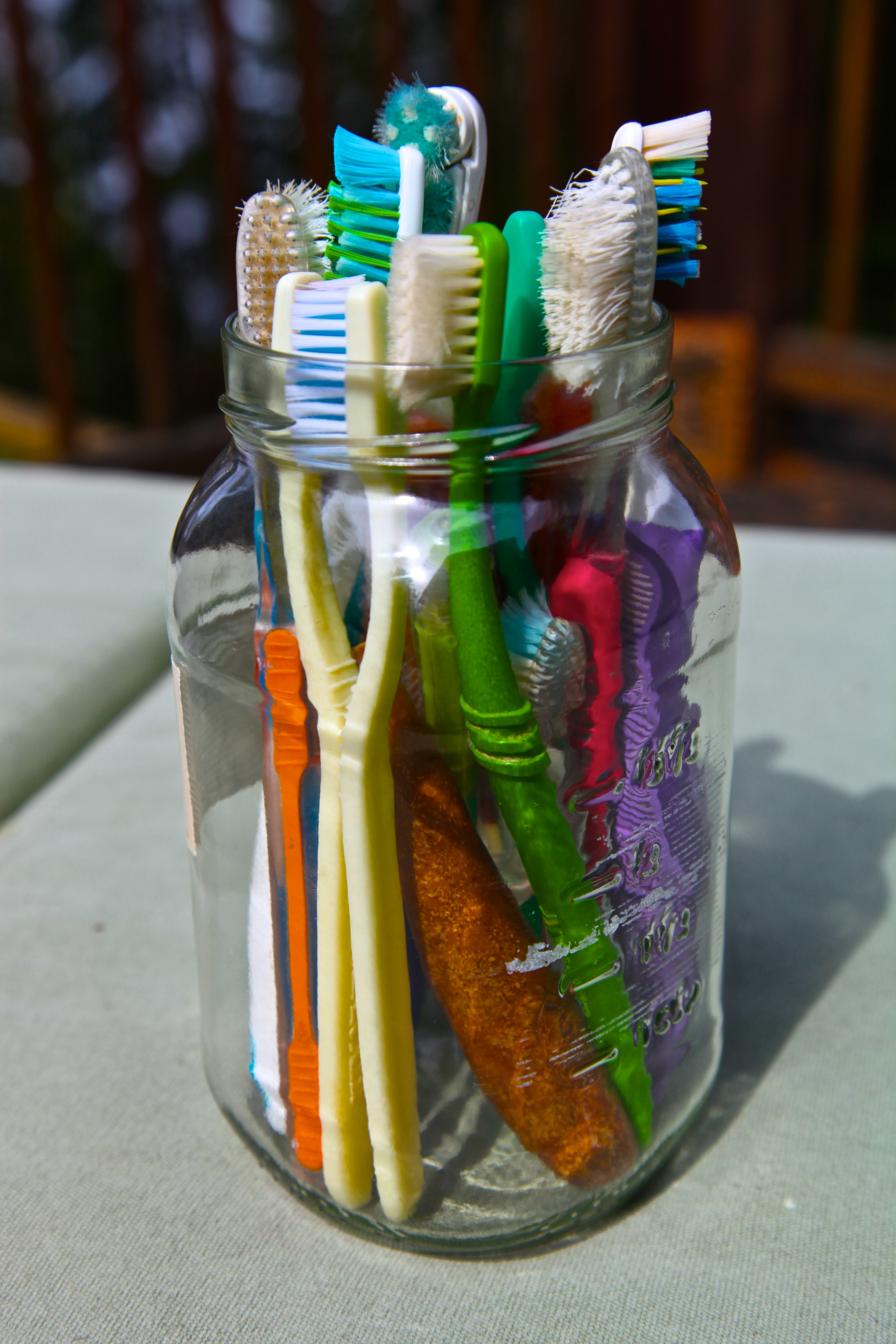
Reuse Your Toothbrushes

Unable to throw things out because of our zero waste lifestyle, we’ve accumulated quite a few plastic toothbrushes in our day. But it turns out old toothbrushes can come in handy. Here are 25 wonderful things that can be done with that little versatile brush (once you’ve retired it from use in your mouth):

1) Use it to clean hard-to-clean places.

2) Pass it on to your dog for brushing his/her teeth. (Yes, sanitize it first!)

3) Keep one with your craft supplies to be used as a special stiff paintbrush for art projects.

4) Clean corn.

5) Use as a grout scrubber.

6) Keep one under the sink for scrubbing around faucets and sink edges.

7) Label another one for use as a fingernail cleaner after gardening.

8) Keep one in the car glove box for emergency assistance like brushing off battery terminals.

9) Put one in your child’s “scientist backpack” for archaeology outings. A toothbrush is a critical artifact cleaning instrument. I can attest to the fact that my son’s spare brush packed in with his archaeological brushes has come in handy for our team of scientists in the excavations we’ve done in the Caves of Mustang.

10) Stash one in your foyer or mud room for cleaning mud from shoes. Keep one in your shoe shine kit for sprucing up drab shoes.

11) Keep one on your tool bench for assisting in cleaning tools.

12) Store one in your cleaning supplies bucket for spot cleaning carpets and furniture.

13) Save one for the laundry room for spot cleaning grease stains, etc.

14) Put one in with your makeup to brush away mascara clumps and to be used as an eyebrow brush.

15) Another one will be wanted on-hand as a back scratcher.

16) Use one for cleaning your bicycle chain.

17) Save one for cleaning jewelry or silverware.

18) Use one to clean out brushes and combs.

19) Some people swear by them as excellent fish tank algae cleaners to scrub algae off the glass.

20) Here’s a reuse idea from our favorite repurpose/reuse website:  “For all you fishermen, and women out there, cut the head off the toothbrush, and then drill a hole in either end, attach a swivel to one end and then the hook at the other end, make great spinning lures as they are often bright and multi coloured and the bodies make the perfect shape.”

21) Lift the lid and look at the hinges of your toilet seat. Pretty gross. Use an old toothbrush to make it look (and smell) as good as new.

22) Use as a bottle cleaner for those vintage bottles you collect.

23) Make a toothbrush bracelet.

24) Use your toothbrush as a tool to make a  rag rug.

25) For some serious fun, visit Evil Mad Scientist and learn how to make a bristle bot. Decapitate the toothbrush (off with its head!), and affix a teeny, tiny pager motor or (get this) battery-powered toothbrush motor (the sort that make your toothbrush vibrate), as well as a battery (and maybe some LEDs), and of course any googly-eyes you might have lying around and you’ve got yourself a buzzing little bot, bouncing around on bristles.

26) Use one to clean the grooves on your horizontally-sliding windows.

27) One reader wrote in to share that she uses four toothbrushes glued side by side to brush fleece sweaters and blankets after they are washed. It helps to make them look and feel like new.

28) Use one for a hair dye applicator.

29) Use your old toothbrushes to clean your dryer lint trap. Residues can build up and the brushing helps clean that off.

30) Dust and clean the crevices and ledges on hardwood molding with your old brush.

You’ll see the comments section is below. We’re hoping to find some further great ideas, links, instructions, even photos if you have ’em, for toothbrush reuse or waste-free alternatives to tooth-brushing.

The Thing About Breadmakers

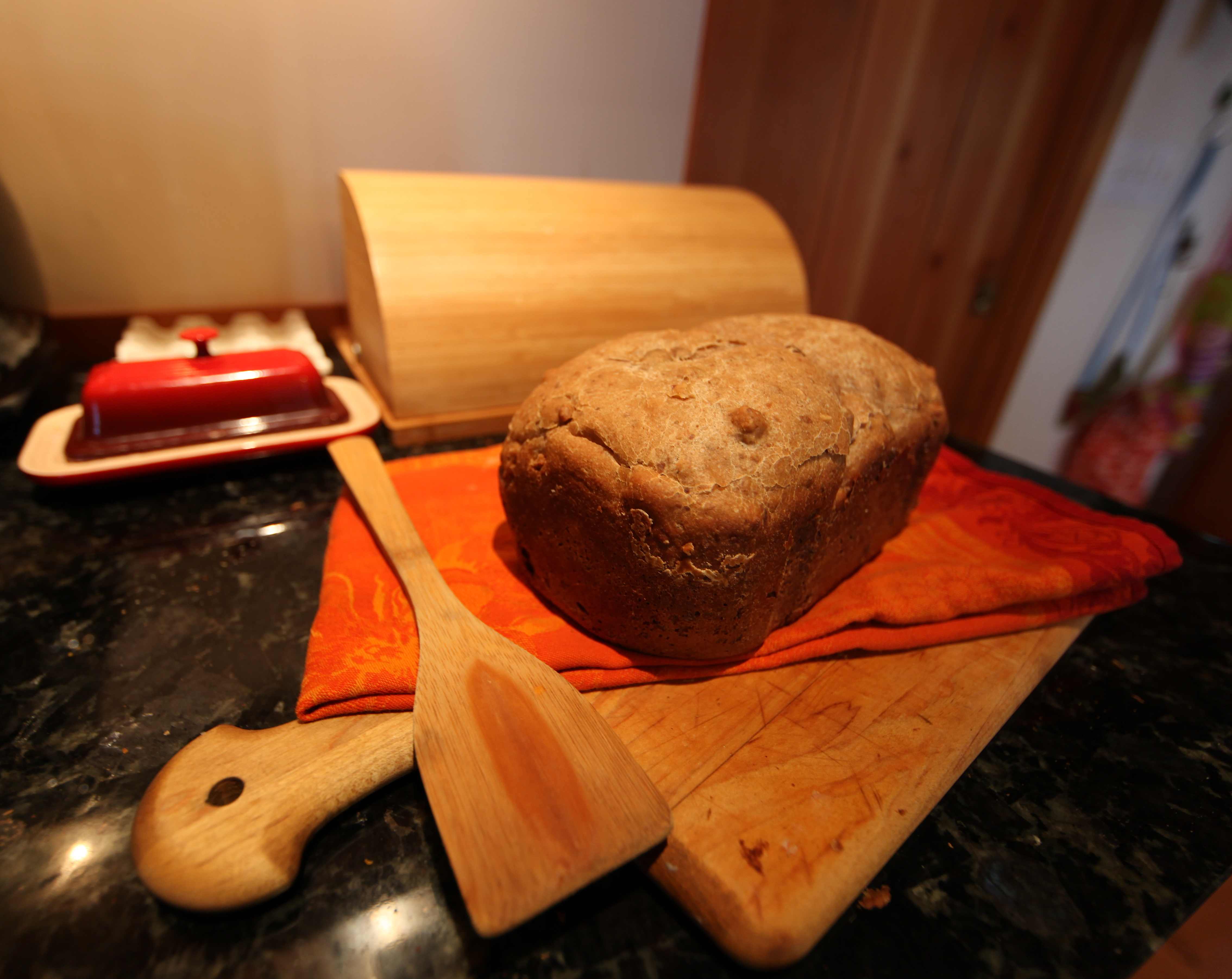
I was once a breadmaking fanatic, because my breadmaker meant 4 minutes of prep and 3.3 hours later I’d have delicious wholesome organic bread that the whole family would devour. Unlike most breadmaker owners, we actually used our machine regularly. We’d been making bread from it non-stop for years, until this week.

An artisan-style bread from a bread-maker that will please all. Photo © Liesl Clark

An artisan-style bread from a bread-maker that will please all. Photo © Liesl Clark

Here were the obvious benefits of this delicious bread:

1) No plastic packaging.

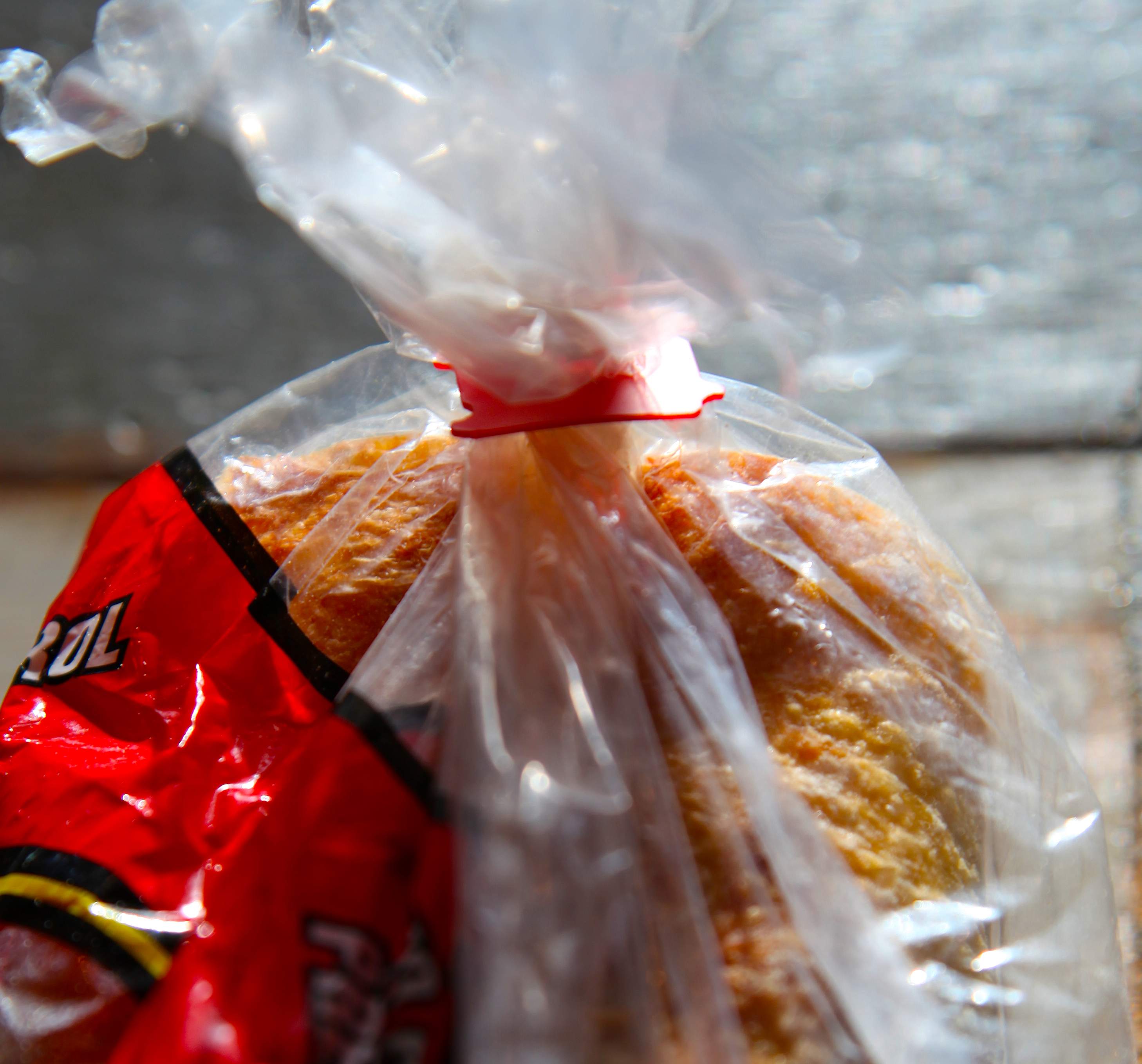
The little plastic bread clip

Bread bag with a little plastic bread clip.

2) Saves money. Our locally-baked bread costs about $5.00 per loaf. We buy our ingredients in bulk and each loaf costs us less than $1.00.

3) Nothing better than the smell (and taste) of home baked bread coming out of the oven.

But, truth be told, this bread has fluoropolymers leaching into it.

Let me back up a bit. A few years ago, I purged all things plastic from my kitchen. Especially plastic containers and Teflon-coated pans. I took our breadmaker to Best Buy for recycling because it had pans made of Teflon. I noticed, too, that the pans would peel this weird-looking plastic coating from them every year or so. That was the fluoropolymer coating that Dupont makes for all Teflon coated pans. This alarming article in The New York Times can fill you in on just how toxic fluoropolymers are.

So, I thought I would be clever and find a Teflon-free breadmaker, one safe for my family. Enter Zojirushi. Zojirushi makes what they call a Teflon-free breadmaker that we switched to after reading all the negative press about the potential health hazards of cooking with Teflon. We converted our entire kitchen into a Teflon-free zone, with the one exception of the breadmaker because we were ignorant. This machine is NOT teflon-free. In the product description it states “non-stick coated pan.” They coat it with a generic polymer that is….Teflon, but it’s just given a different name, fluoropolymer, the new fancy substitute that is an endocrine disruptor known to cause all kinds of cancers. It’s a sad state of affairs. I don’t believe there’s a bread machine out there that doesn’t have fluoropolymer coating.

Alas, if we want Teflon-free bread, we’ll have to make it sans breadmaker, in our clay or enamel-coated cast iron pans, with a little more care and attention to the process which might just make the bread taste even better. I grew up on homemade Teflon-free bread, and I’d like my children to have that privilege, too. I wonder if our local bakeries are using Teflon-free pans? It might not hurt to ask.

If you’re interested, here’s the recipe my family has eaten for years. Now they’ll have to enjoy it when I have more time to bake. It’s a whole wheat raisin and walnut bread that toasts perfectly, is moist, and has just the right amount of crunch in the crust.

Teflon-Free Zogirushi Pans. Photo © Liesl Clark

Teflon-Clad Zogirushi Pans. Photo © Liesl Clark

Whole Wheat Walnut Raisin Bread

1 Cup warm water

3/4 Cup combination of liquid ingredients (we use 1 egg + milk and a little yogurt)

2 Tablespoons flax seed oil (you can substitute another nut oil, but flax seed oil is excellent)

1 Heaping teaspoon salt (we use a celtic sea salt)

3 Cups flour (we prefer one cup whole wheat and 2 cups white, all organic)

4 Handfuls walnuts (this is also excellent with flax seeds)

3-4 Handfuls raisins

1 Tablespoon honey

3/8 Teaspoon yeast (we add more as our yeast ages since we buy it in bulk)

If you like a little body to your bread, add about 1/4 cup shredded zucchini or carrot which we do when those veggies are in our garden.

I think I’ll try to simulate a breadmaker next time and just add all of these ingredients in this order, making sure the yeast is added near the honey so it can react to the sugars in it and place the whole thing near our fireplace to activate the yeast with honey so it can rise in a breadmaker-like simulation, but using a big bowl. Then, mix the dough and let it rise, punch it back down, knead it, and let it rise again in a plastic-free bread pan, then bake. This recipe makes a 2-3 lb loaf of bread. Might make sense to double it so you get 2 loaves for your effort.

This bread has changed our lives. Easy. Cheap. Healthy. Homemade. Plastic-Free. Photo © Liesl Clark

Cheap. Healthy. Homemade. Plastic-Free. Photo © Liesl Clark


25 Uses For Coffee Grounds

25 Wondrous Things to do With Your Coffee Grounds. Photo © Liesl Clark

25 Wondrous Things to do With Your Coffee Grounds. Photo © Liesl Clark

We all love our coffee here in the Northwest, but where I live, on Bainbridge Island, we love our coffee grounds perhaps even more. Nowhere else will you see farmers, home gardeners, landscapers, and vermiculturists fighting over the grounds produced by local cafes. Let’s face it, coffee grounds and plants go well together. I can assure you they’re all using them for #2 and #3 below as coffee grounds fertilizer and worm food, but the other 23 uses are also worth looking into. Some might even surprise you:

1) Turn Your Hydrangeas Blue: Hydrangeas can be blue or purple depending upon your soil Ph. Acidic soil begets blue hydrangeas. Coffee grounds, when brewed, are acidic. Use them as a top dressing on the soil around your hydrangeas, making sure to scratch the coffee grounds into the soil and you’ll enjoy blue bursts of color. I prefer purple, but my soil is acidic anyway, so we get blue.

2) Feed the Worms: We have a worm bin and those squirmies tend to thrive on 80% coffee grounds 10% eggshells and 10% dried leaves.

3) Coffee Grounds in Your Compost: Everyday, we use our coffee grounds as fertilizer. Most people put them in their compost along with their kitchen scraps. They’re a great source of nitrogen, potassium, calcium, magnesium, and sulfur.

4) Coffee Grounds Provide Shine to Your Hair: I haven’t tried it, but word is out that if you work some wet grounds into your hair they’ll help create a beautiful shine. They’ll also give you some great brunette highlights. Cover up the grays? Let us know.

5) Coffee Grounds Construction Play: This homeschooling family uses coffee grounds for play with small construction vehicles. The grounds are an interesting replacement for sand or dirt.

6) Coffee Grounds Abrasive Dish Scrub: Use grounds as your scrubbing agent for dirty dishes. I’m serious. When we ran out of scrubbies one day, I just used some grounds to get a scrambled egg pan all cleaned up. It’s like when you’re camping and use sand as your dish-cleaning abrasive.

7) Deodorizer: If your freezer or fridge are smelly and you can’t find the source, put a bowl or 2 of dried coffee grounds in there and the grounds will absorb the odors. Add vanilla for a different scent.

8) Facial Scrub: Just apply slightly wet coffee grounds to your face and exfoliate. Coffee grounds are found in some skin care products. I haven’t tried this yet, but I think my daughter and I will try it on our next natural spa day and post the results.

9) Furniture Scratch Remover: Cover up furniture scratches by rubbing them down with wet coffee grounds that match your furniture’s color. I’ve done this and it works!

10) Easter Egg Dye: Dye your eggs with coffee grounds for a pretty rust brown color. “But they’ll just look like our brown eggs,” you might say. Nope, this brown color is really pretty and looks great when you use it on eggs that have had crayon designs drawn on them.

11) Ant Repellant: Ants don’t like coffee grounds. Sprinkle them along their path. We do this under our deck where the ants live and it really bugs them. (See what I did there?)

12) Coffee Grounds Body Scrub: Scrub them over your body as a gentle exfoliant. But be sure to cover your drain with a mesh drain catcher or towel.

13) Drain Cleaner: If you dilute them and let them go down the drain every once in a while, they reportedly make an excellent drain cleaner.

14) Tool Cleaner: Coffee grounds can help clean up your tools as an abrasive rub and gunk remover. I love this one. While my husband is away, the kids and I are going to do some tool cleaning.

15) Coffee Ground Fossils: Here’s a great tutorial for making cool fossils or pretty imprints with the kiddos.

16) Ice Remover: Use grounds to “salt” your icy sidewalks. Then take your shoes off before treading on your fancy carpets.

17) Blueberry Food: Save your grounds in a bucket all winter long, then make a soup to cast the lot over your blueberries. They love coffee grounds! Spruce and evergreens do too.

18) Dust Buster: Another fave of mine — Sprinkle over your fireplace ashes when cleaning them out to dampen down the ashes.

19) Seed Spacer: Add dried coffee grounds to your tiny seeds like carrot seeds when sowing as they help spread out your seed dispersal when doing it by hand.

20) Slug Repellant: Some slugs are reportedly coffee ground haters. Not ours. But I don’t want to deter you from trying to put a ring around your favorite slug-devoured plants. You don’t likely have enormous slugs like we do that’ll slime their way through a fire pit filled with ashes. They don’t call them banana slugs for nothin’.

21) Mosquito Larvae Killer: I can’t verify this one either but some people say if you pour some grounds into your puddles it’ll kill mosquito larvae. Hmmmm….kill? Doubt it.

22) Vintage Wood Stain: Here’s a simple wood stain recipe using coffee grounds. Good luck.

23) Cockroach Trap: This Old House has an interesting-looking coffee-bait roach trap for you.

24) Treasure Map Paper: Dip some blank white paper into a bowl or sink-full of grounds and some water. Pull it out and let it dry. Then have fun with your map-making.

25) Cat Repellant: Cats apparently don’t like coffee grounds so you can put them around your spots (like your sand box?) where you don’t want cats to, um, do what they do in dirt.

Don’t stop at 25!

26) Meat Marinade: Add a teaspoon of coffee grounds to your steak marinade and impress your favorite coffee lover.

27) Secret Brownie Ingredient: If you’re the boss, add a few grounds to your brownies to give everyone (not for kids!) a boost at work.

Lastly but definitely our favorite, my friend Rebecca’s Grandma Inge’s best coffee grounds reuse tip is to put a bowl of grounds in the car to keep you (and the car) refreshed and perky throughout the day.

How do you use your grounds?

Mapping Plastic: Aquaculture’s Styrofoam Beaches

Day 5: Pleasant Beach to Fort Ward Boat Ramp

This article is part of a survey of Bainbridge Island’s 53-mile coastline. We’re circumnavigating the entire island to collect and make observations of the kinds (and amount) of plastics we see along the way to try to answer the question: Where does it come from?

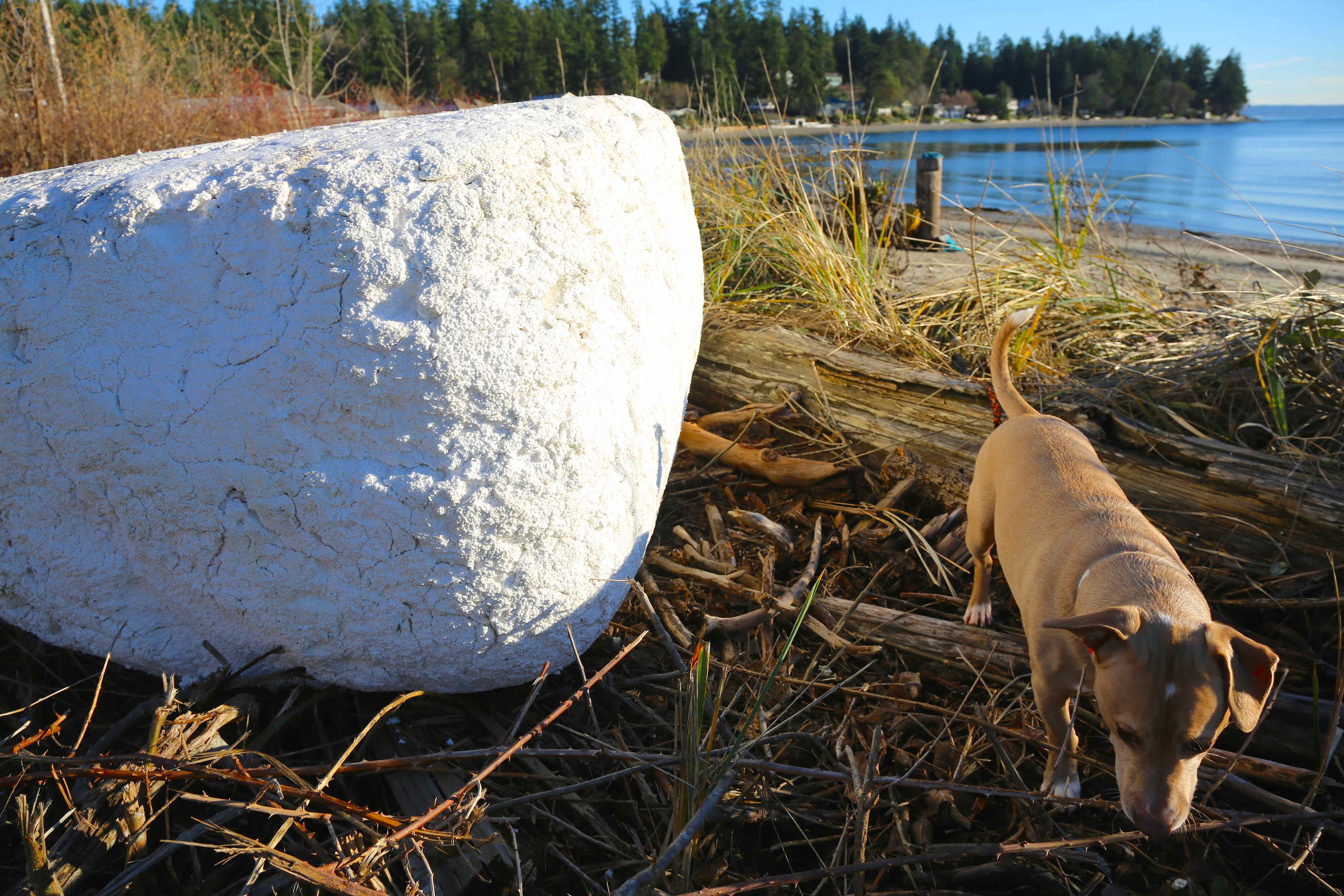
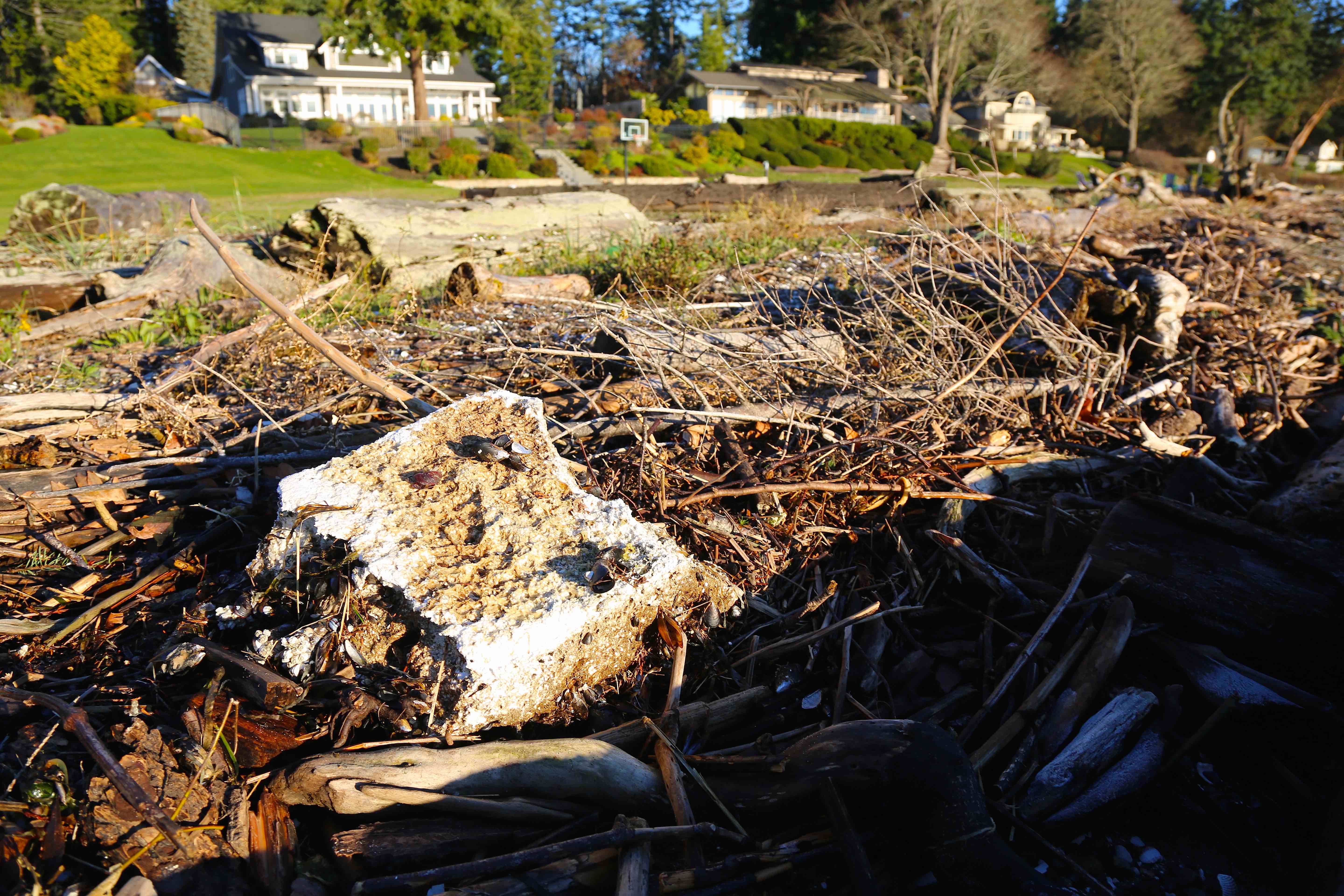
The single-most prevalent plastic we find on our beaches, in our citizen-y-science-kind-of-way, is polystyrene. There’s so much of it, we see it in every shape, from tiny single particles the size of a snowflake to car-size chunks.

Styro-mobile. This car-sized chunk came riding in on the sea. © Liesl Clark

Styro-mobile. This small car-sized chunk came riding in on the sea. © Liesl Clark

But wait, this other one is just 300 yards down the beach. © Liesl Clark

But wait, here’s another enormous one just 300 yards down the beach. © Liesl Clark

Where are these huge styro-chunks coming from?

They’re used underneath floats and docks. The aquaculture industry is known to utilize polystyrene to keep their operations afloat. But nature eventually takes its course. Boring isopods damage expanded polystyrene floats under docks and, in the process, they expel copious numbers of microplastic particles. This paper describes the impacts of these mini drilling marine isopods in aquaculture facilities and docks and the resultant pollution the isopod-infested styrofoam is causing.

Here’s an opening statement in the article (I’ve taken out all of the references for ease of reading):

Like other microplastics (defined as <5 mm in diameter) in the marine environment, these particles may have detrimental effects to marine organisms. Plastics persist for hundreds to thousands of years in normal oceanic conditions. Also, polystyrene fragments and other minute plastics in the marine environment are readily colonized by biofilm and other organisms causing them to sink. Thus, these particles may interact with benthic and pelagic organisms. Ingested microplastics may cause both toxicological effects by transmitting bioaccumulating toxins and possibly physical effects by occluding feeding structures or inducing a false indication of satiation.

What I get from this article is that these little organisms, like shipworms and wood lice, bore into the styrofoam under floats and docks and in so doing they shed tiny plastic particles into the water, like a drill spewing mini-plastic shavings. The isopods start to feel full, after dining on the stiff white stuff, and eventually die off because their fast food source ain’t so good for them. The little ubiquitous particles end up not only in our bellies, but everywhere. On every continent. They even look like plankton and are now a part of our food chain. Experts, for years, have estimated microplastic particles are outnumbering plankton 6:1 in the marine environment. The bigger fish eat the ever-present plastics and then we eat the fish. End of story. The plastics are now in us, and they’re toxic.

Another little factoid is that mussels and other bivalves raft over the deep blue seas on freed polystyrene floats to foreign lands — lands where they don’t belong, where they’re considered alien and invasive.

Alien bivalves are the plastic-fed zombies of the future.

Unlucky Beached Bivalves © Liesl Clark

Unlucky Beached Bivalves, Rafting on Styrofoam © Liesl Clark

I’ve picked up so much beached polystyrene and other everyday plastics over the years, our personal dumping fees at our local transfer station can be astounding, given we produce as little waste as we can as a family.

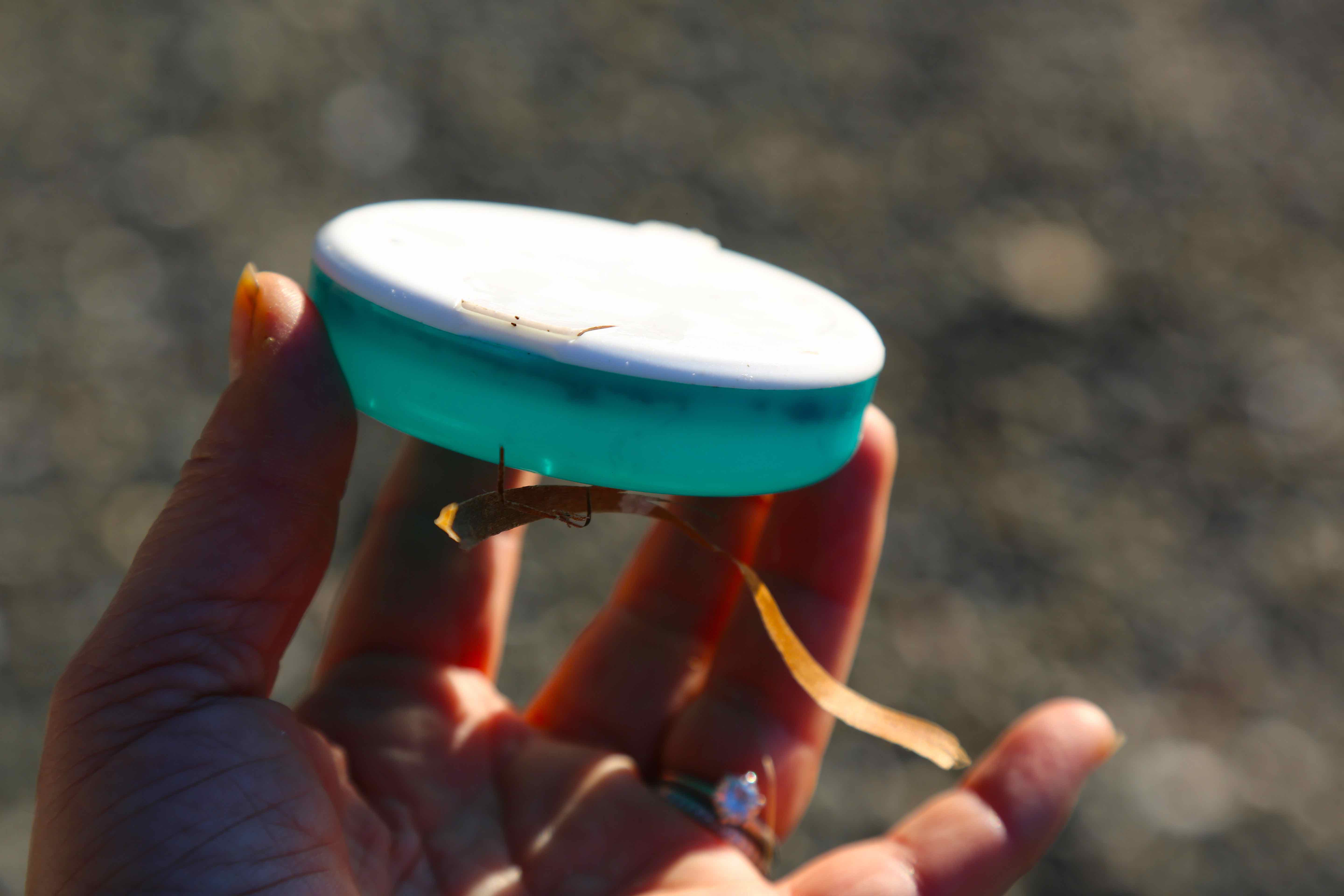
Kids love the mints (or is it gum?) that come in these plastic containers. Why do they have to be packaged in a container that will remain here forever? © Liesl Clark

Kids love the mints (or is it gum?) that come in these plastic containers. Why do they have to be packaged in a container that will remain here forever? © Liesl Clark

Aquaculture’s equipment and incidentals are also polluting our beaches.

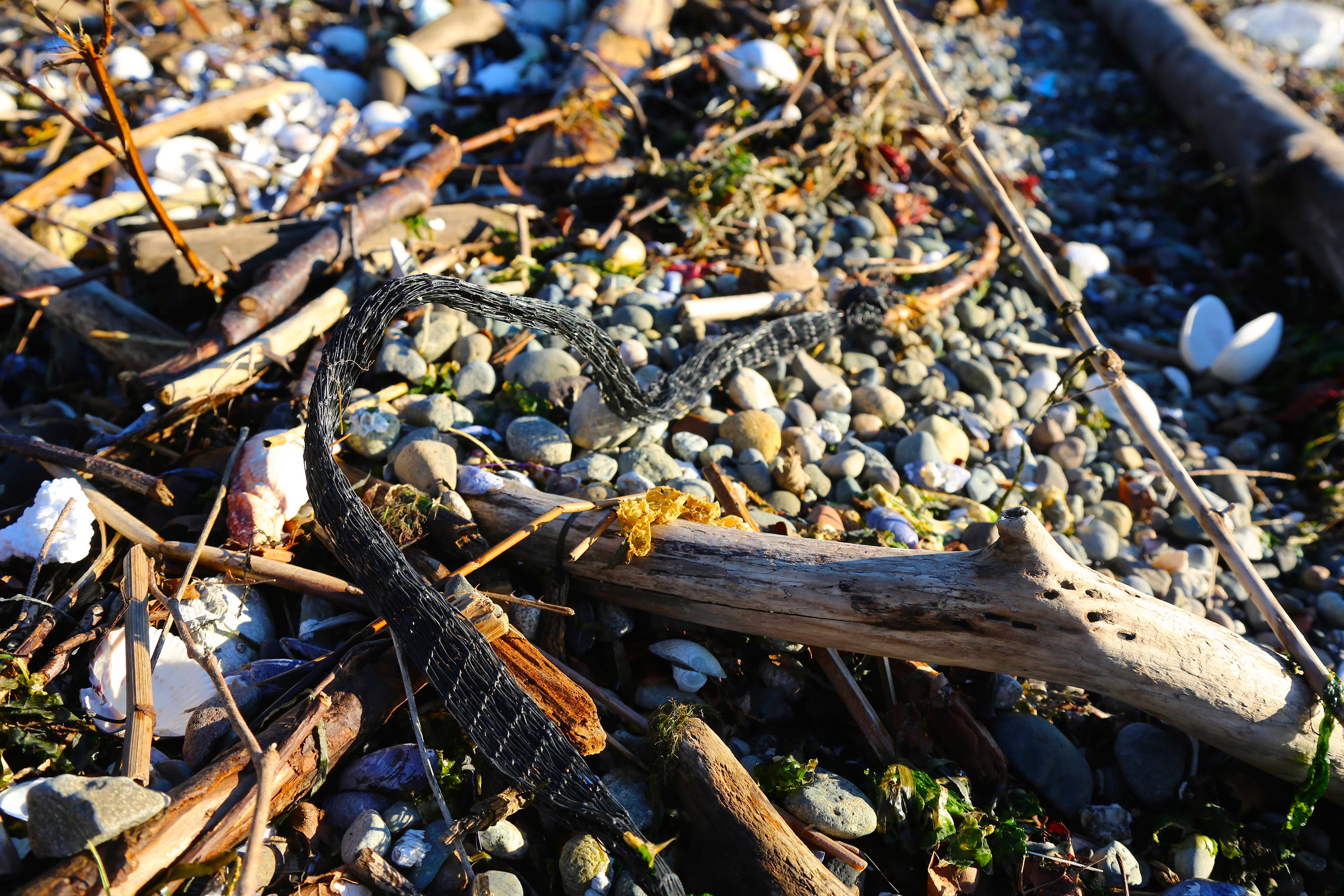
Shellfish Netting? © Liesl Clark

Shellfish Netting © Liesl Clark

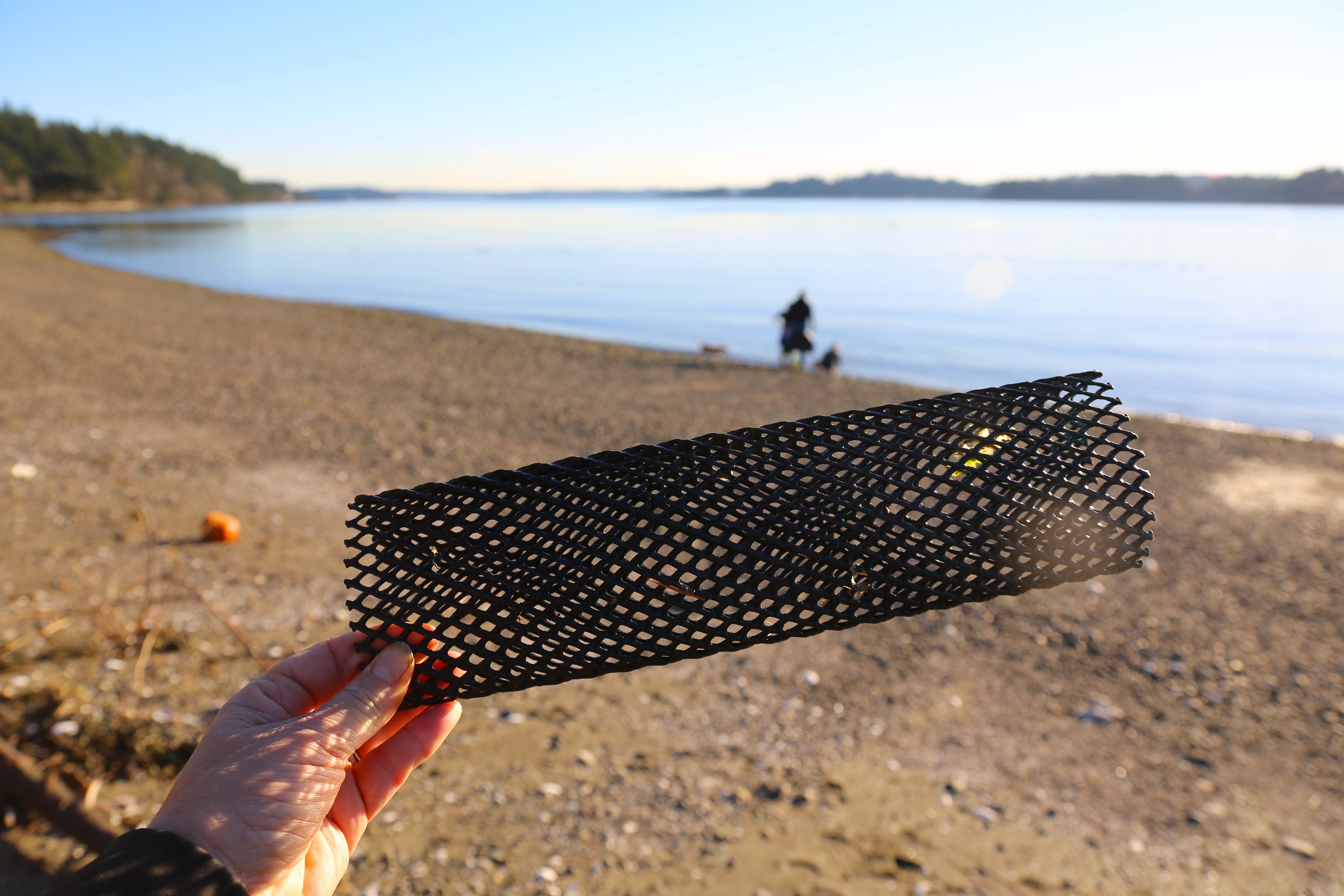
Plenty of this plastic netting washes ashore, nets used to hold mussels or oysters.

We find tons of these:
No clue what this is used for, but it has aquaculture written all over it. © Liesl Clark

Some sort of substrate netting used in aquaculture  © Liesl Clark

 The aquaculture industry has all sorts of specialty items, 100% plastic:
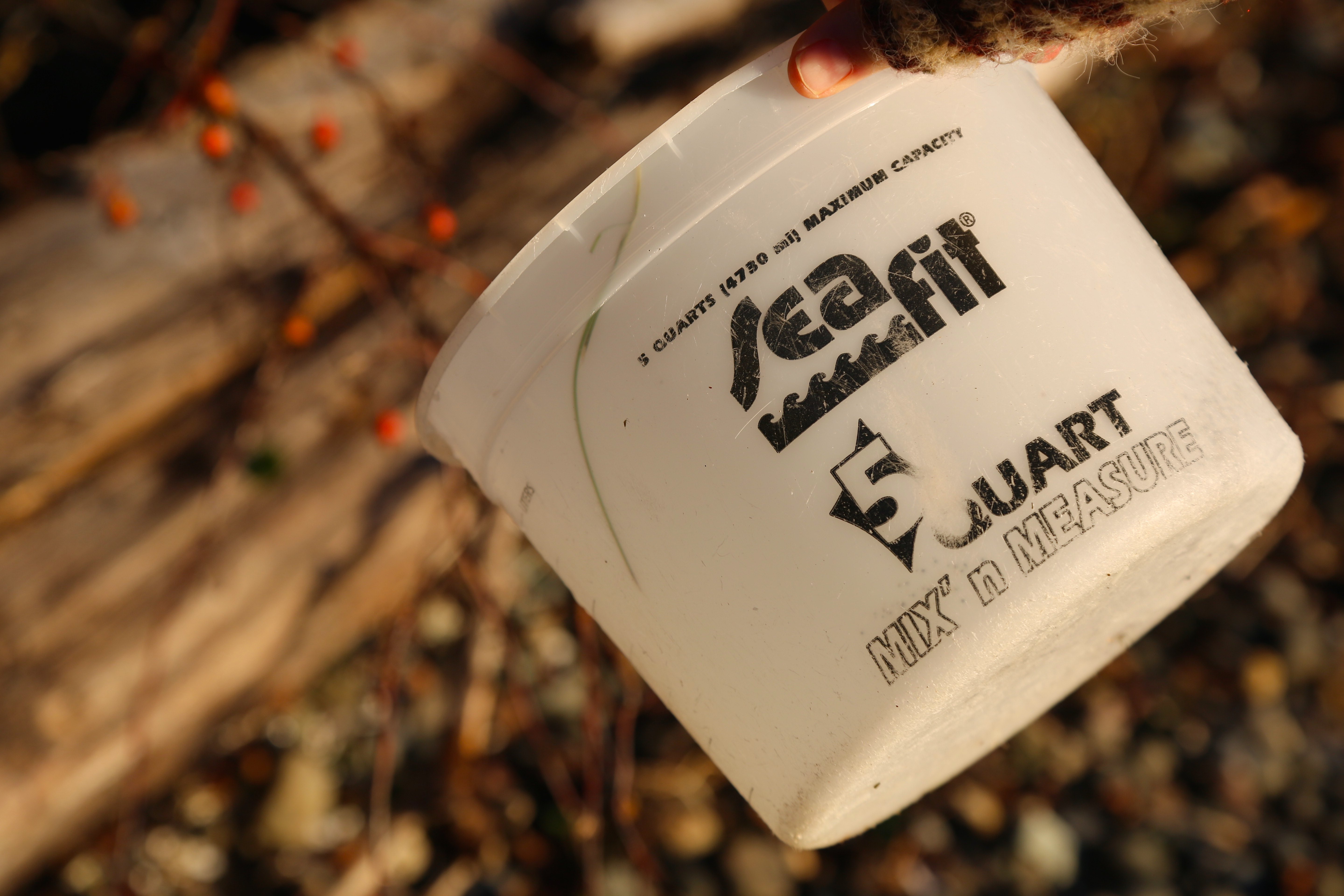
I beg to differ. This specimen is not sea-fit. © Liesl Clark

I beg to differ. This specimen is not sea-fit. © Liesl Clark

 But we can’t blame it all on aquaculture and the marine industry. We’re all responsible for the myriad plastics in the sea that wash up on our beaches. Plastic floats, it’s buoyant and lightweight, it moves with flooding waters and wind. It mostly comes from us, from our homes.

Beached Sign, Tattered By the Sea © Liesl Clark

Beached Sign, Tattered By the Sea © Liesl Clark

The polystyrene that isn’t from marine floats and the aquaculture industry is from us, our fast food takeout containers, styro-block packaging, and packing peanuts flowing into our seas from inland rivers. According to Beachapedia:

The ‘Two Rivers’ study in Los Angeles found that over 1.6 billion pieces of plastic foam were headed to the ocean over a three-day period during surveys in 2004/5. 71% of 2.3 billion plastic items in the survey were foam items and that made up 11% of the overall weight of plastic pollution collected during the surveys.

If that isn’t enough to sound an alarm for you about styrofoam, there are plenty of studies that can fill you in on how polystyrene in the marine environment acts as a sponge for persistent organic pollutants like PCBs and DDT. Chelsea Rochman’s study of the beaches around San Diego shows that the most toxic plastics found in the marine environment is, you guessed it, styrofoam. Her lab fish that ate it didn’t fare so well.

Solutions?
1) Stop using styrofoam: If you mail order a product, ask the shipper to ship it without styrofoam.

2) Refuse takeout containers made of styrofoam.

3) Recycle what styrofoam you can. Our island has a recycle event twice a year for styrofoam and Seattle has a facility that recycles. Just type into your browser “Styrofoam Recycling in (name of your city)” and see if there’s a facility or green organization near you that will take your styrofoam. If not, find the nearest recycling facility (even if it’s a few hours away) and be the person in your community who organizes a styrofoam recycling event on Earth Day each year. Your community will likely get behind the costs of renting a U-Haul to get the stuff to a safe recycling operation.

4) Get out there for yourself and walk your shorelines, river shores, wild places. Pick up what styrofoam you find and start asking questions about where it might come from. Educate everyone you can.

If you’re interested in reading more about the previous legs of this survey, here’s a list of our stages so far:

Special Thanks:

A special shout-out to Julie Skotheim who took time out of her day to join us on this leg of our journey.

Marine "Rope," 100% Plastic © Liesl Clark

Marine “Rope,” 100% Plastic © Liesl Clark


Off the Grid Toast

The Stovetop Toaster You Always Wanted

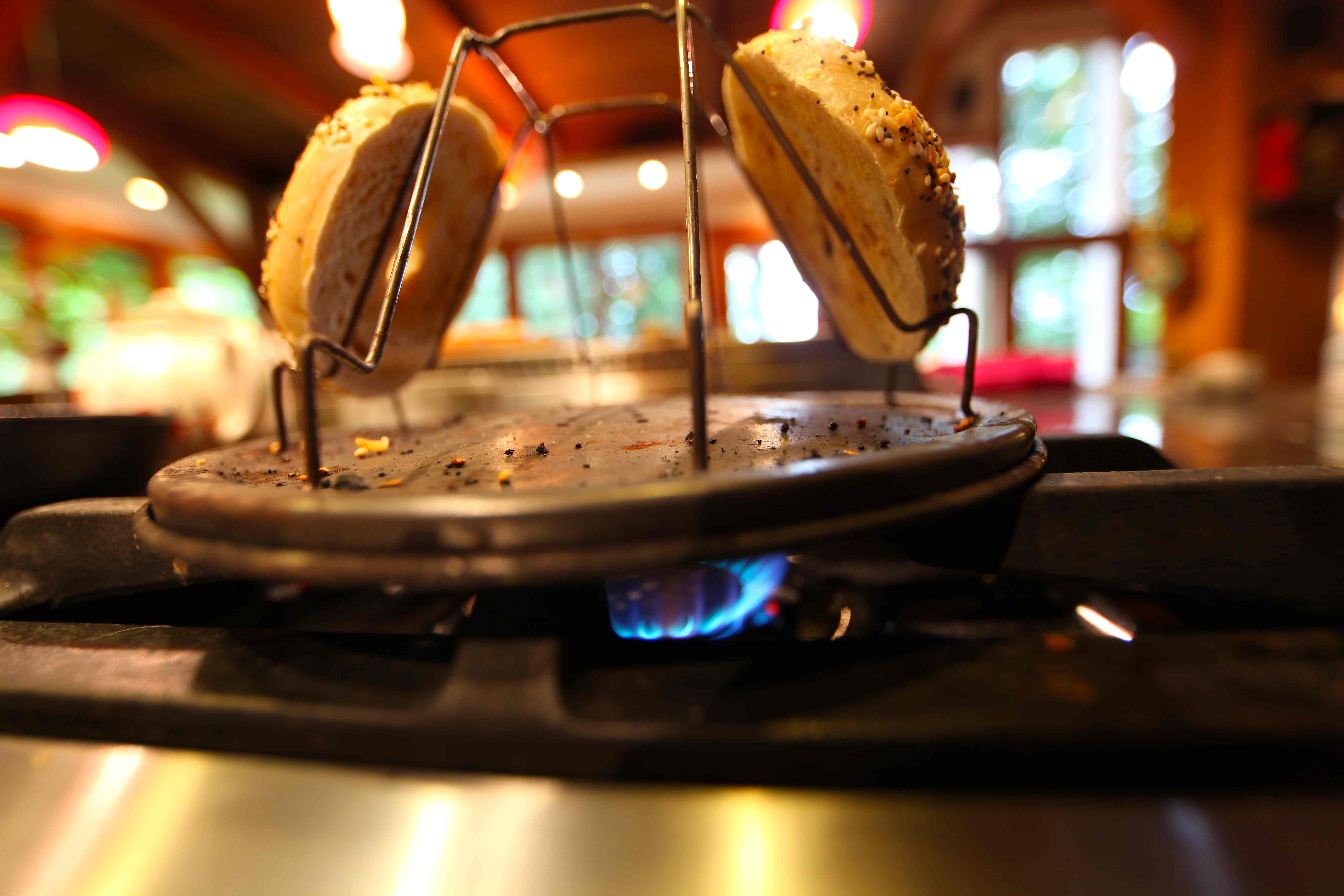
Our toaster oven stopped working two years ago and, coincidentally, I found a camp stove toaster a day later. I had wanted one of these for years. They’re the foldable lightweight stovetop toasters that enable you to toast your bread right over your burner. Coleman makes them and they cost less than $5 at Walmart. But if you’re patient, you’ll likely find one at a yard sale or in your Buy Nothing group.

Stovetop Toast-Makers Rule. © Liesl Clark

These toasters are perfect for the homebody interested in downsizing and getting rid of their small electrical appliances that just take up room and leave you with no options when the power goes out.

One by one, we’ve offloaded the little electrical appliances we rarely use, and our cupboards are so much easier to deal with. But more importantly, we’re making hand-made food again, and it ain’t no chore.  We’re finding alternative ways to make things off the grid, like yogurt, and are rediscovering the pleasures of simplicity and mindfully-made food. No, we aren’t poster-children for the farming life made simple, and we certainly aren’t feeling deprived. We don’t miss our toaster oven at all, thanks to our trusty Coleman camp stove toaster. I keep our new toast-maker on our stovetop day and night because toast is a staple around here since we bake our own bread. But it’s also foldable, so this gizmo won’t take up much room in your cupboard.

Simple, lightweight stovetop toaster. © Liesl Clark

Not only are we saving electricity, we’re convinced our toast tastes better as it’s toasted lightly over a diffused flame over the course of a few minutes, the same amount of time it would take in an electric toaster. I do believe Bagels are much better toasted with this thingy. And when the winter storms come and the power is out — we have toast! (Our stove is natural gas.)

Oh, and I’ve found the small base plate with holes on the toaster makes an excellent chili pepper roaster, too.

Reduce, Reuse, Recycle, Recover Batteries

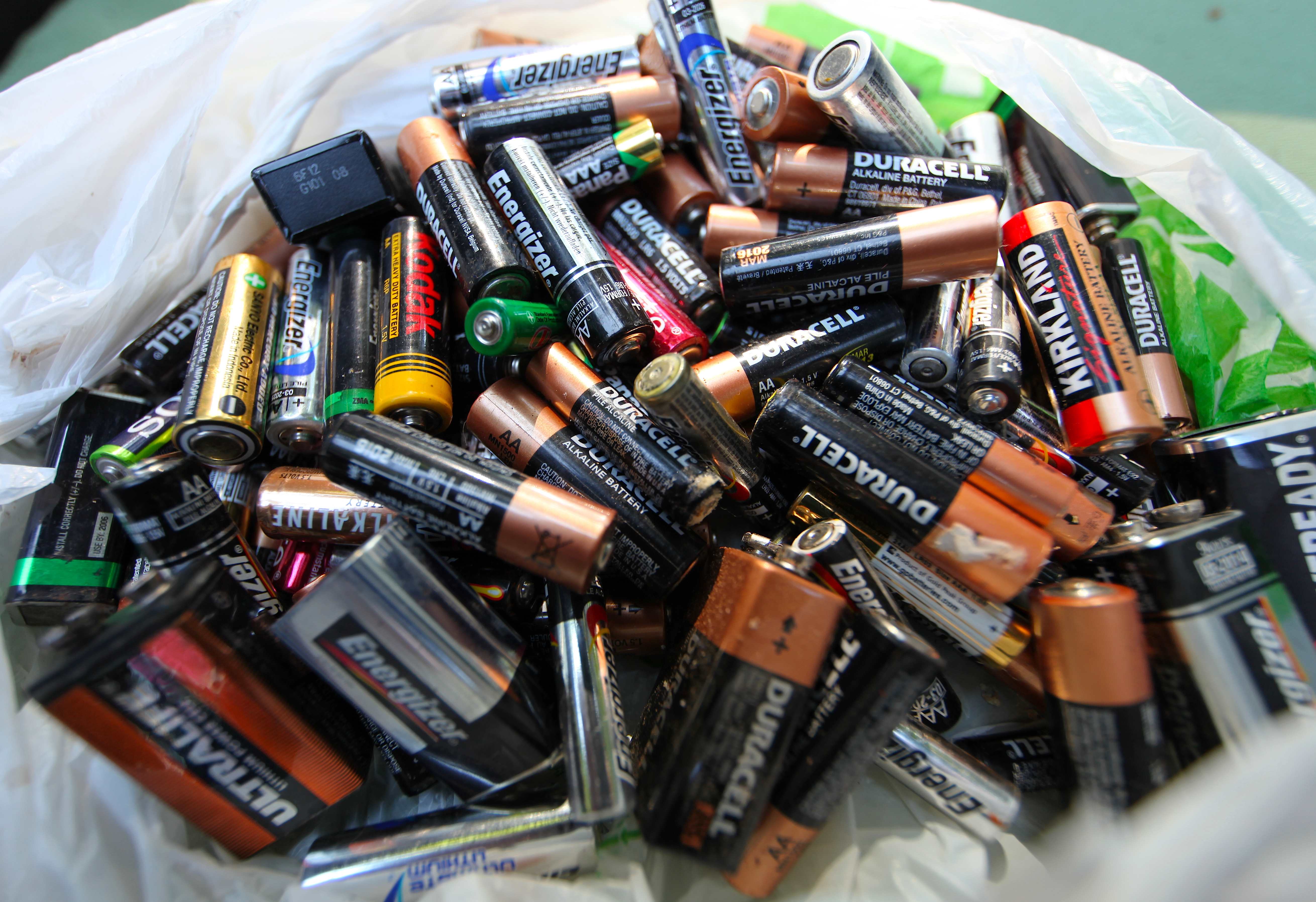
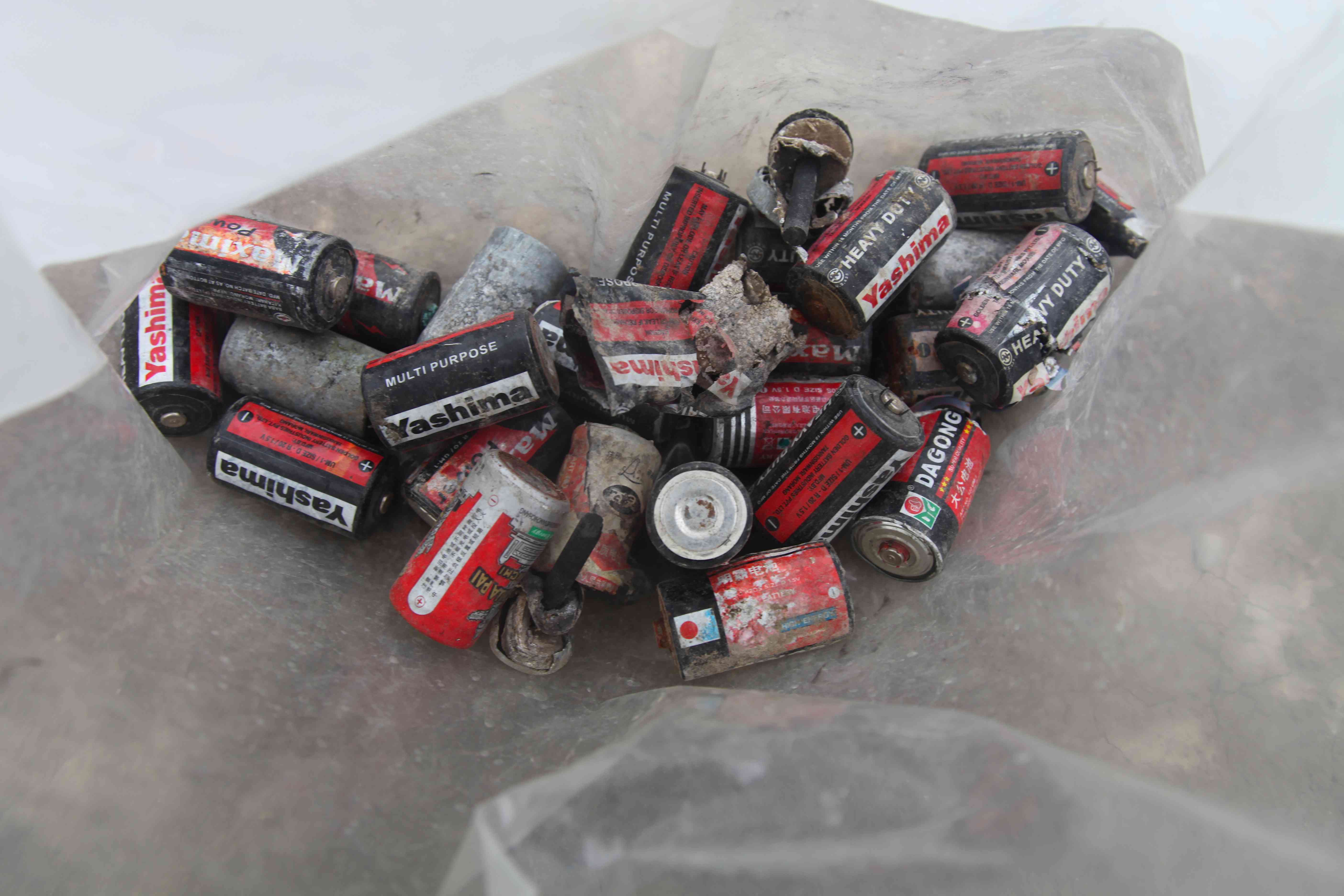
Batteries © Liesl Clark

The Batteries We Recycle © Liesl Clark

The average American has at least 10 batteries in their possession at any given time and throws away 8 batteries per year. That statistic feels low to me. Members of my household blast through many more than 8 every few weeks. We try to use rechargeable batteries, because they’re reusable, but in some remote parts of the world where we work, we just need to bring disposables with us because the charging of batteries requires power.

Should we recycle batteries? Absolutely! The mercury and cadmium in our batteries can wreak havoc on the environment. According to the Environmental Health and Safety Organization, “In landfills, heavy metals have the potential to leach slowly into soil, groundwater or surface water. Dry cell batteries contribute about 88 percent of the total mercury and 50 percent of the cadmium in the municipal solid waste stream.”

By recycling batteries, we’re ensuring those heavy metals are captured again and kept from our watersheds. Whether they power our cell phones, laptop computers, or flashlights at night, batteries are an essential part of our everyday lives. Finding the nearest place to dispose of them is now easier,  through your municipal recycling transfer stations and facilities like Ikea for alkaline batteries and Staples for rechargeables and cell phone batteries.

Here’s an amazing resource from Environment, Health and Safety Online that will clue you in about all of the different types of batteries and how they impact the environment. They also highlight how to safely dispose of them. For example, those tiny little button batteries that go in your watch or in some toys should go to your household hazardous waste facility. Them things are toxic!

In Nepal, where we travel each year, batteries are what enable us to make our documentaries for National Geographic and NOVA. Without that stored power, we couldn’t run our film equipment. Batteries, whether rechargeable, alkaline, gel cell, or lithium, are essential to our mission. Each one is carried back down from the mountains and reused on future expeditions. The spent batteries are taken home with us for safe disposal since there’s no battery recycling in Nepal. In the Himalaya, we’ve seen batteries regularly discarded outside villages in the rivers and streams.

Over the years, we’ve worked to set up a battery recycling program in the kingdom of Mustang, one of the highest watersheds in the world. We’re trying to inspire villages to collect their batteries and stockpile them. Trekking agencies heading out of the kingdom with their clients can take a bag or 2 of these batteries downhill to be disposed of responsibly in Kathmandu or Pokhara, two of the largest urban centers in Nepal. Better yet, trekkers could take batteries home with them to recycle them in their home countries. The crisis of battery waste building-up in the pristine wilderness needs to be addressed by everyone who lives and travels through these fragile environments. We pick up batteries in the villages we stay in, and do a cleanup with villagers whenever we can.

Prayer Flags in the Kingdom of Mustang. Photo © Cory Richards

Prayer Flags in the Kingdom of Mustang. Photo © Cory Richards

The next time you see a battery lying on the ground, whether it’s in a parking lot, on a trail in the wilderness, or outside a rural village, think of our planet as one interconnected ecosystem. All water, and whatever might have leached into it, travels downhill. If we address, globally, the most toxic materials first and then work our way down the waste chain to the more inert ones, we have a place to start and a set of priorities to follow.

Batteries found in just a few minutes of searching amidst the town dumping site just outside the walls of the royal city of Lo Manthang. © Liesl Clark

Batteries found in just a few minutes of searching amidst the town dumping site just outside the walls of the royal city of Lo Manthang. © Liesl Clark

If  you’d like to help us, please donate, even a few dollars, to our battery rescue operation through the Alex Lowe Charitable Foundation.

Embracing Ugly Veggies

Digging around in the garden, today, I had to run into the house to look up a stunning fact. Here it is: Roughly one third of the food produced in the world for human consumption every year, approximately 1.3 billion tons, is wasted. But here’s the hitch — The Food and Agricultural Association claims:

  • Fruits and vegetables, plus roots and tubers have the highest wastage rates of any food.

Fruits and veggies top out the list, not grains, dairy, meat and legumes. It’s the perishables that contribute to (in this country) the over 33 million tons of food each year that ends up in the landfill.

I posit that much of it is ugly veggies, like ours.

This time of year, the veggies in our garden are downright repulsive.

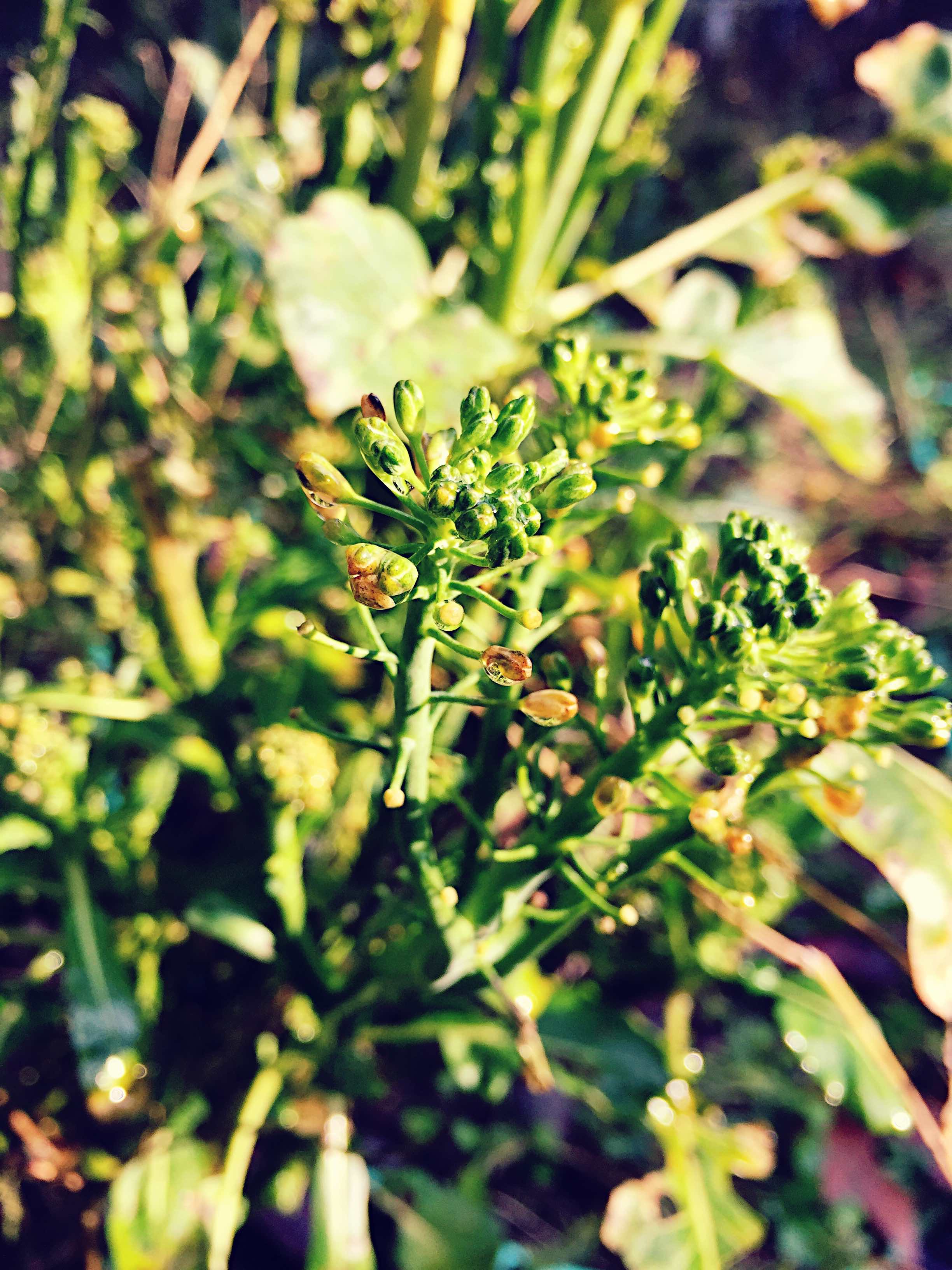
That's Broccoli Folks! © Liesl Clark

That’s Broccoli Folks! © Liesl Clark

The ceaseless rain and a recent freeze, has waterlogged the cauliflower.

Browned Cauli Still Tastes Great © Liesl Clark

Browned Cauli Still Tastes Great © Liesl Clark

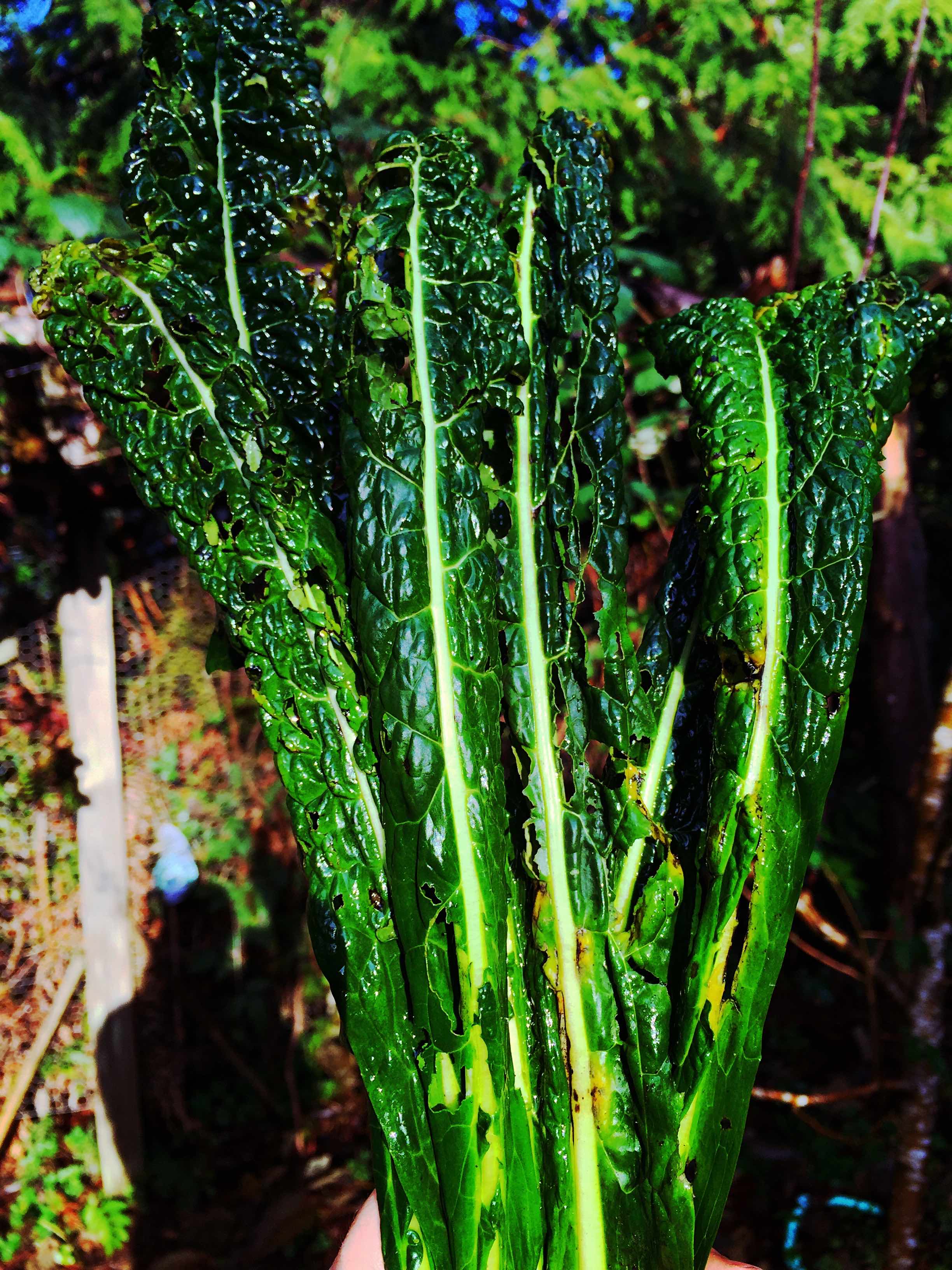
Thanks to a few thousand slugs that share the land with us, the slender kale has holes in it.

Holy Kale © Liesl Clark

Holy Kale © Liesl Clark

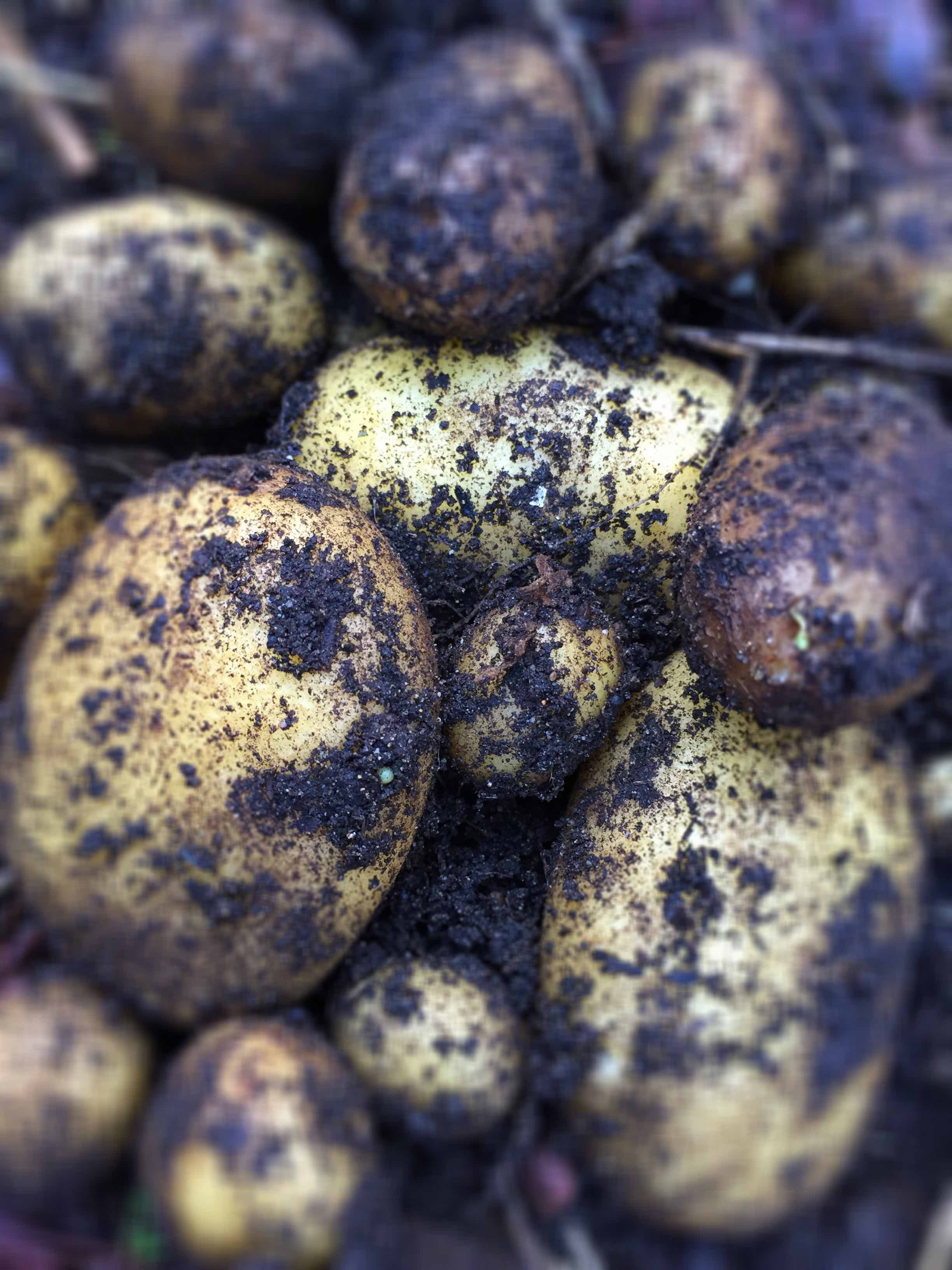
The finger potatoes and sun chokes cling to the sodden earth like black clods of nutritious grit.

It's What's For Dinner © Liesl Clark

It’s What’s For Dinner © Liesl Clark

Never fear, friends, just lower your standards, and don’t let your ugly veggies get you down. They’re still food. Hideously delicious food.

Roasted Sun Chokes © Liesl Clark

Roasted Sun Chokes © Liesl Clark


Gone are the days of showing off our succulent crops in beautiful baskets on long lost sunny afternoons. No, tonight’s dinner was wrestled free from the muck and slime of a New Year’s dark garden of primal growth that only the diehard will eat. We eat the foul-looking foodstuffs because snubbing our nose at them would contribute to the EPA’s wasted food bottom line. No, we’ll whip up dishes from weird days where clouds and wet shadows prevail over the  sheepish sunlight.

We triumph, quietly, when the kids eat the ugly veggies.

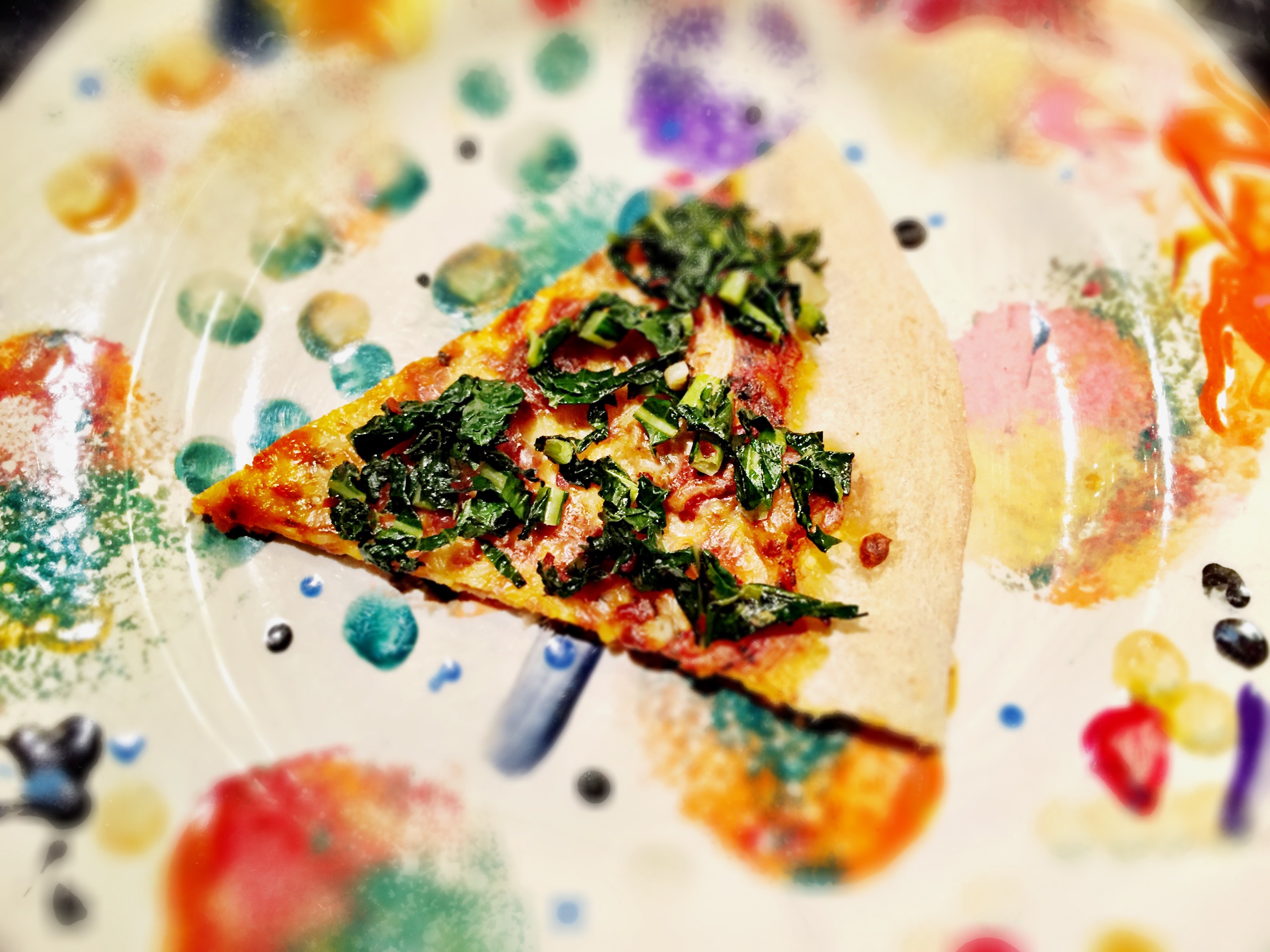
Pizza with Kale and Red Pepper Flakes © Liesl Clark

Pizza with Kale and Red Pepper Flakes © Liesl Clark

So, why be ashamed of the slug holes and dark spots on your rotting heads of cauliflower or snail-slimed leaves of kale when you hear this confession and bear witness to our homely ingredients? Embrace your ugly veggies. They’re food after all.

Washing the Grit From Sun Chokes © Liesl Clark

Washing the Grit From Sun Chokes © Liesl Clark

No one’s watching. No one’s comparing their Instagram-perfect patches of deep solstice greens with yours.  Bon appetit!  Go ahead, share your vile veggies with the fates that befall all winter gardens. Welcome them into your kitchen, unsightly as they are.

Snail on Kale © Liesl Clark

Snail on Kale © Liesl Clark

We eat our ugly veggies with pride. How about you?

What’s In Our Compost

Yuck? No! It’s food for your veggies and flowers.

Most people don’t know that you can compost all sorts of paper bits, string, cotton fabric, human hair, and wax paper. Throw it in the pile and turn it into garden gold!

What’s in Our Compost? Paper scraps, hair, pet fur, wax paper, egg shells, cotton fabrics, string, read on….

If you don’t compost, you can put these things in your organic or yard waste, if you have a municipal yard waste pickup in your community. Failing that, offer your compostables up to a neighbor in your Buy Nothing group. They’ll gladly take it off your hands. My pile can always take more ingredients as we use it on our 8 gardens and one acre of lawn. Keeping this stuff out of your garbage will save you money in the end. So, what can go into the compost pile?

Any organic matter that our chickens, dog, cat, humans, or guinea pig won’t eat goes into the decomposing pile. But we’re also able to compost other weird stuff. Here’s a short list of the unusual things we’ve been able to turn into fertilizer:

Human Hair from Haircuts and Shower Drains

Pet Fur

Band Aid Wrappers

Baskets

Wine at the Bottom of the Glass

Floor Sweepings (I pick out the plastic bits)

Clay

Coffee Grounds and Filters (but you knew that already)

Coffee Bags (non-plastic-lined, just rip out the metal strip at the top)

Sugar Packets

Shredded Paper

Ashes from the Fireplace and Fire Pit

Paper Produce Stickers

Butter Wrappers (these really do break down)

Wax Paper (but it also makes great fire-starter)

String

Bailing Twine

Balloons (the latex kind only)

Cotton Fabric

Cornstarch Packing Peanuts

Crushed Egg Shells (the worms love ’em)

Cardboard Egg Cartons (great carbon source)

Q-Tips (the kind with the paper applicators, non-plastic)

Toilet Paper Rolls (ditto on the carbon source)

Nut Shells (they do break down, but can also go in the firestarter)

Fruit Pits (we get sprouted peach trees each year)

Fabric Scraps (so long as they’re natural non-bleached, non-poly)

Sheep’s Wool (we have lots for crafting)

SCOBY (my hens love it, but it can go in the compost, too)

Half-Burned Match Sticks

Old Seeds and Their Packets (we might get some freebie veggies the next season)

Pencil Shavings From the Sharpener

Nail Clippings From Cats, Dogs, Humans (Ew, gross!)

Paper Lollipop Sticks

Wax Coated Paper Candy Wrappers

Masking Tape

Parchment Paper

Old Potpourri

Old Baking Soda

Non-Toxic Play Doh

Puzzles

Rags

Latex Rubber Bands

Corn Husks and Cobs

Yarn

Paper Towels (but we’ve given those up)

Tissues (same as above)

Tea Bags and Paper Wrappers

Paper Scraps

Old Herbs and Spices

Entire Buried Fish (these go way down in the pile)

Entire Buried Chickens (these go even further down in the pile)

Cat Vomit (did she write cat vomit? Seriously, why throw it in the garbage if it’s just going to break down anyway?)

Avocado Pits (See what I did there? I moved right along. BTW, the worms love the avocado pits and lay their eggs in them. Think worm nursery.)
Guinea Pig Droppings (Have I grossed you out enough?)

Dog Vomit (Ok, Liesl, you’ve gone too far!)

Bee Vomit (That’s honey!)

I’ll stop there. You get the point. If it’s organic matter, it’ll break down. If it’s a paper product, the organic matter in the pile will break the paper down. And it all ends up on the lawn or in the gardens feeding the little plants into big plants and then producing beautiful food for our table.

Peas produced from the fertilizer we make out of our weird composted stuffs. © Liesl Clark

Peas produced from the fertilizer we make out of weird composted stuffs. © Liesl Clark

What NOT to put into your compost pile:

Lint: I used to put lint into the compost until I realized much of our lint is synthetic fibers. It’ll never break down.

Organic Produce Stickers (You have to pick off each one of these buggers and put them in your trash because they’re made of plastic.)

Plastic-Coated Papers

Thermal Receipts (These are Bisphenol-A-laden. It’s an endocrine disruptor. Just say “no” when someone asks if you want a receipt.)

What other oddities can you add to the compostables list?