High Mountains, Pure Water

Sample Nepal Village Zero Waste Plan

(A work in progress)

1)    Locate village waste sites. Are they trash pits dug out for burning? Are they in a windy spot? If so, build a fence around them so rara (ramen) and biscuit packets don’t blow away. Do cows frequent the site and forage? If so, a fence will stop this. Cows die from ingested plastics, and the plastic can’t be a positive influence on the milk the cows produce.

2)    Are there incinerators for burning trash in the village? Review which plastics are being burned and at what temperature.

3)    At the trash pits (and also in a few volunteer homes) separate out the resources from the trash: aluminum, glass, compostables like paper, cardboard and food scraps.

4)    Find a nearby source that will buy the aluminum and a local willing to carry it out.

5)    Find a nearby source that will buy or recycle glass and a local or foreign NGO willing to carry it out. Often there are porters willing to carry for a small fee or trucks heading downvalley that are empty.

6)    Conduct awareness camps with locals to re-assess why compostables like paper, cardboard, and organics like food scraps are ending up in the trash pits. Methane gas from organic waste in landfills is a large contributor to greenhouse gas worldwide. This organic waste should be seen as a resource for compost piles. Remind locals that tea bags can be composted. Eggshells can be composted. If locals are going into the forests to collect leaves (carbon) for compost, they should be saving their paper and cardboard which has the same affect on compost piles if shredded into smaller pieces. Teaching locals to keep the leaves beneath the trees to prevent erosion will take time, but showing them that the paper and food scraps can take their place could go a long way in reducing the amount of leaves being taken from the already denuded environment.

7)    Toxic waste drop-off site: designate a local place (either one right at the pit or at a community center) where people can drop off their toxic waste – batteries, lead acid car batteries, CFL light bulbs. Find a local conservation group that will transport them to a safe disposal site.

8)    Cut down on single use items. If there are many plastic water bottles in the trash pits, locals can look into getting a potable water filter donated to the community. Informed trekkers will bring their own water bottles to be re-filled with safe drinking water. Signs in the village indicating where the safe potable water can be purchased will help reduce plastic water bottle waste.  The village or individual lodges that purchase the water filters will get a return on their investment.

9) Create goals for the future: plastic bag bans in your village, public potable water station.

Thanks to Clif Bar, we’ve been able to take some of these steps in interested villages in Solukhumbu and Mustang. The goal is to get the plastic and toxic waste out of the critical high mountain watersheds. Our steps may be small, but with continued follow-through they will have a lasting impact on Nepal’s increasingly threatened, garbage-choked watersheds.
The Path to Zero Waste and the Choices We Make

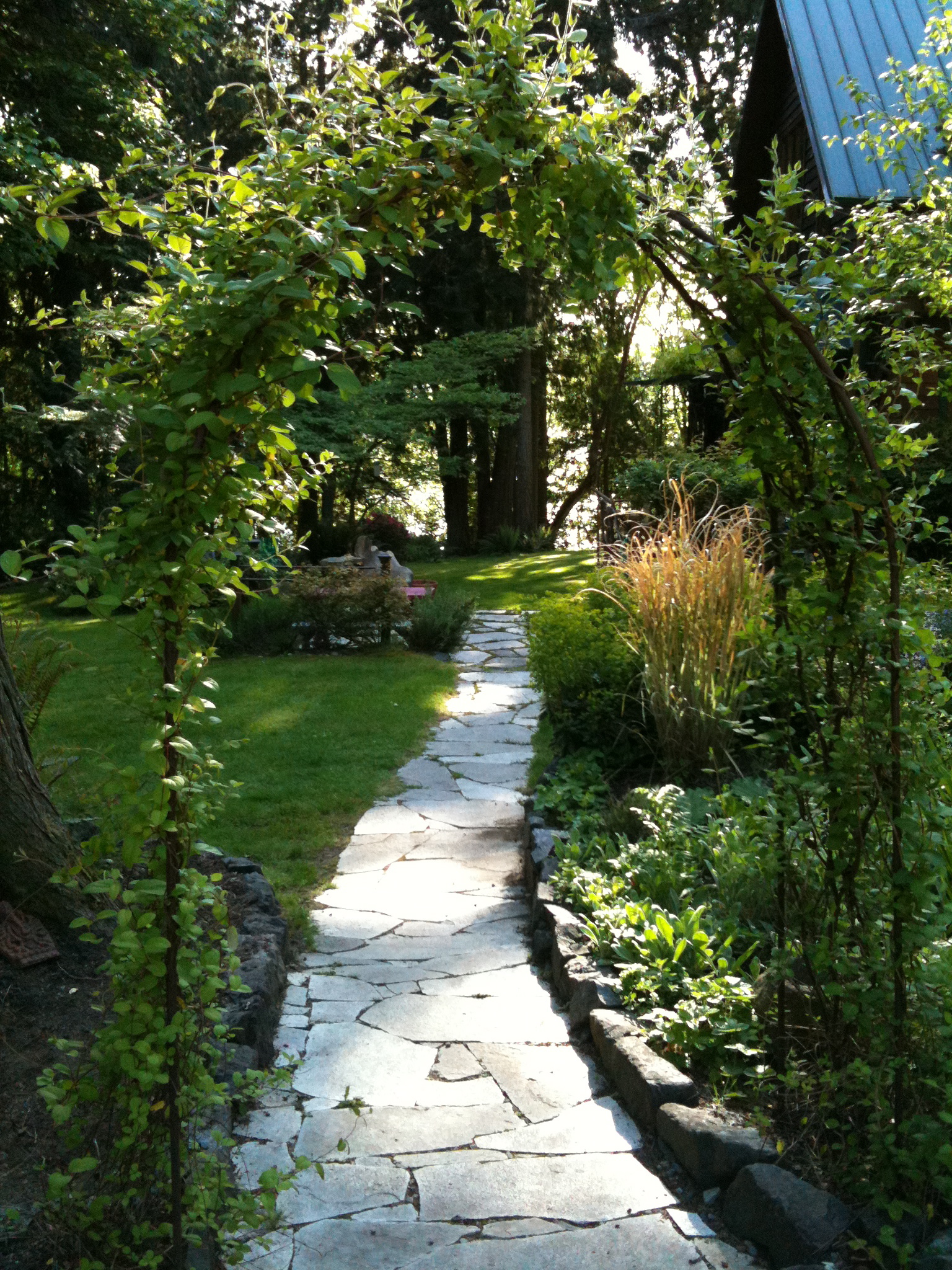
Path to Zero Waste (or, our laundry room where we keep our trash)

When I first became interested in the subject of how to reduce our family’s consumption of goods and, in particular, reduce our waste to the landfill, I found that lists created by other zero waste pioneers really helped. I admit, I scoured the Web at night when the kids were asleep and found lists upon lists of how others had outsmarted the system and found ways to reduce their waste. Mostly, they had returned to the basics, living a less consumer-oriented life, and had re-learned what their grandparents already knew. We’ve form-fitted those practices for our family’s lifestyle and without further ado, here’s our list (with a few explanations attached). Please send questions or comments as they all help to hone this list of simple steps and make it clearer for others:

1)    Audit your waste: Take a week’s-worth of your trash (or even a day if you are overwhelmed) and separate it into compostables, recyclables (paper, recyclable plastics, glass, aluminum), plastic bags (polyethylene), and everything else. You’ll likely find that at least half is compostable, another quarter is recyclable, and the rest goes into the landfill. It’s that last bit that you’ll eventually get to analyze more closely, but first look at the other categories and see how you can improve upon getting them where they need to go.

2)    Compost: If you can’t compost your own food scraps, see if someone else will, like your own town. Most cities and towns have a yard waste/organic waste pickup. This will reduce your waste to the landfill so much that your garbage bill will go down significantly. Guaranteed.

3)    Recycle: Okay, recycling is not an end to a means (of buying unnecessary plastics) but it helps reduce waste to the landfill. Print out (or memorize!) your local recycling guidelines and keep it posted above (or on) your recycling bin. Any 3-year-old can sort the recycling from the landfill waste. But before you throw it in the recycling bin ask yourself whether there might be a better re-use for the item.

4)    Polyethylene: I’m amazed how much of our waste is polyethylene – toilet paper wrapping, rice cake bags, cereal bags, newspaper bags, ziplock bags (with the zipper part cut out). Check out this list of what you can recycle at your local grocery store in the plastic bag receptacle.

5)    Landfill trash: Now audit this pile of trash. Are you sure it needs to go to the landfill? Here’s a list I compiled for Bainbridge Islanders (it can be useful for anyone) noting the usual products of our material culture and how they can be responsibly disposed of or reused rather then thrown in the landfill.

6)    Remove your trash bin from your kitchen: Put it in an out-of-the-way place so you have to think about it every time you designate something for the landfill. I simply put our compost receptacle and recycling in the space under our counter that was meant for “trash” and put the trash bin around the corner in the laundry room. It’s made a big difference for the whole family.

7)    Create special waste streams: After analyzing your landfill trash, if you find any items that you produce enough of that you can designate a special waste container for, do it! I’ve done this for batteries, wine corks & bottle caps (freecyclers take them away), and Styrofoam.

8)    All the other stuff: Have a bag hanging somewhere nearby where you can put all that other stuff that needs to be taken to a place for safe disposal and then once every 6 months take them to their final destinations – printer cartridges, prescription drugs, CFL lightbulbs, art supplies (like pie tins) for schools, etc.

9)    Join The Buy Nothing Project or a similar group: Anything that could have a second life should be given away. I’m amazed at what I’ve been able to give in my local Buy Nothing group. Total strangers drive to my house to pick up concrete blocks, old tarps, car seats, light fixtures, outdoor furniture, the list goes on. And, of course, I’ve received wonderful used treasures through my neighborhood network: waffle iron, veggie starts and perennials, booster seat, books for our children’s libraries in Nepal, glass canning jars.

10) Adopt new shopping habits: Always bring your reusable bags, including plastic or cloth produce bags and jars for your liquid bulk items (maple syrup, agave, tamari, peanut butter, olive oil, etc.) Refuse items packaged in plastic. It’s as simple as that. If you search around, there’s usually an acceptable alternative.

11) Buy in bulk: This is the single change in our shopping habits that has made the greatest impact on our waste. We buy 25 lb bags of flour, rice, lentils, beans, and pasta, among other items. But these are our staples that we cannot grow ourselves.

12) Grow/farm your own: If you have the space, grow a garden of greens and  whatever else you love. Get chickens and savor fresh eggs every day. We even raise bees for the day when we can actually harvest our own supply of honey for the year. The more you grow, the fewer trips you have to make to the store.

13) Forage: I know it sounds crazy, but if you can learn what the great free foragable edibles are around you, you can reduce your waste by buying less. We’re proud to admit that a good percentage of our diet is from foraged food: blackberries, apples (although the town just cut down our favorite beach apple tree), water cress, nettles, bitter cress, oyster mushrooms, huckleberries, blueberries (from our home in New Hampshire), chanterelles, salmonberries.

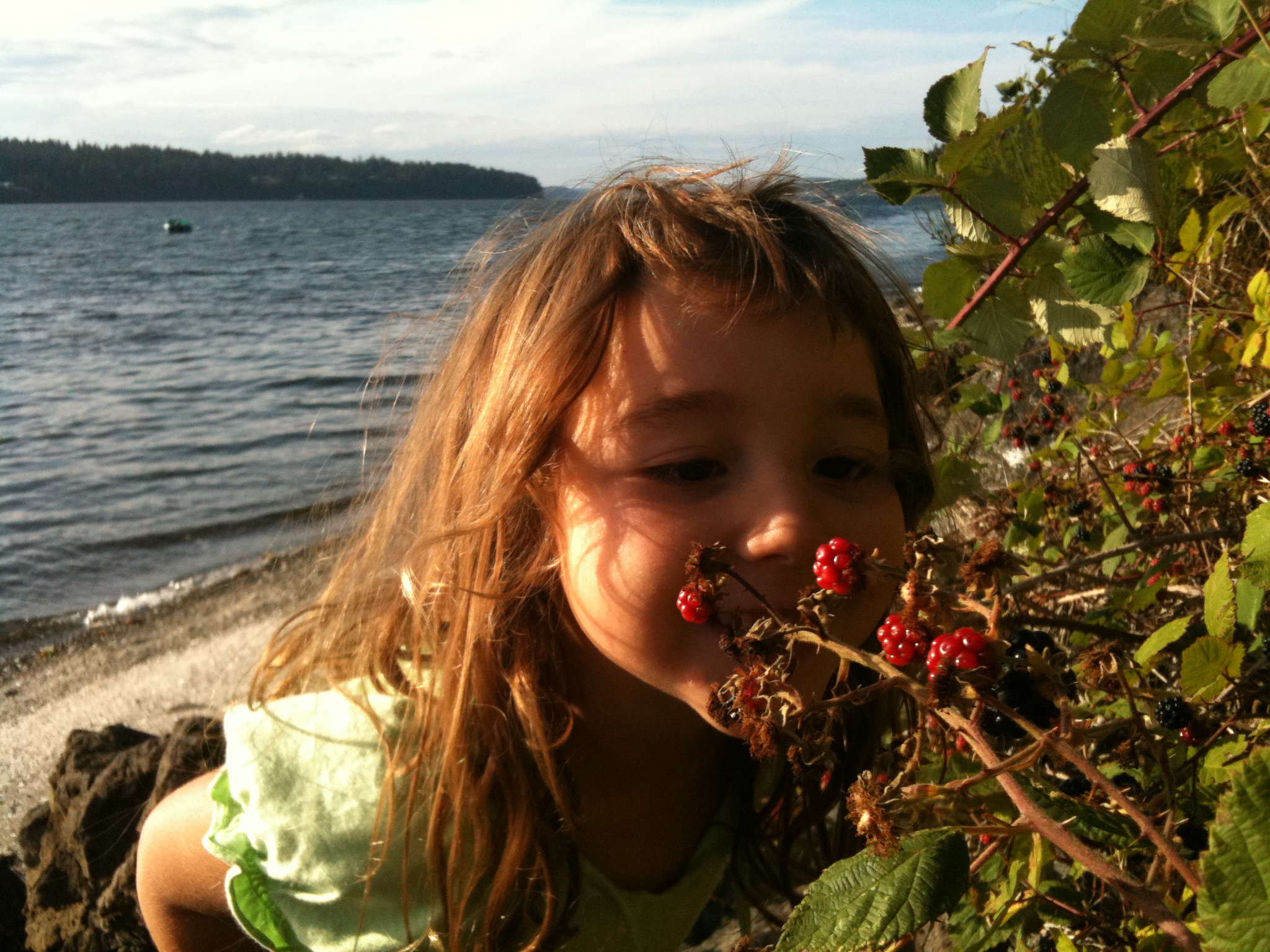
Secret Beach Blackberry Patch

14) Make your own: If there’s something you eat regularly, try to make your own so you don’t have to purchase the packaging along with the staple item. We bake all our bread, make our yogurt, and toast our own nut mixes. It’s a way of life so it doesn’t feel like a chore and our home made staples are much better than what we find at the store. Really.

15) No single-use items: Find re-usables to curb your habits. We now travel with our own coffee mugs, water bottles, glass straws, cutlery, and sometimes even plates.

And the end result? We fill one garbage bag of trash every 4-6 months.


Think Locally, Act Globally

There are a few places left on Earth where cultures and individuals have not lost touch with their past, their knowledge of how to live in harmony with the natural world, rather than overcoming it and destroying it. As far as carbon footprints are concerned, these are the people who have perhaps a heel-p

rint on the environment, as compared to the ski-boot-size print we know we have upon the Earth every day we live our average American lives. This is the story of one family’s journey to seek answers to the myriad questions about what we can do to reach back toward our past and re-learn the ways of the people who still respect the gifts of the Earth, conserve them, re-use them, and ultimately have the power and education to refuse the modern products that are toxic to our environment. This blog is a snapshot of where things have gone awry and an offering of simple solutions to stop the flood of plastics and non-reusable garbage into our wild places.

We don’t have a blueprint for living the perfect zero impact life, but we can provide a road-map for an ever-changing journey toward a more mindful way of living, whether we live in the most remote villages in the Himalayas or on a both rural and suburban island 35 minutes by ferry to metro Seattle.

Filming large prayer wheel in Upper Mustang

I’m a documentary filmmaker, with 20 years’ luck making films for NOVA, the BBC, and National Geographic in the world’s wildest least inhabited places on Earth. My husband is an explorer/climber who became known at the turn of this century for his 7 successful summits of Mount Everest. You might say our combined experiences have aided our re-thinking of the everyday worlds we live in. We’ve lived the sparse mountaineer’s life, a modern-wilderness-caveman-style existence in all sorts of extremes and have analyzed it closely, paring down our essentials and power requirements to the absolute minimum. And we now know there can be great joy and satisfaction living a life more simple, far from the cough of motors, hours if not days from the nearest shopping center.

We continue to make films and do research in the remote places we love, but what has stunned us and inspired us to change our lifestyle at home and live more closely to the rhythms of the Earth is the amount of waste we’re seeing in the world’s highest watersheds and the trickle-down of those misguided waste disposal practices, those plastics and toxic chemicals, ultimately, into our pristine waterways and oceans.

Spring Snow in the Himalayas

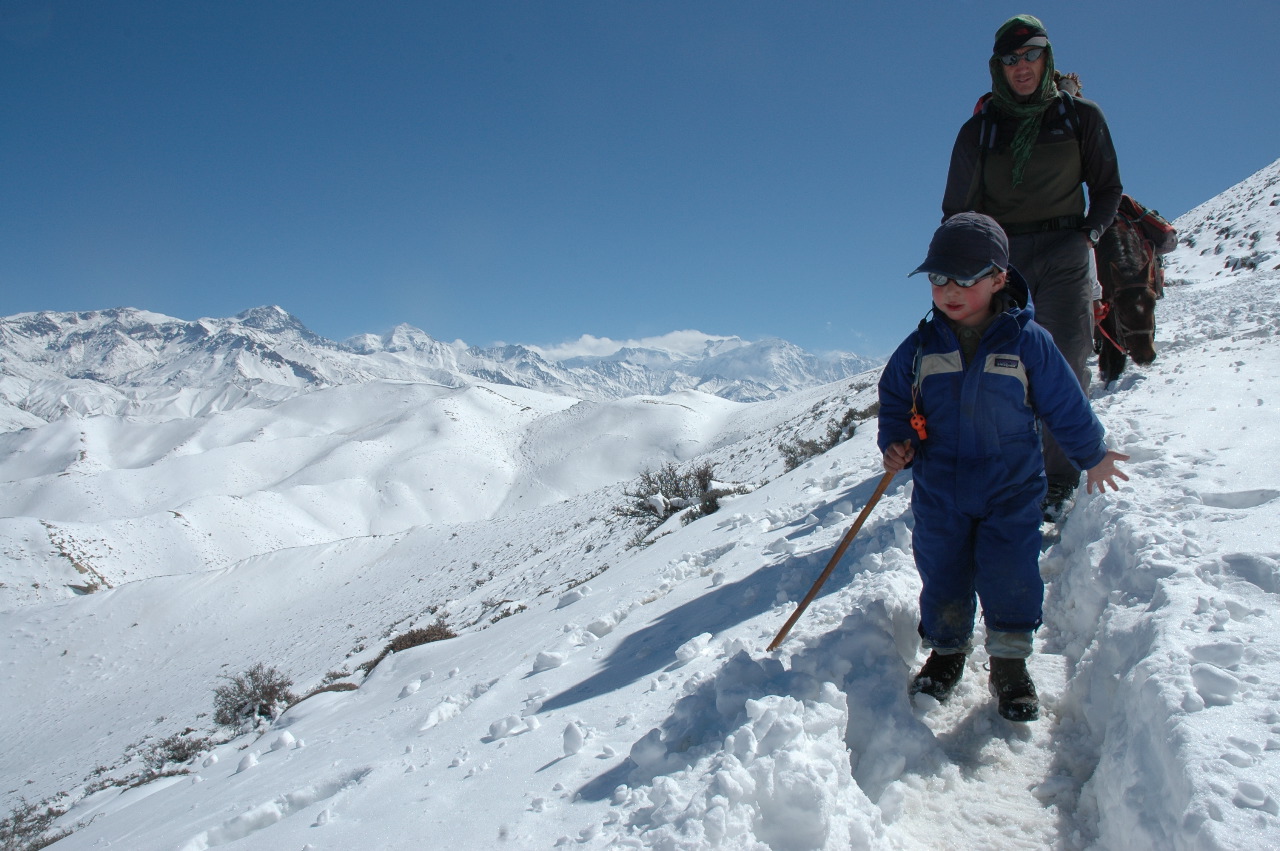
3 Year Old Post-holing Over a 13,000 foot pass

We’re taking simple steps, as you’ll learn in this blog, to initiate pilot projects, both at home and abroad, to help both our local island townsfolk and the indigenous cultures we work with see waste in new ways: separating the resources from the toxics and opening up a dialogue about how to reduce the waste that is ultimately detrimental to us all. We’re re-learning what our great great grandparents practiced.

Mostly, it’s our children (ages 5 & 7) who inspire our work. They find solutions long before we do and adapt to every environment they face. But they can no longer enjoy the beauty of the highest Himalayan villages, for example, because their eyes are caught by the tree limbs wrapped in blowing plastic bags, the ancient mani walls carved with Buddha’s teachings and stuffed with ramen noodle packages, and the wild grasses glittering with sweets wrappers and water bottles thrown from the hands of their Sherpa friends.

Stopping For a Hug, 13,000 feet, Khumbu, Nepal

“Let’s try to do something about it,” are the words Finn & Cleo spoke last February when we spent a month in the Mount Everest region of Nepal working on a Magic Yeti Children’s Library we had established a year before. This short film is a brief look at the adventures we had in coming up with simple solutions for a beautiful village at 12,600 feet at risk of becoming another trash heap sending its waste down into the greatest watershed in the world. The people of Phortse are taking positive steps to prevent this.