First Chapter in Our Book of Reuse

Chapter 1: An On-going Photo Essay of the Things We’ve Upcycled or Repurposed into New Iterations for Family Reuse

Repurposed window, now mirror

Repurposed window, now mirror

1) The old window turned mirror. This 6-pane window was found inside our 200-year-old barn and looked about the same vintage. Glass was broken on the floor and there was no caulking to speak of. I cleaned the cobwebs off, scraped the glass shards from the grooves, used a wire brush on the wood frame mullions to remove old paint and gunk, then took it to a window shop and asked them put mirror into the frames instead of glass! It was cheap and the results were exactly what I envisioned.

Sea Glass Frame

Sea Glass Frame

2) Sea Glass Picture Frames: The fun part was exploring our new beach when we first moved to our little island. The multicolored glass told a story of many inhabitants coming here long before us.

Home made candle

Home made candle from freecycled wax

3) A post on our local Buy Nothing group brought us an abundance of unwanted and half-burned candles. Added some of our own wax from our honey bees and, voila, new candles!

Pallet Playhouse

Pallet Playhouse

4) This pallet playhouse in the trees was built entirely out of 2 wooden pallets and branches from around the property. The “slide” access to it was left on the property by the timberframers who made our home: another reuse of construction debris.

Note, in the next picture how HUGE the tree trunk is on the right side of the frame. You’re only seeing half of it, too. This tree was cut down a century ago by loggers on the island who downed the first-growth trees to help rebuild San Francisco after its great fire.

Another view of the play palace/pallet in the trees

Another view of the play palace/pallet in the trees

5) A button valentine kid-creation for friends at school.

Buttons on clear plastic retrieved from trash = valentine

Buttons on clear plastic retrieved from trash = valentine

Angels While Gathering Wood

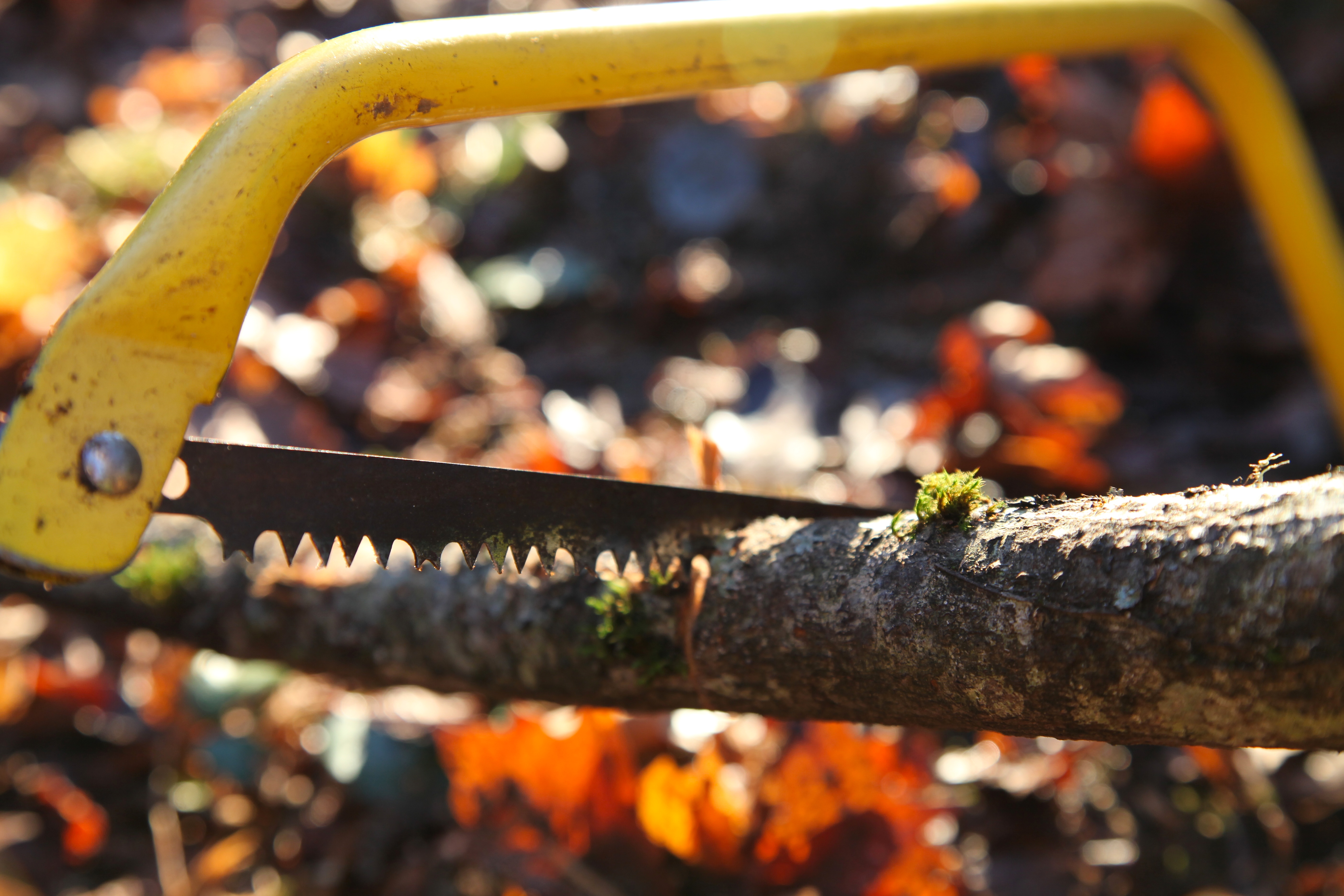
Handsaw for Winter Foraging

Handsaw for Winter Foraging

One of our greatest joys, lately, has been foraging for wood in our forest to augment the dry-split wood we have stacked for winter use. We heat our home entirely with the wood from our land and a new pastime for the kids is to wander the slopes and swales to find kindling or larger pieces we can cut with a hand saw, quietly, while listening to the winter sounds of the forest. Bald eagles chatter above, complaining from the constant pestering by crows. And our cat, Willa, scrambles up trees to keep out of view. There’s something immensely satisfying about picking up the piles of blown down limbs and using them to help heat ourselves in these cold months.

Lumberjack

Lumberjack

Every afternoon is spent in these woods, and we’re getting to know the patterns of light, the shifting breezes from Port Orchard Bay below us, and the dramatic changes in weather intimately. Our efforts were rewarded, yesterday, by a visit from 2 angels, bringing new joy to the littlest members of our family:

Thank You, Tree

Five dollars and some good footwear will get you on the slopes of the Olympics undertaking an adventure that’s guaranteed to tighten bonds in your family and connect you to a Christmas tree you can “weed” from the forest. This sustainable practice, offered by the U.S. Forest Service,  means the trees left behind get more light and nutrients. It’s Christmas tree shopping with a sense of meaning, connection, and good old fashioned adventure.

Many people can’t afford the $30-on-average pre-cut trees at your local lot. These come in every shape and size. But with a little effort (don’t forget your handsaw) you can pick out a custom-grown tree for your space.

Here’s what the USFS says about it: “Forest Service Christmas Tree permits …. are $5.00 each and are good for one U-cut tree on the Olympic National Forest. Permits may be purchased at any Olympic National Forest office (Forks, Olympia, Quilcene, Quinault).”

USFS rangers say they don’t need to re-plant “because the trees seed themselves so readily,” hence the locations where you can cut are specified dense tree locations where you’re encouraged to weed one that’s close to others.

Elf & Tree

Elf & Tree

Time is still ripe for the picking. Enjoy the beautiful drive, the invigorating hike, and the quest to find that perfect tree. Our tradition is to thank the tree before we cut it down, being mindful of the water, sun, and soil that provided for its life in the first place.

Power Sabbath

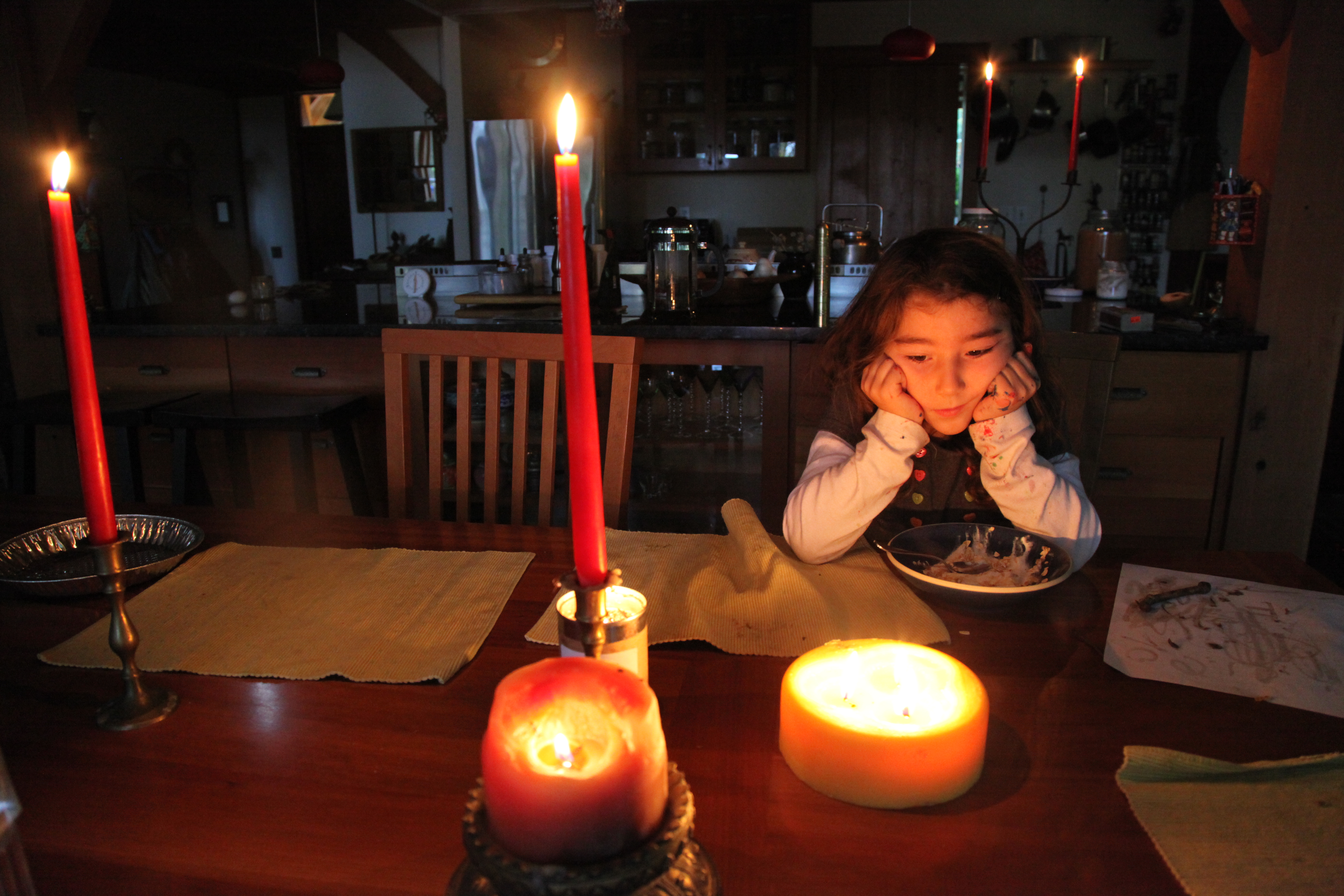
Breakfast by Candlelight

Breakfast by Candlelight

Sundays, for us, are power sabbath days. If you’ve never tried a power sabbath, it’s well worth it to ease the burden of everyday assaults on the senses from computers, lights, appliances for even a few hours.

Have you ever been thankful for a brief power outage, for the reminder it gave you of how pleasant a slowing-down-to-deal-with-the-basics-in-life can be? For us, it’s reminiscent of 12-hour daily load sheds in Kathmandu and simple living on expedition, a reminder that we live a privileged life. Access to power shouldn’t be taken for granted. Using less of it each week, of course, reduces our impact.

Reading by Hurricane Lamp

Reading by Hurricane Lamp

We have a propane stove/oven and heat our house entirely with wood, so the switching off of power isn’t a huge shock. But we live in the Seattle area and mornings can be dark, so candles light our way about the house and kitchen. We highly recommend you try even a morning or evening of power sabbath, so the whole family can check in with each other and simplifying your lives by turning off all links to wall sockets. Try it and see what sort of quiet magic happens.

Life Less Laundry: In Praise of Dirt Bags

How often do you do your laundry? Americans launder clothes way too often. And we use too much detergent, according to the Wall Street Journal. We’ve started re-thinking our laundry scene here at home. After spending much time living in villages in the dustiest parts of the Himalaya, one looks at laundry a little differently.

First, water has to be collected and carried to your fire to be heated, if you’re going to be a purist. Otherwise, a nearby stream will suffice. Secondly, you have to hang it up to dry and inevitably those clothes get full of wind-blown dirt and dust as they drip dry. Then, I learned an amazing lesson about laundry while living 6 weeks in Kathmandu. I noticed people don’t waste energy wringing out the wet clothes and linens to hasten drying. The water must be put to use! Laundry is often hung right over the vegetable garden to drip-irrigate precious veggies. So, come summer, our family hangs our dripping-wet laundry (no spin cycle used) over our tomato plants and we never need to water them.

Phortse-Bound

Phortse-Bound

Meanwhile, back in the village once your laundry is dry and you finally put on your so-called clean togs, within seconds those clothes can get pretty “dirty.” But dirt ain’t dirty! We’ve all learned to bring brown clothes to wear in Nepal so dirt can be hidden. The dirt isn’t the problem that ultimately makes you want to launder your clothes. It’s the bodily stuff humans produce on clothes (smells notwithstanding) that become one’s standard for washing. And if your animals somehow get their stuff on your clothes, (cows, yaks, horses, chickens) then it’s time to wash. Otherwise, a little dirt isn’t worth the effort to wash and one learns to wear clothes for many days, if not weeks, when you’re on expedition before having the time and commitment for washing.

Even here in the States, we’re becoming more water-conscious. Levi-Strauss Co. gets it: In a recent article in the New York Times, Levi-Strauss is admitting to the amount of water they’ve used in the past to stonewash their jeans. And now they’re sewing tags in clothes to tell consumers to not wash their jeans so often (by the end of their life, your jeans will have consumed 919 gallons of water.) In fact, if you want to kill those yucky microbes, Levi-Strauss recommends you throw ’em in the freezer for 24 hours. One jeans-wearing guy is reportedly swearing off washing his denim-trous…ever. He’s already a year down that road.

But for us, the issue has become more about plastic. Yes, plastic is in your laundry and one of my favorite scientists today, Mark Browne, has determined that on average a single garment will shed 1900 fibers of microplastic per wash into your gray water. The problem is woven in our favorite polypropylene pants or tights, or poly-wool blend sweaters. If it’s made of plastic, it’s shedding plastic, and those microfibers are showing up on every shoreline on our planet. This is a very real concern to marine biologists and toxicologists who are finding that microfibers are ingested by many marine species and are likely making their way into our own food stream.

So take a close look at your dryer lint. It’s those fibers that are making their way out of your washing machine and into our waters. If you’re a died-in-the-wool purist about your clothes and only wear organic cottons and fibers, you’re doing wonders for the planet. The Fibershed Project is a fine example of lessons learned when you truly look at clothes, how they’re manufactured, where they come from, and the amount of energy, water, and toxins used to make them. The Fibershed folks promote looking at which fibers can be sourced in your own bioregion.

Laundry Solution? Wear No Clothes.

Laundry Solution? Wear No Clothes.

Whether your concern is toxics, water conservation, social justice, or buying and/or sourcing local there are also those who are committed to  zero waste laundry practices. Our friend Rebecca, at Rockfarmer has a great DIY laundry detergent recipe we’ve used for several years. And Biokleen’s 10 pound powder detergent in a box (buy it bulk through Azure Standard, along with all your other bulk needs) is also great on the environment. But it’s not going to be fully zero waste until we can sort out the problem of plastic micro-filament shedding into the environment.

We’re working on getting funding to develop a filter to stop the plastics from leaving your washer and entering our waters. Our hope is that the clothing manufacturers who produce the poly-blends might be the ones interested in contributing to this effort. Lint in your dryer is a resource for some (I know one explorer who saved his for months before heading out into the hinterland and he used it as firestarter for a journey across the Tibetan Plateau,) but lint in your washer is a potential endocrine disruptor for marine species and ultimately ourselves.

So, the next time you see me or members of our family and we’re looking a little “dirty,” you’ll know we’re stretching our standards a little, wearing those clothes just a little longer before contributing further to a growing problem in our oceans.

Journey to Kagbeni

Journey to Kagbeni

No Impact Week: Consumption

Being Creative with New Recipes

Being Creative with New Recipes

This week Yes! Magazine has launched a project called No Impact Week, that people the world over are encouraged to participate in. We couldn’t resist, and this post is a summary of Day 1 — all about consumption and literally where this family has been experimenting over the past month. Can we find new ways of reducing our over-all consumption of goods, energy, and water?

Yesterday was a good day for us, as the No Impact project got us started on several new ideas. We were asked to make a list of what we needed this week:

Suet for birds

School snacks for the kids

Pickles

Bread

Laundry detergent

Food wasn’t deemed by the project as necessary to put on the list, but we’re trying to grow/make most of our own food and so we think it’s a good exercise every few weeks to consider whether you really need to go to the market to purchase food that week. Is there enough in your larder to support your family’s needs for the week? If so, save yourself the trip and make do. You’ll likely find new recipes you never dreamed of making because you’ll have to work with the veggies and foodstuffs you have on hand. We decided to take our list of needed items and, well, make them!

Making Suet!

Suet for Birds: Okay, I admit we purchased the beef fat a day earlier in preparation for the suet-making experiment. But the truth is, we’ve been trying to figure out a zero-waste option for suet. It’s now fall and the birds outside desperately need more fat in their diet, to help them through the winter. At our local store, the butcher happily put chunks of beef fat (about 2 lbs came to $2.00) in a large jar I brought. At home, we rendered the fat, strained it through a fine mesh colander, then mixed in raisins, peanuts, whole grain chicken feed, hulled sunflower seeds. We spread it all out in a glass pan and…there’s suet enough for at least 2 months for our woodpeckers, Steller’s Jays and chickadees. When suet is out, even the Pileated Woodpecker comes right to the window.

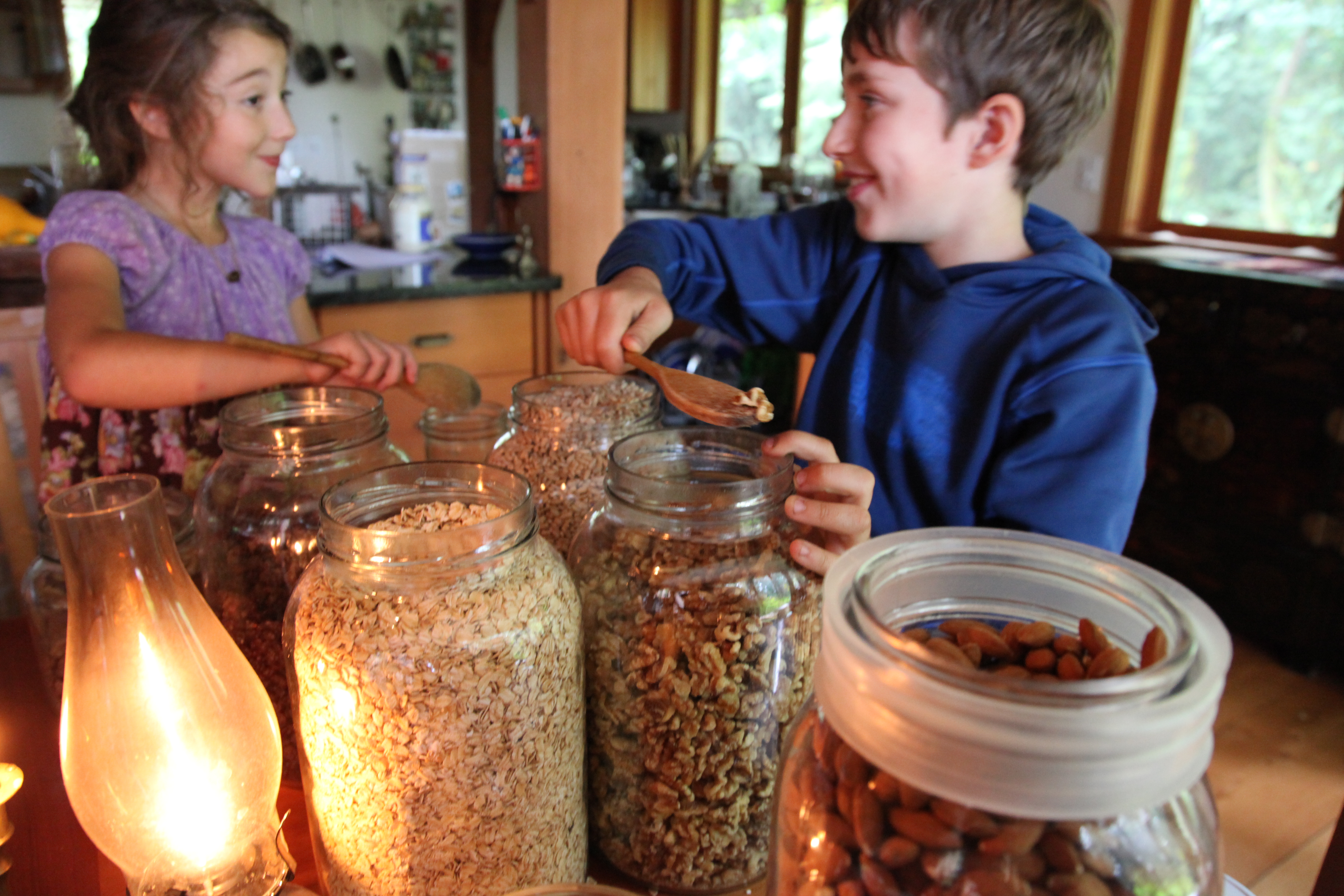
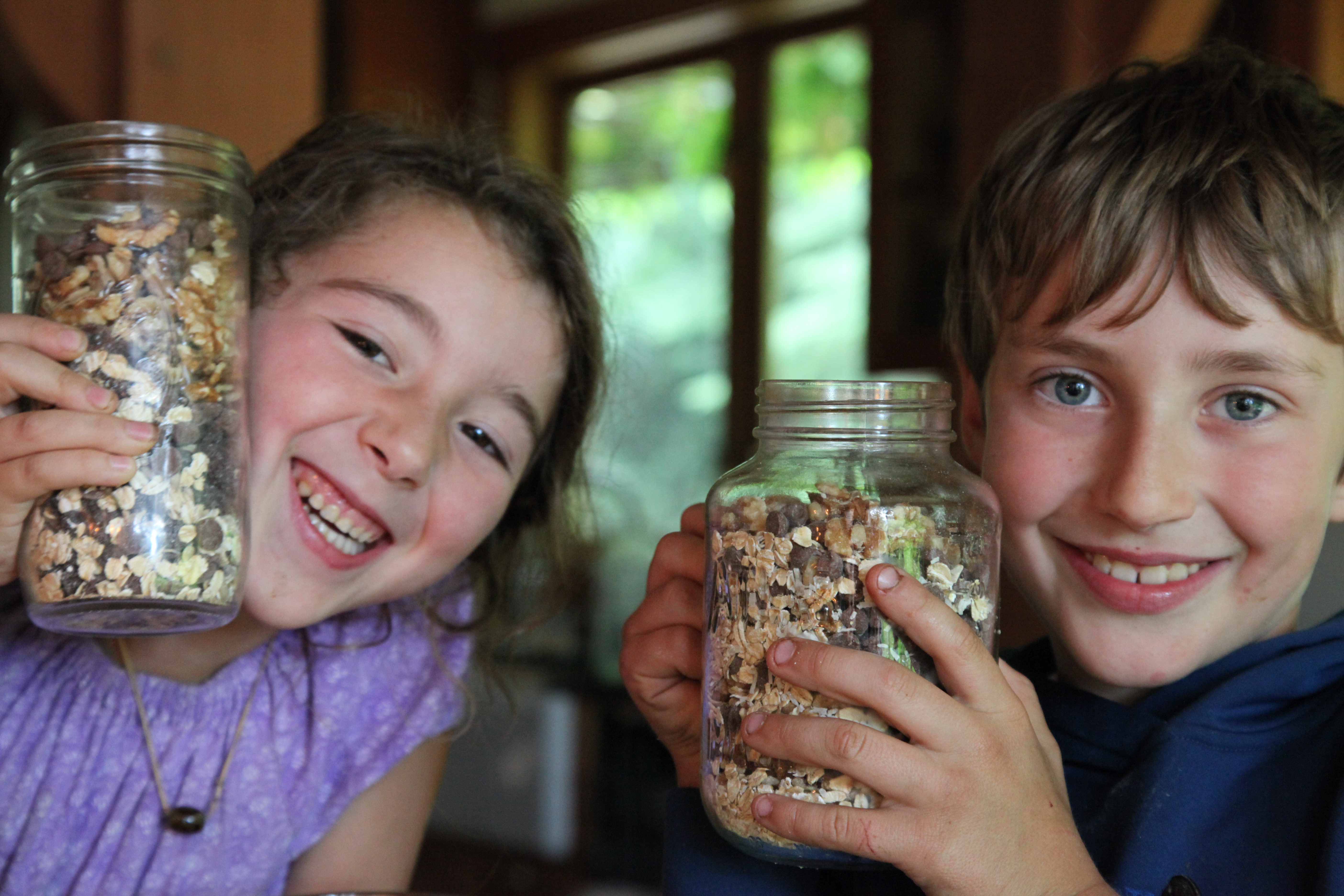
School Snacks for Kids: This one was easy. With nuts, organic chocolate chips, rolled oats, and raisins all bought in bulk, we pulled out the large glass jars we store our bulk items in, put them on the table around the candlelight (no impact lunch!), gave each child his/her own jar and they made personal trail mix jars using wooden spoons for dipping. Each morning they make their own lunches, so pouring from their personal jars into their lunch canteens is easy.

Trail Mixers

Zero Waste Trail Mix

Zero Waste Trail Mix

Pickles: We ran out of pickles last week, a fave of the kids,’ and so we made our own this week! They’re delicious. By bartering 18 eggs last week, we received from our friend Carol some gorgeous pickling cucumbers. It was incredibly easy to make refrigerator dill pickles and we know these will be consumed in a matter of days. We used this recipe, substituting with organic turbinado sugar, and we definitely recommend using grape leaves for pickle crispness!
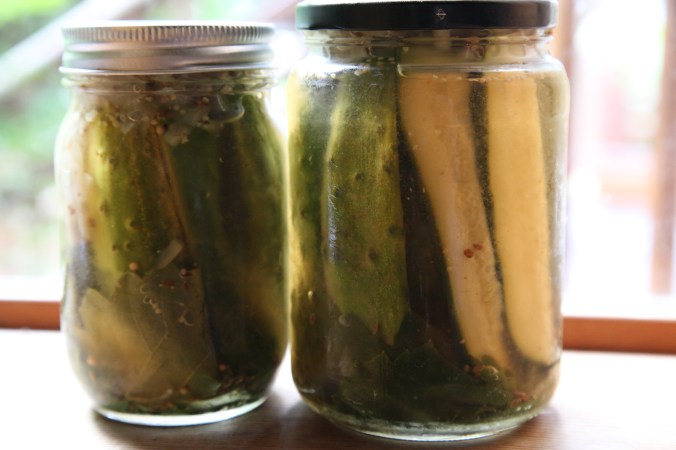
Organic Dill Pickles with Turbinado Sugar

Organic Dill Pickles with Turbinado Sugar

Bread: It’s a twice-weekly tradition. We make all our own bread and are happy for it. It’s yummy, full of great ingredients, and much cheaper than anything we buy from our favorite bakery. We still support our local bakery, occasionally, too. Here’s our killer bread machine whole wheat walnut raisin bread recipe:

1 cup warm water

3/4 cup liquid (combo of egg, yogurt, milk, whatever you’ve got)

1 heaping teaspoon good sea salt

2 tablespoons flax seed oil

3 cups flour (any combo you like)

4 handfuls walnuts (or any nuts)

3-4 handfuls raisins

1 tablespoon honey

1/2 teaspoon yeast

Laundry Detergent: Stay tuned for our zero waste detergent, coming up in a future post.

Month Less Plastic

Plastic-free for a month

Today is the beginning of a new adventure my family and a few other friends’ families have signed up for: a month less plastic. What?

Essentially, the challenge is to reduce our plastic intake, and share what we learn with each other. If you’re interested in this endeavor, please join us, and write in to share your experiences in curbing our toxic love affair with plastic. It permeates parts of our lives well beyond our kitchens and children’s playrooms, and that’s what this adventure is meant to highlight. What will we learn from trying to use less plastic, whether it’s a focus on simply not allowing new plastics to enter our homes or a study on which plastics we use each day and how we can keep them useful so they never end up in a landfill? Will this exercise complicate our everyday rituals or simplify them? We’re looking for more clarity in defining our relationships with the materials we use each day. Are they healthy? Will the things I throw away or recycle end up part of a new plastic item or will they land in a landfill, or the ocean? What impact will they have in the long run?

All solutions to the problem of persistence of plastics in our environment point to less dependence on plastic. So, we’re going to give it a try. A month less plastic.

But first, I need to rewind to the day before the start of our month. Yesterday. I promise, we didn’t head to the store to stock up on all the things made of or packaged in plastic we’ll need for a month. In fact, we went to a local store to purchase much-needed toilet paper and bananas. Bananas don’t grow here so I’m violating the local motif, but we’re known to do that with a few of our staples: bananas, rice, flours, nuts, avocados, coconuts.

Organic Bananas?

Bananas came in two varieties: organic and non-organic. We aimed for the organic bananas and, to our dismay, found they not only had a couple of organic stickers on them fashioned in the shape of a leaf with a drop of dew on them (made of plastic) but they also had a large strap of plastic tape around the bunch. Adding insult to injury, a ‘sock’ of clear polyethylene plastic was stuck to the stem connecting the bunch together. One plastic over-glued sticker claimed the bananas were “raised by mother nature.” How lovely it will be to see that sticker mushed together with all the other discarded plastics, decidedly not raised by mother nature, in our local landfill in about a week.

Organic/Non-organic, Plastic/no-plastic

Organic/Non-organic, Plastic/no-plastic

On the other side of the produce island, we could see the non-organic “regular” bananas had only a single paper sticker on each bunch. The decision was a no-brainer. Based on our month less plastic agenda, the non-organic bananas ruled out. The organic specimens were a paradox per bunch staring us banana-loving monkeys in the face.

Raised by Mother Nature

We leave you with a short film dedicated to the launch of our month less plastic. It was produced, shot, written, directed, composed and performed by our up-and-coming one-boy film-making machine. I’ll qualify this introspective film by simply saying that it was made entirely without my knowledge. While I was attempting to make a film about how easy it is to shop at your local store and generate zero waste, this film was being made. Sadly, after shooting, editing, and completing our very upbeat film about how one can succeed in zero waste shopping, I was contacted by an executive of the local store and discouraged from pursuing the film any further. We hope you enjoy the film that will have to take its place:

Rag Pickers of the Rotary Auction

They raise hundreds of thousands of dollars in a matter of days, all to the credit of local volunteers and dedicated rotarians. Bainbridge Island’s Rotary Club puts on a rummage sale and auction each year that’s so big it can be seen from Google Earth’s satellites. What’s their secret? Our stuff. Our unwanted mountains of household items we don’t need anymore, but still have a long life in them for others to use. Thousands of home/kitchen/garden things are dropped off each day for 5 days, and all are shopping-carted over to the various departments of the sale: housewares, arts & crafts, sporting goods, children’s books, lawn mowers. It’s a shabby chic department store for a day with prices you can’t beat anywhere in the northwest.

I’m writing this post because we just spent the last week volunteering at the Auction, creating a special job for ourselves: dumpster duty. We attempted to divert as much recyclable and reusable items from that 40-yarder as we could. It was a race to keep up with the myriad trash bins that were being thrown in without our editorial input. The end result: we made a huge dent on the amount of waste to be shipped and dumped in Bremerton, but we’re troubled by the amount of usable and recyclable materials that still made it in. Perhaps a whole shipping container-full.

We need more rag pickers. The effort is exhilarating, a modern archaeological peek into our material culture and the resources we find of little use that would be a boon to another culture or even your neighbor down the street. There are lessons to be learned, but we’re still learning them. Please watch our movie and give us your ideas, your thoughts on how we can stop the daily flow of resources into our landfills.

Life Lessons from the Village

Living Simply in the Himalaya

Voluntary simplicity, back-to-basics, modern homesteading, opting out, just plain living: these are the terms given to a modern movement toward more sustainable living practices. The tenets are based on old values before the day of single-use throw-away items and readily available running water, electricity, home heat, packaged food, and gas at the pump. The practices are from the days when people had no choice but to grow their own food and harness the resources around them: collecting water, power and heat from the sun, food from the soil, products like eggs and honey from the critters we cared for. In this country, we look back toward our great grandparents’ age to re-learn the old less-harmful ways of living. But in many cultures around the planet, those ways are still practiced out of necessity and due to remoteness from a metropolitan center.

Through the eyes of a 3-year-old

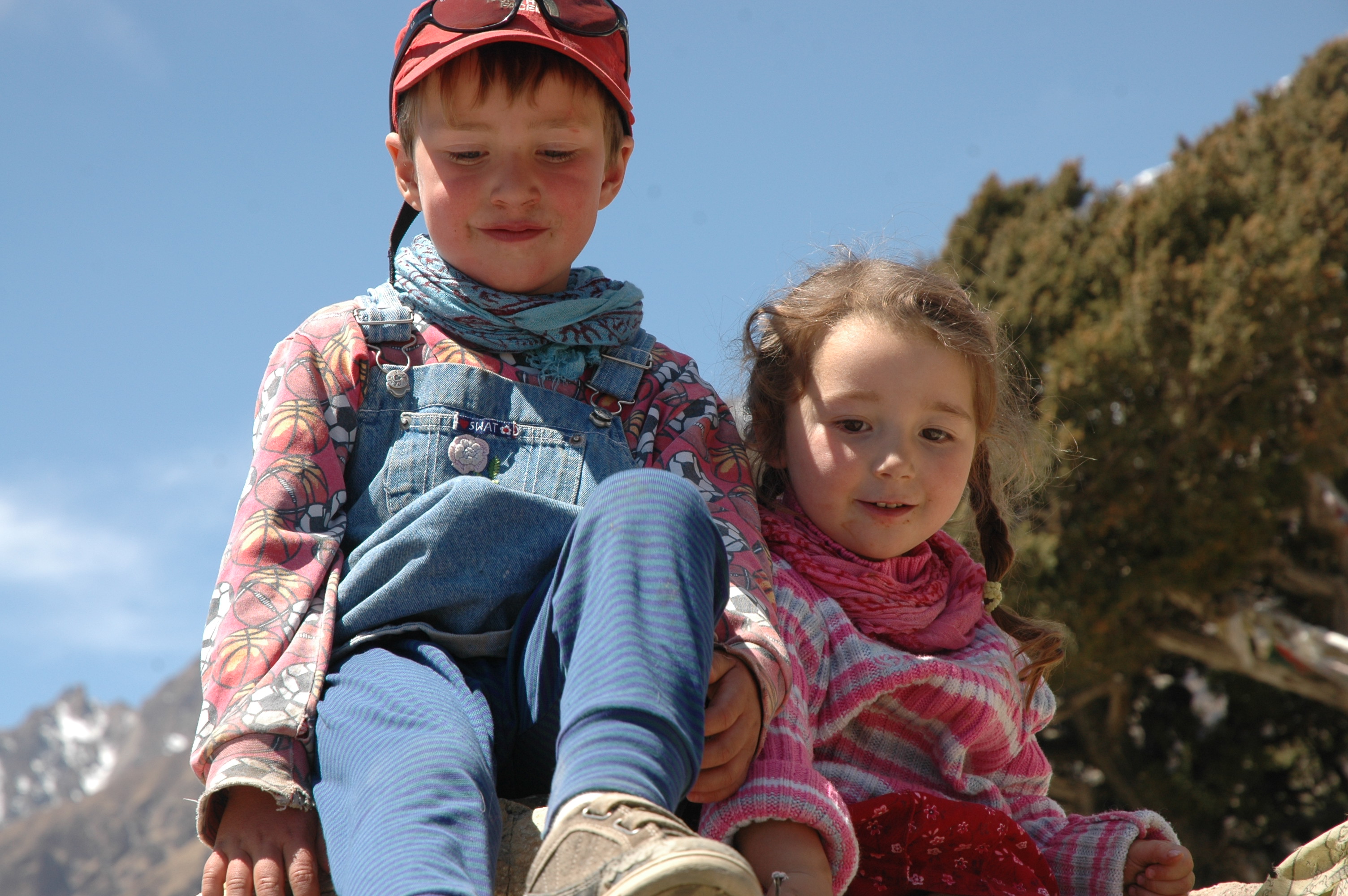
We first took our children to Nepal when they were ages 3 and 18 months. This first trip, for us, was seminal in its impact upon their lives. Our daily rhythms were occupied by the business of living, free of phones, cars, computers, and central heating. Through our friends, the Sherpa community of Kunde, our children learned what it meant to not have running water in our home, instant food cooked over a stove, or delivery by car to a village 10 miles away. We made our own food from scratch and only ate the produce that was stored over winter past the harvest season: potatoes.

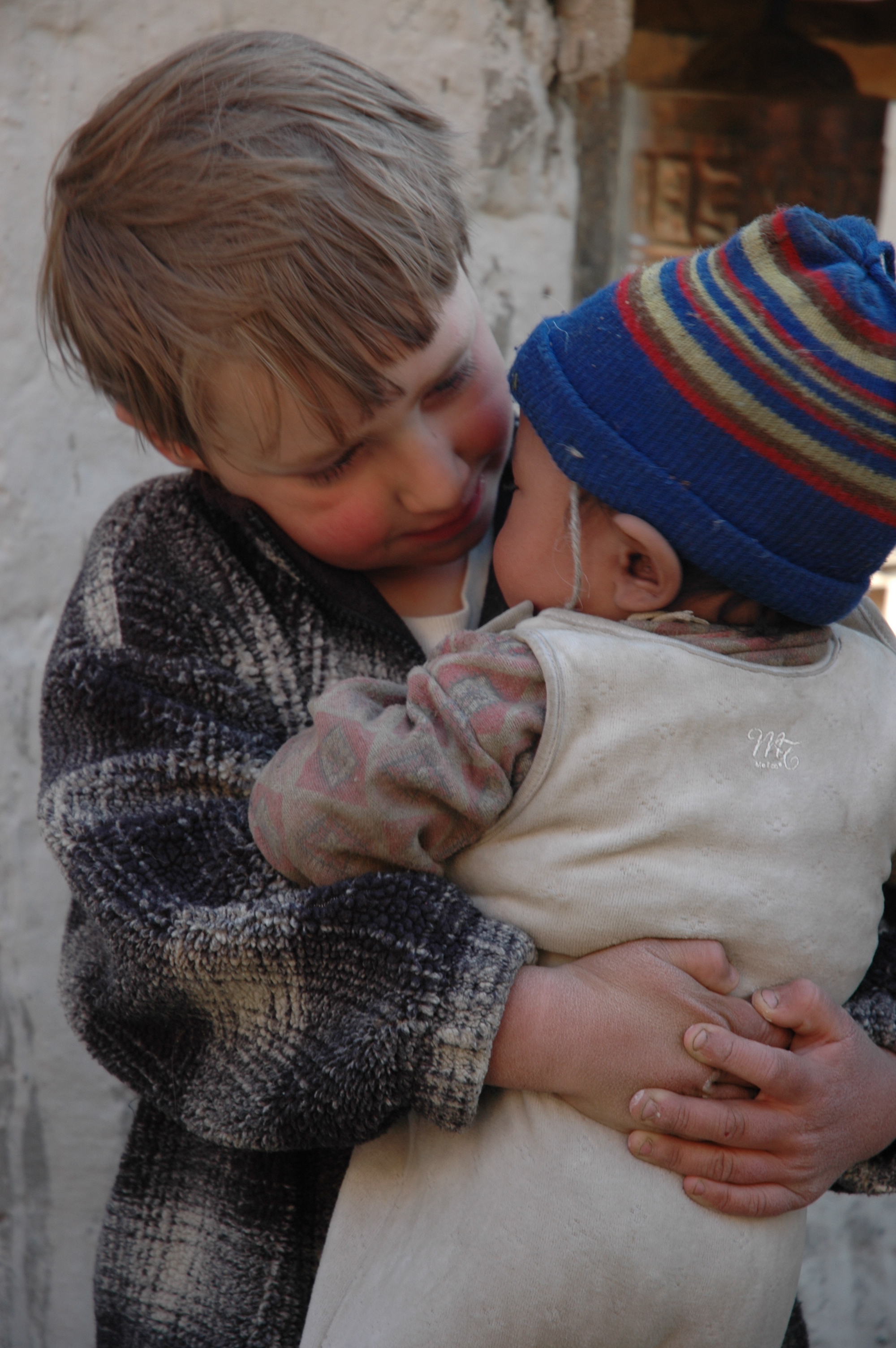
Daddy and Baby, 15,000 Ft

It was a very special time for us and formative for one 3-year-old mind. This little film tries to capture that moment, which still informs us on how we hope to live the rest of our lives:

100 Foot Diet

Winter Survivor: Collard Greens

It’s the ultimate homegrown challenge: eat at least one meal a week, or the majority of your ingredients, from foodstuffs you can find on your own property. No, that doesn’t include the stuff you have in your cupboards that came from Chile. I’m talking about the food you’ve grown, farmed, and the delectables you didn’t even know were edible but are sitting in plain sight, growing right in your lawn, ditch, or woods.

Forager's Quiche

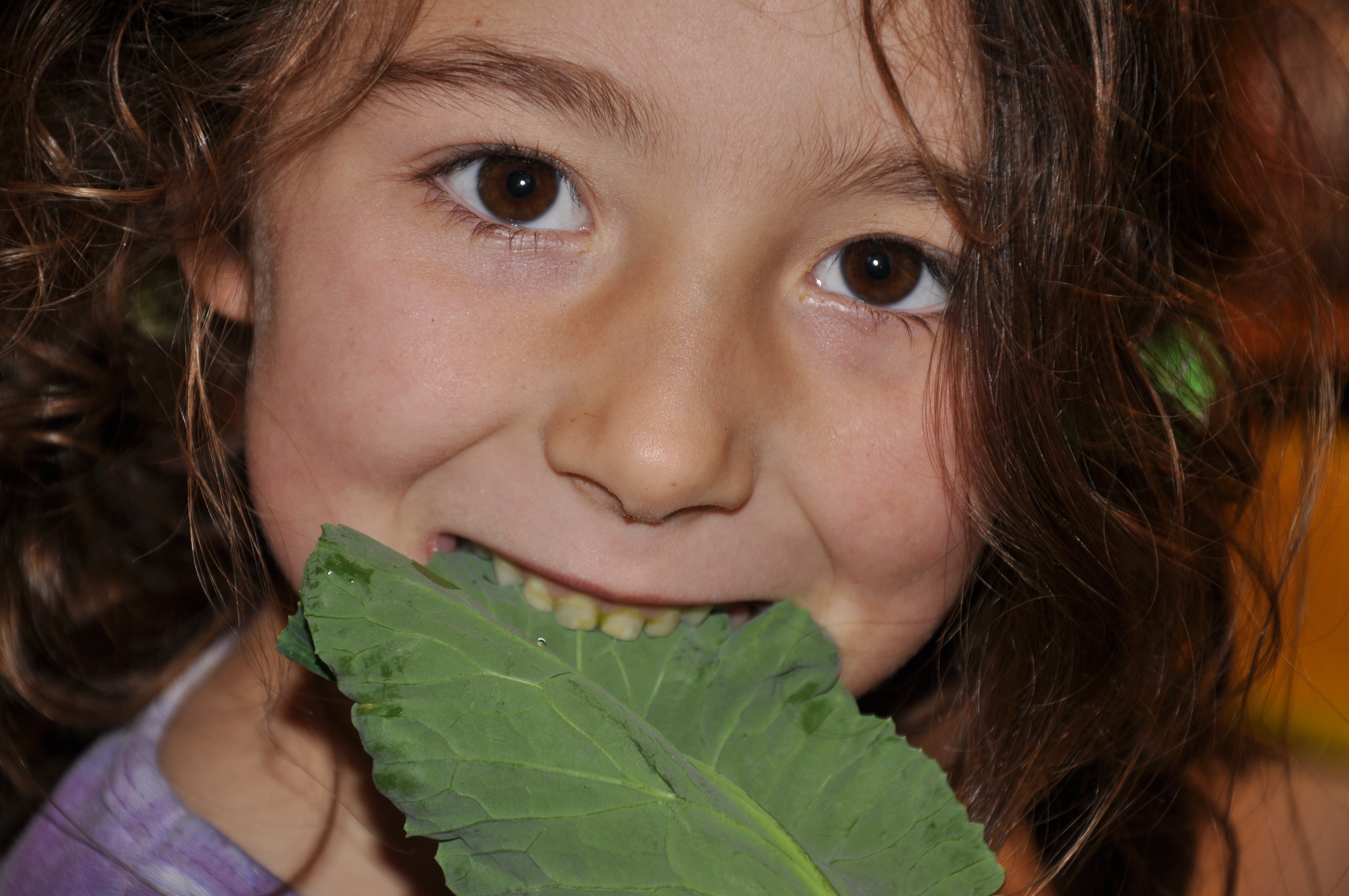
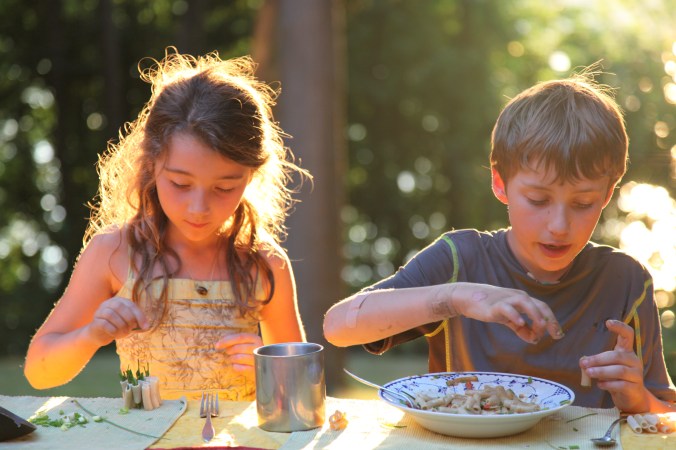
The kids and I are natural foragers. Since that amoebic age when they mostly crawled across the dirt, our little ones have put anything that looks edible in their mouths for a taste. Luckily, that urge to test is still intact. This week it’s been salads made of the weeds we didn’t intend to grow while we were away for 2 months in Nepal — if you can’t beat ’em, eat ’em. And these weeds have been utterly delicious: young dandelion leaves, bitter cress, water cress (okay, that’s in a nearby ditch), plantain, mustard, dock, mint, and stinging nettle. The nettle goes in soups and pestos. Even the potatoes I had thrown in the worm bin hatched new ones (potatoes, not worms) while we were away. Our little homestead just keeps producing in our absence and we’re so very thankful.

These amazing collards have been producing greens for 9 months

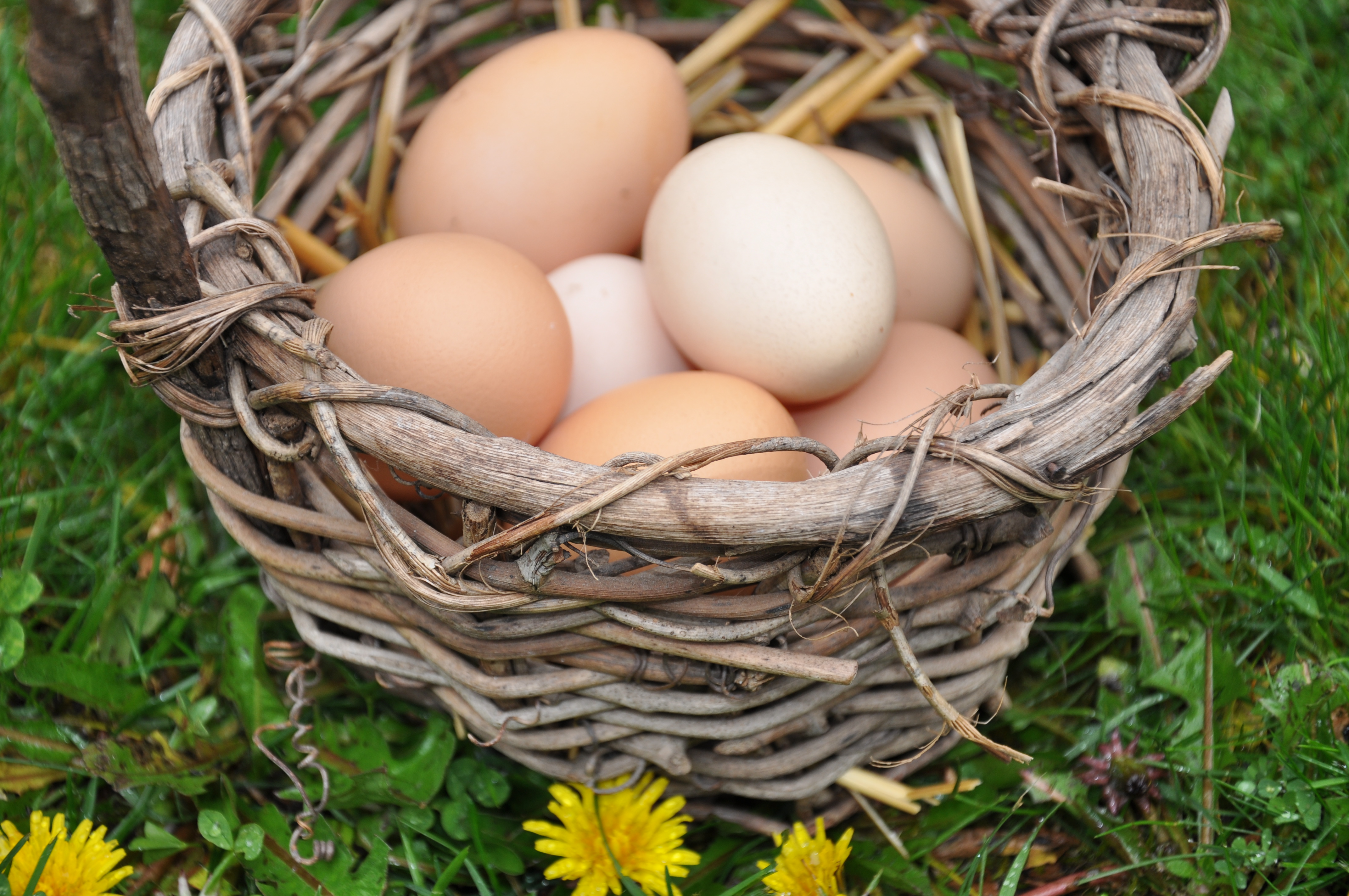
The collards and kale kept going, although they’re as leggy as a runway model. And the chickens are laying 10 eggs a day. So, quiche and frittatas are a regular menu item.

Eggs in Dandelions (great quiche combo)

Even the honey bees are offering up some of their excess gold. Amazingly, one hive of ours didn’t even touch their extra super of honey we had stored above their brood. A mouse, of course, got in a partook in the elixir, but we’re planning on harvesting a few frames for ourselves in the next week to enjoy the honey on our homemade zucchini bread. We pulled out the last of our shredded zucchini from the freezer a few days ago.

Shredded Zucchini from the Garden, 8 Months Later

So, for those who’d like to take the challenge, give the 100 foot diet a try. Go forth and search out those oyster mushrooms, maple blossoms (they’re in season now), and arugula that re-seeded itself just down the path. Oh, and I think your canned, dried, or frozen home-grown produce from last summer definitely counts! Explore and live off the fat of your land.