Himalayan Megaquake: The Past Informing the Future

If there’s one big thing I learned from the April 25, 2015 magnitude 7.8 earthquake in Nepal, it’s that in the face of tragedy and hardship, people make do, learn from the events that transpire, adapt, and forge forward in new and often improved ways. The Nepalese people have been building and rebuilding after major earthquakes for millennia, but it doesn’t mean this seismic event was run-of-the-mill. The Himalayas were made by the world’s most colossal tectonic convergence and mega earthquakes have played the leading role in the formation of the dramatic landscape.

Few Nepalis today have lived through a big quake, and now we know there are secondary affects of large earthquakes in such a vertical landscape: Avalanches that can take out entire villages, glacial lake outbursts that can cause great flooding, and landslides that can block high-flowing rivers.

The Himalayan Uplift Zone in the Nar-Phu Valley © Liesl Clark

The Himalayan Uplift Zone in the Nar-Phu Valley © Liesl Clark

Because major quakes only happen every 80-100 years in Nepal, people forget about the severity of the great quakes after a generation and then homes are no longer built to outlast the rocking, jolts, and permanent elevation changes an earthquake can bring about. What we’ve found especially humbling is the resourcefulness of the millions who live outside the nation’s capitol. Traditional homes are constructed from the resources at hand: Rock, mud, and less often, wood. And in some villages, there are stacked stone homes that withstood a shaking that brought every building around them down. Why did those buildings, and the people inside, survive while others didn’t?

The Village of Nar, Stone and Mud Mortar, Pre-Earthquake © Liesl Clark

The Village of Nar, Stone and Mud Mortar, Pre-Earthquake © Liesl Clark

When I was asked to make a film for NOVA about what the scientific community has learned from the earthquake, the assignment was humbling and also a concern. There’s been a lot of great science going on behind-the-scenes, post-earthquake. Which projects should we focus on? And, how can we address, without sensationalizing, the devastating loss of more than 8,800 people?

We sure feel helpless when an earthquake half way around the world rocks our loved ones, but for everyone I know who lives outside Nepal, who has had any intersection with this beautiful country, those first few weeks after the earthquake were grueling. The news coming out of Nepal was hard to fathom, and in the months afterward, indeed even now (up until January 4, 2016), over 423 earthquakes of magnitude 4 or greater have been felt by the people residing there.

I can’t go into detail about the film, as it’s about to air, on January 27th, 2016 at 9 pm on NOVA/PBS (check your local listings! Some markets may have different and additional broadcast times.) But what I can say is that there’s a clue to the survivability of some structures in the quake and the absolute destruction of others. It can be found in the old part of the Hanumandhoka Palace, a structure built hundreds of years ago. The multi-story original palace structure, in general, withstood the strong shaking of the quake, while the newer wing of the palace, built more recently, is on the verge of collapse.

There's Timberlacing Here. The Secret to a Palace's Success in Surviving an Earthquake. © Liesl Clark

There’s a Clue Here. The Secret to a Palace’s Success in Surviving an Earthquake. © Liesl Clark

We can learn from our predecessors, who lived through past quakes. Old technology is often better than new. Look for examples of what works from our past, to pioneer the simple engineering solutions of the future. This is what people have learned over generations and what we strive to teach in this blog.

Rebuilding a Rubble Stone Home Using Innovative Ideas © Liesl Clark

Rebuilding a Rubble Stone Home Using Innovative Ideas © Liesl Clark

There’s a story of deep commitment and ingenuity in the film about to air, from the scientists, engineers, and architects who have worked decades to warn of the inevitability of earthquakes here, to the specialists in Nepal who have been hands-on, writing about the Nepali innovations of yore and today, to the people themselves who survive, adapt, innovate and thrive no matter what comes their way.

These are the lessons our children take home with them, better for having spent precious time in the lap of ingenuity and compassion.
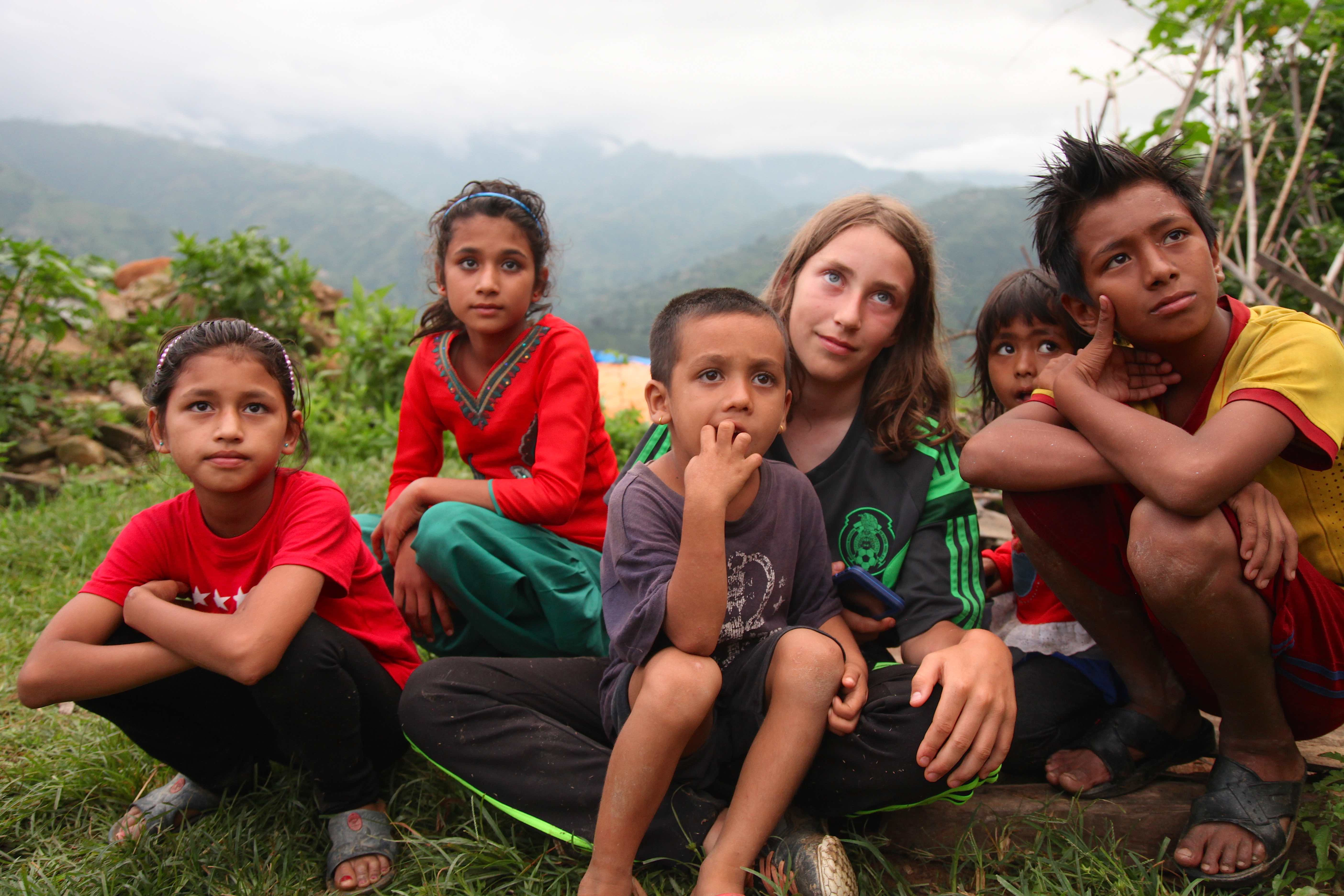
Manhku Kids © Liesl Clark

Manhku Kids © Liesl Clark

If you have the time and interest, our film on NOVA airs at 9:00 pm on PBS on January 27, 2016. Hope you have a chance to watch.
Reduce, Reuse, Recycle, Recover Batteries

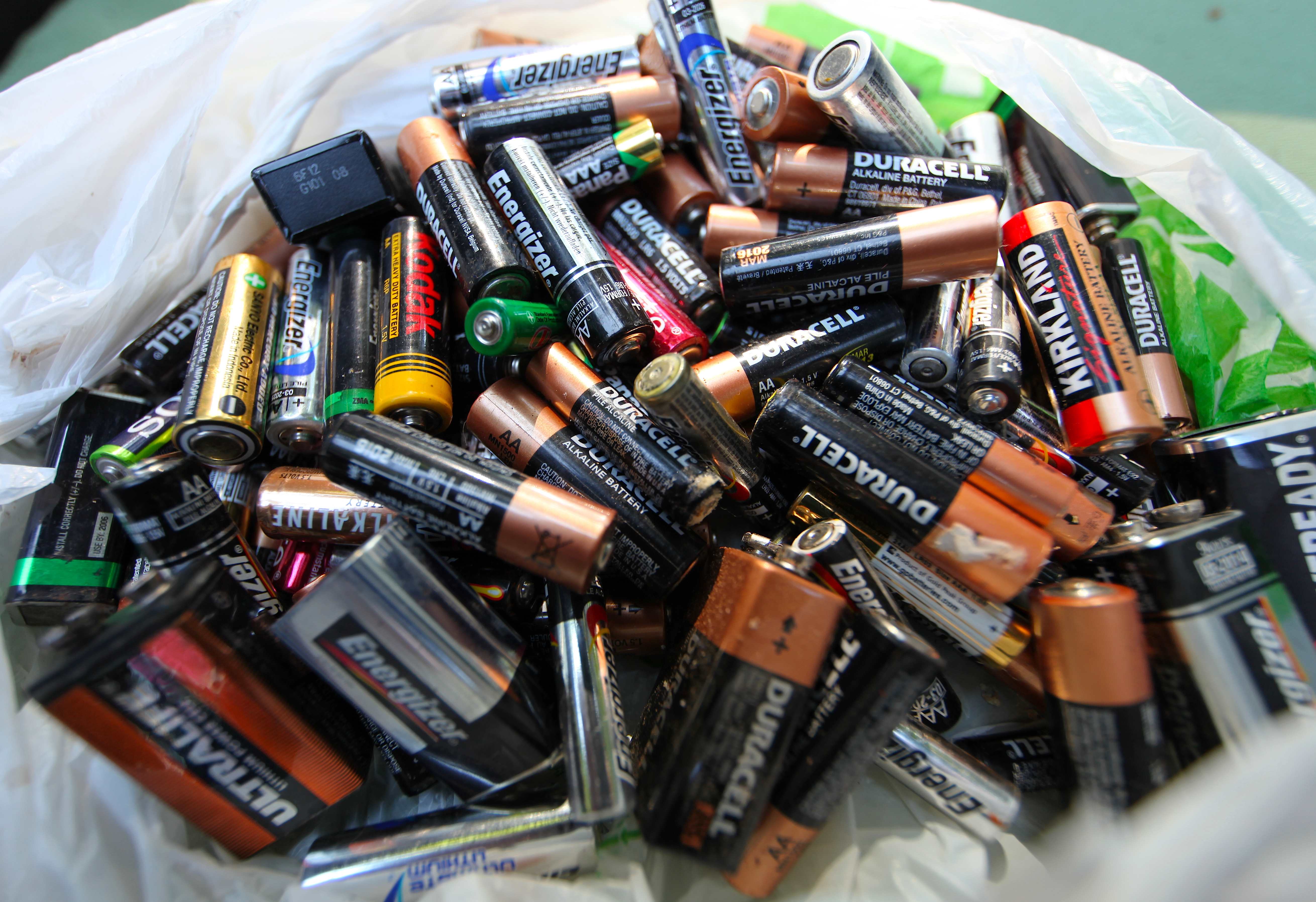
Batteries © Liesl Clark

The Batteries We Recycle © Liesl Clark

The average American has at least 10 batteries in their possession at any given time and throws away 8 batteries per year. That statistic feels low to me. Members of my household blast through many more than 8 every few weeks. We try to use rechargeable batteries, because they’re reusable, but in some remote parts of the world where we work, we just need to bring disposables with us because the charging of batteries requires power.

Should we recycle batteries? Absolutely! The mercury and cadmium in our batteries can wreak havoc on the environment. According to the Environmental Health and Safety Organization, “In landfills, heavy metals have the potential to leach slowly into soil, groundwater or surface water. Dry cell batteries contribute about 88 percent of the total mercury and 50 percent of the cadmium in the municipal solid waste stream.”

By recycling batteries, we’re ensuring those heavy metals are captured again and kept from our watersheds. Whether they power our cell phones, laptop computers, or flashlights at night, batteries are an essential part of our everyday lives. Finding the nearest place to dispose of them is now easier,  through your municipal recycling transfer stations and facilities like Ikea for alkaline batteries and Staples for rechargeables and cell phone batteries.

Here’s an amazing resource from Environment, Health and Safety Online that will clue you in about all of the different types of batteries and how they impact the environment. They also highlight how to safely dispose of them. For example, those tiny little button batteries that go in your watch or in some toys should go to your household hazardous waste facility. Them things are toxic!

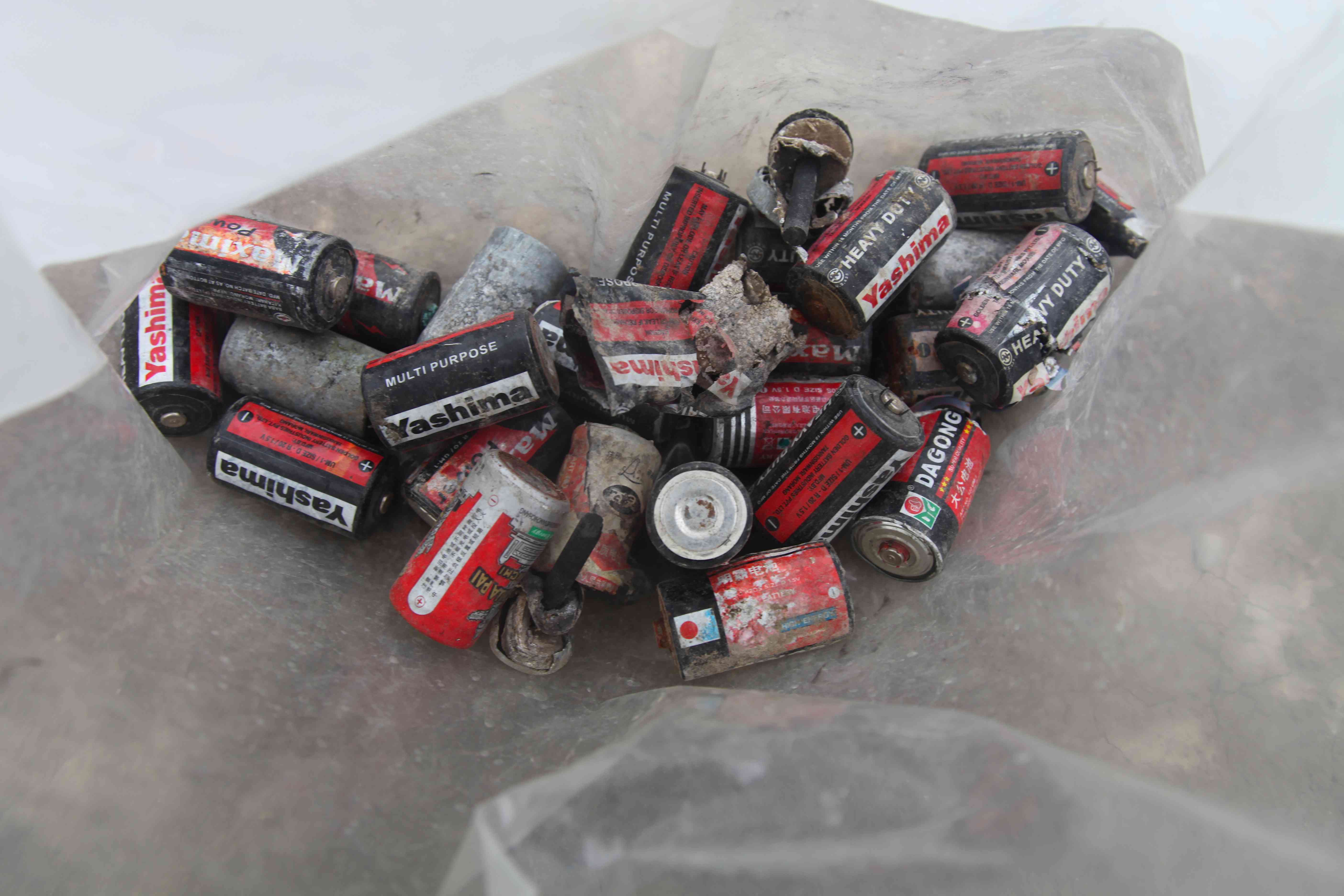
In Nepal, where we travel each year, batteries are what enable us to make our documentaries for National Geographic and NOVA. Without that stored power, we couldn’t run our film equipment. Batteries, whether rechargeable, alkaline, gel cell, or lithium, are essential to our mission. Each one is carried back down from the mountains and reused on future expeditions. The spent batteries are taken home with us for safe disposal since there’s no battery recycling in Nepal. In the Himalaya, we’ve seen batteries regularly discarded outside villages in the rivers and streams.

Over the years, we’ve worked to set up a battery recycling program in the kingdom of Mustang, one of the highest watersheds in the world. We’re trying to inspire villages to collect their batteries and stockpile them. Trekking agencies heading out of the kingdom with their clients can take a bag or 2 of these batteries downhill to be disposed of responsibly in Kathmandu or Pokhara, two of the largest urban centers in Nepal. Better yet, trekkers could take batteries home with them to recycle them in their home countries. The crisis of battery waste building-up in the pristine wilderness needs to be addressed by everyone who lives and travels through these fragile environments. We pick up batteries in the villages we stay in, and do a cleanup with villagers whenever we can.

Prayer Flags in the Kingdom of Mustang. Photo © Cory Richards

Prayer Flags in the Kingdom of Mustang. Photo © Cory Richards

The next time you see a battery lying on the ground, whether it’s in a parking lot, on a trail in the wilderness, or outside a rural village, think of our planet as one interconnected ecosystem. All water, and whatever might have leached into it, travels downhill. If we address, globally, the most toxic materials first and then work our way down the waste chain to the more inert ones, we have a place to start and a set of priorities to follow.

Batteries found in just a few minutes of searching amidst the town dumping site just outside the walls of the royal city of Lo Manthang. © Liesl Clark

Batteries found in just a few minutes of searching amidst the town dumping site just outside the walls of the royal city of Lo Manthang. © Liesl Clark

If  you’d like to help us, please donate, even a few dollars, to our battery rescue operation through the Alex Lowe Charitable Foundation.