Love of Learning

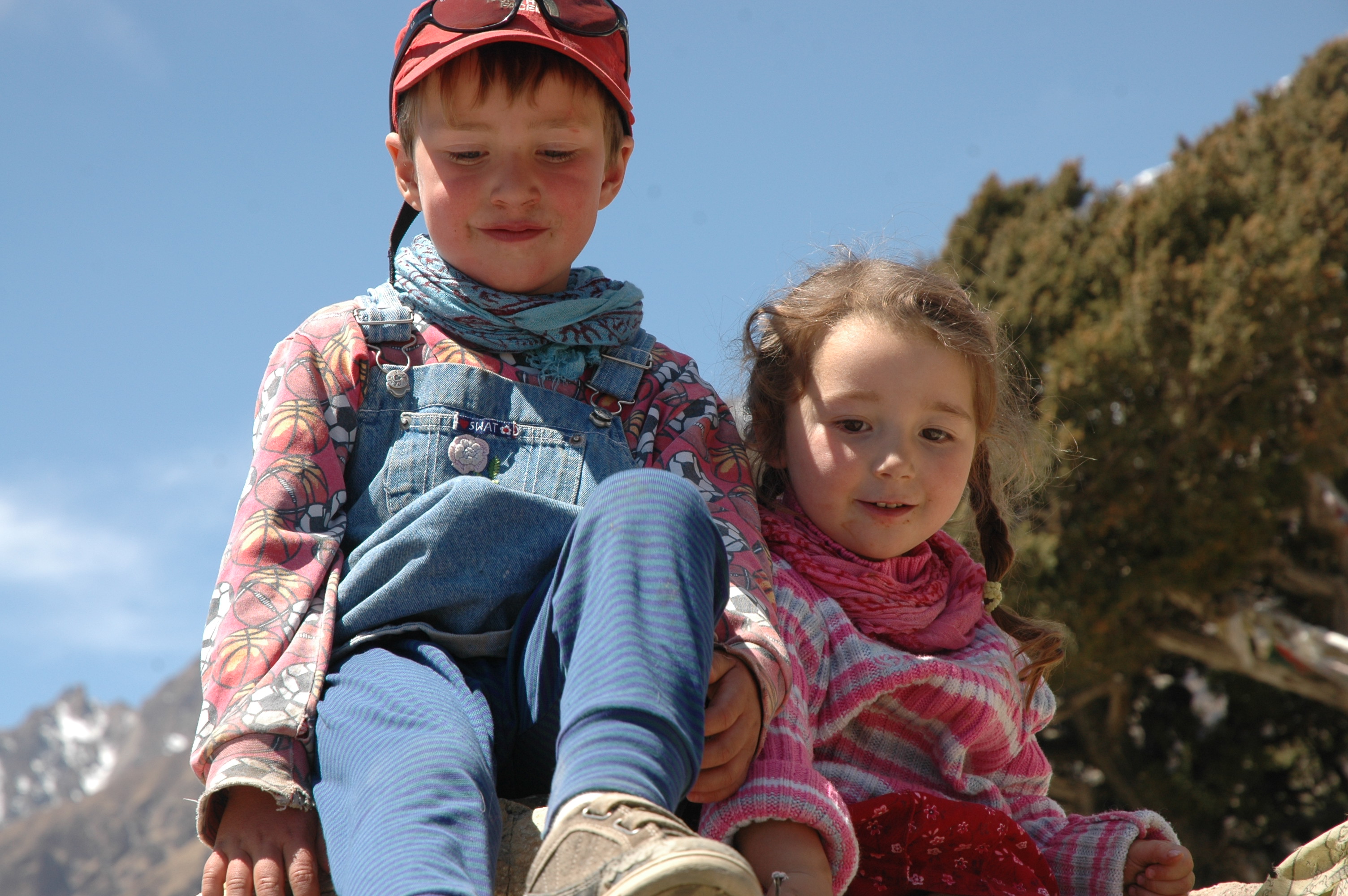
Delivering Books to the Ani School in Tsarang, Upper Mustang, Nepal

Delivering Books to the Ani School in Tsarang, Upper Mustang, Nepal

If there’s one thing I hope to accomplish in life that’s lasting, it would be to teach my children (and any I am lucky to know) a love of learning. We have been fortunate to witness up-close our children’s exploration of the world through homeschooling, our first few years, and now Montessori, which allows children to explore their interests fully.

Here’s a little film made a year ago, by our 7 & 5 year-olds for their science fair. Hands-on learning with a passion for fun. Can you guess what the mystery animal is?

No Impact Week: Waste — Pet Waste that is

Can Pets Go Zero Waste?

Can Pets Go Zero Waste?

Those of you with pets: admit it, you’ve had to think about it. What do we do with their doo? Plastic bags headed to the landfill loaded with methane bombs comes to mind. Not only is the plastic egregious, but filling it with toxic waste to eventually seep into both our atmosphere and watersheds makes no sense. Really, isn’t there a better option? There is.

I always figured having the little furballs go all-natural and eliminate all-waste in our back 40 (well, it’s really someone else’s back 40) made the best sense, but when you read all about it (pet poop, that is) it becomes clear the stuff is full of things like toxiplasmosis which is darnright nasty for the environment, especially for our waters, and we live just a hundred yards or so uphill of Puget Sound.

I’ll even admit to thinking we could try to potty-train our kitten. If you haven’t seen this bizarre practice before, do check out the YouTube videos available on the subject. It’s a bit disturbing, but makes excellent sense. Our furry friend, Willa, got way into it — the toilet, I mean. After falling into it a few times, she sent us a clear message she just didn’t like the porcelain throne and opted to do her dukeys all over the bathroom floor. Seeing her scratch at the commode as if it were some form of kitty litter was pathetic to watch, so we converted her back to an all-American wheat-loving litter-using furry feline in no time and emptied the “clumps” into a re-used plastic bag with that tinge 0f guilt, once again.

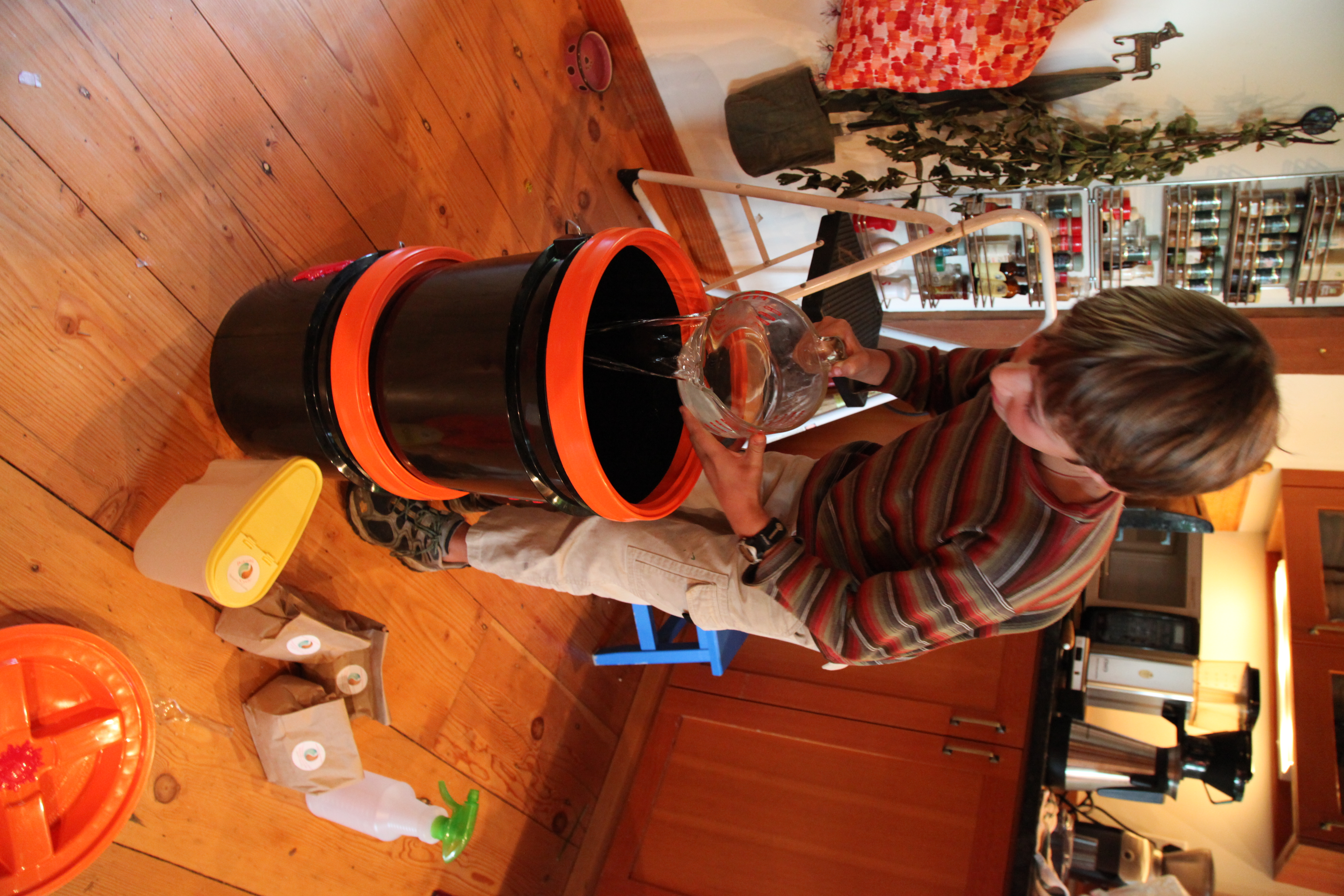
Fast forward to about a year later, when we stumbled across Bokashi and their pet waste composting system which promises to turn Willa-waste into fuschia-food. So, day-before-yesterday, in honor of No Impact Week’s waste day, we assembled our Bokashi composter with excitement.

Bokashi Pet Waste experiment Day 1

Bokashi Pet Waste experiment Day 1

It’s a chemistry experiment that only children could love, and although those big plastic buckets rub me the wrong way, this system should work for life, converting the brown and smelly into gorgeous garden gold for perennials. It’s not for the veggie garden, doo note please, for obvious reasons. Be sure to check out Bokashi’s website to learn more about their systems for pet waste and composting in general. They’re closed systems, so they don’t emit methane. And as for those plastic buckets, if taken care of properly, they’ll be put to use….forever.

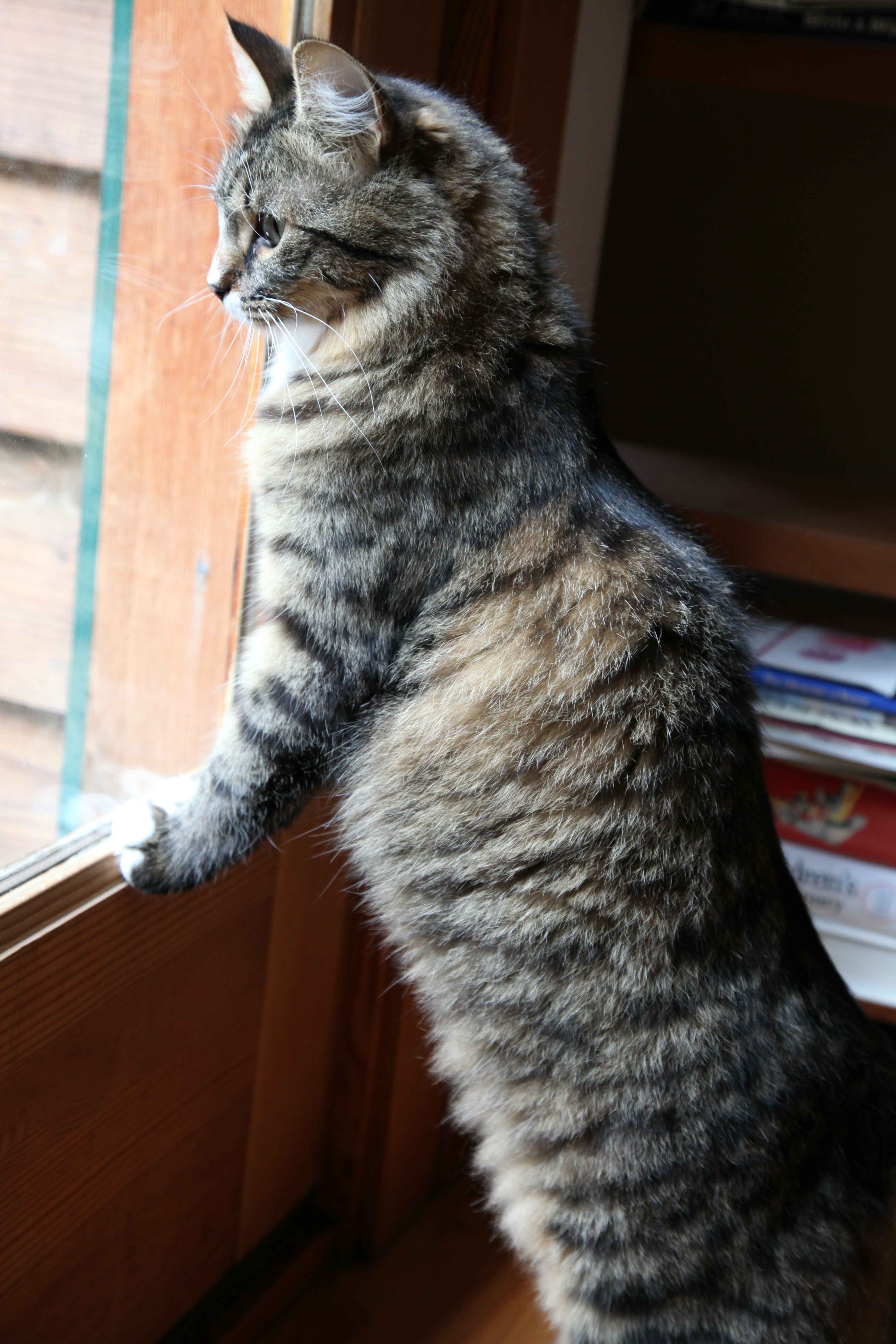
Zero Waste Kitty

Zero Waste Kitty

No Impact Week: Consumption

Being Creative with New Recipes

Being Creative with New Recipes

This week Yes! Magazine has launched a project called No Impact Week, that people the world over are encouraged to participate in. We couldn’t resist, and this post is a summary of Day 1 — all about consumption and literally where this family has been experimenting over the past month. Can we find new ways of reducing our over-all consumption of goods, energy, and water?

Yesterday was a good day for us, as the No Impact project got us started on several new ideas. We were asked to make a list of what we needed this week:

Suet for birds

School snacks for the kids

Pickles

Bread

Laundry detergent

Food wasn’t deemed by the project as necessary to put on the list, but we’re trying to grow/make most of our own food and so we think it’s a good exercise every few weeks to consider whether you really need to go to the market to purchase food that week. Is there enough in your larder to support your family’s needs for the week? If so, save yourself the trip and make do. You’ll likely find new recipes you never dreamed of making because you’ll have to work with the veggies and foodstuffs you have on hand. We decided to take our list of needed items and, well, make them!

Making Suet!

Suet for Birds: Okay, I admit we purchased the beef fat a day earlier in preparation for the suet-making experiment. But the truth is, we’ve been trying to figure out a zero-waste option for suet. It’s now fall and the birds outside desperately need more fat in their diet, to help them through the winter. At our local store, the butcher happily put chunks of beef fat (about 2 lbs came to $2.00) in a large jar I brought. At home, we rendered the fat, strained it through a fine mesh colander, then mixed in raisins, peanuts, whole grain chicken feed, hulled sunflower seeds. We spread it all out in a glass pan and…there’s suet enough for at least 2 months for our woodpeckers, Steller’s Jays and chickadees. When suet is out, even the Pileated Woodpecker comes right to the window.

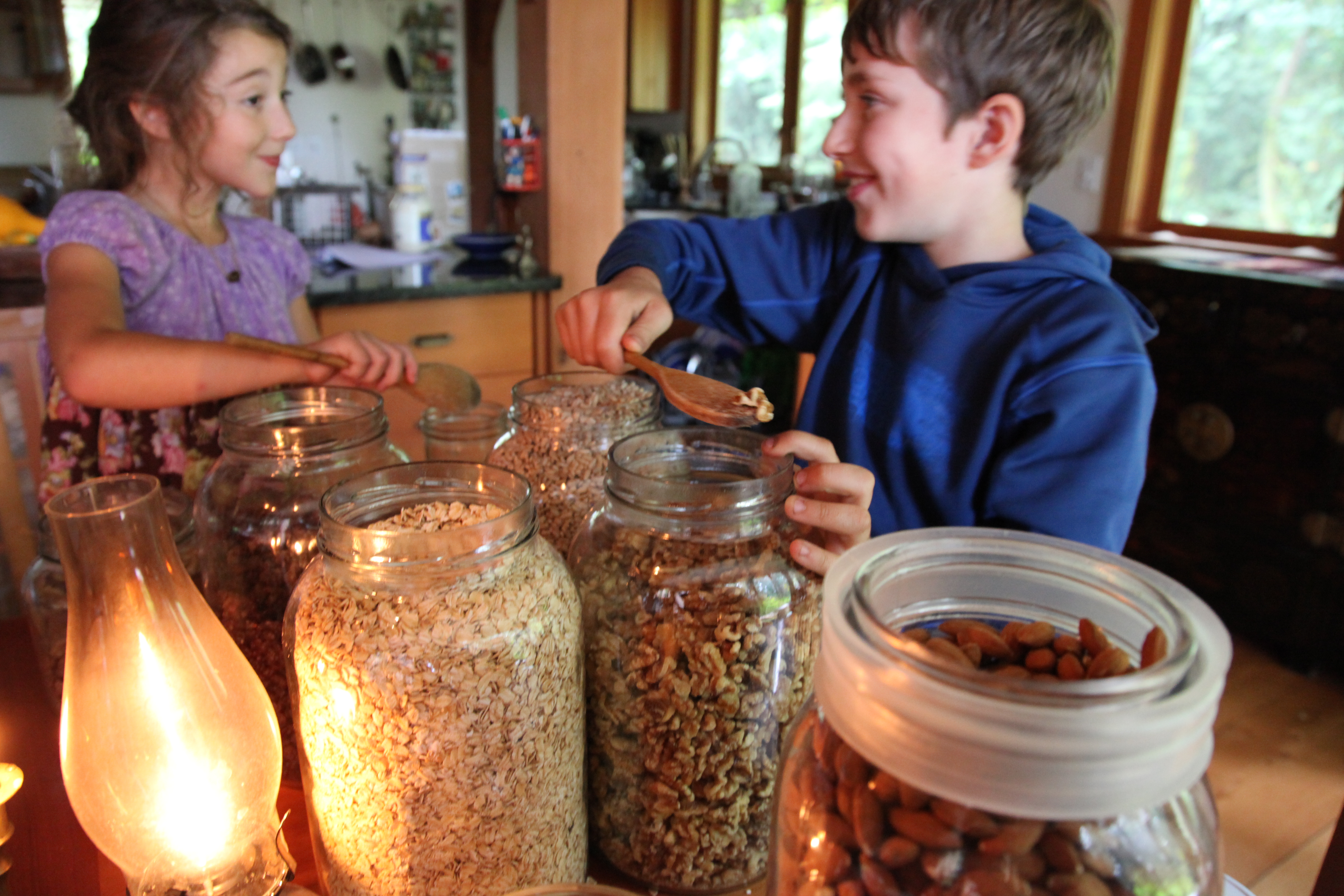
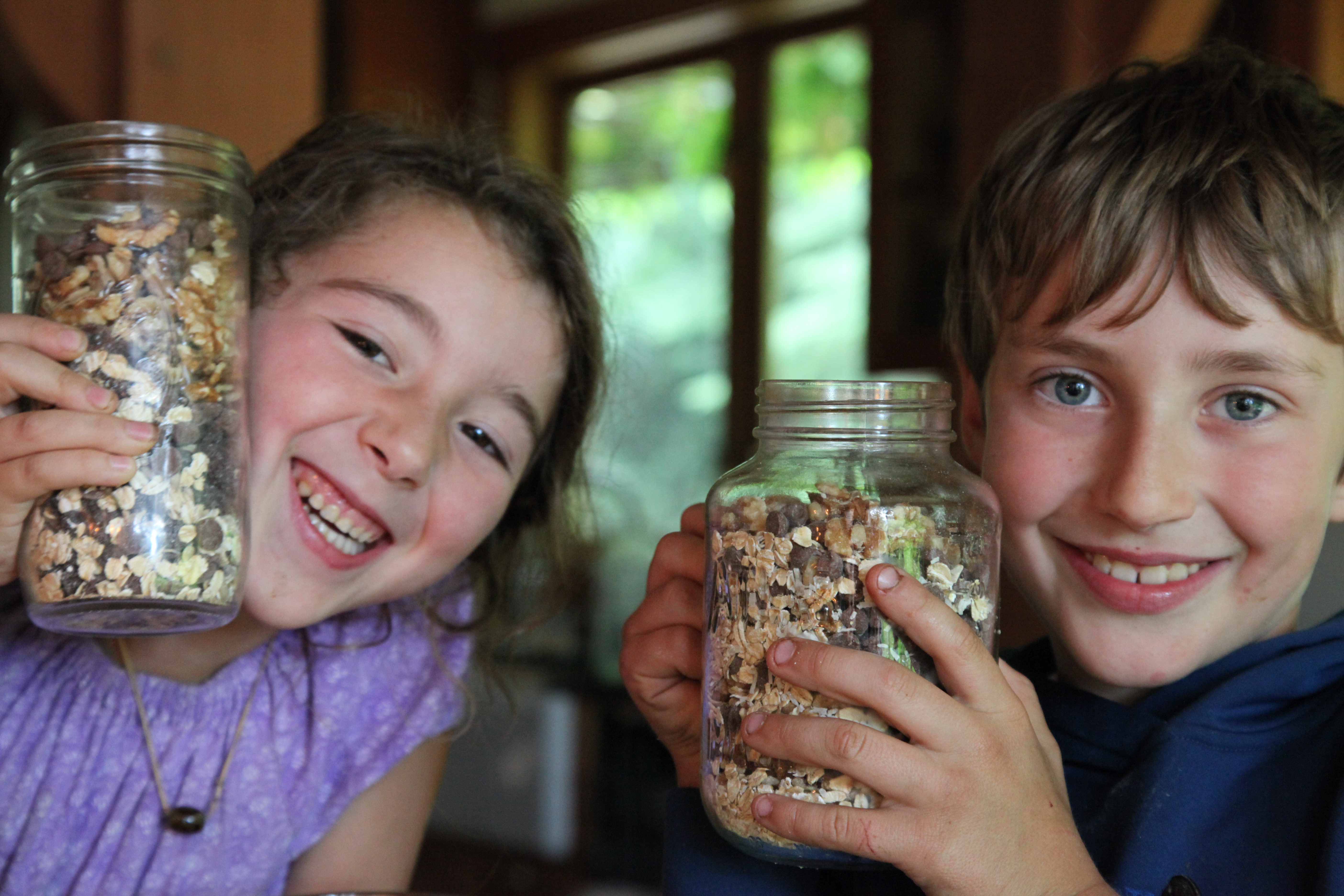
School Snacks for Kids: This one was easy. With nuts, organic chocolate chips, rolled oats, and raisins all bought in bulk, we pulled out the large glass jars we store our bulk items in, put them on the table around the candlelight (no impact lunch!), gave each child his/her own jar and they made personal trail mix jars using wooden spoons for dipping. Each morning they make their own lunches, so pouring from their personal jars into their lunch canteens is easy.

Trail Mixers

Zero Waste Trail Mix

Zero Waste Trail Mix

Pickles: We ran out of pickles last week, a fave of the kids,’ and so we made our own this week! They’re delicious. By bartering 18 eggs last week, we received from our friend Carol some gorgeous pickling cucumbers. It was incredibly easy to make refrigerator dill pickles and we know these will be consumed in a matter of days. We used this recipe, substituting with organic turbinado sugar, and we definitely recommend using grape leaves for pickle crispness!

Organic Dill Pickles with Turbinado Sugar

Organic Dill Pickles with Turbinado Sugar

Bread: It’s a twice-weekly tradition. We make all our own bread and are happy for it. It’s yummy, full of great ingredients, and much cheaper than anything we buy from our favorite bakery. We still support our local bakery, occasionally, too. Here’s our killer bread machine whole wheat walnut raisin bread recipe:

1 cup warm water

3/4 cup liquid (combo of egg, yogurt, milk, whatever you’ve got)

1 heaping teaspoon good sea salt

2 tablespoons flax seed oil

3 cups flour (any combo you like)

4 handfuls walnuts (or any nuts)

3-4 handfuls raisins

1 tablespoon honey

1/2 teaspoon yeast

Laundry Detergent: Stay tuned for our zero waste detergent, coming up in a future post.

Week 1: Month Less Plastic

One Week's-worth of Plastic to the Landfill

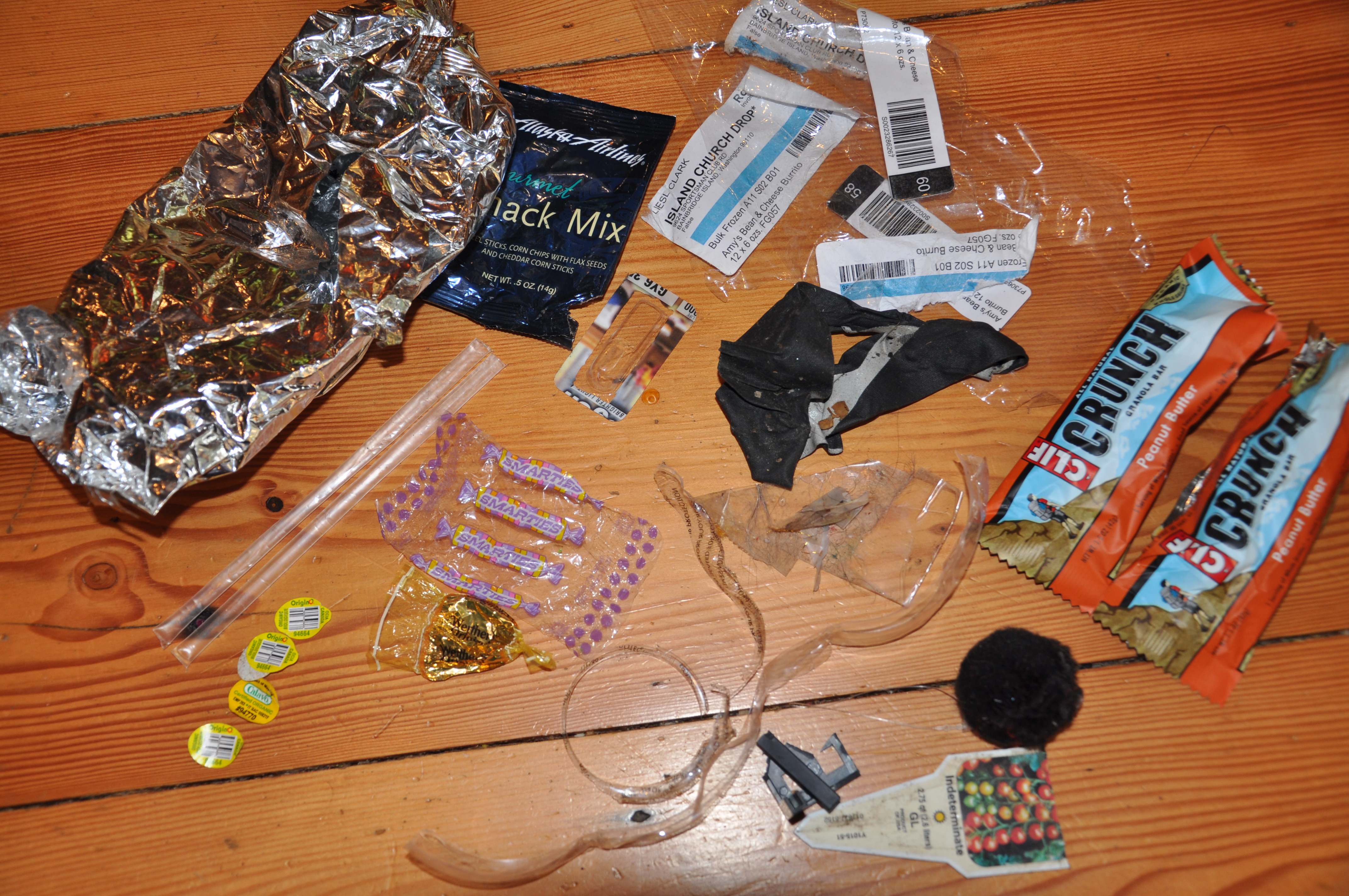
I never thought I’d be taking pictures of my trash for the public to see. But there it is: one week’s-worth of plastic from our household that will go to the landfill.

Now here are my excuses and explanations: First, we’ve had 5 people living in this household, 1 guest visiting from Nepal and decidedly perplexed by our hoarding of all bits plastic that are going into our dust bin. The other general excuse is that more than half of these items were acquired in our household before our month less plastic began. I’m tracking the plastics that are to go to the landfill this month. So, those are my general excuses. The others are related to each item:

Tin-foil-looking stuff that crackers were wrapped in: no specific excuse. Crackers bought before month less plastic and we finished them this past week. Since then, we’ve found some zero waste crackers (that is, if you count recycling in the zero waste mix.)

Paper stickers attached to our bulk order polyethylene bags: What can I say? They need to be cut off the bags and the bags are then put into polyethylene recycling.

Honey straws: I couldn’t say no to the kids the week before our month less plastic, this is the result one week later — to the landfill.

Tape: Scotch tape and gaffer tape do end up in the landfill unfortunately. Haven’t come up with an alternative so far for specific needs (like film needs with gaffer tape and kids projects with clear tape)

Broken black plastic toy: It broke into several pieces no superglue is going to heal.

Clif Bars: Clif Bar sent them to us as part of their support for our hungry team members taking part in educational projects on zero waste in Nepal. We pack all our plastics out of remote areas and these were leftovers that the kids consume as emergency food. Clif Bar is currently researching better alternatives to the plastics in their packaging. And, they’re supporting projects like ours in Nepal, working to reduce plastics trickling down the world’s highest watersheds. They’re a great company.

Black ball thing: That’s a puffball that was used in a child’s art project and it has a ton of glue on one side. Don’t think it’ll be re-used in this lifetime. Surely it’s made of some petroleum product.

Safety Seals: Visiting acupuncturist family member brought herbs for my appendectomy recovery. The herbs come in bottles that have safety seals on their necks and under the lid. UGGH.

Nursery plant label: This one broke. Others, I’ve been trying to send back to the nurseries that generate them.

Alaska Air Snack Packaging: Guests who knew nothing about our month less plastic.

Specialty light bulb packaging: These sorts of plastics in packaging are probably our biggest challenge in a zero waste home. There are NO alternatives.

Organic Stickers: During the week before month less plastic we purchased some organic bananas (see previous post) and tomatoes. Oddly, if they aren’t organic, the sticker’s made of paper. We love the paradox of purchasing organic veggies packaged in nonorganic materials. Was worthy of a film by our garbage spies, but our favorite local store didn’t like that idea so you’ll have to come see it in person to learn how to shop zero waste.

Final excuse: If you compare our plastic landfill waste for 5 people in a week to the plastic landfill waste generated by one passenger on Korean Air on a 15-hour flight between Seoul and Seattle, we win hands down!

Plastic for 1: Seoul to Seattle

Month Less Plastic

Plastic-free for a month

Today is the beginning of a new adventure my family and a few other friends’ families have signed up for: a month less plastic. What?

Essentially, the challenge is to reduce our plastic intake, and share what we learn with each other. If you’re interested in this endeavor, please join us, and write in to share your experiences in curbing our toxic love affair with plastic. It permeates parts of our lives well beyond our kitchens and children’s playrooms, and that’s what this adventure is meant to highlight. What will we learn from trying to use less plastic, whether it’s a focus on simply not allowing new plastics to enter our homes or a study on which plastics we use each day and how we can keep them useful so they never end up in a landfill? Will this exercise complicate our everyday rituals or simplify them? We’re looking for more clarity in defining our relationships with the materials we use each day. Are they healthy? Will the things I throw away or recycle end up part of a new plastic item or will they land in a landfill, or the ocean? What impact will they have in the long run?

All solutions to the problem of persistence of plastics in our environment point to less dependence on plastic. So, we’re going to give it a try. A month less plastic.

But first, I need to rewind to the day before the start of our month. Yesterday. I promise, we didn’t head to the store to stock up on all the things made of or packaged in plastic we’ll need for a month. In fact, we went to a local store to purchase much-needed toilet paper and bananas. Bananas don’t grow here so I’m violating the local motif, but we’re known to do that with a few of our staples: bananas, rice, flours, nuts, avocados, coconuts.

Organic Bananas?

Bananas came in two varieties: organic and non-organic. We aimed for the organic bananas and, to our dismay, found they not only had a couple of organic stickers on them fashioned in the shape of a leaf with a drop of dew on them (made of plastic) but they also had a large strap of plastic tape around the bunch. Adding insult to injury, a ‘sock’ of clear polyethylene plastic was stuck to the stem connecting the bunch together. One plastic over-glued sticker claimed the bananas were “raised by mother nature.” How lovely it will be to see that sticker mushed together with all the other discarded plastics, decidedly not raised by mother nature, in our local landfill in about a week.

Organic/Non-organic, Plastic/no-plastic

Organic/Non-organic, Plastic/no-plastic

On the other side of the produce island, we could see the non-organic “regular” bananas had only a single paper sticker on each bunch. The decision was a no-brainer. Based on our month less plastic agenda, the non-organic bananas ruled out. The organic specimens were a paradox per bunch staring us banana-loving monkeys in the face.

Raised by Mother Nature

We leave you with a short film dedicated to the launch of our month less plastic. It was produced, shot, written, directed, composed and performed by our up-and-coming one-boy film-making machine. I’ll qualify this introspective film by simply saying that it was made entirely without my knowledge. While I was attempting to make a film about how easy it is to shop at your local store and generate zero waste, this film was being made. Sadly, after shooting, editing, and completing our very upbeat film about how one can succeed in zero waste shopping, I was contacted by an executive of the local store and discouraged from pursuing the film any further. We hope you enjoy the film that will have to take its place:

Rag Pickers of the Rotary Auction

They raise hundreds of thousands of dollars in a matter of days, all to the credit of local volunteers and dedicated rotarians. Bainbridge Island’s Rotary Club puts on a rummage sale and auction each year that’s so big it can be seen from Google Earth’s satellites. What’s their secret? Our stuff. Our unwanted mountains of household items we don’t need anymore, but still have a long life in them for others to use. Thousands of home/kitchen/garden things are dropped off each day for 5 days, and all are shopping-carted over to the various departments of the sale: housewares, arts & crafts, sporting goods, children’s books, lawn mowers. It’s a shabby chic department store for a day with prices you can’t beat anywhere in the northwest.

I’m writing this post because we just spent the last week volunteering at the Auction, creating a special job for ourselves: dumpster duty. We attempted to divert as much recyclable and reusable items from that 40-yarder as we could. It was a race to keep up with the myriad trash bins that were being thrown in without our editorial input. The end result: we made a huge dent on the amount of waste to be shipped and dumped in Bremerton, but we’re troubled by the amount of usable and recyclable materials that still made it in. Perhaps a whole shipping container-full.

We need more rag pickers. The effort is exhilarating, a modern archaeological peek into our material culture and the resources we find of little use that would be a boon to another culture or even your neighbor down the street. There are lessons to be learned, but we’re still learning them. Please watch our movie and give us your ideas, your thoughts on how we can stop the daily flow of resources into our landfills.

Beach Plastic Odyssey

Do you play catch with your son? How about on the beach?  Did the ball go into the water? Could you get it back? Did you watch it float away? Why? Did you think it wouldn’t do anything? It did. I found it.

– Kasper 7th-8th grader, Odyssey Multiage Program

Beach “Treasures” Recovered During A Beach Plastic Odyssey: Alarming quantities of plastic litter are spotted daily in our seas worldwide, both in the waters and along the shoreline. A stunning 90% of all marine debris is plastic, and 80% of that plastic is coming from land.

Having read these statistics, my family can no longer have innocent beach days devoid of facing the impact we’ve had on our watersheds and shore environments. It hasn’t taken long for us all (from ages 4 – 74, grandparents included) to step into the role of citizen scientists, wanting to solve the questions of what exactly is floating in our waters and where is it coming from? But doing it alone was too high a plastic mountain to climb, so we’ve developed a community-based project, along with the Rockefeller Campbell family, called Plastic is Forever, a citizen-science project for all ages to study the effects of everyday plastics in our local waters. Our methods employed are varied, but they involve a combination of simple hands-on science, mathematical inventorying, treasure hunting, taxonomy of unknown plastic parts, and a good bit of creative spirit through art and film.

On their final days of school this year, the Odyssey 7-8th grade class of 2010-2011 took part in our pilot educational project to raise awareness that the problem of plastics in the marine environment is not just out in the North Pacific Gyre, but dramatically right here under our very noses.

The Beach Forays and What We Found: A one-hour foray by 40 students to a local beach reaped sad, yet typical, results. The list of common debris found mimics the most commonly used items in our region: bottle caps, straws, plastic pens, and (in the case of Puget Sound) fireworks. To qualify this last item, you have to imagine the 4th of July from any Puget Sound vantage point: an admittedly beautiful display of countless private pyrotechnics that, on the calm waters of the Sound, mirror beautifully skyward and then seaward.

Each firing over our waters, however, is a literal throwing-away-of-plastics-and-blown-up-plastic-bits into the Sound. By January, those pieces are washing up by the tens of thousands along our local shores, mixed with seaweed, wood bits, and the myriad other common plastics on our everyday list. Here’s a sampling of hot items found during 5 trips to Puget Sound beaches by a team of four K-1 students in March of 2010:

Balloons & Ribbons:                                         10

Bottle Caps:                                                       87.5

Candy Wrappers:                                              38

Earplugs:                                                            52

Fireworks Parts:                                              134

Construction Foam:                                       Infinite

Fishing Tackle Floats:                                      34

Marine Rope:                                                    85 feet

Microplastic Pieces:                                       Infinite

Miscellaneous Broken Plastic Pieces:          1140

Miscellaneous Unknown Plastic Parts:          220

Pens:                                                                   17

Pen Parts:                                                           30

Plastic Bags:                                                       27

PVC Tubing:                                                       70 inches

Shoes:                                                                   8.5

Shotgun Cartridges:                                         71.5

Drinking Straws:                                               57.2

Styrofoam:                                                        Infinite

Syringes:                                                               4.5

Water Bottles:                                                     18

Ziplock Bags:                                                      10

When I look at this list, I first think of what’s missing: The number-one most-used material plastic in our country — polyethylene or “film.” Translated: plastic bags. They are also the least-recycled plastic worldwide. Why aren’t we finding hundreds of plastic bags in a month of visiting our local beaches? The answer is simple: they’re already absorbed into the environment, having first been ingested by land-lubber scavengers like raccoons and dogs. Add to that the fact that plastic bags are the first of the plastics to photo-degrade in salt water into unintelligible tiny bits mixed in with the translucent seaweeds of our marine ecosystem. Take a Mason jar the next time you go to the beach and collect a jar-full of seaweed sludge. How much of it is organic and how much synthetic? In the winter months, the amount of torn up broken-down synthetics is alarming. And then there’s another clue in those jars: tiny fish bites (some not so tiny) taken out of what’s left of the plastic bags. They’re there, and if they’re not made by fish, harbor seals, otters, then they’re made by raccoons or other predators who encountered the plastic bag housing tasty remnants of human foodstuffs during the landward part of the bag’s journey.
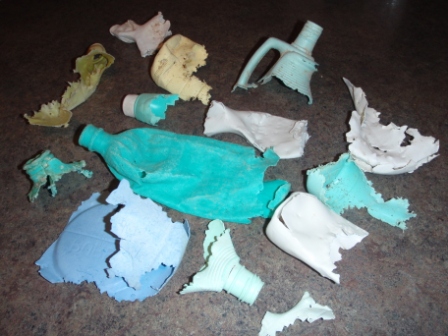
Plastics Bitten by Fish Photographed by 5Gyres Project

It’s the obvious absence of plastic bags on our beaches that is most disturbing. The majority are made from petroleum — a nonrenewable resource. Very few are recycled into more bags or other types of plastic. The hundreds of plastic bags used in each American household every year simply end up in a landfill or in our waterways, never breaking down completely, making their way down to the sea. A 2001 study cited on the website of the U.S. Environmental Protection Agency (EPA) and the UNEP (United Nations Environmental Programme) shows that of 38 sea turtles examined, 60% had ingested marine debris, mostly plastic bags. According to some websites, 60 – 100 million barrels of oil are required to make the world’s plastic bags each year.
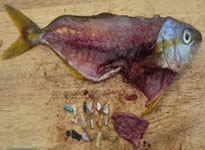
Plastic pieces found inside fish (5 Gyres project)

But it’s not just about the oil and the turtles, raccoons, fish, harbor seals, Laysan albatross, and even whales that we know are ingesting our discarded plastics. I often think about the communities of mussels thriving on large pieces of styrofoam, floating freely across our waters. There’s good evidence they injest the plastic toxins and release them into our waters.

We’re learning that plastics themselves, without the help of the bivalves, along with pesticides and even common prescription drugs are releasing synthetic and natural hormones into rivers and streams, which is leading to unintended consequences on wildlife, causing some male fish, for example, to become feminized and lay eggs. In a recent report, it was found that one third of small mouth bass were feminized in nine major U.S. river basins, and almost all of the rivers and streams tested in the United States contained some hormonally active chemicals. Our pure waters are purely reflecting our unintentional impact and irresponsible handling of waste, even if it’s waste from our bodies after consuming prescription drugs and birth-control pills.

Christopher Bartlett of The Magic Snorkel.com has documented the work of Captain Charles Moore while trawling the Pacific Garbage Patch. I’ll quote him directly as these facts about marine plastics are not my expertise but important to understand:

Plastics absorb Persistent Organic Pollutants (POPs) from paint chips, coolants, pesticides, and metals, so when fish eat plastic matter and then bigger fish eat them, the chemicals could be bioaccumulating. Do the micro plastic particles contain POPs, and do these harmful pollutants migrate into the tissues and organs of the fish that ingest them and subsequently enter into the human food chain? Concentrations of the most frequent POPs (PCBs, DDT, and PAH – all renowned for their effects on the human organism) on nurdles collected from Japanese coastal waters were found to be up to 1 million times higher than the levels detected in surrounding seawater, the new data from the NPSG could have far-reaching effects.

If you want to have a personal encounter with nurdles, the feedstock of all items made of plastic (and washing up by the millions on our shores,) come to our exhibit at Bainbridge Performing Arts this July.

Earplugs? Why are we finding so many earplugs washing onto our beaches? We’d love to hear your thoughts. Construction workers? Boaters? Swimmers? They come in every color: purple, dayglo yellow, green, pink/green, orange. Next time you go to the beach, walk along the wrack line, (high tide line) and try to NOT find an earplug or 2 and a balloon piece with a ribbon tied to the end of it.

But you might be one of those people who just can’t see these plastics underfoot. They blend in — or we’ve tuned them out – and most plastics we find in the high tide debris can be seen mimicking something we typically see in the natural world. White and black plastic netting (used in the fishing industry to hold clams, mussels, oysters) look just like some forms of seaweed. Black PVC tubing looks like dark waterlogged sticks. Even the ribbons on the ends of balloons look like seaweed. My dear friend and fellow plastic citizen scientist, Rebecca Rockefeller, picked up a chunk of fish roe from the wrack line in one hand and in the other a similar-size chunk of styrofoam, same hue of orange with the same-size synthetic “eggs.” If I were a hungry large fish or otter, I’d be all over that sty-roe-foam. There’s no doubt these plastics have entered the food chain and, indeed now, our bodies.

The following 6-minute film documents the Beach Plastic Odyssey project and its impact upon a thoughtful and creative group of 7th and 8th graders. We thank them for their enthusiasm and clear insights they gave us on our first journey down the path of teaching environmental awareness. We did have a few doubters on day one: “I’ve spent a lot of time at Fort Ward beach and have never seen any plastics.” But, by the end of the study, there was little doubt that plastic debris washes up onto our shorelines with every high tide.

Here are some enlightening conclusions from the Odyssey 7th-8th grade team:

What lifestyle change(s) might be necessary to reduce your plastic consumption?

When we bring our lunch, we can use metal containers and not plastic ones.

Recycling, bring fabric bags to Safeway, or stop buying unnecessary things.

Bringing reusable water bottles

Reusing things

Recycle

Use less water bottles – reuse them

What other conclusions, if any, can you draw?

I can conclude that a lot of things we use have alternatives and we just need to be willing to use the alternatives.

Don’t litter, don’t use plastic too much.

The fascinating results of the students’ work, including reflection sheets, and an inventory, can be seen at Bainbridge Performing Arts, starting July 1 though August along with works of art created from found debris on our local beaches by local artists. Meanwhile, we hope you enjoy the film:

The Rag Pickers of Kathmandu

Sometimes we just have to make the best of hard times. There’s always the hope of finding a way through darkness toward a place that moves us beyond where we started in the first place. Excruciating pain in my abdomen for a long night told me I needed to go to the hospital. We had just arrived in Kathmandu and were hours away from flying into the mountains for a 3-week archaeological/filming expedition. A CAT scan revealed an inflamed appendix that was ready to burst. Undergoing an emergency appendectomy through open surgery in a Kathmandu hospital was the only option. It meant I wouldn’t be able to join the expedition, and our 2 small children would have to stay with me while I recovered in Kathmandu — an opportunity lost for 2 eager young archaeologists and a filmmaker poised to shoot unique cave research as it unfolded. We would miss our many friends in Upper Mustang, whom we’ve grown fond of after 7 trips to the region as a family. What seemed a loss, at the time, became an opportunity in the end.

Sharing a movie on the flight to Kathmandu

As time slowly healed our hearts and rest mended my swollen abdomen (as we waited for the expedition members to return to Kathmandu), we found a compelling story to tell with a little Go-Pro POV camera in the hands of an 8-year-old. Forays by rickshaw into the streets of Kathmandu brought daily lessons on the gut-wrenching lifestyle of a low caste of people who play one of the most vital roles in reducing pollution in Nepal and in particular in the Kathmandu Valley. They’re called “rag pickers” and the rags they pick from the sludge of human waste, including sewage, are indeed resources plucked from the mire of human consumption. These so-called “rags” are mainly plastics: ramen noodle packets, biscuit packets, plastic shopping bags, plastic beverage bottles, and all forms of hard plastics.

There are about 300 rag pickers engaged in waste recovery in the various urban centers of Kathmandu, alone. Most are villagers displaced by the Maoist regime, having moved from rural mountainous regions to Kathmandu. Yet, rag picking is a safety-net for anyone who finds themselves amongst the poorest of the poor, guaranteed employment for the self-starter willing to pick through the rank and toxic garbage of Kathmandu’s residents. Touching other people’s dirty trash is close to taboo in Nepal, hence rag pickers are scorned and mistreated. They suffer high risk of health complications and nearly half are women and children. The majority are illiterate.

This film short is a story for both kids and adults, told from the point of view of 2 children on a journey, seeking solutions to the chaos of waste management across our planet.

Life Lessons from the Village

Living Simply in the Himalaya

Voluntary simplicity, back-to-basics, modern homesteading, opting out, just plain living: these are the terms given to a modern movement toward more sustainable living practices. The tenets are based on old values before the day of single-use throw-away items and readily available running water, electricity, home heat, packaged food, and gas at the pump. The practices are from the days when people had no choice but to grow their own food and harness the resources around them: collecting water, power and heat from the sun, food from the soil, products like eggs and honey from the critters we cared for. In this country, we look back toward our great grandparents’ age to re-learn the old less-harmful ways of living. But in many cultures around the planet, those ways are still practiced out of necessity and due to remoteness from a metropolitan center.

Through the eyes of a 3-year-old

We first took our children to Nepal when they were ages 3 and 18 months. This first trip, for us, was seminal in its impact upon their lives. Our daily rhythms were occupied by the business of living, free of phones, cars, computers, and central heating. Through our friends, the Sherpa community of Kunde, our children learned what it meant to not have running water in our home, instant food cooked over a stove, or delivery by car to a village 10 miles away. We made our own food from scratch and only ate the produce that was stored over winter past the harvest season: potatoes.

Daddy and Baby, 15,000 Ft

It was a very special time for us and formative for one 3-year-old mind. This little film tries to capture that moment, which still informs us on how we hope to live the rest of our lives:

100 Foot Diet

Winter Survivor: Collard Greens

It’s the ultimate homegrown challenge: eat at least one meal a week, or the majority of your ingredients, from foodstuffs you can find on your own property. No, that doesn’t include the stuff you have in your cupboards that came from Chile. I’m talking about the food you’ve grown, farmed, and the delectables you didn’t even know were edible but are sitting in plain sight, growing right in your lawn, ditch, or woods.

Forager's Quiche

The kids and I are natural foragers. Since that amoebic age when they mostly crawled across the dirt, our little ones have put anything that looks edible in their mouths for a taste. Luckily, that urge to test is still intact. This week it’s been salads made of the weeds we didn’t intend to grow while we were away for 2 months in Nepal — if you can’t beat ’em, eat ’em. And these weeds have been utterly delicious: young dandelion leaves, bitter cress, water cress (okay, that’s in a nearby ditch), plantain, mustard, dock, mint, and stinging nettle. The nettle goes in soups and pestos. Even the potatoes I had thrown in the worm bin hatched new ones (potatoes, not worms) while we were away. Our little homestead just keeps producing in our absence and we’re so very thankful.

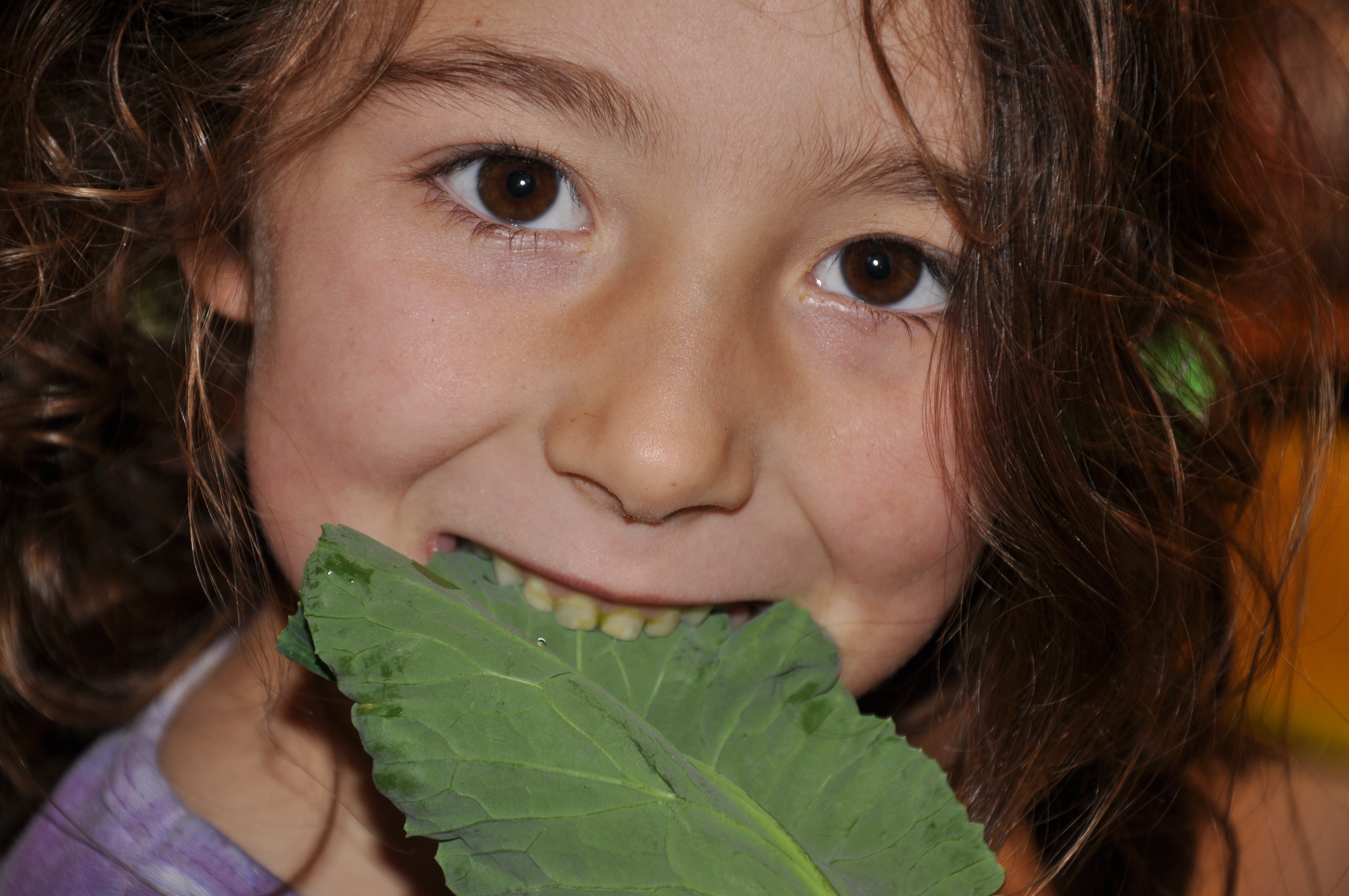
These amazing collards have been producing greens for 9 months

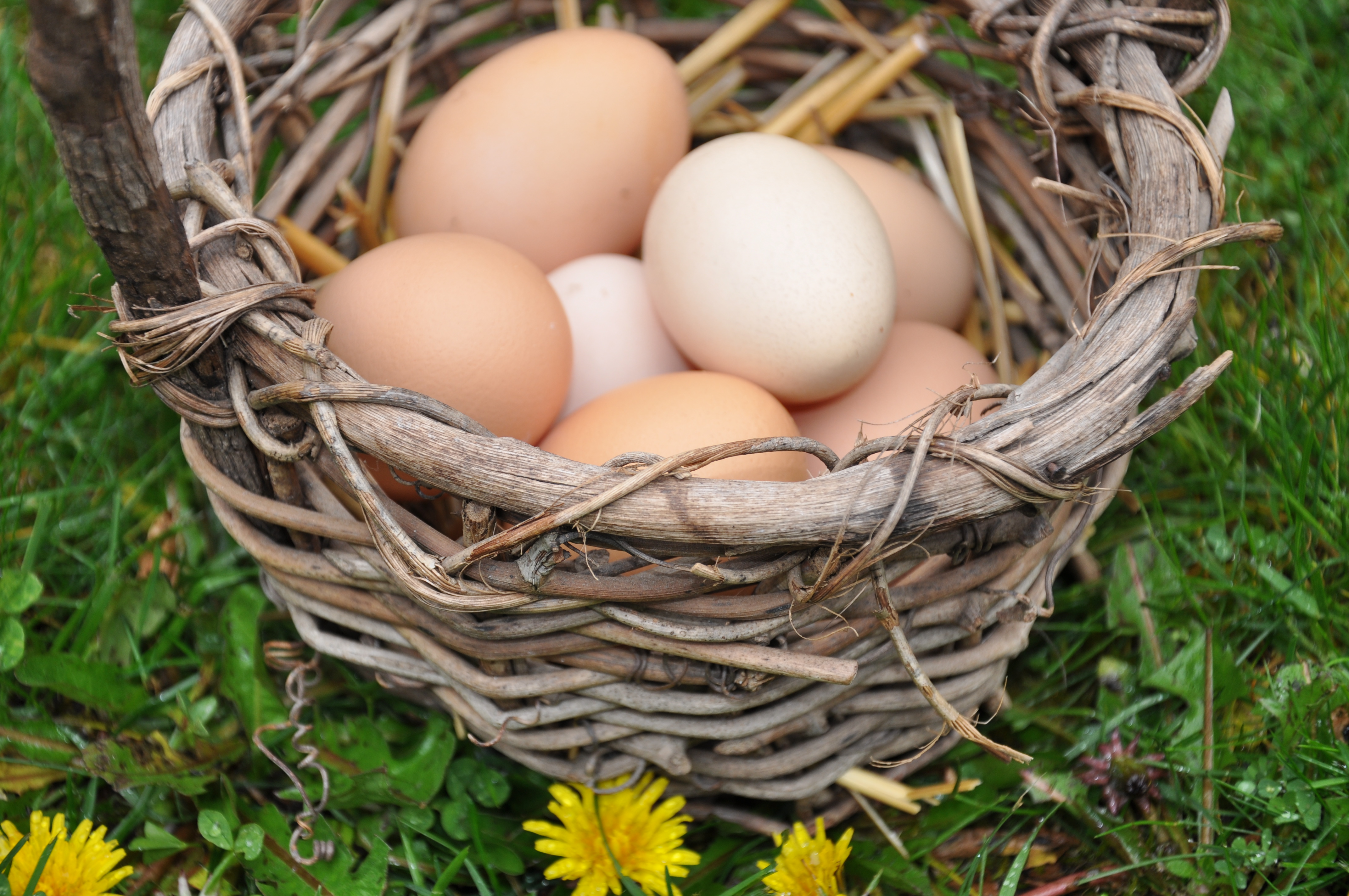
The collards and kale kept going, although they’re as leggy as a runway model. And the chickens are laying 10 eggs a day. So, quiche and frittatas are a regular menu item.

Eggs in Dandelions (great quiche combo)

Even the honey bees are offering up some of their excess gold. Amazingly, one hive of ours didn’t even touch their extra super of honey we had stored above their brood. A mouse, of course, got in a partook in the elixir, but we’re planning on harvesting a few frames for ourselves in the next week to enjoy the honey on our homemade zucchini bread. We pulled out the last of our shredded zucchini from the freezer a few days ago.

Shredded Zucchini from the Garden, 8 Months Later

So, for those who’d like to take the challenge, give the 100 foot diet a try. Go forth and search out those oyster mushrooms, maple blossoms (they’re in season now), and arugula that re-seeded itself just down the path. Oh, and I think your canned, dried, or frozen home-grown produce from last summer definitely counts! Explore and live off the fat of your land.